Archer Aviation's eVTOL Technology Outlook Amid Investor Impatience
Written by Emily J. Thompson, Senior Investment Analyst
Updated: Mar 08 2026
0mins
Source: Fool
- Poor Financial Performance: Archer Aviation reported a negative adjusted EBITDA of $137.9 million for Q4 2025, significantly exceeding analyst expectations of $122 million, highlighting the company's cash burn issues in its commercialization efforts, which has led to declining investor confidence in its future prospects.
- Pessimistic Future Outlook: Management anticipates a negative adjusted EBITDA between $160 million and $180 million for Q1 2025, well above analyst forecasts of $110 million, further exacerbating negative sentiment in the market and causing the stock to drop over 10% post-earnings.
- Market Potential and Risks: Despite the current share price being under $7, Archer's market cap stands at $5 billion, with potential to raise $500 million to $1 billion for growth, which could exert additional pressure on shares but also presents a potential investment opportunity for investors.
- International Market Progress: Archer plans to launch passenger-carrying flights in the UAE, while FAA approval in the U.S. is still pending; this development could reduce EBITDA losses and pave the way for the company to achieve break-even, enhancing its competitive position in the electric aviation market.
Trade with 70% Backtested Accuracy
Stop guessing "Should I Buy ACHR?" and start using high-conviction signals backed by rigorous historical data.
Sign up today to access powerful investing tools and make smarter, data-driven decisions.
Analyst Views on ACHR
Wall Street analysts forecast ACHR stock price to rise
6 Analyst Rating
4 Buy
2 Hold
0 Sell
Moderate Buy
Current: 6.120

Low
8.00
Averages
12.40
High
18.00
Current: 6.120
Low
8.00
Averages
12.40
High
18.00
About ACHR
Archer Aviation Inc. is an aerospace company. It is engaged in providing customers with advanced aircraft and related technologies and services in the United States and internationally in both the commercial and defense sectors. Its commercial line of business consists of the sale of its commercial aircraft (Archer Direct), such as Midnight, to aircraft operators as well as technologies and services related thereto, including commercial launch (certification, testing, training, demonstration, market survey and early trial operations), and maintenance and repair. Its defense line of business consists of the sale of aircraft and related technologies for defense applications. Its initial product is intended to be a hybrid-propulsion, vertical take-off and landing (VTOL) aircraft. Its Midnight aircraft is designed around its proprietary 12-tilt-6 distributed electric propulsion platform. It carries four passengers plus a pilot. The aircraft is purpose-built for air taxi operations.
About the author

Emily J. Thompson
Emily J. Thompson, a Chartered Financial Analyst (CFA) with 12 years in investment research, graduated with honors from the Wharton School. Specializing in industrial and technology stocks, she provides in-depth analysis for Intellectia’s earnings and market brief reports.

Archer Aviation Advances eVTOL Certification Process

- Significant Certification Progress: Archer Aviation has become the first eVTOL developer to complete Phase 3 of the FAA certification process, marking its leading position in the electric vertical take-off and landing aircraft sector, which is expected to provide a competitive market advantage.
- White House Program Participation: The company has been selected for the White House's eVTOL Integration Pilot Program, allowing it to conduct limited early flight tests with local government support, which will accelerate the practical application of this new mode of transportation.
- Final Certification Phase: Archer is set to enter the final phase of the Type Certification process, where it must demonstrate that its Midnight aircraft meets FAA airworthiness requirements through formal testing, and successful completion will lead to Type Inspection Authorization, further advancing its commercialization efforts.
- Long-Term Investment Potential: Although full certification is expected in 2027 or 2028, Archer Aviation faces challenges with cash burn and market competition, requiring investors to remain patient and focus on its long-term growth potential.
See More

Archer Aviation Advances Toward FAA Certification for eVTOL Aircraft
- Certification Milestone: Archer Aviation has completed 75% of the FAA certification process, becoming the first eVTOL manufacturer to finish the third phase, which positions the company favorably in the urban air mobility sector and may provide a first-mover advantage.
- Testing Compliance Plans: The FAA has approved Archer's Means of Compliance and specific testing plans, including safety tests for multi-engine redundancy and flight control software, which enhances market confidence in the aircraft's safety standards.
- Future Flight Initiatives: Archer plans to conduct limited early flight tests under the eVTOL Integration Pilot Program, expected to start as early as this year, providing valuable data for real-world applications and accelerating its commercialization efforts.
- Long-Term Investment Outlook: Although full Type Certification is anticipated by 2027 or 2028, Archer Aviation's market potential remains attractive to investors, necessitating patience and a focus on its long-term strategic development.
See More

SpaceX Faces Valuation and Market Challenges Ahead of IPO


- Market Size Projection: SpaceX claims an addressable market of $28.5 trillion, primarily in enterprise applications, yet this figure is nearly equal to the U.S. GDP of $32.4 trillion, raising concerns about the sustainability of such a high valuation given its current financials.
- Poor Financial Performance: In 2025, SpaceX reported revenues of $18.7 billion, but its GAAP operating loss widened to $2.6 billion following its merger with xAI, indicating significant challenges in profitability that investors must carefully consider.
- Investor Focus: While SpaceX's ambitious vision attracts substantial investor interest, its current financial metrics do not justify its market value, prompting investors to be wary of potential misrepresentation stemming from inflated market size claims.
- Technology and Mission: SpaceX aims to enable multi-planetary life through technologies like reusable rockets and Starlink satellite internet; if these goals are achieved, its valuation may become justified, but its current market performance remains to be seen.
See More
SpaceX Set to Go Public with $2 Trillion Valuation Target
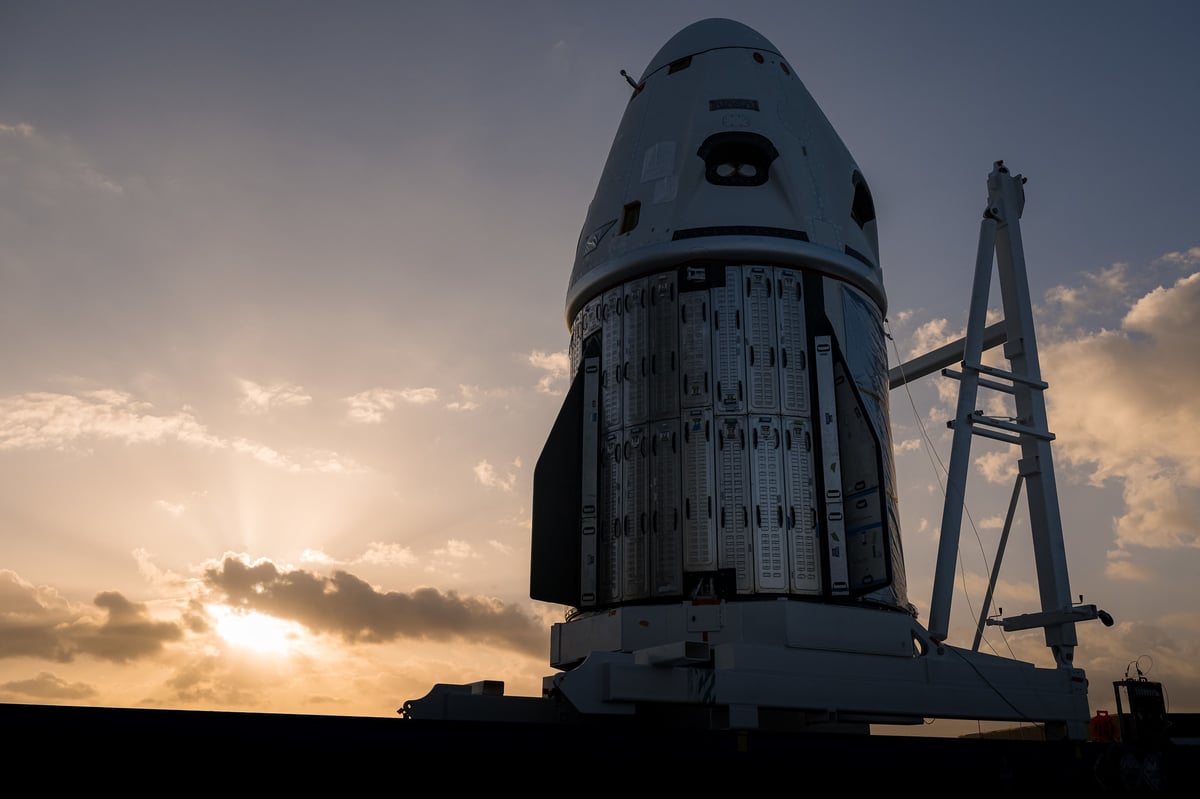
- IPO Outlook: SpaceX is set to go public soon, targeting a valuation of $2 trillion, despite reporting only $18.7 billion in revenue for 2025 and a GAAP operating loss of $2.6 billion last year, indicating a fragile current financial state.
- Market Potential: The company claims an addressable market of $28.5 trillion, nearly equivalent to the U.S. GDP, primarily in AI enterprise applications, although the actual significance of this figure is questionable, urging investors to approach it with caution.
- Technological Innovation: Breakthroughs in reusable rocket technology and Starlink satellite internet have garnered significant investor interest, yet the company's revenue accounts for less than 0.1% of its addressable market, highlighting the substantial uncertainty surrounding its future potential.
- Investor Caution: While SpaceX's ambitious mission attracts investors, its inflated addressable market figures may mislead them, emphasizing the need to focus on actual performance rather than market size to avoid repeating the mistakes of other startups.
See More
Intense Competition in eVTOL Market Heats Up

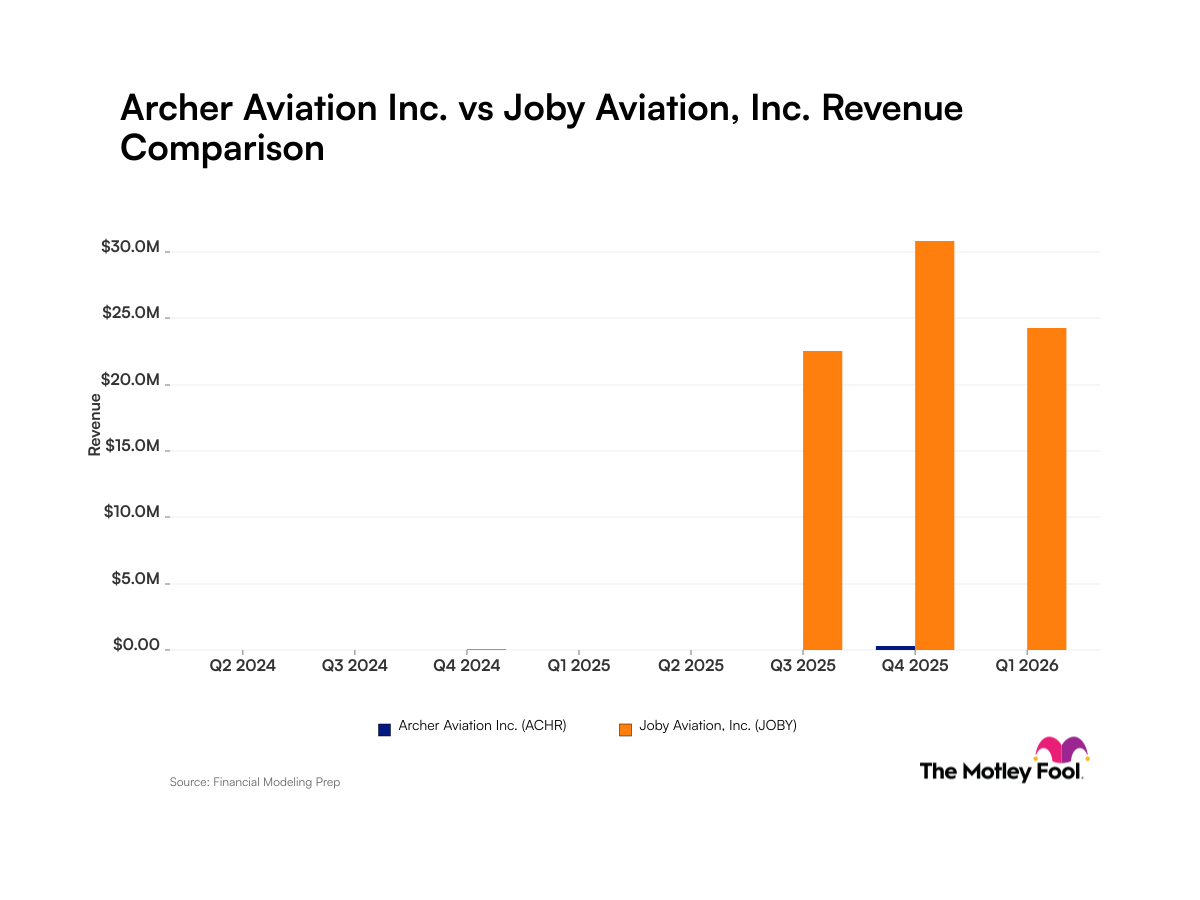
- Massive Market Potential: The eVTOL market is projected to reach $1 trillion over the next 20 years, positioning Archer Aviation and Joby Aviation as key players in a rapidly evolving industry that attracts significant investor interest.
- Revenue Comparison: Joby Aviation leads Archer in revenue generation, although both companies are still in the early stages of federal certification; Joby's revenue is bolstered by its acquisition of Blade, with full-year expectations of $105 million to $115 million.
- Financial Health: Archer reported a negative free cash flow of $181 million in Q1, indicating financial strain during its transition and certification process, while Joby's negative free cash flow stood at $222 million, highlighting challenges in its expansion efforts.
- Future Outlook: As Archer expands operations at Hawthorne Airport in Los Angeles and gradually increases revenue, investors will closely monitor the progress of both companies in manufacturing and certification, leading to an increasingly competitive landscape.
See More
Joby Aviation's Prospects in the eVTOL Market
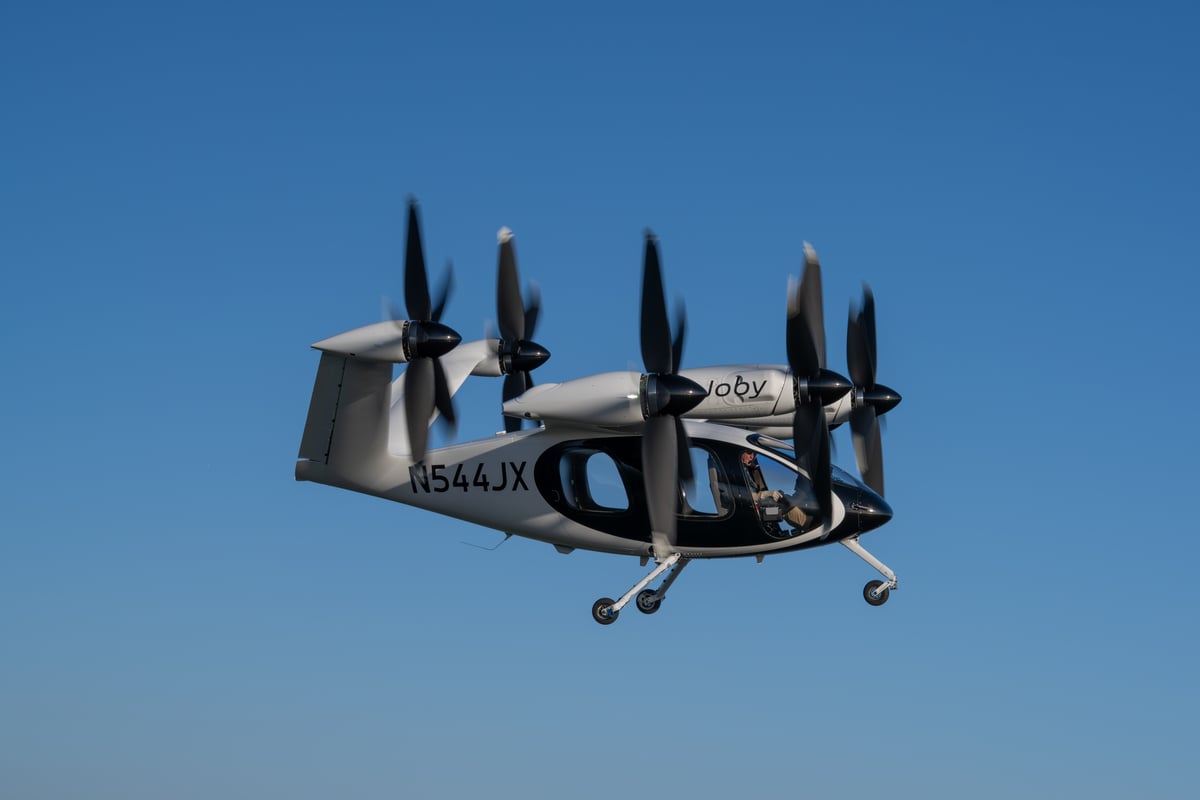
- Market Potential: The eVTOL industry is projected by Grand View Research to reach $28.6 billion by 2030, indicating significant growth potential that has captured the attention of numerous investors.
- Regulatory Progress: Joby Aviation has commenced FAA-compliant flight testing and aims to initiate commercial operations this year, laying a solid foundation for market entry and boosting investor confidence.
- Strategic Partnerships: Collaborations with Uber and Delta Airlines will integrate Joby's electric air taxis into ride-sharing networks, significantly enhancing market penetration and sales, thereby driving future revenue growth.
- Strong Financial Position: Despite burning through $660 million in cash over the past four quarters, Joby retains approximately $2.5 billion in cash and short-term investments as of the end of March, ensuring funding for future expansion and growth needs.
See More
Archer Aviation Advances eVTOL Certification Process
- Significant Certification Progress: Archer Aviation has become the first eVTOL developer to complete Phase 3 of the FAA certification process, marking its leading position in the electric vertical take-off and landing aircraft sector, which is expected to provide a competitive market advantage.
- White House Program Participation: The company has been selected for the White House's eVTOL Integration Pilot Program, allowing it to conduct limited early flight tests with local government support, which will accelerate the practical application of this new mode of transportation.
- Final Certification Phase: Archer is set to enter the final phase of the Type Certification process, where it must demonstrate that its Midnight aircraft meets FAA airworthiness requirements through formal testing, and successful completion will lead to Type Inspection Authorization, further advancing its commercialization efforts.
- Long-Term Investment Potential: Although full certification is expected in 2027 or 2028, Archer Aviation faces challenges with cash burn and market competition, requiring investors to remain patient and focus on its long-term growth potential.
See More
Archer Aviation Advances Toward FAA Certification for eVTOL Aircraft
- Certification Milestone: Archer Aviation has completed 75% of the FAA certification process, becoming the first eVTOL manufacturer to finish the third phase, which positions the company favorably in the urban air mobility sector and may provide a first-mover advantage.
- Testing Compliance Plans: The FAA has approved Archer's Means of Compliance and specific testing plans, including safety tests for multi-engine redundancy and flight control software, which enhances market confidence in the aircraft's safety standards.
- Future Flight Initiatives: Archer plans to conduct limited early flight tests under the eVTOL Integration Pilot Program, expected to start as early as this year, providing valuable data for real-world applications and accelerating its commercialization efforts.
- Long-Term Investment Outlook: Although full Type Certification is anticipated by 2027 or 2028, Archer Aviation's market potential remains attractive to investors, necessitating patience and a focus on its long-term strategic development.
See More
SpaceX Faces Valuation and Market Challenges Ahead of IPO
- Market Size Projection: SpaceX claims an addressable market of $28.5 trillion, primarily in enterprise applications, yet this figure is nearly equal to the U.S. GDP of $32.4 trillion, raising concerns about the sustainability of such a high valuation given its current financials.
- Poor Financial Performance: In 2025, SpaceX reported revenues of $18.7 billion, but its GAAP operating loss widened to $2.6 billion following its merger with xAI, indicating significant challenges in profitability that investors must carefully consider.
- Investor Focus: While SpaceX's ambitious vision attracts substantial investor interest, its current financial metrics do not justify its market value, prompting investors to be wary of potential misrepresentation stemming from inflated market size claims.
- Technology and Mission: SpaceX aims to enable multi-planetary life through technologies like reusable rockets and Starlink satellite internet; if these goals are achieved, its valuation may become justified, but its current market performance remains to be seen.
See More
SpaceX Set to Go Public with $2 Trillion Valuation Target
- IPO Outlook: SpaceX is set to go public soon, targeting a valuation of $2 trillion, despite reporting only $18.7 billion in revenue for 2025 and a GAAP operating loss of $2.6 billion last year, indicating a fragile current financial state.
- Market Potential: The company claims an addressable market of $28.5 trillion, nearly equivalent to the U.S. GDP, primarily in AI enterprise applications, although the actual significance of this figure is questionable, urging investors to approach it with caution.
- Technological Innovation: Breakthroughs in reusable rocket technology and Starlink satellite internet have garnered significant investor interest, yet the company's revenue accounts for less than 0.1% of its addressable market, highlighting the substantial uncertainty surrounding its future potential.
- Investor Caution: While SpaceX's ambitious mission attracts investors, its inflated addressable market figures may mislead them, emphasizing the need to focus on actual performance rather than market size to avoid repeating the mistakes of other startups.
See More
Intense Competition in eVTOL Market Heats Up
- Massive Market Potential: The eVTOL market is projected to reach $1 trillion over the next 20 years, positioning Archer Aviation and Joby Aviation as key players in a rapidly evolving industry that attracts significant investor interest.
- Revenue Comparison: Joby Aviation leads Archer in revenue generation, although both companies are still in the early stages of federal certification; Joby's revenue is bolstered by its acquisition of Blade, with full-year expectations of $105 million to $115 million.
- Financial Health: Archer reported a negative free cash flow of $181 million in Q1, indicating financial strain during its transition and certification process, while Joby's negative free cash flow stood at $222 million, highlighting challenges in its expansion efforts.
- Future Outlook: As Archer expands operations at Hawthorne Airport in Los Angeles and gradually increases revenue, investors will closely monitor the progress of both companies in manufacturing and certification, leading to an increasingly competitive landscape.
See More
Joby Aviation's Prospects in the eVTOL Market
- Market Potential: The eVTOL industry is projected by Grand View Research to reach $28.6 billion by 2030, indicating significant growth potential that has captured the attention of numerous investors.
- Regulatory Progress: Joby Aviation has commenced FAA-compliant flight testing and aims to initiate commercial operations this year, laying a solid foundation for market entry and boosting investor confidence.
- Strategic Partnerships: Collaborations with Uber and Delta Airlines will integrate Joby's electric air taxis into ride-sharing networks, significantly enhancing market penetration and sales, thereby driving future revenue growth.
- Strong Financial Position: Despite burning through $660 million in cash over the past four quarters, Joby retains approximately $2.5 billion in cash and short-term investments as of the end of March, ensuring funding for future expansion and growth needs.
See More