Analysts Upgrade Ratings for AMD and AAPL Amid AI Market Dynamics
Written by Emily J. Thompson, Senior Investment Analyst
Updated: Jun 04 2026
0mins

Source: seekingalpha
- AMD Upgrade: Andres Veurink has upgraded AMD to Strong Buy, citing its competitive edge in AI inference, particularly in memory capacity and cost-effective power usage, which positions it to capture a significant market share by 2030.
- AAPL Rating Increase: Envision Research upgraded Apple from Hold to Buy, highlighting its advantageous position in the rise of agentic AI applications without the heavy capital expenditures that burden other hyperscale competitors, potentially justifying its premium valuation.
- MRVL Downgrade: The J Thesis downgraded Marvell Technology to Neutral, noting that while fundamentals remain strong, the stock has become a consensus trade that is significantly overbought, limiting its near-term upside and raising concerns about valuation.
- AEO Downgrade: Gary Alexander downgraded American Eagle Outfitters to Neutral, citing slowing comparable sales momentum and a reliance on social media trends that may not provide sustainable long-term growth, resulting in diminished appeal for the stock.
Trade with 70% Backtested Accuracy
Stop guessing "Should I Buy AMD?" and start using high-conviction signals backed by rigorous historical data.
Sign up today to access powerful investing tools and make smarter, data-driven decisions.
Analyst Views on AMD
Wall Street analysts forecast AMD stock price to fall
33 Analyst Rating
25 Buy
8 Hold
0 Sell
Strong Buy
Current: 517.405

Low
210.00
Averages
289.13
High
377.00
Current: 517.405
Low
210.00
Averages
289.13
High
377.00
About AMD
Advanced Micro Devices, Inc. is a global semiconductor company. The Company is focused on high-performance computing and artificial intelligence (AI). Its segments include Data Center, Client and Gaming, and Embedded. Data Center segment includes AI accelerators, microprocessors (CPUs) for servers, graphics processing units (GPUs), accelerated processing units (APUs), data processing units (DPUs), Field Programmable Gate Arrays (FPGAs), and Adaptive system-on-Chip (SoC) products for data centers. Client and Gaming segment includes CPUs, APUs, chipsets for desktops and notebooks, discrete GPUs, and semi-custom SoC products and development services. Embedded segment includes embedded CPUs, APUs, FPGAs, system on modules (SOMs), and Adaptive SoC products. It markets and sells its products under the AMD trademark. Its products include AMD EPYC, AMD Ryzen, AMD Ryzen PRO, Virtex UltraScale+, among others.
About the author

Emily J. Thompson
Emily J. Thompson, a Chartered Financial Analyst (CFA) with 12 years in investment research, graduated with honors from the Wharton School. Specializing in industrial and technology stocks, she provides in-depth analysis for Intellectia’s earnings and market brief reports.

Recent Developments Lead to Decline in Semiconductor Stocks


- Market Dynamics: Afternoon stock prices on July 7, 2026, indicate a widespread decline in semiconductor stocks due to recent company developments, reflecting market concerns about the industry's outlook, which may lead to decreased investor confidence.
- Investor Reaction: As stock prices fall, investor doubts about the future performance of the semiconductor sector may affect subsequent capital inflows and market activity, further exacerbating industry uncertainty.
- Industry Outlook: Challenges faced by the semiconductor industry could lead to reduced investments in R&D and production, impacting future technological innovation and market competitiveness, which may affect overall economic growth in the long run.
- Market Volatility: This stock price decline could trigger broader market volatility, particularly in the tech sector, prompting investors to closely monitor industry developments to adjust their investment strategies.
See More
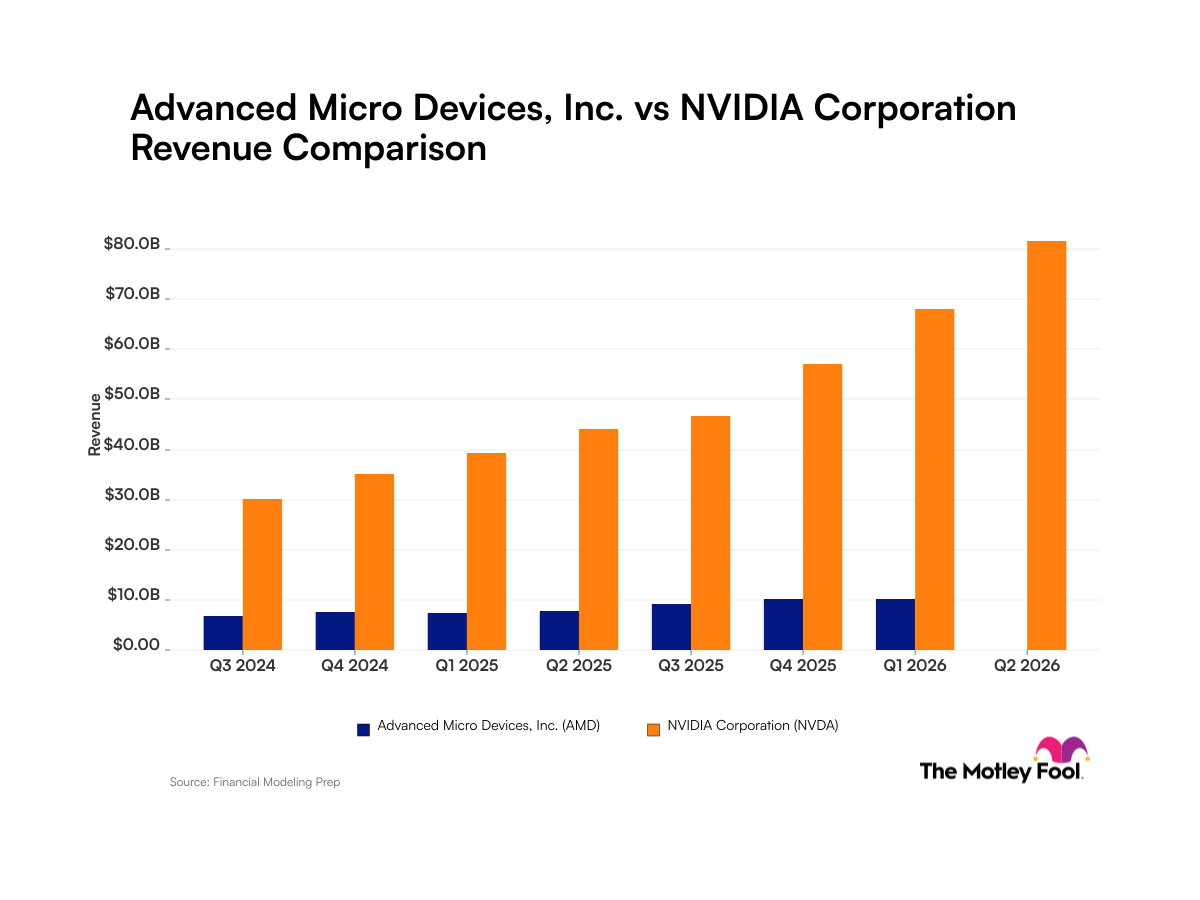
AMD and Nvidia Revenue Growth Comparison


- AMD Expansion Investment: AMD announced an investment of over $10 billion in Taiwan to expand its packaging capabilities while committing up to £2 billion for research in the UK, which will enhance its global market competitiveness and drive future product innovation.
- Nvidia Revenue Growth: Nvidia reported $68.3 billion in revenue for Q1 2026, with an impressive year-over-year growth rate of 85%, demonstrating strong demand in the high-performance semiconductor market, particularly in the artificial intelligence sector, further solidifying its market dominance.
- Quarterly Revenue Comparison: In Q1 2026, AMD's revenue was $10.3 billion, showing a 38% year-over-year growth, yet it pales in comparison to Nvidia's $68.3 billion, reflecting significant disparities in market share and growth potential between the two companies.
- Stock Price Performance Discrepancy: Despite AMD's stock soaring 273% over the past 12 months while Nvidia only rose 23%, the price-to-sales ratio difference indicates AMD's stock is perceived as a better value, attracting more investor interest.
See More

Semiconductor Stocks Decline; Investment Recommendations Released
- Semiconductor Market Trends: Recent developments from various companies have led to a general decline in semiconductor stocks, indicating market concerns about future growth, which may affect investor confidence and capital inflows.
- Updated Investment Recommendations: The analyst team's list of 10 best stocks does not include Micron Technology, reflecting a cautious outlook on its future performance, which could prompt investors to reassess their portfolios.
- Historical Returns Comparison: For instance, Netflix and Nvidia have previously yielded returns of $407,651 and $1,252,823 respectively when recommended, highlighting the importance of selecting the right stocks and encouraging investors to seek high-return opportunities.
- Investor Community Engagement: Joining the Stock Advisor investment community provides access to the latest investment advice and market analysis, assisting individual investors in making more informed decisions in a competitive market.
See More

Nvidia Expands Revenue Gap Over AMD
- Revenue Growth Comparison: Nvidia achieved an impressive 85% year-over-year growth rate in revenue for the quarter ending April 26, 2026, while AMD's sales of $10.3 billion only grew by 38%, highlighting Nvidia's dominance in the high-performance semiconductor market.
- Profitability Disparity: With a net income margin of 72% compared to AMD's 14%, Nvidia not only showcases its superior market positioning but also indicates its ability to achieve higher profitability amid surging demand for AI solutions.
- Investment Dynamics: AMD's announcement of over $10 billion investment in Taiwan to expand packaging capabilities and up to £2 billion for R&D in the UK reflects its intent to grow in the global market, contrasting sharply with Nvidia's rapid growth trajectory.
- Market Expectations and Stock Performance: Despite AMD's stock soaring 273% over the past 12 months while Nvidia only rose 23%, the price-to-sales ratio difference indicates investor recognition of AMD's value, reflecting divergent market expectations for future growth.
See More

U.S. Stocks Close Higher Led by Chipmakers Amid Strong Investor Demand


- Chipmaker Rally: The U.S. stock market saw a boost as chipmakers surged, driven by SK Hynix's ADRs being oversubscribed by more than seven times, indicating strong investor demand and enhancing overall market sentiment.
- Optimistic Market Sentiment: Despite escalating tensions in the Middle East, stocks rose, reflecting investor confidence in robust Q2 earnings forecasts, which are expected to increase by 23%, close to Q1's impressive 30% growth.
- Strong Labor Market: Weekly initial unemployment claims unexpectedly fell to 215,000, indicating a resilient labor market that further supports the upward trend in stock prices amid economic uncertainties.
- Airline Stocks Benefit from Oil Price Drop: Airline and cruise line stocks rallied as WTI crude oil prices fell over 1%, showcasing the market's sensitivity to fluctuations in energy prices and their impact on operational costs.
See More
Market Rebounds as Chip Stocks Surge on Micron's $3 Billion Investment


- Market Rebound: Following President Trump's suggestion that Iran may seek a deal, Wall Street saw a rebound with the Nasdaq Composite rising 0.9% and the S&P 500 gaining 0.6%, reflecting investor optimism about diplomatic resolutions to conflicts.
- Chip Sector Investment: Micron Technology's announcement of a $3 billion investment in the U.S. semiconductor supply chain led to a 7.5% surge in its stock, also boosting shares of AMD and Broadcom, indicating strong market confidence in the chip industry.
- Oil Price Fluctuations: Trump's comments on Iran caused the United States Oil Fund to drop 2.7%, erasing most of Wednesday's gains, although optimism about diplomatic solutions persists, geopolitical risks remain high.
- Honeywell's Continued Decline: Honeywell International's stock fell another 9.2% post-spinoff, totaling a 25% drop over three days, raising concerns about its future profitability in the market.
See More
Recent Developments Lead to Decline in Semiconductor Stocks
- Market Dynamics: Afternoon stock prices on July 7, 2026, indicate a widespread decline in semiconductor stocks due to recent company developments, reflecting market concerns about the industry's outlook, which may lead to decreased investor confidence.
- Investor Reaction: As stock prices fall, investor doubts about the future performance of the semiconductor sector may affect subsequent capital inflows and market activity, further exacerbating industry uncertainty.
- Industry Outlook: Challenges faced by the semiconductor industry could lead to reduced investments in R&D and production, impacting future technological innovation and market competitiveness, which may affect overall economic growth in the long run.
- Market Volatility: This stock price decline could trigger broader market volatility, particularly in the tech sector, prompting investors to closely monitor industry developments to adjust their investment strategies.
See More
AMD and Nvidia Revenue Growth Comparison
- AMD Expansion Investment: AMD announced an investment of over $10 billion in Taiwan to expand its packaging capabilities while committing up to £2 billion for research in the UK, which will enhance its global market competitiveness and drive future product innovation.
- Nvidia Revenue Growth: Nvidia reported $68.3 billion in revenue for Q1 2026, with an impressive year-over-year growth rate of 85%, demonstrating strong demand in the high-performance semiconductor market, particularly in the artificial intelligence sector, further solidifying its market dominance.
- Quarterly Revenue Comparison: In Q1 2026, AMD's revenue was $10.3 billion, showing a 38% year-over-year growth, yet it pales in comparison to Nvidia's $68.3 billion, reflecting significant disparities in market share and growth potential between the two companies.
- Stock Price Performance Discrepancy: Despite AMD's stock soaring 273% over the past 12 months while Nvidia only rose 23%, the price-to-sales ratio difference indicates AMD's stock is perceived as a better value, attracting more investor interest.
See More
Semiconductor Stocks Decline; Investment Recommendations Released
- Semiconductor Market Trends: Recent developments from various companies have led to a general decline in semiconductor stocks, indicating market concerns about future growth, which may affect investor confidence and capital inflows.
- Updated Investment Recommendations: The analyst team's list of 10 best stocks does not include Micron Technology, reflecting a cautious outlook on its future performance, which could prompt investors to reassess their portfolios.
- Historical Returns Comparison: For instance, Netflix and Nvidia have previously yielded returns of $407,651 and $1,252,823 respectively when recommended, highlighting the importance of selecting the right stocks and encouraging investors to seek high-return opportunities.
- Investor Community Engagement: Joining the Stock Advisor investment community provides access to the latest investment advice and market analysis, assisting individual investors in making more informed decisions in a competitive market.
See More
Nvidia Expands Revenue Gap Over AMD
- Revenue Growth Comparison: Nvidia achieved an impressive 85% year-over-year growth rate in revenue for the quarter ending April 26, 2026, while AMD's sales of $10.3 billion only grew by 38%, highlighting Nvidia's dominance in the high-performance semiconductor market.
- Profitability Disparity: With a net income margin of 72% compared to AMD's 14%, Nvidia not only showcases its superior market positioning but also indicates its ability to achieve higher profitability amid surging demand for AI solutions.
- Investment Dynamics: AMD's announcement of over $10 billion investment in Taiwan to expand packaging capabilities and up to £2 billion for R&D in the UK reflects its intent to grow in the global market, contrasting sharply with Nvidia's rapid growth trajectory.
- Market Expectations and Stock Performance: Despite AMD's stock soaring 273% over the past 12 months while Nvidia only rose 23%, the price-to-sales ratio difference indicates investor recognition of AMD's value, reflecting divergent market expectations for future growth.
See More
U.S. Stocks Close Higher Led by Chipmakers Amid Strong Investor Demand
- Chipmaker Rally: The U.S. stock market saw a boost as chipmakers surged, driven by SK Hynix's ADRs being oversubscribed by more than seven times, indicating strong investor demand and enhancing overall market sentiment.
- Optimistic Market Sentiment: Despite escalating tensions in the Middle East, stocks rose, reflecting investor confidence in robust Q2 earnings forecasts, which are expected to increase by 23%, close to Q1's impressive 30% growth.
- Strong Labor Market: Weekly initial unemployment claims unexpectedly fell to 215,000, indicating a resilient labor market that further supports the upward trend in stock prices amid economic uncertainties.
- Airline Stocks Benefit from Oil Price Drop: Airline and cruise line stocks rallied as WTI crude oil prices fell over 1%, showcasing the market's sensitivity to fluctuations in energy prices and their impact on operational costs.
See More
Market Rebounds as Chip Stocks Surge on Micron's $3 Billion Investment
- Market Rebound: Following President Trump's suggestion that Iran may seek a deal, Wall Street saw a rebound with the Nasdaq Composite rising 0.9% and the S&P 500 gaining 0.6%, reflecting investor optimism about diplomatic resolutions to conflicts.
- Chip Sector Investment: Micron Technology's announcement of a $3 billion investment in the U.S. semiconductor supply chain led to a 7.5% surge in its stock, also boosting shares of AMD and Broadcom, indicating strong market confidence in the chip industry.
- Oil Price Fluctuations: Trump's comments on Iran caused the United States Oil Fund to drop 2.7%, erasing most of Wednesday's gains, although optimism about diplomatic solutions persists, geopolitical risks remain high.
- Honeywell's Continued Decline: Honeywell International's stock fell another 9.2% post-spinoff, totaling a 25% drop over three days, raising concerns about its future profitability in the market.
See More