Amazon Acquires Robotics Startup Rivr for Delivery Innovation
Written by Emily J. Thompson, Senior Investment Analyst
Updated: 1 hour ago
0mins
Should l Buy AMZN?
Source: Newsfilter
- Acquisition Context: Amazon has confirmed its acquisition of Swiss robotics startup Rivr, known for its four-legged delivery robots, indicating a continued investment in delivery automation despite undisclosed deal terms.
- Technology Application: Amazon plans to test Rivr's robots for 'doorstep delivery' to enhance safety outcomes for delivery drivers and improve overall customer experience, particularly in the last mile of delivery.
- Investment Commitment: This acquisition reflects Amazon's commitment to research and development, having invested heavily in warehouse automation over the past decade, leading to the establishment of the dedicated Amazon Robotics unit.
- Future Outlook: Amazon stated it will collaborate with third-party delivery contractors to field test Rivr's technology, gathering real-world insights and feedback to optimize the scaling of this technology in the future, thereby enhancing delivery efficiency and safety.
Trade with 70% Backtested Accuracy
Stop guessing "Should I Buy AMZN?" and start using high-conviction signals backed by rigorous historical data.
Sign up today to access powerful investing tools and make smarter, data-driven decisions.
Analyst Views on AMZN
Wall Street analysts forecast AMZN stock price to rise
44 Analyst Rating
41 Buy
3 Hold
0 Sell
Strong Buy
Current: 209.870

Low
175.00
Averages
280.01
High
325.00
Current: 209.870
Low
175.00
Averages
280.01
High
325.00
About AMZN
Amazon.com, Inc. provides a range of products and services to customers. The products offered through its stores include merchandise and content it has purchased for resale and products offered by third-party sellers. The Company’s segments include North America, International and Amazon Web Services (AWS). It serves consumers through its online and physical stores and focuses on selection, price, and convenience. Customers access its offerings through its websites, mobile apps, Alexa, devices, streaming, and physically visiting its stores. It also manufactures and sells electronic devices, including Kindle, Fire tablet, Fire TV, Echo, Ring, Blink, and eero, and develops and produces media content. It serves developers and enterprises of all sizes, including start-ups, government agencies, and academic institutions, through AWS, which offers a set of on-demand technology services, including compute, storage, database, analytics, and machine learning, and other services.
About the author

Emily J. Thompson
Emily J. Thompson, a Chartered Financial Analyst (CFA) with 12 years in investment research, graduated with honors from the Wharton School. Specializing in industrial and technology stocks, she provides in-depth analysis for Intellectia’s earnings and market brief reports.

Amazon's Growth Potential Amid Stock Pullback

- Strong Sales Growth: In Q4 2025, Amazon's net sales increased by 12% year-over-year to $213.4 billion, demonstrating that despite market challenges, the company's core business remains robust and is expected to continue driving revenue growth.
- Accelerating Cloud Business: Amazon Web Services (AWS) saw a 24% year-over-year revenue surge in Q4, reaching $35.6 billion, marking the fastest growth rate in 13 quarters, indicating the company's strengthening market leadership in high-demand sectors.
- Surge in Capital Expenditures: Amazon plans to invest approximately $200 billion in capital expenditures over the coming years, primarily focused on AWS; while this strategic investment may suppress free cash flow in the short term, it lays the groundwork for long-term growth.
- Outstanding Operating Cash Flow: Although free cash flow declined to $11.2 billion, Amazon's operating cash flow rose by 20% year-over-year to $139.5 billion, showcasing the company's strong cash generation capabilities in its core operations, supporting its ongoing investment strategy.
See More
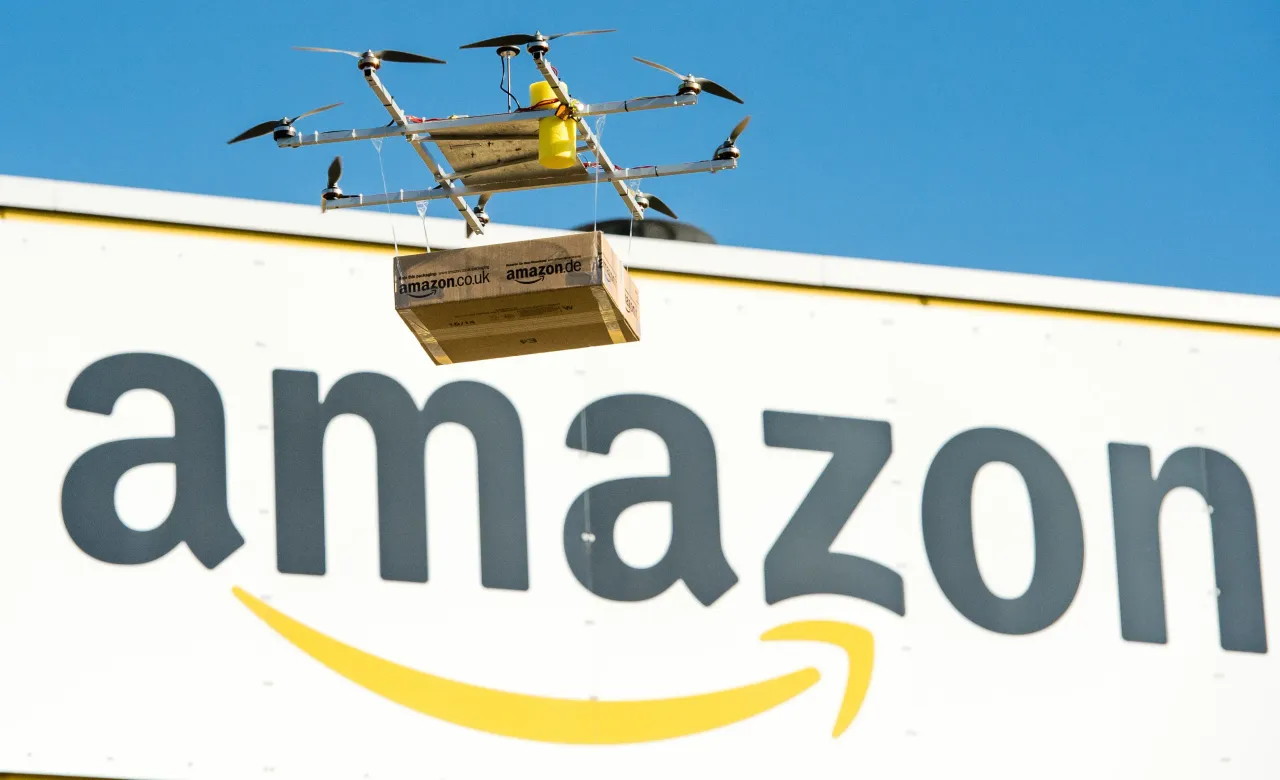
Amazon Acquires Swiss Robotics Startup Rivr to Enhance Logistics
- Acquisition Context: Amazon has acquired Swiss startup Rivr, valued at $110 million, to enhance logistics efficiency and reduce costs, reflecting its ongoing commitment to investing in automation technologies.
- Technological Innovation: Rivr's four-legged and wheeled robots can navigate streets and stairs, utilizing their own AI models and data for training, thereby improving last-mile delivery efficiency and enabling human drivers to increase deliveries per trip.
- Market Reaction: Despite the acquisition news, AMZN stock has climbed about 6.7% over the past year, yet retail sentiment on Stocktwits remains in the 'extremely bearish' territory, indicating concerns about future performance.
- Automation Strategy: This acquisition will further advance Amazon's automation efforts in its logistics network, where over a million robots have already been deployed, aiming to enhance safety and efficiency in delivery services through robotics integration.
See More

Rivian Secures $1.25 Billion Partnership with Uber

- Capital Injection: Rivian secures up to $1.25 billion from Uber, with an initial $300 million already committed, providing crucial funding for its autonomous fleet development, although contingent on meeting specific performance milestones.
- Market Expansion Plans: Uber aims to launch initial commercial deployments of Rivian R2 robotaxis in San Francisco and Miami by 2028, with plans to expand to 25 cities across the U.S., Canada, and Europe by 2031, significantly enhancing Rivian's market reach.
- Accelerated Technology Development: This partnership will expedite the rollout of Rivian's third-generation autonomy platform, which integrates in-house chip technology and a multi-modal sensor system to enhance its AI computing performance, thereby strengthening its competitive position in the EV market.
- Risks and Challenges: Despite the cash injection, Rivian faces substantial capital requirements and negative cash flow, reporting a negative $1.1 billion in free cash flow for Q4 2022, highlighting the survival pressures in the EV market, necessitating cautious evaluation of its long-term profitability.
See More

Emerging Neocloud Stock Nebius Leads AI Infrastructure Investment


- Outstanding Market Performance: Nebius stock has surged 57% in 2026, reflecting strong market demand and investor confidence, and is expected to continue benefiting from the growth in AI infrastructure investments.
- Key Partnership Agreement: Microsoft signed a five-year deal worth up to $19.4 billion with Nebius, securing access to GPU infrastructure from its New Jersey data center, further solidifying Nebius's critical position in the AI sector.
- Expanded Collaboration: Nebius has entered into a new agreement with Meta valued at up to $27 billion, providing dedicated capacity across multiple locations, indicating its leadership and trust in the AI services market.
- Industry Spending Trends: Major tech companies are projected to spend $690 billion on capital expenditures in 2026, with most allocated to AI infrastructure, positioning Nebius as a key service provider to benefit from this trend and drive future growth.
See More

Anthropic: A Standout Innovator in AI


- Significant User Growth: Anthropic's Claude language model boasts 19 million monthly active users on the desktop version compared to 7 million on mobile, indicating rapid adoption among enterprise clients and enhancing the company's market position.
- Revenue Surge: As of now, Anthropic's annual recurring revenue (ARR) has skyrocketed to $14 billion, a remarkable increase from $100 million in early 2024 and $1 billion in 2025, reflecting the success of its business model and strong market demand.
- Funding and Valuation: In February, Anthropic closed a $30 billion Series G funding round, valuing the company at $380 billion, surpassing several well-known firms like Coca-Cola and AMD, showcasing strong investor confidence in its future potential.
- Diverse Investment Channels: While Anthropic is a private company, making direct stock purchases challenging for ordinary investors, the KraneShares Artificial Intelligence and Technology ETF (AGIX) offers a way to gain indirect exposure to Anthropic, with AGIX outperforming the S&P 500.
See More

Uber Partners with Rivian to Deploy 50,000 Autonomous Vehicles by 2031
- Massive Partnership: Uber and Rivian have announced a partnership to deploy up to 50,000 autonomous vehicles by 2031, with an initial investment of $300 million and further funding tied to Rivian's self-driving milestones, demonstrating Uber's strong commitment to the autonomous vehicle market.
- Financial Boost for Rivian: Rivian is set to receive up to $1.25 billion in funding, which not only provides crucial capital for its upcoming R2 vehicles but also secures Uber as a primary buyer, significantly enhancing Rivian's competitive position in the market.
- Market Expansion Plans: Initial commercial deployments are slated to begin in 2028 in San Francisco and Miami, with a goal to expand to 25 cities across the U.S., Canada, and Europe by 2031, which will greatly increase Rivian's market reach and distribution capabilities.
- Uber's Capital Advantage: By partnering with companies like Rivian, Uber mitigates the capital risks associated with developing autonomous vehicles, while its projected free cash flow of $9.8 billion in 2025 highlights its financial strength and strategic market opportunities in the autonomous transition.
See More
Amazon's Growth Potential Amid Stock Pullback
- Strong Sales Growth: In Q4 2025, Amazon's net sales increased by 12% year-over-year to $213.4 billion, demonstrating that despite market challenges, the company's core business remains robust and is expected to continue driving revenue growth.
- Accelerating Cloud Business: Amazon Web Services (AWS) saw a 24% year-over-year revenue surge in Q4, reaching $35.6 billion, marking the fastest growth rate in 13 quarters, indicating the company's strengthening market leadership in high-demand sectors.
- Surge in Capital Expenditures: Amazon plans to invest approximately $200 billion in capital expenditures over the coming years, primarily focused on AWS; while this strategic investment may suppress free cash flow in the short term, it lays the groundwork for long-term growth.
- Outstanding Operating Cash Flow: Although free cash flow declined to $11.2 billion, Amazon's operating cash flow rose by 20% year-over-year to $139.5 billion, showcasing the company's strong cash generation capabilities in its core operations, supporting its ongoing investment strategy.
See More
Amazon Acquires Swiss Robotics Startup Rivr to Enhance Logistics
- Acquisition Context: Amazon has acquired Swiss startup Rivr, valued at $110 million, to enhance logistics efficiency and reduce costs, reflecting its ongoing commitment to investing in automation technologies.
- Technological Innovation: Rivr's four-legged and wheeled robots can navigate streets and stairs, utilizing their own AI models and data for training, thereby improving last-mile delivery efficiency and enabling human drivers to increase deliveries per trip.
- Market Reaction: Despite the acquisition news, AMZN stock has climbed about 6.7% over the past year, yet retail sentiment on Stocktwits remains in the 'extremely bearish' territory, indicating concerns about future performance.
- Automation Strategy: This acquisition will further advance Amazon's automation efforts in its logistics network, where over a million robots have already been deployed, aiming to enhance safety and efficiency in delivery services through robotics integration.
See More
Rivian Secures $1.25 Billion Partnership with Uber
- Capital Injection: Rivian secures up to $1.25 billion from Uber, with an initial $300 million already committed, providing crucial funding for its autonomous fleet development, although contingent on meeting specific performance milestones.
- Market Expansion Plans: Uber aims to launch initial commercial deployments of Rivian R2 robotaxis in San Francisco and Miami by 2028, with plans to expand to 25 cities across the U.S., Canada, and Europe by 2031, significantly enhancing Rivian's market reach.
- Accelerated Technology Development: This partnership will expedite the rollout of Rivian's third-generation autonomy platform, which integrates in-house chip technology and a multi-modal sensor system to enhance its AI computing performance, thereby strengthening its competitive position in the EV market.
- Risks and Challenges: Despite the cash injection, Rivian faces substantial capital requirements and negative cash flow, reporting a negative $1.1 billion in free cash flow for Q4 2022, highlighting the survival pressures in the EV market, necessitating cautious evaluation of its long-term profitability.
See More
Emerging Neocloud Stock Nebius Leads AI Infrastructure Investment
- Outstanding Market Performance: Nebius stock has surged 57% in 2026, reflecting strong market demand and investor confidence, and is expected to continue benefiting from the growth in AI infrastructure investments.
- Key Partnership Agreement: Microsoft signed a five-year deal worth up to $19.4 billion with Nebius, securing access to GPU infrastructure from its New Jersey data center, further solidifying Nebius's critical position in the AI sector.
- Expanded Collaboration: Nebius has entered into a new agreement with Meta valued at up to $27 billion, providing dedicated capacity across multiple locations, indicating its leadership and trust in the AI services market.
- Industry Spending Trends: Major tech companies are projected to spend $690 billion on capital expenditures in 2026, with most allocated to AI infrastructure, positioning Nebius as a key service provider to benefit from this trend and drive future growth.
See More
Anthropic: A Standout Innovator in AI
- Significant User Growth: Anthropic's Claude language model boasts 19 million monthly active users on the desktop version compared to 7 million on mobile, indicating rapid adoption among enterprise clients and enhancing the company's market position.
- Revenue Surge: As of now, Anthropic's annual recurring revenue (ARR) has skyrocketed to $14 billion, a remarkable increase from $100 million in early 2024 and $1 billion in 2025, reflecting the success of its business model and strong market demand.
- Funding and Valuation: In February, Anthropic closed a $30 billion Series G funding round, valuing the company at $380 billion, surpassing several well-known firms like Coca-Cola and AMD, showcasing strong investor confidence in its future potential.
- Diverse Investment Channels: While Anthropic is a private company, making direct stock purchases challenging for ordinary investors, the KraneShares Artificial Intelligence and Technology ETF (AGIX) offers a way to gain indirect exposure to Anthropic, with AGIX outperforming the S&P 500.
See More
Uber Partners with Rivian to Deploy 50,000 Autonomous Vehicles by 2031
- Massive Partnership: Uber and Rivian have announced a partnership to deploy up to 50,000 autonomous vehicles by 2031, with an initial investment of $300 million and further funding tied to Rivian's self-driving milestones, demonstrating Uber's strong commitment to the autonomous vehicle market.
- Financial Boost for Rivian: Rivian is set to receive up to $1.25 billion in funding, which not only provides crucial capital for its upcoming R2 vehicles but also secures Uber as a primary buyer, significantly enhancing Rivian's competitive position in the market.
- Market Expansion Plans: Initial commercial deployments are slated to begin in 2028 in San Francisco and Miami, with a goal to expand to 25 cities across the U.S., Canada, and Europe by 2031, which will greatly increase Rivian's market reach and distribution capabilities.
- Uber's Capital Advantage: By partnering with companies like Rivian, Uber mitigates the capital risks associated with developing autonomous vehicles, while its projected free cash flow of $9.8 billion in 2025 highlights its financial strength and strategic market opportunities in the autonomous transition.
See More