Zscaler Reports Strong Revenue Growth Amid Cybersecurity Sector Challenges

Zscaler Inc. shares rose by 3.66% as the stock reached a 20-day high, reflecting positive investor sentiment despite broader market declines.
The company's revenue for Q1 2026 was reported at $815.8 million, showcasing a strong growth trajectory even amidst a net loss of $34 million. This performance indicates that Zscaler's sales growth is outpacing competitors like Palo Alto Networks, which reported $2.6 billion in revenue but faced concerns regarding AI's impact on customer retention. The contrasting performance highlights Zscaler's potential for expansion in the cybersecurity market.
Investors are optimistic about Zscaler's ability to navigate challenges in the cybersecurity sector, particularly as it continues to grow its revenue despite market headwinds. This positions Zscaler favorably for future growth opportunities.
Trade with 70% Backtested Accuracy
Analyst Views on ZS

About ZS
About the author


Quantum Secure Encryption Corp Launches QPA v2 Platform for Post-Quantum Migration


- Platform Launch: Quantum Secure Encryption Corp officially launched the QPA v2 platform on March 31, 2026, aimed at bridging the operational gap in enterprise post-quantum migration, marking a shift from awareness to execution support, which is expected to significantly enhance compliance and security capabilities for enterprises.
- Market Demand: The global post-quantum cryptography market is projected to reach approximately $17.69 billion by 2034, with annual cybercrime costs expected to hit $10.5 trillion in 2026, indicating a sustained demand for quantum security solutions that QPA v2 is poised to meet.
- Technological Innovation: QPA v2 transforms the traditional manual assessment process into a structured, data-driven workflow with real-time visibility into quantum readiness, risk levels, and migration progress, enabling enterprises to effectively manage complex cryptographic dependencies.
- Client Engagement: The platform is already live with both current and prospective clients, and the company has strengthened its post-quantum infrastructure through key milestones in early 2026, demonstrating active engagement in both public sector and enterprise markets.

Quantum Secure Encryption Corp. Launches QPA v2 Platform for Post-Quantum Migration

- Platform Launch: Quantum Secure Encryption Corp. officially launched its QPA v2 enterprise post-quantum cryptographic migration platform on March 31, 2026, addressing the operational gap in implementing quantum-safe algorithms, thereby helping enterprises prepare for upcoming compliance deadlines.
- Market Demand: The global post-quantum cryptography market is projected to reach approximately $17.69 billion by 2034, with annual cybercrime costs expected to hit $10.5 trillion in 2026, indicating a growing demand for quantum security solutions that QPA v2 is poised to meet.
- Technological Innovation: QPA v2 transforms the traditional manual assessment process by introducing a PQC Planning Wizard, AI-enhanced assessment modules, and integrated inventory analysis, enabling enterprises to monitor quantum readiness and migration progress in real-time, thus enhancing cryptographic governance in complex environments.
- Client Engagement: The platform is already live with several current and prospective clients, marking a shift from awareness-building to execution support, further solidifying its influence in the public sector and enterprise markets, particularly through early pilot projects in government information systems.
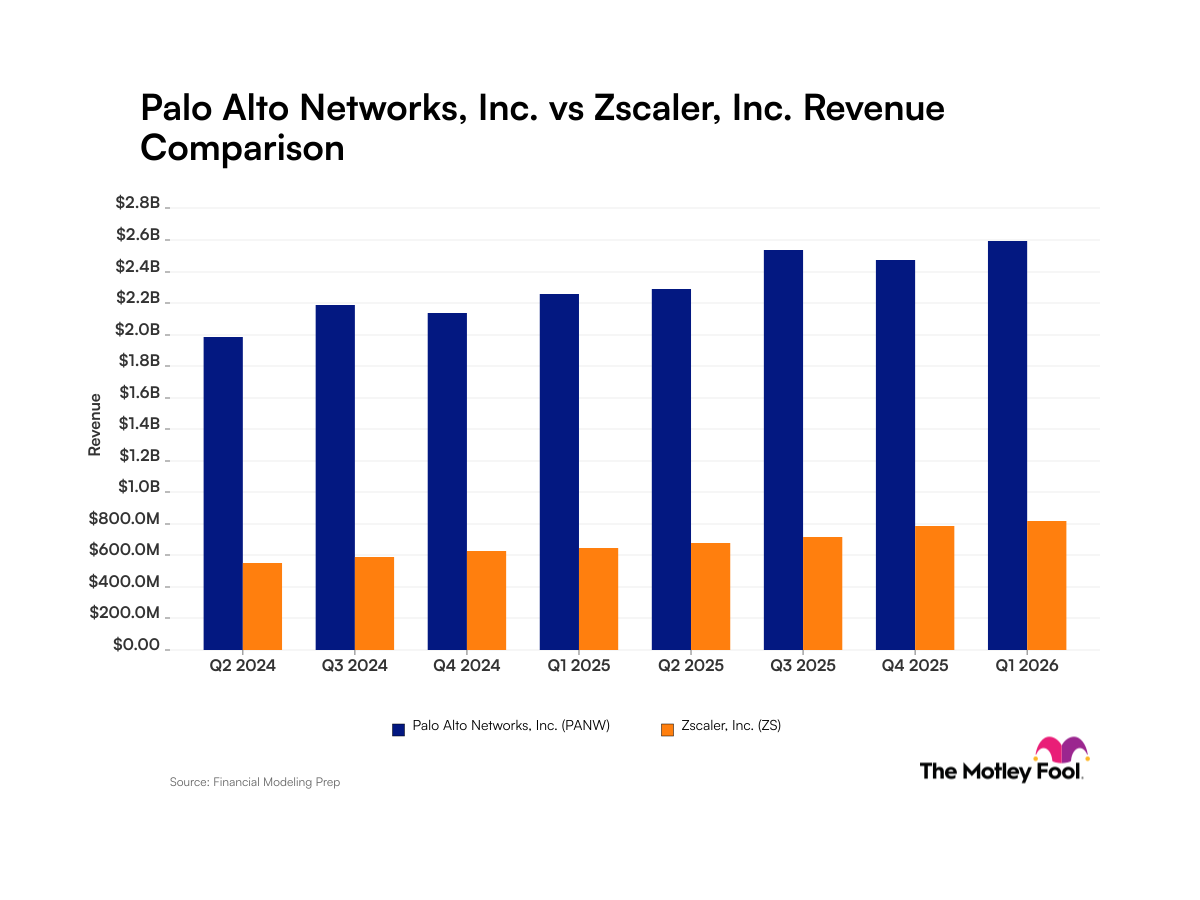
Palo Alto Networks Shows Steady Revenue Growth
- Significant Revenue Growth: Palo Alto Networks reported $2.6 billion in revenue for Q1 2026, reflecting a year-over-year growth of approximately 17%, underscoring its strong demand and leadership in the cybersecurity sector.
- Acquisition Impact: The completion of a $25 billion acquisition of CyberArk Software not only enhances its product portfolio but also potentially increases future market share and competitive strength.
- Zscaler Revenue Dynamics: Zscaler achieved $815.8 million in revenue for Q1 2026, despite a net loss of $34 million, indicating its rapid sales growth outpaces that of Palo Alto Networks, showcasing its expansion potential.
- Market Reaction and AI Influence: Concerns over AI potentially affecting customer retention led to a sell-off in the cybersecurity sector, yet both companies successfully integrated AI into their solutions, demonstrating continued strong market demand for their products.

U.S. Stocks Rise, Nasdaq Hits Record High


- Nasdaq Hits Record High: The Nasdaq 100 index surged 1.32% to reach a new record high, primarily driven by chipmakers and AI infrastructure stocks, indicating strong market confidence in technology stocks that may attract further investor interest in the tech sector.
- Strong Employment Data: U.S. nonfarm payrolls rose by 115,000 in April, exceeding expectations of 65,000, while March figures were revised up to 185,000, demonstrating resilience in the labor market that could lead the Fed to maintain interest rates in upcoming policy meetings.
- Corporate Earnings Support Market: So far, 84% of the 425 S&P 500 companies have beaten earnings estimates, with Q1 earnings projected to climb 12% year-over-year, providing robust support for the stock market and reflecting the potential for economic recovery.
- Geopolitical Impact on Oil Prices: Iran's seizure of an oil tanker in the Strait of Hormuz has led to a slight increase in WTI crude oil prices, heightening concerns over future oil price volatility and potentially affecting the stability of global energy supply chains.

US Stocks Close Lower Amid Cautious Market Sentiment


- Market Weakness: On Thursday, the S&P 500 Index fell by 0.38%, the Dow Jones Industrial Average dropped by 0.63%, and the Nasdaq 100 Index decreased by 0.12%, reflecting investor skepticism regarding a potential US-Iran peace deal, which led to a reversal of early gains and impacted market confidence.
- Economic Data Support: Despite the market decline, initial jobless claims rose by 10,000 to 200,000, below the expected 205,000, indicating resilience in the labor market, while Q1 nonfarm productivity increased by 0.8%, surpassing the 0.6% forecast, providing some support to the market.
- Earnings Report Impact: As of Thursday, 84% of the 425 S&P 500 companies that reported earnings exceeded expectations, with Q1 earnings projected to rise by 12% year-over-year, although growth outside the tech sector is only expected to be around 3%, indicating a divergence that may influence investor allocation strategies.
- Oil Price Recovery: WTI crude oil prices rebounded after a 4% decline on Thursday, as the market focused on the potential resumption of US military operations to ensure safe passage through the Strait of Hormuz, which is expected to have ongoing implications for global oil prices and related stocks.

U.S. Stock Market Retreats as Oil Prices Surge
- Market Retreat: The S&P 500 Index fell by 0.40%, the Dow Jones Industrial Average by 0.51%, and the Nasdaq 100 by 0.28%, indicating a retreat in market sentiment as rising oil prices weigh on investor confidence and raise concerns about future economic prospects.
- Strong Employment Data: Initial jobless claims in the U.S. rose by 10,000 to 200,000, indicating a stronger labor market than the expected 205,000, while continuing claims unexpectedly fell by 10,000 to a 2.25-year low of 1.766 million, showcasing economic resilience.
- Productivity and Costs: U.S. Q1 nonfarm productivity increased by 0.8%, surpassing expectations of 0.6%, while unit labor costs rose by 2.3%, below the anticipated 2.5%, which may influence future inflation expectations and Fed policy decisions.
- Fed Policy Outlook: Boston Fed President indicated that interest rates should remain at “mildly restrictive” levels, suggesting that if inflation trends worsen significantly, a reassessment of policy would be necessary, with markets pricing in only a 6% chance of a rate cut at the next FOMC meeting.
Quantum Secure Encryption Corp Launches QPA v2 Platform for Post-Quantum Migration
- Platform Launch: Quantum Secure Encryption Corp officially launched the QPA v2 platform on March 31, 2026, aimed at bridging the operational gap in enterprise post-quantum migration, marking a shift from awareness to execution support, which is expected to significantly enhance compliance and security capabilities for enterprises.
- Market Demand: The global post-quantum cryptography market is projected to reach approximately $17.69 billion by 2034, with annual cybercrime costs expected to hit $10.5 trillion in 2026, indicating a sustained demand for quantum security solutions that QPA v2 is poised to meet.
- Technological Innovation: QPA v2 transforms the traditional manual assessment process into a structured, data-driven workflow with real-time visibility into quantum readiness, risk levels, and migration progress, enabling enterprises to effectively manage complex cryptographic dependencies.
- Client Engagement: The platform is already live with both current and prospective clients, and the company has strengthened its post-quantum infrastructure through key milestones in early 2026, demonstrating active engagement in both public sector and enterprise markets.
Quantum Secure Encryption Corp. Launches QPA v2 Platform for Post-Quantum Migration
- Platform Launch: Quantum Secure Encryption Corp. officially launched its QPA v2 enterprise post-quantum cryptographic migration platform on March 31, 2026, addressing the operational gap in implementing quantum-safe algorithms, thereby helping enterprises prepare for upcoming compliance deadlines.
- Market Demand: The global post-quantum cryptography market is projected to reach approximately $17.69 billion by 2034, with annual cybercrime costs expected to hit $10.5 trillion in 2026, indicating a growing demand for quantum security solutions that QPA v2 is poised to meet.
- Technological Innovation: QPA v2 transforms the traditional manual assessment process by introducing a PQC Planning Wizard, AI-enhanced assessment modules, and integrated inventory analysis, enabling enterprises to monitor quantum readiness and migration progress in real-time, thus enhancing cryptographic governance in complex environments.
- Client Engagement: The platform is already live with several current and prospective clients, marking a shift from awareness-building to execution support, further solidifying its influence in the public sector and enterprise markets, particularly through early pilot projects in government information systems.
Palo Alto Networks Shows Steady Revenue Growth
- Significant Revenue Growth: Palo Alto Networks reported $2.6 billion in revenue for Q1 2026, reflecting a year-over-year growth of approximately 17%, underscoring its strong demand and leadership in the cybersecurity sector.
- Acquisition Impact: The completion of a $25 billion acquisition of CyberArk Software not only enhances its product portfolio but also potentially increases future market share and competitive strength.
- Zscaler Revenue Dynamics: Zscaler achieved $815.8 million in revenue for Q1 2026, despite a net loss of $34 million, indicating its rapid sales growth outpaces that of Palo Alto Networks, showcasing its expansion potential.
- Market Reaction and AI Influence: Concerns over AI potentially affecting customer retention led to a sell-off in the cybersecurity sector, yet both companies successfully integrated AI into their solutions, demonstrating continued strong market demand for their products.
U.S. Stocks Rise, Nasdaq Hits Record High
- Nasdaq Hits Record High: The Nasdaq 100 index surged 1.32% to reach a new record high, primarily driven by chipmakers and AI infrastructure stocks, indicating strong market confidence in technology stocks that may attract further investor interest in the tech sector.
- Strong Employment Data: U.S. nonfarm payrolls rose by 115,000 in April, exceeding expectations of 65,000, while March figures were revised up to 185,000, demonstrating resilience in the labor market that could lead the Fed to maintain interest rates in upcoming policy meetings.
- Corporate Earnings Support Market: So far, 84% of the 425 S&P 500 companies have beaten earnings estimates, with Q1 earnings projected to climb 12% year-over-year, providing robust support for the stock market and reflecting the potential for economic recovery.
- Geopolitical Impact on Oil Prices: Iran's seizure of an oil tanker in the Strait of Hormuz has led to a slight increase in WTI crude oil prices, heightening concerns over future oil price volatility and potentially affecting the stability of global energy supply chains.
US Stocks Close Lower Amid Cautious Market Sentiment
- Market Weakness: On Thursday, the S&P 500 Index fell by 0.38%, the Dow Jones Industrial Average dropped by 0.63%, and the Nasdaq 100 Index decreased by 0.12%, reflecting investor skepticism regarding a potential US-Iran peace deal, which led to a reversal of early gains and impacted market confidence.
- Economic Data Support: Despite the market decline, initial jobless claims rose by 10,000 to 200,000, below the expected 205,000, indicating resilience in the labor market, while Q1 nonfarm productivity increased by 0.8%, surpassing the 0.6% forecast, providing some support to the market.
- Earnings Report Impact: As of Thursday, 84% of the 425 S&P 500 companies that reported earnings exceeded expectations, with Q1 earnings projected to rise by 12% year-over-year, although growth outside the tech sector is only expected to be around 3%, indicating a divergence that may influence investor allocation strategies.
- Oil Price Recovery: WTI crude oil prices rebounded after a 4% decline on Thursday, as the market focused on the potential resumption of US military operations to ensure safe passage through the Strait of Hormuz, which is expected to have ongoing implications for global oil prices and related stocks.
U.S. Stock Market Retreats as Oil Prices Surge
- Market Retreat: The S&P 500 Index fell by 0.40%, the Dow Jones Industrial Average by 0.51%, and the Nasdaq 100 by 0.28%, indicating a retreat in market sentiment as rising oil prices weigh on investor confidence and raise concerns about future economic prospects.
- Strong Employment Data: Initial jobless claims in the U.S. rose by 10,000 to 200,000, indicating a stronger labor market than the expected 205,000, while continuing claims unexpectedly fell by 10,000 to a 2.25-year low of 1.766 million, showcasing economic resilience.
- Productivity and Costs: U.S. Q1 nonfarm productivity increased by 0.8%, surpassing expectations of 0.6%, while unit labor costs rose by 2.3%, below the anticipated 2.5%, which may influence future inflation expectations and Fed policy decisions.
- Fed Policy Outlook: Boston Fed President indicated that interest rates should remain at “mildly restrictive” levels, suggesting that if inflation trends worsen significantly, a reassessment of policy would be necessary, with markets pricing in only a 6% chance of a rate cut at the next FOMC meeting.