Rivian Begins Production of R2 Electric Vehicle Amid Tornado Damage

Rivian Automotive Inc's stock fell 5.02% as it crossed below the 5-day SMA, reflecting broader market weakness with the Nasdaq-100 down 0.76% and the S&P 500 down 0.69%.
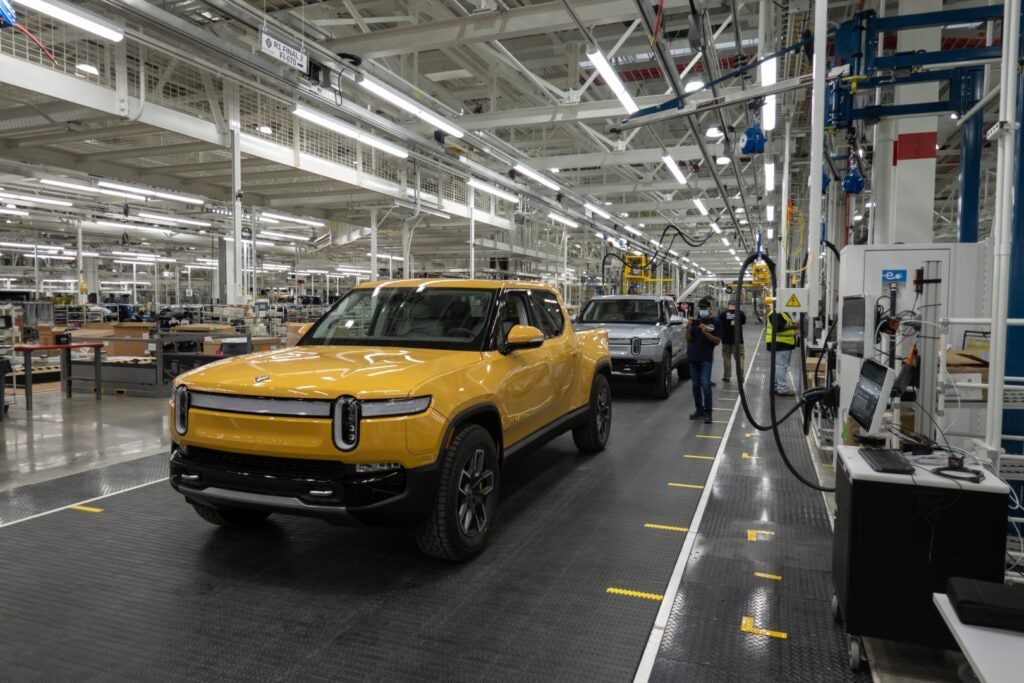
The company has officially commenced production of its R2 electric vehicle at its Normal, Illinois plant, marking a crucial milestone ahead of customer deliveries. Despite the recent tornado damage to a part of the factory, operations are expected to resume soon. Rivian aims to enhance market competitiveness with the R2, which features a 330-mile range and advanced driver-assistance systems, while also planning to introduce a lower-priced model in the future.
This production launch is a significant step for Rivian as it seeks to fulfill its promises of cost reduction and future profitability. The company is optimistic about attracting more buyers with the R2 model, which is expected to drive sales and improve margins as production ramps up.
Trade with 70% Backtested Accuracy
Analyst Views on RIVN

About RIVN
About the author

Rivian R2 SUV Deliveries Set to Begin This Spring
- R2 SUV Delivery Plans: Rivian is set to begin deliveries of its R2 SUV this spring, with the entry-level variant expected to start at around $45,000, aiming to compete against Tesla's Model Y and expand its market share.
- Production and Capacity Expansion: Production of the R2 has commenced at Rivian's Illinois factory, with plans to deliver 22,000 to 23,000 units this year, while the upcoming Georgia facility is expected to enhance capacity to meet market demand.
- Financial Impact and Market Reaction: Although initial production of the R2 will pressure margins, it is projected that by 2027, costs will drop to less than half of the R1 model, leading to a bullish sentiment shift around RIVN stock.
- Natural Disaster Impact: A recent tornado damaged parts of Rivian's Illinois factory, affecting areas used for parts storage and logistics, yet the company remains on track to launch R2 deliveries as planned.
Tesla's In-Car AI Assistant Grok: Usage and Risks

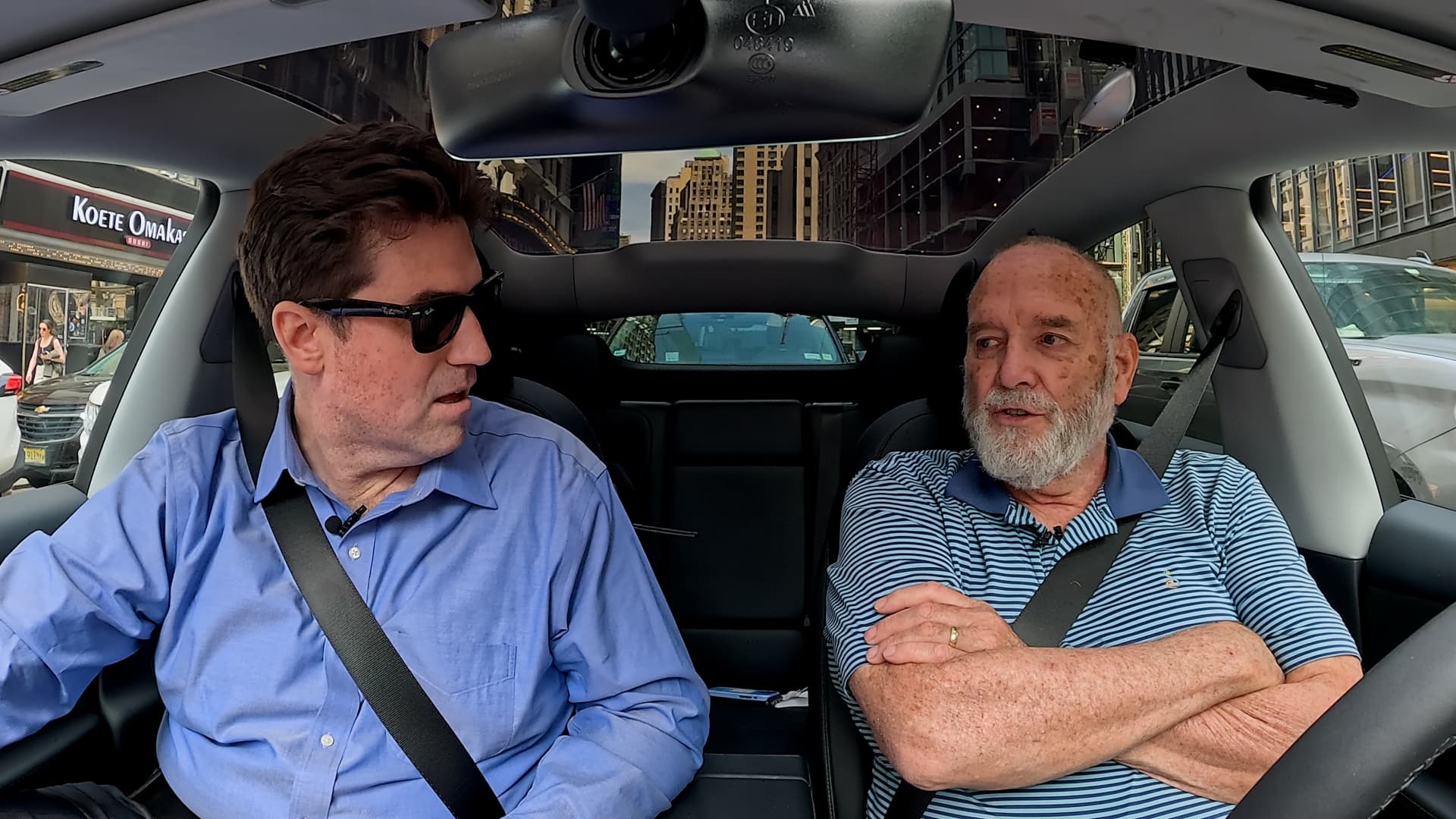
- Usage of AI Assistant Grok: Tesla owner Mike Nelson has been using xAI's Grok chatbot in New York City, finding it entertaining and informative during drives, but he also notes it increases distraction risks, particularly in complex urban settings.
- Risks of FSD System: Tesla's Full Self-Driving (FSD) system, priced at $99 per month, offers partial automation but requires driver attention; Nelson highlights that using Grok may exacerbate these risks while driving.
- Safety Investigations: The National Highway Traffic Safety Administration has initiated multiple investigations into Tesla's FSD system due to several accidents, including a fatal crash in 2023, underscoring the serious implications of distracted driving.
- Technical Limitations and Controversies: Grok sometimes provides incorrect answers to user queries, and its NSFW mode has raised concerns among parents; Tesla has not commented on these issues, reflecting the tension between technological innovation and user safety.
Tesla Owner's Experience with AI Assistant Grok Raises Concerns
- Attractive AI Assistant: Tesla owner Mike Nelson finds Grok nearly irresistible during drives, highlighting the potential of AI assistants to enhance driving experiences, despite his background representing Tesla owners in over 10 lawsuits, raising concerns about safety.
- Driving Safety Risks: While using Tesla's Full Self-Driving system, Nelson notes that Grok may exacerbate distraction risks, particularly in chaotic environments like New York City, potentially leading to decreased attention to surroundings and increased accident risks.
- Functionality Limitations: Although Grok offers various features, Nelson experiences inconsistencies in its responses regarding seat and climate control adjustments, indicating limitations in the AI assistant's practical application that could undermine user trust.
- Content Regulation Issues: Grok's NSFW mode has raised concerns among parents, especially regarding minors accessing inappropriate content, with Tesla yet to respond, highlighting the tension between technological advancement and user safety.
Stellantis to Focus Investment on Core Brands
- Strategic Restructuring: Stellantis plans to focus its investment on core brands like Jeep, Ram, Peugeot, and Fiat in a strategic plan to be announced in May, with a 'material increase' in funding aimed at enhancing competitiveness in the U.S. and European markets.
- Brand Consolidation Strategy: The company will regionalize lower-volume brands, leveraging technology from core brands to develop new models, thereby increasing market share and reducing the dilution of internal investments, which enhances overall operational efficiency.
- Market Share Challenges: Stellantis faces intense competition from Chinese automakers, particularly in Europe and emerging markets, and recently booked a €22.2 billion charge due to adjustments in its electric vehicle plans, highlighting the pressures it faces during its transformation.
- Investor Confidence Fluctuations: With the company's valuation dropping to around €21 billion, close to the market value of EV startup Rivian, some investors have suggested shutting down overlapping brands to save costs; however, new CEO Filosa believes these brands still hold potential in specific markets.

Market Update: Analysis of Key Company Performances

- Critical Metals Insight: Critical Metals suggests that to invest in the sector, one must buy MP Materials, indicating a reliance on industry leaders that could influence investor choices and market dynamics.
- SoundHound AI Exit Strategy: SoundHound AI has stated it will not participate in certain businesses, reflecting a reevaluation of its future strategy, which may raise investor concerns about its long-term growth potential.
- Dave's Product Shift: Dave plans to sell its fintech business to focus on energy bars, indicating a significant shift in market positioning that could affect its brand image and market share.
- Rivian's Quarterly Performance: Rivian Automotive expressed surprise at its last quarter's performance, believing the company is on track for profitability, which could boost investor confidence and drive stock price increases.
Rivian Automotive Stock Investment Thesis Overview
- Market Re-rating Opportunity: Rivian's stock has plummeted from post-IPO highs of $179 to around $20, indicating a potential re-rating opportunity as the company shifts from hype-driven expectations to execution, which may attract renewed investor interest.
- Growth Driven by New Platforms: The upcoming R2 and R3 platforms, supported by high-pressure die casting and structural battery design, aim to significantly expand the addressable market while enhancing production efficiencies akin to Tesla's Model Y inflection point, potentially driving sales growth.
- Strategic Partnerships Enhance Execution: The $5.8 billion collaboration with Volkswagen and over 100,000 Amazon electric delivery van orders provide stable fleet demand, mitigating execution risks while strengthening the company's financial foundation.
- Transition to Software-Defined Mobility: Rivian is evolving into a software-defined mobility platform through its Autonomy+ subscriptions and proprietary RAP1 AI chip, reducing reliance on NVIDIA and potentially achieving software-like high margins in the future, further enhancing profitability.
Rivian R2 SUV Deliveries Set to Begin This Spring
- R2 SUV Delivery Plans: Rivian is set to begin deliveries of its R2 SUV this spring, with the entry-level variant expected to start at around $45,000, aiming to compete against Tesla's Model Y and expand its market share.
- Production and Capacity Expansion: Production of the R2 has commenced at Rivian's Illinois factory, with plans to deliver 22,000 to 23,000 units this year, while the upcoming Georgia facility is expected to enhance capacity to meet market demand.
- Financial Impact and Market Reaction: Although initial production of the R2 will pressure margins, it is projected that by 2027, costs will drop to less than half of the R1 model, leading to a bullish sentiment shift around RIVN stock.
- Natural Disaster Impact: A recent tornado damaged parts of Rivian's Illinois factory, affecting areas used for parts storage and logistics, yet the company remains on track to launch R2 deliveries as planned.
Tesla's In-Car AI Assistant Grok: Usage and Risks
- Usage of AI Assistant Grok: Tesla owner Mike Nelson has been using xAI's Grok chatbot in New York City, finding it entertaining and informative during drives, but he also notes it increases distraction risks, particularly in complex urban settings.
- Risks of FSD System: Tesla's Full Self-Driving (FSD) system, priced at $99 per month, offers partial automation but requires driver attention; Nelson highlights that using Grok may exacerbate these risks while driving.
- Safety Investigations: The National Highway Traffic Safety Administration has initiated multiple investigations into Tesla's FSD system due to several accidents, including a fatal crash in 2023, underscoring the serious implications of distracted driving.
- Technical Limitations and Controversies: Grok sometimes provides incorrect answers to user queries, and its NSFW mode has raised concerns among parents; Tesla has not commented on these issues, reflecting the tension between technological innovation and user safety.
Tesla Owner's Experience with AI Assistant Grok Raises Concerns
- Attractive AI Assistant: Tesla owner Mike Nelson finds Grok nearly irresistible during drives, highlighting the potential of AI assistants to enhance driving experiences, despite his background representing Tesla owners in over 10 lawsuits, raising concerns about safety.
- Driving Safety Risks: While using Tesla's Full Self-Driving system, Nelson notes that Grok may exacerbate distraction risks, particularly in chaotic environments like New York City, potentially leading to decreased attention to surroundings and increased accident risks.
- Functionality Limitations: Although Grok offers various features, Nelson experiences inconsistencies in its responses regarding seat and climate control adjustments, indicating limitations in the AI assistant's practical application that could undermine user trust.
- Content Regulation Issues: Grok's NSFW mode has raised concerns among parents, especially regarding minors accessing inappropriate content, with Tesla yet to respond, highlighting the tension between technological advancement and user safety.
Stellantis to Focus Investment on Core Brands
- Strategic Restructuring: Stellantis plans to focus its investment on core brands like Jeep, Ram, Peugeot, and Fiat in a strategic plan to be announced in May, with a 'material increase' in funding aimed at enhancing competitiveness in the U.S. and European markets.
- Brand Consolidation Strategy: The company will regionalize lower-volume brands, leveraging technology from core brands to develop new models, thereby increasing market share and reducing the dilution of internal investments, which enhances overall operational efficiency.
- Market Share Challenges: Stellantis faces intense competition from Chinese automakers, particularly in Europe and emerging markets, and recently booked a €22.2 billion charge due to adjustments in its electric vehicle plans, highlighting the pressures it faces during its transformation.
- Investor Confidence Fluctuations: With the company's valuation dropping to around €21 billion, close to the market value of EV startup Rivian, some investors have suggested shutting down overlapping brands to save costs; however, new CEO Filosa believes these brands still hold potential in specific markets.
Market Update: Analysis of Key Company Performances
- Critical Metals Insight: Critical Metals suggests that to invest in the sector, one must buy MP Materials, indicating a reliance on industry leaders that could influence investor choices and market dynamics.
- SoundHound AI Exit Strategy: SoundHound AI has stated it will not participate in certain businesses, reflecting a reevaluation of its future strategy, which may raise investor concerns about its long-term growth potential.
- Dave's Product Shift: Dave plans to sell its fintech business to focus on energy bars, indicating a significant shift in market positioning that could affect its brand image and market share.
- Rivian's Quarterly Performance: Rivian Automotive expressed surprise at its last quarter's performance, believing the company is on track for profitability, which could boost investor confidence and drive stock price increases.
Rivian Automotive Stock Investment Thesis Overview
- Market Re-rating Opportunity: Rivian's stock has plummeted from post-IPO highs of $179 to around $20, indicating a potential re-rating opportunity as the company shifts from hype-driven expectations to execution, which may attract renewed investor interest.
- Growth Driven by New Platforms: The upcoming R2 and R3 platforms, supported by high-pressure die casting and structural battery design, aim to significantly expand the addressable market while enhancing production efficiencies akin to Tesla's Model Y inflection point, potentially driving sales growth.
- Strategic Partnerships Enhance Execution: The $5.8 billion collaboration with Volkswagen and over 100,000 Amazon electric delivery van orders provide stable fleet demand, mitigating execution risks while strengthening the company's financial foundation.
- Transition to Software-Defined Mobility: Rivian is evolving into a software-defined mobility platform through its Autonomy+ subscriptions and proprietary RAP1 AI chip, reducing reliance on NVIDIA and potentially achieving software-like high margins in the future, further enhancing profitability.