Lucid Group Raises $1.05 Billion Through Public Offering and Investments
Written by Emily J. Thompson, Senior Investment Analyst
Updated: Apr 14 2026
0mins
Should l Buy LCID?
Source: PRnewswire
Lucid Group's stock fell 3.26% and hit a 52-week low amid broader market weakness, with the Nasdaq-100 down 0.34% and the S&P 500 down 0.16%.
The company announced a successful public offering of $300 million, expected to close soon, and secured significant investments from Uber and Ayar Third Investment, totaling approximately $1.05 billion. This funding will enhance Lucid's liquidity and support its growth initiatives in the electric vehicle market, reflecting strong confidence from investors.
The substantial capital raised positions Lucid favorably for future expansion, particularly in the competitive EV sector, while the partnership with Uber for robotaxi services further solidifies its market strategy.
Trade with 70% Backtested Accuracy
Stop guessing "Should I Buy LCID?" and start using high-conviction signals backed by rigorous historical data.
Sign up today to access powerful investing tools and make smarter, data-driven decisions.
Analyst Views on LCID
Wall Street analysts forecast LCID stock price to rise
6 Analyst Rating
1 Buy
4 Hold
1 Sell
Hold
Current: 6.030

Low
10.00
Averages
17.00
High
30.00
Current: 6.030
Low
10.00
Averages
17.00
High
30.00
About LCID
Lucid Group, Inc. is a technology company, which designs, engineers, and manufactures electric vehicles (EVs), EV powertrains, and battery systems in-house using its equipment and factories. It sells vehicles directly to consumers through its retail sales network and through online channels. Its vehicles include Lucid Air and Lucid Gravity. Lucid Air is an advanced sedan, featuring powertrain technology. It offers 420 miles of Environmental Protection Agency (EPA)-estimated range, with an 84-kWh battery pack. The Lucid Air Sapphire is the highest-performance version of the Lucid Air, boasting 1,234 horsepower from three motors, 427 miles of an EPA-estimated range. The Lucid Gravity provides the interior space and practicality of a full-size sport utility vehicle (SUV) within the exterior footprint of a mid-size SUV. It provides space for up to seven adults. It has engineered the Lucid Gravity Grand Touring to deliver up to 450 miles of EPA-estimated range.
About the author

Emily J. Thompson
Emily J. Thompson, a Chartered Financial Analyst (CFA) with 12 years in investment research, graduated with honors from the Wharton School. Specializing in industrial and technology stocks, she provides in-depth analysis for Intellectia’s earnings and market brief reports.

Analysis of Revenue Trends for Lucid and Tesla
- Lucid's Revenue Struggles: Lucid reported a net income margin of -364% for Q1 2026, indicating significant challenges in the EV market, although its new Gravity SUV and partnership with Uber may drive sales growth, the current financial outlook remains bleak.
- Tesla's Stable Revenue: Tesla achieved a net income margin of 2% in Q1 2026, with its ongoing revenue scale and stable cash flow allowing investments in self-driving technology and energy storage products, reinforcing its leadership position in the EV sector.
- Market Demand Shifts: The overall slowdown in EV sales growth has posed challenges for Lucid, and despite cash support from its major shareholder, the Saudi Public Investment Fund, its long-term viability is under serious threat.
- Investor Focus: Tesla's technological advantages and market scale provide a competitive edge, while Lucid must significantly boost sales to compete; investors should closely monitor both companies' future technological advancements and market performance.
See More

Intensifying Competition in EV Self-Driving Technology


- Massive Market Potential: The electric vehicle sector is chasing a $10 trillion autonomous driving opportunity, and despite stagnant sales growth for Tesla, Lucid, and Rivian, there remains potential for stock price surges through technological innovation.
- Investment in Technology: Rivian CEO RJ Scaringe emphasized the company's commitment to autonomy, having invested hundreds of millions to build an in-house software platform, showcasing a strategic decision for EV manufacturers to control their technology.
- Tesla's Market Dominance: With a market cap of $1.3 trillion, Tesla is positioned to dominate the self-driving future, leveraging its unparalleled access to capital and a multi-billion-dollar stake in Elon Musk's AI startup xAI, making it the go-to choice for investors.
- Rivian's Growth Potential: Rivian's recent launch of the R2 SUV, which secured an order for 50,000 units from Uber, validates its technology in the market, although Lucid's smaller scale limits its competitiveness in the autonomous driving sector.
See More

Future Opportunities in the Electric Vehicle Market
- Massive Market Potential: The electric vehicle (EV) sector is pursuing a $10 trillion market opportunity, and despite sales challenges faced by Tesla, Rivian, and Lucid Group, stock prices are expected to rise significantly in the coming years.
- Investment in Autonomous Technology: Rivian CEO RJ Scaringe emphasized the company's commitment to autonomous driving technology, having invested hundreds of millions to develop an in-house software platform, ensuring dominance in the upcoming transportation technology shift.
- Tesla's Market Leadership: With a market cap of $1.3 trillion, Tesla is well-positioned for an autonomous future, leveraging its capital access and investment in AI startup xAI, making it the go-to choice for autonomous driving bets.
- Rivian's Order Growth: Rivian's recent launch of the R2 SUV secured an order of 50,000 units from Uber, showcasing its technological strength and likely attracting more robotaxi business orders in the future.
See More
Nuro Secures Key Autonomous Vehicle Testing Permits in California

- Permit Acquisition: Nuro announced on Friday that it has secured a California Public Utilities Commission (CPUC) Drivered Pilot Permit, allowing it to conduct pilot testing of autonomous passenger services in California, marking a significant advancement for its robotaxi service.
- Strategic Partnership: Nuro formed a strategic partnership with Uber and Lucid Group in July 2025 to launch a premium global robotaxi program on the Uber ride-hailing platform, which is expected to enhance competitive positioning in the market.
- Vehicle Deployment Plan: Under the agreement, Uber commits to deploying at least 35,000 Lucid electric vehicles over six years, integrating Nuro's autonomous technology to elevate service luxury and technological sophistication.
- Market Reaction: Lucid Group's (LCID) shares rose 4% following Nuro's permit acquisition, reflecting market optimism regarding the collaboration and future autonomous services, despite LCID's stock having declined over 70% in the past year.
See More

Lucid Motors Stock Plummets 99%, Risks Remain High
- Stock Price Collapse: Lucid Motors' stock has plummeted from a peak of $10,000 in February 2021 to just $120 today, representing a staggering 99% decline that underscores the risks of investing in speculative and unprofitable companies.
- Production Surge: Despite a 149% year-over-year increase in production volume to 5,500 vehicles in Q1, lagging deliveries resulted in only a 20% revenue growth to $282.5 million, significantly below Wall Street's expectation of $440.4 million, highlighting issues with sales capacity.
- Escalating Operating Losses: The operating losses for Q1 surged 37% year-over-year to $1.27 billion, which is alarming given Lucid's market cap of just $2.06 billion; if current trends persist, full-year losses could exceed $5 billion, raising concerns about potential equity dilution.
- Strategic Partnership Hope: The partnership with Uber Technologies, which has involved a $500 million direct investment and plans to purchase up to 35,000 Gravity SUVs, could help alleviate Lucid's excess production capacity, although this will be executed over several years.
See More
Significant Stock Price Movements for Multiple Companies

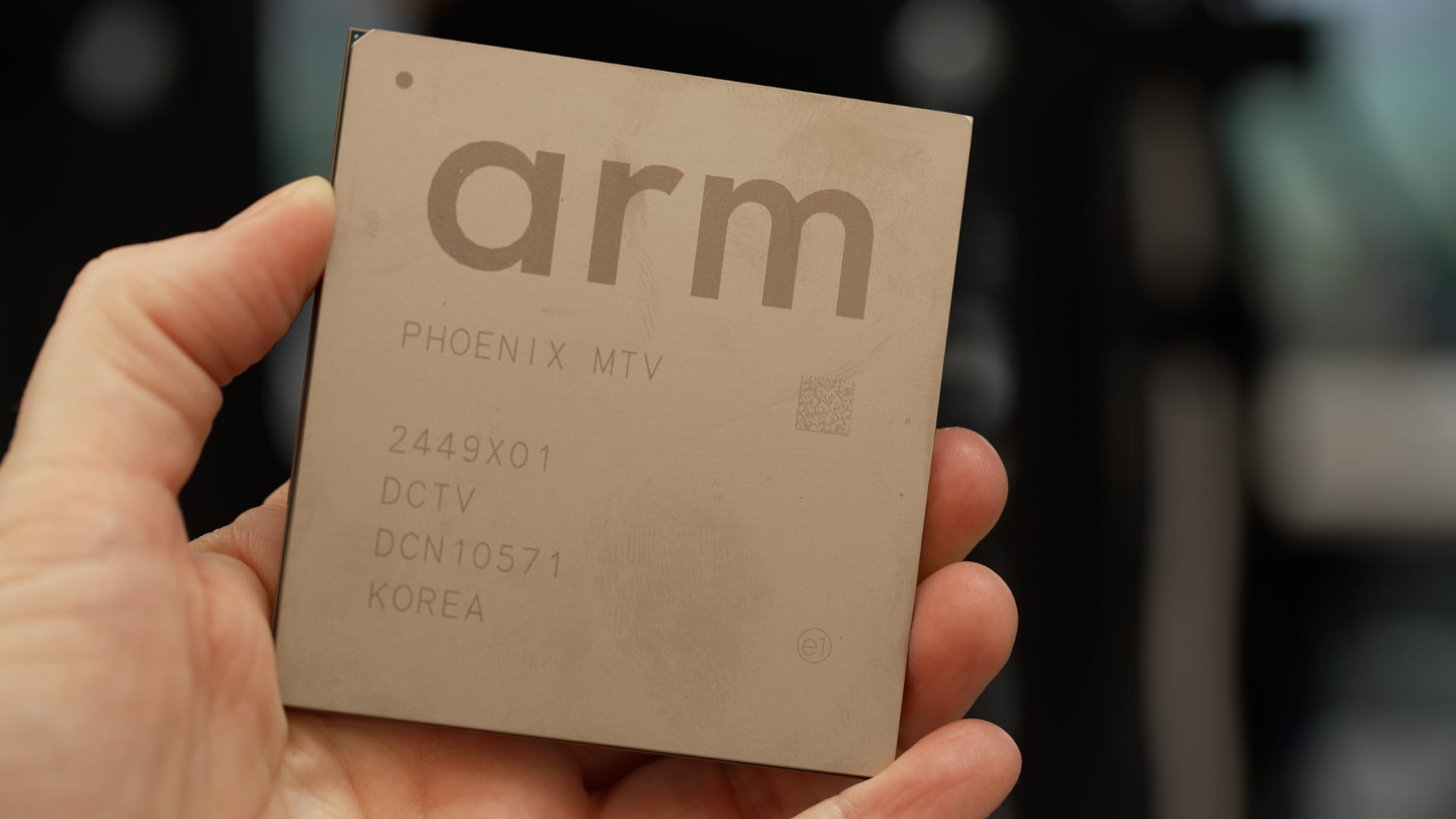
- Arm Holdings Surge: Ahead of its earnings report, Arm Holdings saw a nearly 13% jump on Nasdaq, with UBS analyst raising its 12-month price target from $175 to $245, indicating strong market optimism for its growth potential.
- Healthpeak Properties Strong Performance: The healthcare REIT soared 18% after first-quarter funds from operations and revenue exceeded Wall Street expectations, raising its second-quarter FFO guidance to $1.71 to $1.75, reflecting robust business momentum.
- CDW Stock Decline: CDW shares dropped 19% after reporting disappointing operating income in Q1, with adjusted EPS of $2.28 matching consensus, yet the company reaffirmed its 2026 outlook, raising concerns about future performance.
- Aurora Innovation Partnership: Aurora Innovation's stock rose 9% following a deal to provide driverless technology to Berkshire Hathaway's McLane, which is expected to enhance its competitive edge in the long-haul trucking market.
See More
Analysis of Revenue Trends for Lucid and Tesla
- Lucid's Revenue Struggles: Lucid reported a net income margin of -364% for Q1 2026, indicating significant challenges in the EV market, although its new Gravity SUV and partnership with Uber may drive sales growth, the current financial outlook remains bleak.
- Tesla's Stable Revenue: Tesla achieved a net income margin of 2% in Q1 2026, with its ongoing revenue scale and stable cash flow allowing investments in self-driving technology and energy storage products, reinforcing its leadership position in the EV sector.
- Market Demand Shifts: The overall slowdown in EV sales growth has posed challenges for Lucid, and despite cash support from its major shareholder, the Saudi Public Investment Fund, its long-term viability is under serious threat.
- Investor Focus: Tesla's technological advantages and market scale provide a competitive edge, while Lucid must significantly boost sales to compete; investors should closely monitor both companies' future technological advancements and market performance.
See More
Intensifying Competition in EV Self-Driving Technology
- Massive Market Potential: The electric vehicle sector is chasing a $10 trillion autonomous driving opportunity, and despite stagnant sales growth for Tesla, Lucid, and Rivian, there remains potential for stock price surges through technological innovation.
- Investment in Technology: Rivian CEO RJ Scaringe emphasized the company's commitment to autonomy, having invested hundreds of millions to build an in-house software platform, showcasing a strategic decision for EV manufacturers to control their technology.
- Tesla's Market Dominance: With a market cap of $1.3 trillion, Tesla is positioned to dominate the self-driving future, leveraging its unparalleled access to capital and a multi-billion-dollar stake in Elon Musk's AI startup xAI, making it the go-to choice for investors.
- Rivian's Growth Potential: Rivian's recent launch of the R2 SUV, which secured an order for 50,000 units from Uber, validates its technology in the market, although Lucid's smaller scale limits its competitiveness in the autonomous driving sector.
See More
Future Opportunities in the Electric Vehicle Market
- Massive Market Potential: The electric vehicle (EV) sector is pursuing a $10 trillion market opportunity, and despite sales challenges faced by Tesla, Rivian, and Lucid Group, stock prices are expected to rise significantly in the coming years.
- Investment in Autonomous Technology: Rivian CEO RJ Scaringe emphasized the company's commitment to autonomous driving technology, having invested hundreds of millions to develop an in-house software platform, ensuring dominance in the upcoming transportation technology shift.
- Tesla's Market Leadership: With a market cap of $1.3 trillion, Tesla is well-positioned for an autonomous future, leveraging its capital access and investment in AI startup xAI, making it the go-to choice for autonomous driving bets.
- Rivian's Order Growth: Rivian's recent launch of the R2 SUV secured an order of 50,000 units from Uber, showcasing its technological strength and likely attracting more robotaxi business orders in the future.
See More
Nuro Secures Key Autonomous Vehicle Testing Permits in California
- Permit Acquisition: Nuro announced on Friday that it has secured a California Public Utilities Commission (CPUC) Drivered Pilot Permit, allowing it to conduct pilot testing of autonomous passenger services in California, marking a significant advancement for its robotaxi service.
- Strategic Partnership: Nuro formed a strategic partnership with Uber and Lucid Group in July 2025 to launch a premium global robotaxi program on the Uber ride-hailing platform, which is expected to enhance competitive positioning in the market.
- Vehicle Deployment Plan: Under the agreement, Uber commits to deploying at least 35,000 Lucid electric vehicles over six years, integrating Nuro's autonomous technology to elevate service luxury and technological sophistication.
- Market Reaction: Lucid Group's (LCID) shares rose 4% following Nuro's permit acquisition, reflecting market optimism regarding the collaboration and future autonomous services, despite LCID's stock having declined over 70% in the past year.
See More
Lucid Motors Stock Plummets 99%, Risks Remain High
- Stock Price Collapse: Lucid Motors' stock has plummeted from a peak of $10,000 in February 2021 to just $120 today, representing a staggering 99% decline that underscores the risks of investing in speculative and unprofitable companies.
- Production Surge: Despite a 149% year-over-year increase in production volume to 5,500 vehicles in Q1, lagging deliveries resulted in only a 20% revenue growth to $282.5 million, significantly below Wall Street's expectation of $440.4 million, highlighting issues with sales capacity.
- Escalating Operating Losses: The operating losses for Q1 surged 37% year-over-year to $1.27 billion, which is alarming given Lucid's market cap of just $2.06 billion; if current trends persist, full-year losses could exceed $5 billion, raising concerns about potential equity dilution.
- Strategic Partnership Hope: The partnership with Uber Technologies, which has involved a $500 million direct investment and plans to purchase up to 35,000 Gravity SUVs, could help alleviate Lucid's excess production capacity, although this will be executed over several years.
See More
Significant Stock Price Movements for Multiple Companies
- Arm Holdings Surge: Ahead of its earnings report, Arm Holdings saw a nearly 13% jump on Nasdaq, with UBS analyst raising its 12-month price target from $175 to $245, indicating strong market optimism for its growth potential.
- Healthpeak Properties Strong Performance: The healthcare REIT soared 18% after first-quarter funds from operations and revenue exceeded Wall Street expectations, raising its second-quarter FFO guidance to $1.71 to $1.75, reflecting robust business momentum.
- CDW Stock Decline: CDW shares dropped 19% after reporting disappointing operating income in Q1, with adjusted EPS of $2.28 matching consensus, yet the company reaffirmed its 2026 outlook, raising concerns about future performance.
- Aurora Innovation Partnership: Aurora Innovation's stock rose 9% following a deal to provide driverless technology to Berkshire Hathaway's McLane, which is expected to enhance its competitive edge in the long-haul trucking market.
See More