Intel shares surge amid Apple collaboration news
Written by Emily J. Thompson, Senior Investment Analyst
Updated: Nov 29 2025
0mins

Should l Buy INTC?
Source: TipRanks
Intel Corp shares rose 4.58% in pre-market trading, reaching a 52-week high. This surge follows news that Apple is considering using Intel chips, reflecting strong market confidence in Intel's chip demand and potential recovery in the semiconductor industry. The company's stock has seen a remarkable increase of 114% in April, marking its best month in 55 years on Nasdaq, further supported by strategic partnerships with Google and involvement in Elon Musk's Terafab project.
Trade with 70% Backtested Accuracy
Stop guessing "Should I Buy INTC?" and start using high-conviction signals backed by rigorous historical data.
Sign up today to access powerful investing tools and make smarter, data-driven decisions.
Analyst Views on INTC
Wall Street analysts forecast INTC stock price to fall
29 Analyst Rating
5 Buy
19 Hold
5 Sell
Hold
Current: 120.290

Low
20.00
Averages
39.30
High
52.00
Current: 120.290
Low
20.00
Averages
39.30
High
52.00
About INTC
Intel Corporation is a global designer and manufacturer of semiconductor products. The Company's segments include Intel Products, Intel Foundry, and All Other. Its Intel Products comprise Client Computing Group (CCG) and Data Center and AI (DCAI). CCG delivers platforms and processors that power PCs and edge devices, enabling enhanced performance, connectivity and user experience for consumer and commercial markets with capabilities that also support retail, industrial robotics and AI ecosystems at the edge. DCAI delivers workload-optimized solutions based upon its x86 architecture for data centers, including CPUs, AI accelerators, NICs, IPUs and custom ASICs, enabling performance and scalability for cloud, enterprise, telecommunication and HPC environments. The Intel Foundry segment comprises technology development, manufacturing and foundry services, developing new semiconductor process technologies and advanced packaging technologies. All Other segments include Mobileye and Other.
About the author

Emily J. Thompson
Emily J. Thompson, a Chartered Financial Analyst (CFA) with 12 years in investment research, graduated with honors from the Wharton School. Specializing in industrial and technology stocks, she provides in-depth analysis for Intellectia’s earnings and market brief reports.
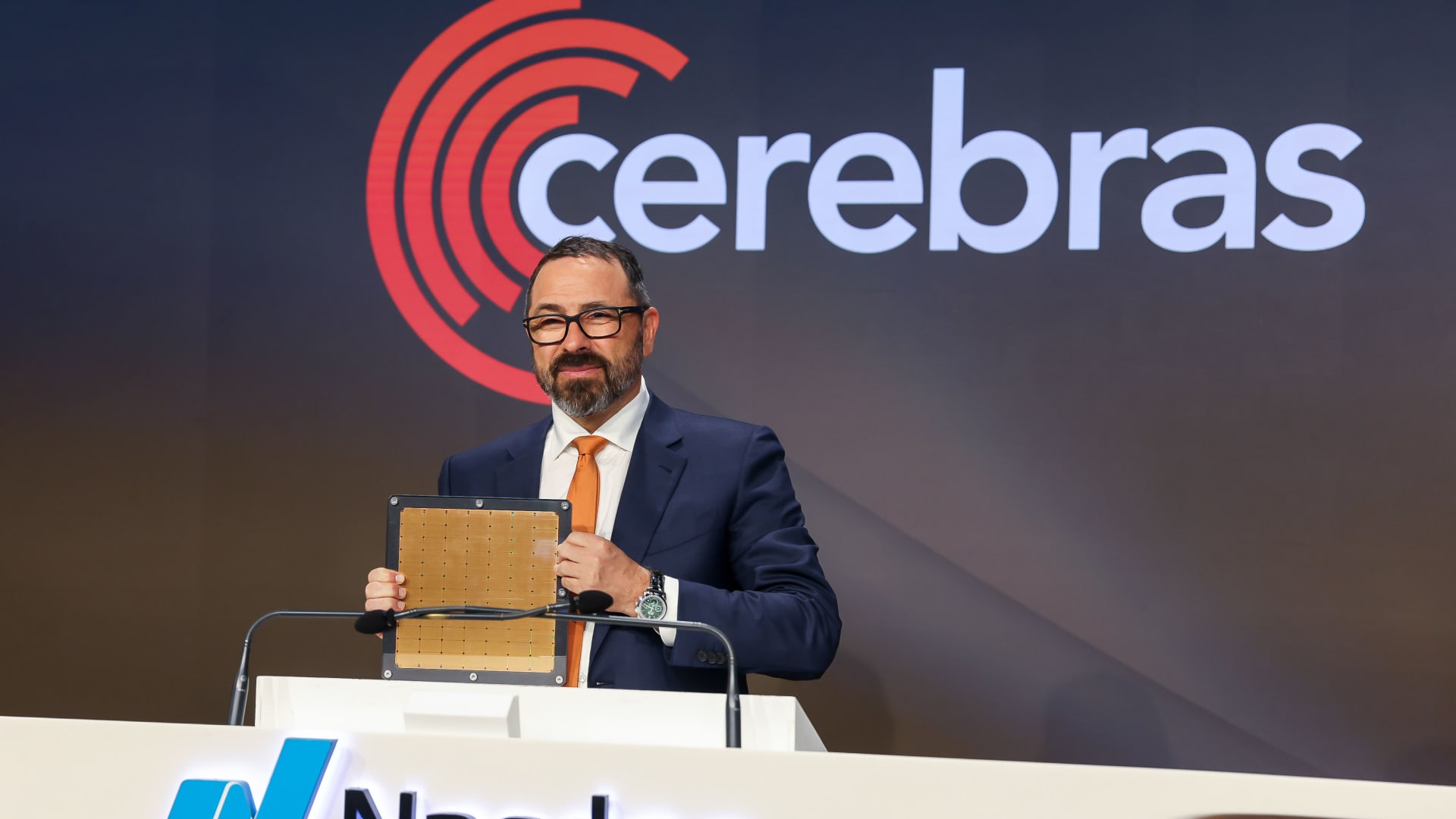
Cerebras Systems IPO Soars, Approaching $100 Billion Market Cap


- IPO Performance: Cerebras' shares surged 68% on their Nasdaq debut, pushing the company's market cap close to $100 billion, signaling a strong demand for AI chips and a resurgence of investor confidence.
- Founders' Wealth Surge: CEO Andrew Feldman and CTO Sean Lie now hold stakes valued at $3.2 billion and $1.7 billion respectively, reflecting the substantial wealth increase resulting from the successful IPO and solidifying their positions in the tech industry.
- Record Financing: The IPO raised $5.55 billion, marking it as the largest IPO of 2026, showcasing the market's intense interest in AI technology and recognition of the company's future growth potential.
- Investor Returns: Early investors Benchmark and Foundation Capital now hold shares worth $5.5 billion and $4.8 billion respectively, indicating a significant return for Silicon Valley venture capitalists after a prolonged IPO drought, which may stimulate future investment activities.
See More

Cerebras IPO Soars, Founders Become Billionaires
- Founders' Wealth Surge: Cerebras' IPO has turned CEO Andrew Feldman and technology chief Sean Lie into billionaires, with their stakes now valued at $3.2 billion and $1.7 billion respectively, highlighting the lucrative returns from their early investments in artificial intelligence.
- Market Cap Surpasses $100 Billion: On its Nasdaq debut, Cerebras achieved a market cap close to $95 billion, a significant increase from its previous valuation of $23.1 billion, reflecting the robust demand for AI chips and solidifying the company's position in the industry.
- Impressive IPO Performance: Cerebras shares soared 68% on the first day of trading, providing substantial returns for early investors and marking a much-needed win for Silicon Valley venture capitalists amid a prolonged IPO drought.
- Future Growth Potential: Feldman stated that the company has reached a level of maturity where it makes sense to access public markets, planning to utilize the $5.55 billion raised to fuel future growth, indicating ongoing expansion and market opportunities in the AI sector.
See More

Apple and Intel Reach Preliminary Agreement on Chip Production

- Agreement Analysis: Apple's preliminary agreement with Intel primarily focuses on producing low-end legacy chips for the iPhone, iPad, and Mac, with approximately 80% of the order mix aimed at the iPhone, mirroring Apple's end-device sales structure.
- Production Timeline: The two companies are conducting small-scale testing this year, with a ramp-up expected in 2027 and 2028, while a decline may occur in 2029, indicating the long-term nature and uncertainty of the production plan.
- Yield Target Comparison: Intel is targeting a yield of 50% to 60% for next year, while Taiwan Semiconductor's advanced 2 nm node yield is estimated to exceed 70%, highlighting the challenges Intel faces in improving production yields.
- Market Dependency Analysis: Despite the collaboration with Intel, Apple is likely to continue relying on TSMC for over 90% of its chip production needs, reflecting Apple's strategic dependency in its supply chain and sensitivity to market dynamics.
See More

Cerebras Systems IPO Soars, Valuation Exceeds $100 Billion


- Strong IPO Performance: Cerebras Systems debuted on Nasdaq at $350, significantly above its $185 offering price, achieving a valuation exceeding $100 billion, reflecting strong market confidence in its AI technology.
- Record Financing: The company sold 30 million shares, raising $5.55 billion, marking the largest IPO for a U.S. tech company since Uber in 2019; total proceeds could reach $6.38 billion if underwriters exercise their option for an additional 4.5 million shares.
- Significant Revenue Growth: Cerebras reported a 76% increase in revenue last year to $510 million, with a net income of $88 million, a remarkable turnaround from a loss of $481.6 million the previous year, indicating a successful business model transformation.
- Competitive Market Advantage: Cerebras claims speed and price advantages over Nvidia, while shifting focus towards cloud services, planning a cloud deal with OpenAI worth over $20 billion, which will further expand its market share.
See More
Cerebras IPO Soars, Valuation Exceeds $100 Billion

- Strong IPO Performance: Cerebras opened at $350 on its Nasdaq debut, representing an 89.2% increase from its IPO price of $185, which values the company at over $100 billion, marking it as one of the largest tech IPOs in the U.S.
- Massive Fundraising: The IPO raised $5.55 billion by selling 30 million shares, making it the largest U.S. tech IPO since Uber in 2019; if underwriters exercise their option for an additional 4.5 million shares, total proceeds could reach $6.38 billion.
- Diversification Progress: Cerebras is shifting its focus through partnerships with Amazon and OpenAI, with revenue jumping 76% to $510 million last year and net income of $88 million, indicating strong demand and improved profitability in the AI market.
- Competitive Market Advantage: Cerebras claims its hardware offers speed and price advantages over Nvidia's GPUs, and through collaborations with universities in the UAE to develop English-Arabic AI models, it is further solidifying its market position.
See More
Nvidia Secures AI Chip Deal During China Visit

- Nvidia's China Visit: Nvidia CEO Jensen Huang accompanies President Trump to China, announcing a deal to export H200 AI chips, which will further solidify Nvidia's leadership in the global AI market.
- Market Reaction: Nvidia's stock rises over 2% on the news, while Intel's stock falls 3.9%, indicating investor optimism towards Nvidia's prospects and concerns regarding Intel's competitiveness.
- Market Share Shift: A UBS report reveals Intel's server CPU market share has dropped to 54.9%, down 370 basis points sequentially, while AMD and ARM have increased their shares to 27.4% and 17.7%, respectively, highlighting intensifying competition.
- Long-term Trends: AMD and ARM show significant growth in the AI data center market, with year-over-year increases of 330 and 620 basis points, respectively, while Intel's share declines by 950 basis points, indicating greater challenges ahead for Intel.
See More
Cerebras Systems IPO Soars, Approaching $100 Billion Market Cap
- IPO Performance: Cerebras' shares surged 68% on their Nasdaq debut, pushing the company's market cap close to $100 billion, signaling a strong demand for AI chips and a resurgence of investor confidence.
- Founders' Wealth Surge: CEO Andrew Feldman and CTO Sean Lie now hold stakes valued at $3.2 billion and $1.7 billion respectively, reflecting the substantial wealth increase resulting from the successful IPO and solidifying their positions in the tech industry.
- Record Financing: The IPO raised $5.55 billion, marking it as the largest IPO of 2026, showcasing the market's intense interest in AI technology and recognition of the company's future growth potential.
- Investor Returns: Early investors Benchmark and Foundation Capital now hold shares worth $5.5 billion and $4.8 billion respectively, indicating a significant return for Silicon Valley venture capitalists after a prolonged IPO drought, which may stimulate future investment activities.
See More
Cerebras IPO Soars, Founders Become Billionaires
- Founders' Wealth Surge: Cerebras' IPO has turned CEO Andrew Feldman and technology chief Sean Lie into billionaires, with their stakes now valued at $3.2 billion and $1.7 billion respectively, highlighting the lucrative returns from their early investments in artificial intelligence.
- Market Cap Surpasses $100 Billion: On its Nasdaq debut, Cerebras achieved a market cap close to $95 billion, a significant increase from its previous valuation of $23.1 billion, reflecting the robust demand for AI chips and solidifying the company's position in the industry.
- Impressive IPO Performance: Cerebras shares soared 68% on the first day of trading, providing substantial returns for early investors and marking a much-needed win for Silicon Valley venture capitalists amid a prolonged IPO drought.
- Future Growth Potential: Feldman stated that the company has reached a level of maturity where it makes sense to access public markets, planning to utilize the $5.55 billion raised to fuel future growth, indicating ongoing expansion and market opportunities in the AI sector.
See More
Apple and Intel Reach Preliminary Agreement on Chip Production
- Agreement Analysis: Apple's preliminary agreement with Intel primarily focuses on producing low-end legacy chips for the iPhone, iPad, and Mac, with approximately 80% of the order mix aimed at the iPhone, mirroring Apple's end-device sales structure.
- Production Timeline: The two companies are conducting small-scale testing this year, with a ramp-up expected in 2027 and 2028, while a decline may occur in 2029, indicating the long-term nature and uncertainty of the production plan.
- Yield Target Comparison: Intel is targeting a yield of 50% to 60% for next year, while Taiwan Semiconductor's advanced 2 nm node yield is estimated to exceed 70%, highlighting the challenges Intel faces in improving production yields.
- Market Dependency Analysis: Despite the collaboration with Intel, Apple is likely to continue relying on TSMC for over 90% of its chip production needs, reflecting Apple's strategic dependency in its supply chain and sensitivity to market dynamics.
See More
Cerebras Systems IPO Soars, Valuation Exceeds $100 Billion
- Strong IPO Performance: Cerebras Systems debuted on Nasdaq at $350, significantly above its $185 offering price, achieving a valuation exceeding $100 billion, reflecting strong market confidence in its AI technology.
- Record Financing: The company sold 30 million shares, raising $5.55 billion, marking the largest IPO for a U.S. tech company since Uber in 2019; total proceeds could reach $6.38 billion if underwriters exercise their option for an additional 4.5 million shares.
- Significant Revenue Growth: Cerebras reported a 76% increase in revenue last year to $510 million, with a net income of $88 million, a remarkable turnaround from a loss of $481.6 million the previous year, indicating a successful business model transformation.
- Competitive Market Advantage: Cerebras claims speed and price advantages over Nvidia, while shifting focus towards cloud services, planning a cloud deal with OpenAI worth over $20 billion, which will further expand its market share.
See More
Cerebras IPO Soars, Valuation Exceeds $100 Billion
- Strong IPO Performance: Cerebras opened at $350 on its Nasdaq debut, representing an 89.2% increase from its IPO price of $185, which values the company at over $100 billion, marking it as one of the largest tech IPOs in the U.S.
- Massive Fundraising: The IPO raised $5.55 billion by selling 30 million shares, making it the largest U.S. tech IPO since Uber in 2019; if underwriters exercise their option for an additional 4.5 million shares, total proceeds could reach $6.38 billion.
- Diversification Progress: Cerebras is shifting its focus through partnerships with Amazon and OpenAI, with revenue jumping 76% to $510 million last year and net income of $88 million, indicating strong demand and improved profitability in the AI market.
- Competitive Market Advantage: Cerebras claims its hardware offers speed and price advantages over Nvidia's GPUs, and through collaborations with universities in the UAE to develop English-Arabic AI models, it is further solidifying its market position.
See More
Nvidia Secures AI Chip Deal During China Visit
- Nvidia's China Visit: Nvidia CEO Jensen Huang accompanies President Trump to China, announcing a deal to export H200 AI chips, which will further solidify Nvidia's leadership in the global AI market.
- Market Reaction: Nvidia's stock rises over 2% on the news, while Intel's stock falls 3.9%, indicating investor optimism towards Nvidia's prospects and concerns regarding Intel's competitiveness.
- Market Share Shift: A UBS report reveals Intel's server CPU market share has dropped to 54.9%, down 370 basis points sequentially, while AMD and ARM have increased their shares to 27.4% and 17.7%, respectively, highlighting intensifying competition.
- Long-term Trends: AMD and ARM show significant growth in the AI data center market, with year-over-year increases of 330 and 620 basis points, respectively, while Intel's share declines by 950 basis points, indicating greater challenges ahead for Intel.
See More