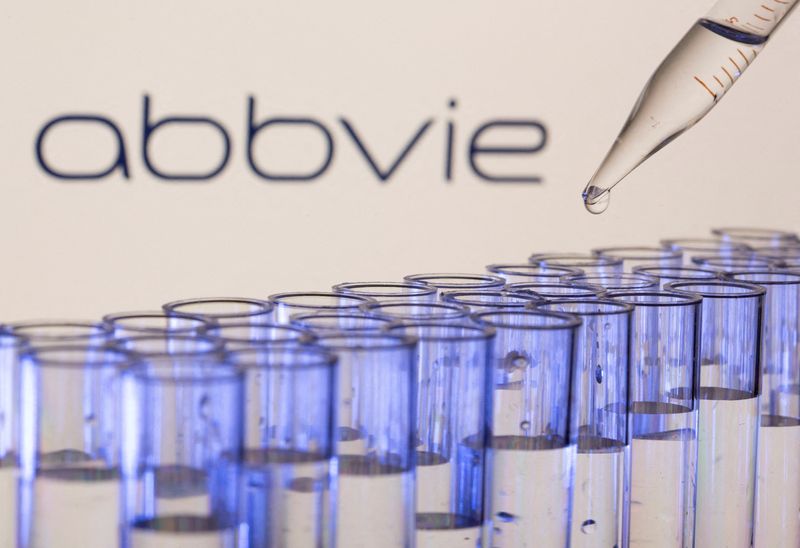
AbbVie Sues HHS Over Medicare Drug Pricing Decision
AbbVie Inc (ABBV) shares rose 3.01% as the stock reached a 20-day high amid positive market conditions.
The increase in AbbVie's stock price follows the company's recent lawsuit against the Department of Health and Human Services (HHS), challenging the inclusion of its Botox therapy in Medicare price negotiations. AbbVie argues that this decision exceeds CMS's authority and could negatively impact future sales revenue, particularly as Botox generated $4.7 billion in net U.S. sales in 2025. This legal action highlights AbbVie's commitment to protecting its market share and profit margins, which may resonate positively with investors.
The implications of this lawsuit could be significant for AbbVie, as it not only seeks to safeguard its revenue from Botox but also sets a precedent for how Medicare pricing policies may affect the pharmaceutical industry. Investors may view this legal challenge as a proactive step in maintaining profitability, especially in light of the competitive landscape in the healthcare sector.
Trade with 70% Backtested Accuracy
Analyst Views on ABBV

About ABBV
About the author


SKINVIVE by JUVÉDERM Receives FDA Approval for Neck Treatment

- New Indication Approved: Allergan Aesthetics, a subsidiary of AbbVie, has received FDA approval to expand SKINVIVE's indication to adults over 21 for neck treatment, enhancing the product's market potential amid increasing prevalence of neck wrinkles.
- Clinical Study Results: In a randomized multicenter study, 74.8% of participants achieved a significant improvement in neck lines at one month, with 66% maintaining this improvement at six months, demonstrating SKINVIVE's effectiveness in enhancing neck skin quality.
- Safety Profile: Participants commonly reported mild adverse events such as redness and bruising at the injection site, which typically resolved within two weeks, with severe adverse events occurring in less than 5%, indicating a high safety profile for SKINVIVE.
- Market Performance: ABBV's stock has traded between $181.73 and $244.81 over the past year, closing at $221.59, down 2.70%, but showing a slight recovery in pre-market trading at $222.22, reflecting market interest in the new product.

AbbVie Declares Quarterly Cash Dividend of $1.73
- Quarterly Cash Dividend: AbbVie's board has declared a cash dividend of $1.73 per share, payable on August 14, 2026, to shareholders of record by July 15, 2026, demonstrating the company's ongoing profitability and commitment to shareholder returns.
- Significant Dividend Growth: Since its inception in 2013, AbbVie has increased its dividend by over 330%, reflecting not only the company's robust financial health but also bolstering investor confidence in its future prospects.
- Shareholder Return Strategy: As a member of the S&P Dividend Aristocrats Index, AbbVie has consistently raised its dividend for over 25 consecutive years, indicating a long-term commitment to shareholder returns and stability in its financial practices.
- Innovative Mission: AbbVie is dedicated to discovering and delivering innovative medicines that address serious health issues today and future medical challenges, covering key therapeutic areas such as immunology, neuroscience, and oncology, thereby further solidifying its market position.
IWF Stock Price Analysis and ETF Dynamics
- Price Fluctuation Analysis: IWF's 52-week low is $100.4703 per share, with a high of $129.14, while the last trade was at $122.79, indicating price volatility near the high point that may influence investor buying decisions.
- Technical Analysis Tool: Comparing the latest share price to the 200-day moving average provides valuable insights for investors, aiding in market trend assessment and potential buying opportunities.
- ETF Trading Mechanism: Exchange-traded funds (ETFs) trade like stocks, where investors buy and sell 'units' that can be created or destroyed based on demand, impacting liquidity and market performance.
- Inflows and Outflows Monitoring: Weekly monitoring of changes in ETF shares outstanding focuses on those experiencing notable inflows (new units created) or outflows (old units destroyed), assessing their impact on underlying assets and market sentiment.
AbbVie Receives FDA Approval for New Neck Anti-Wrinkle Product
- FDA Approval: AbbVie's Skinvive has received FDA approval as a hyaluronic acid injectable designed to reduce neck wrinkles, particularly those caused by 'tech-neck', showcasing the company's innovative capabilities in the skincare sector.
- Significant Clinical Results: A study found that approximately 75% of individuals treated with Skinvive showed clinically significant improvement (≥1 point) on the 5-grade photonumeric Allergan Transverse Neck Lines Scale within one month, indicating strong market demand and product efficacy.
- Market Expansion: Skinvive is not only approved for neck wrinkles but also for improving skin smoothness in adults' cheeks, reflecting AbbVie's diversification strategy in skincare products, which may attract a broader consumer base.
- Industry Outlook: With increasing consumer demand for anti-aging products, the launch of Skinvive could enhance AbbVie's position in the competitive beauty market, potentially driving future revenue growth.

FDA Approves SKINVIVE by JUVÉDERM for Neck Wrinkles
- FDA Approval: Allergan Aesthetics, a subsidiary of AbbVie, announced that the FDA has approved SKINVIVE, the first hyaluronic acid injectable for reducing neck wrinkles, marking a significant innovation in the anti-aging sector.
- Significant Clinical Results: In a pivotal study, 74.8% of treated participants showed clinically significant improvement in neck wrinkles at one month, with 66% maintaining the benefits at six months, demonstrating the product's long-term efficacy.
- High Safety Profile: Most adverse events were mild and resolved within two weeks without treatment, indicating a strong safety profile for SKINVIVE, which can enhance consumer confidence in the product.
- Broad Market Potential: SKINVIVE is expected to be commercially available later this year, following its 2023 FDA approval for improving cheek skin smoothness, further expanding its market potential to meet the growing demand for anti-aging solutions.

Conexeu Sciences Expands Board to Support Commercialization Efforts
- Board Expansion: On June 15, 2026, Conexeu Sciences Inc. expanded its board from six to nine members, with new directors primarily from Fortune 500 companies, signaling the company's ambition to transition its cutting-edge tissue regeneration technology into a viable business.
- Executive Appointment: Co-founder David Bogart was promoted to Chief Commercial Officer, overseeing over $75 million in capital formation, indicating Conexeu's focus on commercial strategy and market outreach to lay the groundwork for future growth.
- Technology Platform: Conexeu's CXU™ platform is a bioregenerative extracellular matrix that rapidly transitions into a stable gel scaffold at body temperature, expected to target multiple billion-dollar markets including advanced wound care and medical aesthetics, showcasing its broad market potential.
- Market Outlook: With an aging population and the diabetes epidemic, the field of tissue regeneration is experiencing strong market momentum, and while Conexeu faces challenges from larger competitors, its unique technology and leadership team position it well for future success.
SKINVIVE by JUVÉDERM Receives FDA Approval for Neck Treatment
- New Indication Approved: Allergan Aesthetics, a subsidiary of AbbVie, has received FDA approval to expand SKINVIVE's indication to adults over 21 for neck treatment, enhancing the product's market potential amid increasing prevalence of neck wrinkles.
- Clinical Study Results: In a randomized multicenter study, 74.8% of participants achieved a significant improvement in neck lines at one month, with 66% maintaining this improvement at six months, demonstrating SKINVIVE's effectiveness in enhancing neck skin quality.
- Safety Profile: Participants commonly reported mild adverse events such as redness and bruising at the injection site, which typically resolved within two weeks, with severe adverse events occurring in less than 5%, indicating a high safety profile for SKINVIVE.
- Market Performance: ABBV's stock has traded between $181.73 and $244.81 over the past year, closing at $221.59, down 2.70%, but showing a slight recovery in pre-market trading at $222.22, reflecting market interest in the new product.
AbbVie Declares Quarterly Cash Dividend of $1.73
- Quarterly Cash Dividend: AbbVie's board has declared a cash dividend of $1.73 per share, payable on August 14, 2026, to shareholders of record by July 15, 2026, demonstrating the company's ongoing profitability and commitment to shareholder returns.
- Significant Dividend Growth: Since its inception in 2013, AbbVie has increased its dividend by over 330%, reflecting not only the company's robust financial health but also bolstering investor confidence in its future prospects.
- Shareholder Return Strategy: As a member of the S&P Dividend Aristocrats Index, AbbVie has consistently raised its dividend for over 25 consecutive years, indicating a long-term commitment to shareholder returns and stability in its financial practices.
- Innovative Mission: AbbVie is dedicated to discovering and delivering innovative medicines that address serious health issues today and future medical challenges, covering key therapeutic areas such as immunology, neuroscience, and oncology, thereby further solidifying its market position.
IWF Stock Price Analysis and ETF Dynamics
- Price Fluctuation Analysis: IWF's 52-week low is $100.4703 per share, with a high of $129.14, while the last trade was at $122.79, indicating price volatility near the high point that may influence investor buying decisions.
- Technical Analysis Tool: Comparing the latest share price to the 200-day moving average provides valuable insights for investors, aiding in market trend assessment and potential buying opportunities.
- ETF Trading Mechanism: Exchange-traded funds (ETFs) trade like stocks, where investors buy and sell 'units' that can be created or destroyed based on demand, impacting liquidity and market performance.
- Inflows and Outflows Monitoring: Weekly monitoring of changes in ETF shares outstanding focuses on those experiencing notable inflows (new units created) or outflows (old units destroyed), assessing their impact on underlying assets and market sentiment.
AbbVie Receives FDA Approval for New Neck Anti-Wrinkle Product
- FDA Approval: AbbVie's Skinvive has received FDA approval as a hyaluronic acid injectable designed to reduce neck wrinkles, particularly those caused by 'tech-neck', showcasing the company's innovative capabilities in the skincare sector.
- Significant Clinical Results: A study found that approximately 75% of individuals treated with Skinvive showed clinically significant improvement (≥1 point) on the 5-grade photonumeric Allergan Transverse Neck Lines Scale within one month, indicating strong market demand and product efficacy.
- Market Expansion: Skinvive is not only approved for neck wrinkles but also for improving skin smoothness in adults' cheeks, reflecting AbbVie's diversification strategy in skincare products, which may attract a broader consumer base.
- Industry Outlook: With increasing consumer demand for anti-aging products, the launch of Skinvive could enhance AbbVie's position in the competitive beauty market, potentially driving future revenue growth.
FDA Approves SKINVIVE by JUVÉDERM for Neck Wrinkles
- FDA Approval: Allergan Aesthetics, a subsidiary of AbbVie, announced that the FDA has approved SKINVIVE, the first hyaluronic acid injectable for reducing neck wrinkles, marking a significant innovation in the anti-aging sector.
- Significant Clinical Results: In a pivotal study, 74.8% of treated participants showed clinically significant improvement in neck wrinkles at one month, with 66% maintaining the benefits at six months, demonstrating the product's long-term efficacy.
- High Safety Profile: Most adverse events were mild and resolved within two weeks without treatment, indicating a strong safety profile for SKINVIVE, which can enhance consumer confidence in the product.
- Broad Market Potential: SKINVIVE is expected to be commercially available later this year, following its 2023 FDA approval for improving cheek skin smoothness, further expanding its market potential to meet the growing demand for anti-aging solutions.
Conexeu Sciences Expands Board to Support Commercialization Efforts
- Board Expansion: On June 15, 2026, Conexeu Sciences Inc. expanded its board from six to nine members, with new directors primarily from Fortune 500 companies, signaling the company's ambition to transition its cutting-edge tissue regeneration technology into a viable business.
- Executive Appointment: Co-founder David Bogart was promoted to Chief Commercial Officer, overseeing over $75 million in capital formation, indicating Conexeu's focus on commercial strategy and market outreach to lay the groundwork for future growth.
- Technology Platform: Conexeu's CXU™ platform is a bioregenerative extracellular matrix that rapidly transitions into a stable gel scaffold at body temperature, expected to target multiple billion-dollar markets including advanced wound care and medical aesthetics, showcasing its broad market potential.
- Market Outlook: With an aging population and the diabetes epidemic, the field of tissue regeneration is experiencing strong market momentum, and while Conexeu faces challenges from larger competitors, its unique technology and leadership team position it well for future success.