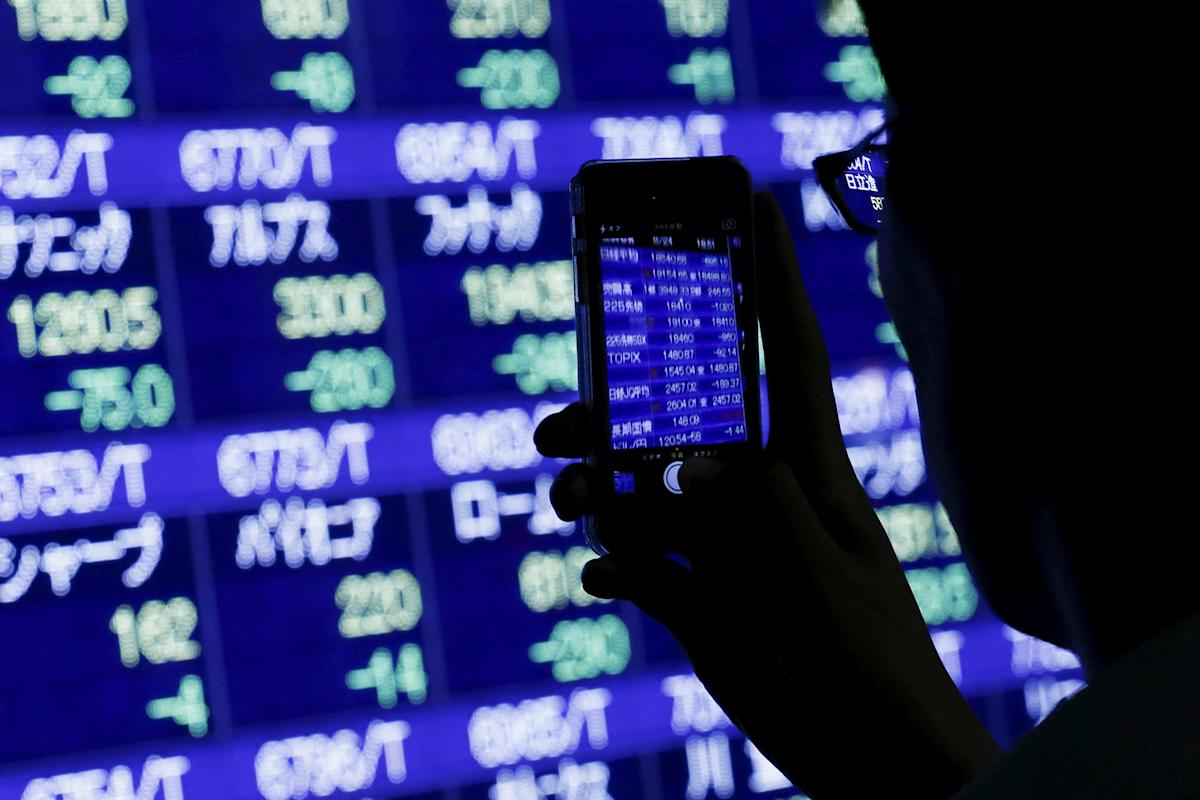
U.S. Economic Outlook Dims Amid Iran Tensions
Written by Emily J. Thompson, Senior Investment Analyst
Updated: Apr 07 2026
0mins


Source: CNBC
- Market Weakness: The S&P 500 index showed significant weakness as President Trump's deadline for Iran approached, with most of the session in the red, reflecting investor concerns over economic prospects amid declining consumer confidence and rising inflation.
- Retail Sector Decline: Walmart's 3.3% drop indicates that even budget-conscious consumers may cut back on spending during an economic downturn, suggesting a deteriorating overall consumer health that could have long-term implications for the retail sector.
- Cruise Industry Struggles: Shares of Royal Caribbean, Norwegian Cruise Line, and Carnival fell nearly 3%, 3.3%, and 2.96% respectively, indicating a potential decline in consumer demand for travel post-pandemic, which raises further concerns about economic recovery.
- Pharmaceutical Stocks Underperform: Merck, Pfizer, and AbbVie saw declines of 1.3%, 2.6%, and 0.2%, respectively, highlighting inflationary pressures and the dual challenges of economic slowdown and rising costs faced by the pharmaceutical industry.
Trade with 70% Backtested Accuracy
Stop guessing "Should I Buy WMT?" and start using high-conviction signals backed by rigorous historical data.
Sign up today to access powerful investing tools and make smarter, data-driven decisions.
Analyst Views on WMT
Wall Street analysts forecast WMT stock price to fall
26 Analyst Rating
25 Buy
1 Hold
0 Sell
Strong Buy
Current: 130.200

Low
119.00
Averages
125.75
High
136.00
Current: 130.200
Low
119.00
Averages
125.75
High
136.00
About WMT
Walmart Inc. is a technology-powered omnichannel retailer. The Company is engaged in the operation of retail and wholesale stores and clubs, as well as eCommerce Websites and mobile applications, located throughout the United States (U.S.), Africa, Canada, Central America, Chile, China, India and Mexico. It operates in three reportable segments: Walmart U.S., Walmart International and Sam's Club U.S. The Walmart U.S. segment includes the Company's mass merchandising concept in the U.S., as well as eCommerce, which includes omni-channel initiatives and certain other business offerings such as advertising services. The Walmart International segment consists of the Company's operations outside of the U.S. through its subsidiaries, as well as eCommerce and omni-channel initiatives. The Sam's Club U.S. segment includes the warehouse membership clubs in the U.S., as well as samsclub.com and omni-channel initiatives.
About the author

Emily J. Thompson
Emily J. Thompson, a Chartered Financial Analyst (CFA) with 12 years in investment research, graduated with honors from the Wharton School. Specializing in industrial and technology stocks, she provides in-depth analysis for Intellectia’s earnings and market brief reports.

Target Launches Baby Boutiques to Attract Family Customers


- Baby Boutique Rollout: Target has launched baby boutiques in approximately 200 stores, allowing customers to experience high-end brands like UPPAbaby firsthand, aiming to attract busy family customers and enhance market share.
- Market Share Challenges: Despite holding a 17.6% share in the baby products market, Target has seen a decline compared to Walmart's 27% and Amazon's 24.4%, indicating increased competitive pressure.
- Sales Growth Expectations: Target anticipates a year-over-year net sales increase of about 2% this year, with growth expected in every quarter, signaling efforts to reverse the sales slump experienced over the past four quarters.
- Strategic Investment Plan: Target plans to invest approximately $5 billion in capital expenditures this fiscal year to improve store experiences and product quality, aiming to enhance customer loyalty and address competitive challenges.
See More

SoundHound AI Q1 2026 Earnings Report Analysis


- Significant Revenue Growth: SoundHound AI reported Q1 revenue of $44.2 million, a 52% year-over-year increase, showcasing the company's potential in a $140 billion total addressable market despite not raising full-year guidance.
- Negative Market Reaction: Although revenue met expectations, the market's concerns over the lack of guidance increase and ongoing losses led to a 7.89% drop in stock price post-earnings, reflecting investor caution regarding short-term prospects.
- Client Collaboration Expansion: SoundHound's agreement with Walmart to integrate its voice AI technology into retail television brands further solidifies its market position in smart devices and customer service sectors.
- Optimistic Future Outlook: The company projects full-year revenue for 2026 between $225 million and $260 million, with 2027 revenue expected to reach at least $350 million to $400 million, indicating strong growth potential, although investors must navigate significant stock volatility.
See More

SoundHound AI Reports Strong Q1 2026 Revenue but Shares Decline
- Significant Revenue Growth: SoundHound AI reported a revenue of $44.2 million in Q1 2026, marking a 52% year-over-year increase; however, despite meeting expectations, concerns over ongoing losses led to a sharp decline in share price.
- Market Expectations Missed: The company did not raise its full-year revenue guidance, maintaining a forecast of $225 million to $260 million for 2026 and a minimum of $350 million to $400 million for 2027, failing to meet market expectations for higher guidance.
- Customer Satisfaction Improvement: SoundHound's technology has shown strong performance among clients, with an average revenue increase of 11% and a 14% boost in customer satisfaction post-implementation, indicating the effectiveness and potential of its products in the market.
- Long-Term Growth Potential: Despite short-term stock volatility, SoundHound's total addressable market is estimated at $140 billion, suggesting the company is still in the early stages and could achieve larger revenue growth through partnerships with major clients.
See More

Caution Signals Emerge in the Market

- Market Valuation Warning: The Shiller P/E ratio has reached 41, the highest level since the dot-com bubble, indicating that the market may be overvalued and investors should be cautious about potential risks.
- Berkshire's Liquidity Innovation: Berkshire Hathaway holds nearly $397 billion in liquidity, surpassing its $330 billion stock portfolio, indicating a strategy of cash accumulation in anticipation of a discounted market.
- Realty Income Stability: Realty Income boasts a 5.1% dividend yield and a 99% occupancy rate, consistently paying dividends monthly since 1994, demonstrating strong cash flow and market competitiveness.
- Kimberly-Clark's Brand Strength: Kimberly-Clark has increased its dividend for 54 consecutive years, and despite merger cost pressures, its 5.2% dividend yield and stable cash flow suggest it still has the capacity to attract investors.
See More

Realty Income and Clorox Outlook Amid Market Challenges
- Stability of Realty Income: Realty Income (NYSE: O) maintains a 99% occupancy rate by leasing single-tenant properties, continuously developing new assets to ensure steady revenue while upholding its reputation for monthly dividends since 1994, with an annual payout of $3.25 and a yield of 5.1%, significantly above the S&P 500's 1.1% average.
- Clorox's Challenges and Opportunities: Despite facing pressures from a cyberattack and rising costs that led to downward revisions in sales and earnings forecasts, Clorox (NYSE: CLX) boasts an annual dividend of $4.96 and a yield of 5.6%, indicating long-term stability, and is likely to maintain its dividend growth streak.
- Kimberly-Clark's Merger Prospects: Kimberly-Clark (NASDAQ: KMB) is set to merge with Kenvue, and although its $32 billion market cap is below the $48.7 billion deal cost, the market has likely priced in some dilution effects, while the merger will integrate more well-known brands, enhancing competitive strength.
- Cautious Market Sentiment: Given the current market conditions, investors should be cautious, especially with the Shiller P/E ratio at a historical high of 41 and Berkshire Hathaway holding nearly $397 billion in liquidity, suggesting it may be preparing for a discounted market, prompting investors to focus on potential value stocks.
See More

Amazon Stock Poised to Outperform S&P 500
- Cloud Growth Acceleration: Amazon Web Services (AWS) reported a 28% revenue increase in Q1, reaching $37.6 billion, marking its fastest growth in nearly four years, indicating a strong recovery in the cloud market that is expected to drive overall performance.
- Chip Business Surge: Amazon's chip division is on a $20 billion annual run-rate, projected to reach $50 billion with internal usage, as data center spending rises, attracting investor attention and enhancing the company's competitive edge in AI infrastructure.
- Agentic AI Advantage: Amazon is well-positioned in both hardware and platform for agentic AI, particularly with its collaboration with OpenAI on the Amazon BedRock platform, which enables customers to build AI agents, likely boosting its e-commerce leadership in smart commerce.
- E-commerce Efficiency Gains: Amazon's e-commerce operations are benefiting from robotics and AI, leading to significant operating leverage where profit growth outpaces revenue growth, further solidifying its market position and potential for future expansion.
See More
Target Launches Baby Boutiques to Attract Family Customers
- Baby Boutique Rollout: Target has launched baby boutiques in approximately 200 stores, allowing customers to experience high-end brands like UPPAbaby firsthand, aiming to attract busy family customers and enhance market share.
- Market Share Challenges: Despite holding a 17.6% share in the baby products market, Target has seen a decline compared to Walmart's 27% and Amazon's 24.4%, indicating increased competitive pressure.
- Sales Growth Expectations: Target anticipates a year-over-year net sales increase of about 2% this year, with growth expected in every quarter, signaling efforts to reverse the sales slump experienced over the past four quarters.
- Strategic Investment Plan: Target plans to invest approximately $5 billion in capital expenditures this fiscal year to improve store experiences and product quality, aiming to enhance customer loyalty and address competitive challenges.
See More
SoundHound AI Q1 2026 Earnings Report Analysis
- Significant Revenue Growth: SoundHound AI reported Q1 revenue of $44.2 million, a 52% year-over-year increase, showcasing the company's potential in a $140 billion total addressable market despite not raising full-year guidance.
- Negative Market Reaction: Although revenue met expectations, the market's concerns over the lack of guidance increase and ongoing losses led to a 7.89% drop in stock price post-earnings, reflecting investor caution regarding short-term prospects.
- Client Collaboration Expansion: SoundHound's agreement with Walmart to integrate its voice AI technology into retail television brands further solidifies its market position in smart devices and customer service sectors.
- Optimistic Future Outlook: The company projects full-year revenue for 2026 between $225 million and $260 million, with 2027 revenue expected to reach at least $350 million to $400 million, indicating strong growth potential, although investors must navigate significant stock volatility.
See More
SoundHound AI Reports Strong Q1 2026 Revenue but Shares Decline
- Significant Revenue Growth: SoundHound AI reported a revenue of $44.2 million in Q1 2026, marking a 52% year-over-year increase; however, despite meeting expectations, concerns over ongoing losses led to a sharp decline in share price.
- Market Expectations Missed: The company did not raise its full-year revenue guidance, maintaining a forecast of $225 million to $260 million for 2026 and a minimum of $350 million to $400 million for 2027, failing to meet market expectations for higher guidance.
- Customer Satisfaction Improvement: SoundHound's technology has shown strong performance among clients, with an average revenue increase of 11% and a 14% boost in customer satisfaction post-implementation, indicating the effectiveness and potential of its products in the market.
- Long-Term Growth Potential: Despite short-term stock volatility, SoundHound's total addressable market is estimated at $140 billion, suggesting the company is still in the early stages and could achieve larger revenue growth through partnerships with major clients.
See More
Caution Signals Emerge in the Market
- Market Valuation Warning: The Shiller P/E ratio has reached 41, the highest level since the dot-com bubble, indicating that the market may be overvalued and investors should be cautious about potential risks.
- Berkshire's Liquidity Innovation: Berkshire Hathaway holds nearly $397 billion in liquidity, surpassing its $330 billion stock portfolio, indicating a strategy of cash accumulation in anticipation of a discounted market.
- Realty Income Stability: Realty Income boasts a 5.1% dividend yield and a 99% occupancy rate, consistently paying dividends monthly since 1994, demonstrating strong cash flow and market competitiveness.
- Kimberly-Clark's Brand Strength: Kimberly-Clark has increased its dividend for 54 consecutive years, and despite merger cost pressures, its 5.2% dividend yield and stable cash flow suggest it still has the capacity to attract investors.
See More
Realty Income and Clorox Outlook Amid Market Challenges
- Stability of Realty Income: Realty Income (NYSE: O) maintains a 99% occupancy rate by leasing single-tenant properties, continuously developing new assets to ensure steady revenue while upholding its reputation for monthly dividends since 1994, with an annual payout of $3.25 and a yield of 5.1%, significantly above the S&P 500's 1.1% average.
- Clorox's Challenges and Opportunities: Despite facing pressures from a cyberattack and rising costs that led to downward revisions in sales and earnings forecasts, Clorox (NYSE: CLX) boasts an annual dividend of $4.96 and a yield of 5.6%, indicating long-term stability, and is likely to maintain its dividend growth streak.
- Kimberly-Clark's Merger Prospects: Kimberly-Clark (NASDAQ: KMB) is set to merge with Kenvue, and although its $32 billion market cap is below the $48.7 billion deal cost, the market has likely priced in some dilution effects, while the merger will integrate more well-known brands, enhancing competitive strength.
- Cautious Market Sentiment: Given the current market conditions, investors should be cautious, especially with the Shiller P/E ratio at a historical high of 41 and Berkshire Hathaway holding nearly $397 billion in liquidity, suggesting it may be preparing for a discounted market, prompting investors to focus on potential value stocks.
See More
Amazon Stock Poised to Outperform S&P 500
- Cloud Growth Acceleration: Amazon Web Services (AWS) reported a 28% revenue increase in Q1, reaching $37.6 billion, marking its fastest growth in nearly four years, indicating a strong recovery in the cloud market that is expected to drive overall performance.
- Chip Business Surge: Amazon's chip division is on a $20 billion annual run-rate, projected to reach $50 billion with internal usage, as data center spending rises, attracting investor attention and enhancing the company's competitive edge in AI infrastructure.
- Agentic AI Advantage: Amazon is well-positioned in both hardware and platform for agentic AI, particularly with its collaboration with OpenAI on the Amazon BedRock platform, which enables customers to build AI agents, likely boosting its e-commerce leadership in smart commerce.
- E-commerce Efficiency Gains: Amazon's e-commerce operations are benefiting from robotics and AI, leading to significant operating leverage where profit growth outpaces revenue growth, further solidifying its market position and potential for future expansion.
See More