Three Hotel Stocks to Keep an Eye On Amid Industry Challenges


Industry Overview: The Zacks Hotels and Motels industry includes companies involved in owning, managing, and franchising hotels, as well as developing vacation ownership products and mobile accommodations, facing challenges like economic uncertainty and labor shortages.
Current Trends: Key trends affecting the industry include economic headwinds leading to reduced leisure and corporate travel demand, significant labor shortages impacting service quality, and a decline in revenue per available room (RevPAR) and occupancy rates.
Market Performance: The Zacks Hotels and Motels industry has underperformed the S&P 500, with a decline of 9.4% over the past year, while the industry's valuation remains lower than the S&P 500 average, indicating a lack of investor confidence.
Stocks to Watch: Notable companies in the industry include Marriott, Hilton, and Choice Hotels, each showing potential for growth through digital transformation, unit expansion, and strategic investments, despite varying stock performance over the past year.
Trade with 70% Backtested Accuracy
Analyst Views on HLT

About HLT
About the author


Hilton Partners with Big Brothers Big Sisters to Offer Career Exploration Opportunities

- Innovative Charitable Donation: Hilton announced a donation of 250 million Hilton Honors Points to Big Brothers Big Sisters, equivalent to over 3,000 standard room nights, aimed at creating transformative travel experiences for youth, thereby helping them broaden their perspectives and build confidence.
- Career Development Opportunities: Through the partnership with Big Brothers Big Sisters, Hilton will provide over 10,000 mentoring moments across six U.S. cities, assisting young people in building confidence, seeing new possibilities, and imagining opportunities they may not have considered, thus further closing the opportunity gap.
- Structured Development Experience: Beginning in the 2026-2027 school year, participants will be paired with Hilton team members for monthly on-property mentoring and skill-building experiences focused on workplace readiness, communication, and professional growth, helping youth gain real-world career exposure.
- Long-term Strategic Commitment: Hilton's donation aligns with America's 250th anniversary, emphasizing the company's commitment to youth career development, aiming to ensure that the American dream remains accessible for the next generation by providing career exposure and skills training.
Analysis of XLY ETF's 52-Week Price Fluctuations

- Price Range Analysis: The XLY ETF has a 52-week low of $104.81 and a high of $125.01, with the latest trade at $115.79, indicating relative stability in the current market that may attract investor interest.
- Technical Analysis Tool: Comparing the latest share price to the 200-day moving average provides investors with deeper technical insights, aiding in more informed investment decisions and enhancing the effectiveness of trading strategies.
- ETF Trading Mechanism: Exchange-traded funds (ETFs) trade like stocks, where investors are buying and selling 'units' that can be created or destroyed based on investor demand, offering flexibility that makes ETFs ideal for diversified portfolios.
- Liquidity Monitoring: Weekly monitoring of changes in shares outstanding for ETFs experiencing significant inflows or outflows helps investors grasp market dynamics, allowing timely adjustments to investment strategies in response to market changes.
Hilton Report: Human-Centric Leadership Drives Retention and Performance
- Importance of Human-Centric Leadership: Hilton's report reveals that human-centered factors are paramount for employees, with 74% citing mentorship opportunities as crucial, indicating that businesses must prioritize interpersonal relationships to enhance employee satisfaction and retention.
- Value of Returning to Office: 94% of employees believe returning to the office serves a purpose, particularly among younger generations, with 96% of Gen Z valuing face-to-face interactions, underscoring the importance of building human connections in a digital age.
- Challenges and Opportunities of AI Transformation: 52% of workers feel anxious about AI's impact on their jobs, yet 62% believe AI will significantly change their work in the next three years, necessitating companies to provide support to help employees shift from anxiety to proactive engagement.
- Practical Strategies for Culture Building: Hilton's proposed
Hilton Expands Lifestyle Brand with College Town Hotels
- Brand Expansion Plan: Hilton is set to open more hotels in college towns to meet the accommodation needs for college tours, athletic weekends, and campus gatherings, with a long-term goal of 400 to 500 new hotels, the first of which is expected to open in 2027.
- Market Strategy: The new brand, 'Undergraduate by Hilton,' will serve as an upper-midscale hotel brand that complements the existing Graduate brand, further enhancing Hilton's presence in the collegiate market.
- Lifestyle Portfolio Growth: CEO Chris Nassetta highlighted that the Lifestyle portfolio is one of the most dynamic areas for expansion, with plans to offer 700 Lifestyle hotels globally by 2028, including 60 openings this year alone.
- Innovative Design Concept: The new hotels will feature an 'always-on, off-campus hangout' vibe, with guest rooms designed as creative classrooms, an all-day barista-led market, grab-and-go retail, and a cocktail program powered by Authentic Hospitality, enhancing the guest experience.

Airlines Warn of Immigration Policy Impact

- Industry Warning: Major U.S. airline and hotel groups have condemned the Trump administration's potential halt of customs and immigration processing at 'sanctuary city' airports, warning that such a move could have 'devastating' effects on the industry, particularly with the FIFA World Cup approaching, which is expected to draw millions of visitors.
- Policy Impact: Homeland Security Secretary Mark Mullin indicated that the government is considering stopping international flight processing in cities with lenient immigration policies, raising concerns about severe impacts on international flights, especially in major hubs like New York and Los Angeles.
- Operational Disruption Risk: Airlines for America warned that reducing Customs and Border Protection staffing at major airports would significantly disrupt airline and tourism operations, affecting traveler flow and international cargo transport, potentially leading to higher costs and inconveniences for airlines and travelers.
- Tourism Sector Damage: The U.S. Travel Association stated that implementing this policy would have 'devastating consequences' for communities reliant on international visitors, likely resulting in a significant downturn for hotels and tourism-related businesses, thereby impacting overall economic vitality.
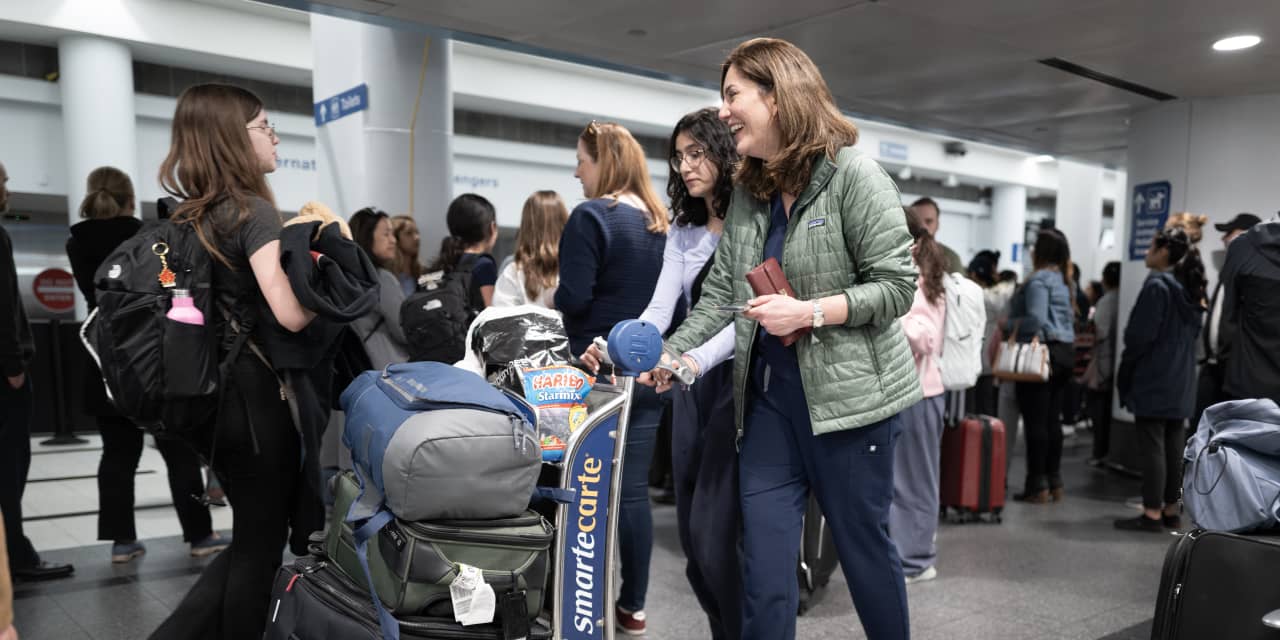
Immigration Policy May Impact International Flights
- Immigration Policy Controversy: Homeland Security Secretary Markwayne Mullin stated in a Fox News interview that if 'radical left Democrats' do not allow the government to enforce federal laws, international flights should not be processed, indicating a potential shift towards stricter immigration policies.
- Strong Industry Response: Major U.S. airlines and tourism groups warned that halting customs and immigration processing at 'sanctuary city' airports would have 'devastating' consequences for the industry and travelers, particularly with the upcoming international events.
- World Cup Approaching: Mullin's comments come just before the FIFA Men's World Cup, which is expected to bring millions of visitors to the U.S., Canada, and Mexico, raising concerns that such policies could disrupt the smooth operation of the event.
- Potential Operational Disruption: Airlines for America highlighted that reducing Customs and Border Protection staffing at major airports would significantly disrupt airline operations, traveler flow, and international cargo transport, potentially leading to a downturn in the industry.
Hilton Partners with Big Brothers Big Sisters to Offer Career Exploration Opportunities
- Innovative Charitable Donation: Hilton announced a donation of 250 million Hilton Honors Points to Big Brothers Big Sisters, equivalent to over 3,000 standard room nights, aimed at creating transformative travel experiences for youth, thereby helping them broaden their perspectives and build confidence.
- Career Development Opportunities: Through the partnership with Big Brothers Big Sisters, Hilton will provide over 10,000 mentoring moments across six U.S. cities, assisting young people in building confidence, seeing new possibilities, and imagining opportunities they may not have considered, thus further closing the opportunity gap.
- Structured Development Experience: Beginning in the 2026-2027 school year, participants will be paired with Hilton team members for monthly on-property mentoring and skill-building experiences focused on workplace readiness, communication, and professional growth, helping youth gain real-world career exposure.
- Long-term Strategic Commitment: Hilton's donation aligns with America's 250th anniversary, emphasizing the company's commitment to youth career development, aiming to ensure that the American dream remains accessible for the next generation by providing career exposure and skills training.
Analysis of XLY ETF's 52-Week Price Fluctuations
- Price Range Analysis: The XLY ETF has a 52-week low of $104.81 and a high of $125.01, with the latest trade at $115.79, indicating relative stability in the current market that may attract investor interest.
- Technical Analysis Tool: Comparing the latest share price to the 200-day moving average provides investors with deeper technical insights, aiding in more informed investment decisions and enhancing the effectiveness of trading strategies.
- ETF Trading Mechanism: Exchange-traded funds (ETFs) trade like stocks, where investors are buying and selling 'units' that can be created or destroyed based on investor demand, offering flexibility that makes ETFs ideal for diversified portfolios.
- Liquidity Monitoring: Weekly monitoring of changes in shares outstanding for ETFs experiencing significant inflows or outflows helps investors grasp market dynamics, allowing timely adjustments to investment strategies in response to market changes.
Hilton Report: Human-Centric Leadership Drives Retention and Performance
- Importance of Human-Centric Leadership: Hilton's report reveals that human-centered factors are paramount for employees, with 74% citing mentorship opportunities as crucial, indicating that businesses must prioritize interpersonal relationships to enhance employee satisfaction and retention.
- Value of Returning to Office: 94% of employees believe returning to the office serves a purpose, particularly among younger generations, with 96% of Gen Z valuing face-to-face interactions, underscoring the importance of building human connections in a digital age.
- Challenges and Opportunities of AI Transformation: 52% of workers feel anxious about AI's impact on their jobs, yet 62% believe AI will significantly change their work in the next three years, necessitating companies to provide support to help employees shift from anxiety to proactive engagement.
- Practical Strategies for Culture Building: Hilton's proposed
Hilton Expands Lifestyle Brand with College Town Hotels
- Brand Expansion Plan: Hilton is set to open more hotels in college towns to meet the accommodation needs for college tours, athletic weekends, and campus gatherings, with a long-term goal of 400 to 500 new hotels, the first of which is expected to open in 2027.
- Market Strategy: The new brand, 'Undergraduate by Hilton,' will serve as an upper-midscale hotel brand that complements the existing Graduate brand, further enhancing Hilton's presence in the collegiate market.
- Lifestyle Portfolio Growth: CEO Chris Nassetta highlighted that the Lifestyle portfolio is one of the most dynamic areas for expansion, with plans to offer 700 Lifestyle hotels globally by 2028, including 60 openings this year alone.
- Innovative Design Concept: The new hotels will feature an 'always-on, off-campus hangout' vibe, with guest rooms designed as creative classrooms, an all-day barista-led market, grab-and-go retail, and a cocktail program powered by Authentic Hospitality, enhancing the guest experience.
Airlines Warn of Immigration Policy Impact
- Industry Warning: Major U.S. airline and hotel groups have condemned the Trump administration's potential halt of customs and immigration processing at 'sanctuary city' airports, warning that such a move could have 'devastating' effects on the industry, particularly with the FIFA World Cup approaching, which is expected to draw millions of visitors.
- Policy Impact: Homeland Security Secretary Mark Mullin indicated that the government is considering stopping international flight processing in cities with lenient immigration policies, raising concerns about severe impacts on international flights, especially in major hubs like New York and Los Angeles.
- Operational Disruption Risk: Airlines for America warned that reducing Customs and Border Protection staffing at major airports would significantly disrupt airline and tourism operations, affecting traveler flow and international cargo transport, potentially leading to higher costs and inconveniences for airlines and travelers.
- Tourism Sector Damage: The U.S. Travel Association stated that implementing this policy would have 'devastating consequences' for communities reliant on international visitors, likely resulting in a significant downturn for hotels and tourism-related businesses, thereby impacting overall economic vitality.
Immigration Policy May Impact International Flights
- Immigration Policy Controversy: Homeland Security Secretary Markwayne Mullin stated in a Fox News interview that if 'radical left Democrats' do not allow the government to enforce federal laws, international flights should not be processed, indicating a potential shift towards stricter immigration policies.
- Strong Industry Response: Major U.S. airlines and tourism groups warned that halting customs and immigration processing at 'sanctuary city' airports would have 'devastating' consequences for the industry and travelers, particularly with the upcoming international events.
- World Cup Approaching: Mullin's comments come just before the FIFA Men's World Cup, which is expected to bring millions of visitors to the U.S., Canada, and Mexico, raising concerns that such policies could disrupt the smooth operation of the event.
- Potential Operational Disruption: Airlines for America highlighted that reducing Customs and Border Protection staffing at major airports would significantly disrupt airline operations, traveler flow, and international cargo transport, potentially leading to a downturn in the industry.