Chevron Reports Q1 2026 Earnings Decline Amid Production Growth
Written by Emily J. Thompson, Senior Investment Analyst
Updated: 32 minutes ago
0mins
Source: Fool
- Earnings Decline: Chevron reported adjusted earnings of $1.41 per share for Q1 2026, significantly down from $2.18 in the same period last year, indicating pressure on profitability amid challenging market conditions.
- Hedging Impact: The company's hedging activities negatively impacted earnings by $2.9 billion in the first quarter, although this effect is expected to reverse in future quarters, leading to a distorted view of current performance.
- Production Growth: Despite geopolitical tensions in the Middle East, Chevron achieved a 15% year-over-year increase in global production and a 24% rise in the U.S. market, with the Permian Basin exceeding one million barrels per day for the fifth consecutive quarter, showcasing resilience in a complex environment.
- Long-Term Strategy: Chevron's management is focused on generating robust cash flow from the Permian Basin, with potential for further production increases despite the ongoing integration of Hess, reflecting a commitment to pursuing long-term growth amid uncertainty.
Trade with 70% Backtested Accuracy
Stop guessing "Should I Buy CVX?" and start using high-conviction signals backed by rigorous historical data.
Sign up today to access powerful investing tools and make smarter, data-driven decisions.
Analyst Views on CVX
Wall Street analysts forecast CVX stock price to fall
19 Analyst Rating
15 Buy
4 Hold
0 Sell
Strong Buy
Current: 183.030

Low
158.00
Averages
176.95
High
206.00
Current: 183.030
Low
158.00
Averages
176.95
High
206.00
About CVX
Chevron Corporation is an integrated energy company. The Company produces crude oil and natural gas; manufactures transportation fuels, lubricants, petrochemicals and additives; and develops technologies that enhance its business and industry. The Company’s segments include Upstream and Downstream. Upstream operations consist primarily of exploring for, developing, producing and transporting crude oil and natural gas; liquefaction, transportation and regasification associated with LNG; transporting crude oil by major international oil export pipelines; processing, transporting, storage and marketing of natural gas; carbon capture and storage; and a gas-to-liquids plant. Downstream operations consist primarily of the refining of crude oil into petroleum products; marketing crude oil, refined products, and lubricants; manufacturing and marketing of renewable fuels, and transporting of crude oil and refined products by pipeline, marine vessel, motor equipment and rail car.
About the author

Emily J. Thompson
Emily J. Thompson, a Chartered Financial Analyst (CFA) with 12 years in investment research, graduated with honors from the Wharton School. Specializing in industrial and technology stocks, she provides in-depth analysis for Intellectia’s earnings and market brief reports.

Chevron Reports Q1 2026 Earnings Decline Amid Production Growth

- Earnings Decline: Chevron reported adjusted earnings of $1.41 per share for Q1 2026, significantly down from $2.18 in the same period last year, indicating pressure on profitability amid challenging market conditions.
- Hedging Impact: The company's hedging activities negatively impacted earnings by $2.9 billion in the first quarter, although this effect is expected to reverse in future quarters, leading to a distorted view of current performance.
- Production Growth: Despite geopolitical tensions in the Middle East, Chevron achieved a 15% year-over-year increase in global production and a 24% rise in the U.S. market, with the Permian Basin exceeding one million barrels per day for the fifth consecutive quarter, showcasing resilience in a complex environment.
- Long-Term Strategy: Chevron's management is focused on generating robust cash flow from the Permian Basin, with potential for further production increases despite the ongoing integration of Hess, reflecting a commitment to pursuing long-term growth amid uncertainty.
See More

Chevron's Q1 Earnings Drop Year Over Year, Production Surges

- Earnings Decline: Chevron reported adjusted earnings of $1.41 per share for Q1, significantly down from $2.18 in the same period last year, indicating pressure on profitability despite a 6.5% rise in oil prices, raising concerns among investors regarding its financial health.
- Hedging Loss Impact: The company's hedging activities resulted in a $2.9 billion loss in Q1, which is expected to reverse in future quarters; however, this short-term hit may have distorted the perceived performance, potentially shaking investor confidence.
- Production Growth: Chevron's global production rose by 15% year-over-year, with a 24% increase in the U.S. market, driven by over one million barrels per day from the Permian Basin, demonstrating the company's ability to grow amidst geopolitical challenges and enhancing its competitive position.
- Strategic Outlook: Despite the challenges posed by the Middle East conflict, Chevron's management remains focused on long-term growth, emphasizing robust cash flow generation from the Permian Basin, indicating potential for further expansion in the future, even if immediate production increases are not prioritized.
See More

Chevron Moves to Acquire 70% Stake in Greek Offshore Block
- Dividend Yield: As of May 29, Chevron Corporation (NYSE:CVX) boasts an annual dividend yield of 3.89%, ranking among the top Dividend Aristocrats by yield, reflecting its robust cash flow and commitment to shareholder returns.
- Mediterranean Expansion: On May 28, Chevron filed a request to acquire a 70% stake in an offshore block southwest of Greece, which, if approved, would position the company as the operator of the block and lead gas exploration activities, thereby enhancing its market presence in the Mediterranean region.
- Legal Executive Appointment: Chevron announced on May 29 the appointment of Scott A. Keller as general counsel, who will join the company on July 1 and is expected to take over as chief legal officer on January 1, 2027, overseeing global legal affairs and ensuring compliance.
- Leadership Transition: Keller's appointment aligns with the anticipated retirement of current chief legal officer R. Hewitt Pate in mid-2027, indicating Chevron's proactive approach to leadership succession planning and maintaining legal oversight during this transition.
See More
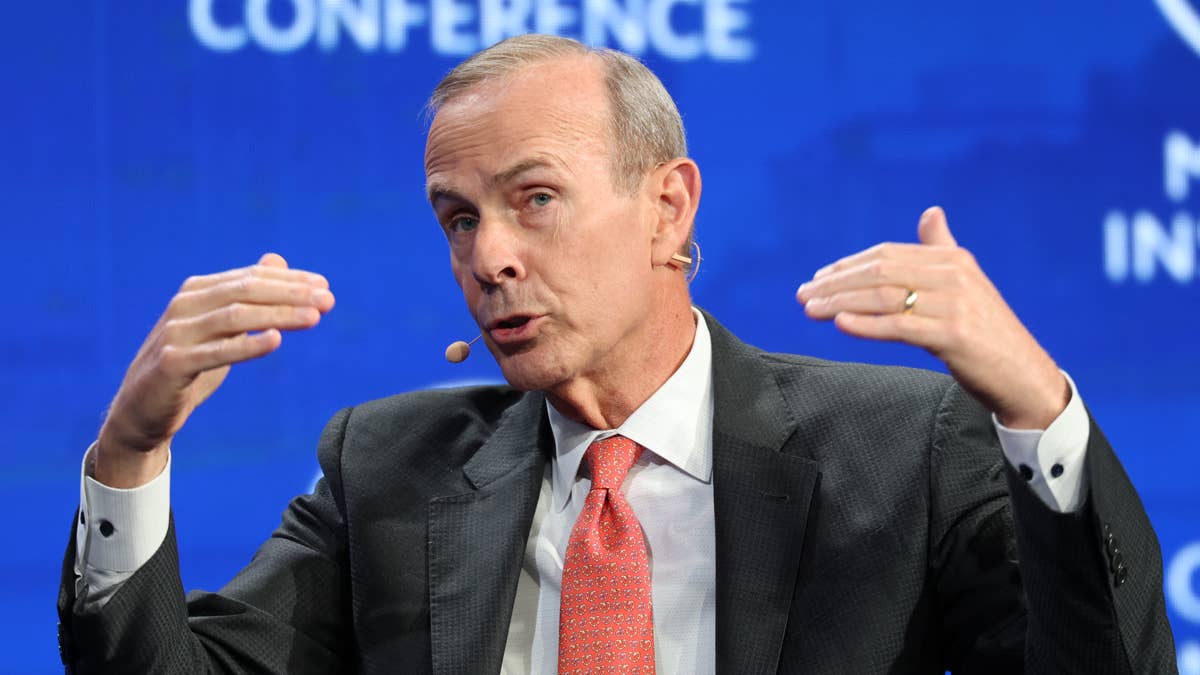
Oil Market Imbalance Intensifies, Prices Expected to Rise
- Inventory Pressure Intensifies: According to the EIA report, U.S. commercial crude oil inventories fell by 3.3 million barrels in a single week to 441.7 million barrels, now approximately 2% below the five-year average, indicating a significantly diminished capacity for the market to absorb supply shocks.
- Price Increase Expectations: Chevron CEO Mike Wirth warned that in the coming weeks, oil prices will face greater upward pressure, with significant increases expected in June and July, reflecting the escalating tensions in the global oil market.
- Global Demand Contraction: The IEA projects a contraction of 420,000 barrels per day in global oil demand for 2026, which is 1.3 million barrels per day weaker than pre-war forecasts, highlighting the negative impact of high oil prices on the economy, particularly on American household budgets.
- Geopolitical Risks Escalate: As tensions between the U.S. and Iran persist, Asian countries like Japan and South Korea have seen significant drops in Middle Eastern oil imports, decreasing by 1.9 million barrels per day and 1 million barrels per day respectively, further destabilizing the global supply chain.
See More

Energy Stocks Surge Amid Geopolitical Turmoil and AI Demand

- Chevron's Profit Surge: Chevron (CVX) has leveraged strict cost discipline and high oil prices, with crude oil reaching $90 per barrel, significantly boosting shareholder returns and enhancing its competitive position in the market through increased profits and free cash flow.
- Brookfield's Rapid Expansion: Brookfield Renewable (BEPC) commissioned over 9 GW of new capacity last year and is on track to achieve a commissioning run rate of 10 GW annually by 2027, benefiting from stable cash flows and inflation-indexed revenues amid rising energy demand.
- Constellation's Nuclear Power Advantage: Constellation Energy (CEG) operates the largest nuclear fleet in the U.S. with 22 GW of nuclear capacity, positioning itself favorably to meet zero-emission goals while capitalizing on market flexibility during energy constraints.
- Increased Investor Focus on Energy Stocks: The geopolitical turmoil in the Middle East and the surging demand from AI data centers have heightened investor interest in companies capable of providing fuel and reliable power, likely driving stock prices and market performance for these energy firms.
See More

Energy Stocks Benefit from Market Turmoil
- Oil Price Surge: Geopolitical turmoil in the Middle East and disruptions around the Strait of Hormuz have sharply increased oil and gas prices, driving strong performance in energy stocks in 2026, with Chevron's free cash flow significantly boosted and expected to continue rewarding shareholders.
- Chevron's Low-Cost Advantage: Chevron's corporate break-even price is around $50 per barrel, benefiting from high-margin assets in the Gulf of Mexico and a 30% stake in Guyana, allowing for higher profits and cash flow during rising oil prices.
- Brookfield Renewable's Growth: Brookfield Renewable operates over 47 gigawatts of capacity globally and aims to add 10 gigawatts of new generation capacity annually by 2027, expected to attract investors through stable cash flow and long-term returns of 12%-15%.
- Constellation Energy's Nuclear Power Edge: Constellation Energy boasts a total capacity of 55 gigawatts, with 22 gigawatts from nuclear energy, making it the largest commercial nuclear operator in the U.S., meeting zero-emission goals while locking in high electricity prices in the market.
See More
Chevron Reports Q1 2026 Earnings Decline Amid Production Growth
- Earnings Decline: Chevron reported adjusted earnings of $1.41 per share for Q1 2026, significantly down from $2.18 in the same period last year, indicating pressure on profitability amid challenging market conditions.
- Hedging Impact: The company's hedging activities negatively impacted earnings by $2.9 billion in the first quarter, although this effect is expected to reverse in future quarters, leading to a distorted view of current performance.
- Production Growth: Despite geopolitical tensions in the Middle East, Chevron achieved a 15% year-over-year increase in global production and a 24% rise in the U.S. market, with the Permian Basin exceeding one million barrels per day for the fifth consecutive quarter, showcasing resilience in a complex environment.
- Long-Term Strategy: Chevron's management is focused on generating robust cash flow from the Permian Basin, with potential for further production increases despite the ongoing integration of Hess, reflecting a commitment to pursuing long-term growth amid uncertainty.
See More
Chevron's Q1 Earnings Drop Year Over Year, Production Surges
- Earnings Decline: Chevron reported adjusted earnings of $1.41 per share for Q1, significantly down from $2.18 in the same period last year, indicating pressure on profitability despite a 6.5% rise in oil prices, raising concerns among investors regarding its financial health.
- Hedging Loss Impact: The company's hedging activities resulted in a $2.9 billion loss in Q1, which is expected to reverse in future quarters; however, this short-term hit may have distorted the perceived performance, potentially shaking investor confidence.
- Production Growth: Chevron's global production rose by 15% year-over-year, with a 24% increase in the U.S. market, driven by over one million barrels per day from the Permian Basin, demonstrating the company's ability to grow amidst geopolitical challenges and enhancing its competitive position.
- Strategic Outlook: Despite the challenges posed by the Middle East conflict, Chevron's management remains focused on long-term growth, emphasizing robust cash flow generation from the Permian Basin, indicating potential for further expansion in the future, even if immediate production increases are not prioritized.
See More
Chevron Moves to Acquire 70% Stake in Greek Offshore Block
- Dividend Yield: As of May 29, Chevron Corporation (NYSE:CVX) boasts an annual dividend yield of 3.89%, ranking among the top Dividend Aristocrats by yield, reflecting its robust cash flow and commitment to shareholder returns.
- Mediterranean Expansion: On May 28, Chevron filed a request to acquire a 70% stake in an offshore block southwest of Greece, which, if approved, would position the company as the operator of the block and lead gas exploration activities, thereby enhancing its market presence in the Mediterranean region.
- Legal Executive Appointment: Chevron announced on May 29 the appointment of Scott A. Keller as general counsel, who will join the company on July 1 and is expected to take over as chief legal officer on January 1, 2027, overseeing global legal affairs and ensuring compliance.
- Leadership Transition: Keller's appointment aligns with the anticipated retirement of current chief legal officer R. Hewitt Pate in mid-2027, indicating Chevron's proactive approach to leadership succession planning and maintaining legal oversight during this transition.
See More
Oil Market Imbalance Intensifies, Prices Expected to Rise
- Inventory Pressure Intensifies: According to the EIA report, U.S. commercial crude oil inventories fell by 3.3 million barrels in a single week to 441.7 million barrels, now approximately 2% below the five-year average, indicating a significantly diminished capacity for the market to absorb supply shocks.
- Price Increase Expectations: Chevron CEO Mike Wirth warned that in the coming weeks, oil prices will face greater upward pressure, with significant increases expected in June and July, reflecting the escalating tensions in the global oil market.
- Global Demand Contraction: The IEA projects a contraction of 420,000 barrels per day in global oil demand for 2026, which is 1.3 million barrels per day weaker than pre-war forecasts, highlighting the negative impact of high oil prices on the economy, particularly on American household budgets.
- Geopolitical Risks Escalate: As tensions between the U.S. and Iran persist, Asian countries like Japan and South Korea have seen significant drops in Middle Eastern oil imports, decreasing by 1.9 million barrels per day and 1 million barrels per day respectively, further destabilizing the global supply chain.
See More
Energy Stocks Surge Amid Geopolitical Turmoil and AI Demand
- Chevron's Profit Surge: Chevron (CVX) has leveraged strict cost discipline and high oil prices, with crude oil reaching $90 per barrel, significantly boosting shareholder returns and enhancing its competitive position in the market through increased profits and free cash flow.
- Brookfield's Rapid Expansion: Brookfield Renewable (BEPC) commissioned over 9 GW of new capacity last year and is on track to achieve a commissioning run rate of 10 GW annually by 2027, benefiting from stable cash flows and inflation-indexed revenues amid rising energy demand.
- Constellation's Nuclear Power Advantage: Constellation Energy (CEG) operates the largest nuclear fleet in the U.S. with 22 GW of nuclear capacity, positioning itself favorably to meet zero-emission goals while capitalizing on market flexibility during energy constraints.
- Increased Investor Focus on Energy Stocks: The geopolitical turmoil in the Middle East and the surging demand from AI data centers have heightened investor interest in companies capable of providing fuel and reliable power, likely driving stock prices and market performance for these energy firms.
See More
Energy Stocks Benefit from Market Turmoil
- Oil Price Surge: Geopolitical turmoil in the Middle East and disruptions around the Strait of Hormuz have sharply increased oil and gas prices, driving strong performance in energy stocks in 2026, with Chevron's free cash flow significantly boosted and expected to continue rewarding shareholders.
- Chevron's Low-Cost Advantage: Chevron's corporate break-even price is around $50 per barrel, benefiting from high-margin assets in the Gulf of Mexico and a 30% stake in Guyana, allowing for higher profits and cash flow during rising oil prices.
- Brookfield Renewable's Growth: Brookfield Renewable operates over 47 gigawatts of capacity globally and aims to add 10 gigawatts of new generation capacity annually by 2027, expected to attract investors through stable cash flow and long-term returns of 12%-15%.
- Constellation Energy's Nuclear Power Edge: Constellation Energy boasts a total capacity of 55 gigawatts, with 22 gigawatts from nuclear energy, making it the largest commercial nuclear operator in the U.S., meeting zero-emission goals while locking in high electricity prices in the market.
See More