Tech Boom vs. Consumer Struggles: A Tale of Two Markets
Written by Emily J. Thompson, Senior Investment Analyst
Updated: 1 day ago
0mins

Should l Buy MU?
Source: CNBC
- Tech Stock Surge: Driven by soaring demand for memory components and CPUs, tech stocks like Alphabet and Nvidia have shown strong performance, propelling major indices such as the Nasdaq Composite and S&P 500 to significant gains over the past month, reflecting heightened confidence among technology investors.
- Consumer Sector Struggles: While the retail and consumer discretionary sectors are not in dire straits, cyclical companies like Home Depot have seen stock prices drop over 23% in the last three months due to rising inflation and energy costs, highlighting the reality of squeezed consumer spending.
- Rising Macroeconomic Concerns: Analysts warn that despite the robust performance of tech stocks, the market's divergence indicates underlying economic fragility, especially as both the consumer price index and producer price index have shown significant increases, with PPI rising 6% year-over-year, the largest since December 2022.
- Surging Energy Prices: Gasoline prices have surged 28.4% year-over-year, with the average price per gallon now at $4.51, reflecting tensions in the global oil market, as Brent crude and West Texas Intermediate trade around $105 and $100 per barrel, respectively, further exacerbating economic pressures on consumers.
Trade with 70% Backtested Accuracy
Stop guessing "Should I Buy MU?" and start using high-conviction signals backed by rigorous historical data.
Sign up today to access powerful investing tools and make smarter, data-driven decisions.
Analyst Views on MU
Wall Street analysts forecast MU stock price to fall
26 Analyst Rating
24 Buy
2 Hold
0 Sell
Strong Buy
Current: 776.010

Low
235.00
Averages
336.12
High
500.00
Current: 776.010
Low
235.00
Averages
336.12
High
500.00
About MU
Micron Technology, Inc. provides memory and storage solutions. The Company delivers a portfolio of high-performance dynamic random-access memory (DRAM), NAND, and NOR memory and storage products through its Micron and Crucial brands. The Company's products enable advancing in artificial intelligence (AI) and compute-intensive applications. Its segments include Cloud Memory Business Unit (CMBU), Core Data Center Business Unit (CDBU), Mobile and Client Business Unit (MCBU) and Automotive and Embedded Business Unit (AEBU). CMBU is focused on memory solutions for large hyperscale cloud customers, and high bandwidth memory (HBM) for all data center customers. CDBU is focused on memory solutions for mid-tier cloud, enterprise, and OEM data center customers and storage solutions for all data center customers. MCBU is focused on memory and storage solutions for mobile and client segments. AEBU is focused on memory and storage solutions for the automotive, industrial, and consumer segments.
About the author

Emily J. Thompson
Emily J. Thompson, a Chartered Financial Analyst (CFA) with 12 years in investment research, graduated with honors from the Wharton School. Specializing in industrial and technology stocks, she provides in-depth analysis for Intellectia’s earnings and market brief reports.
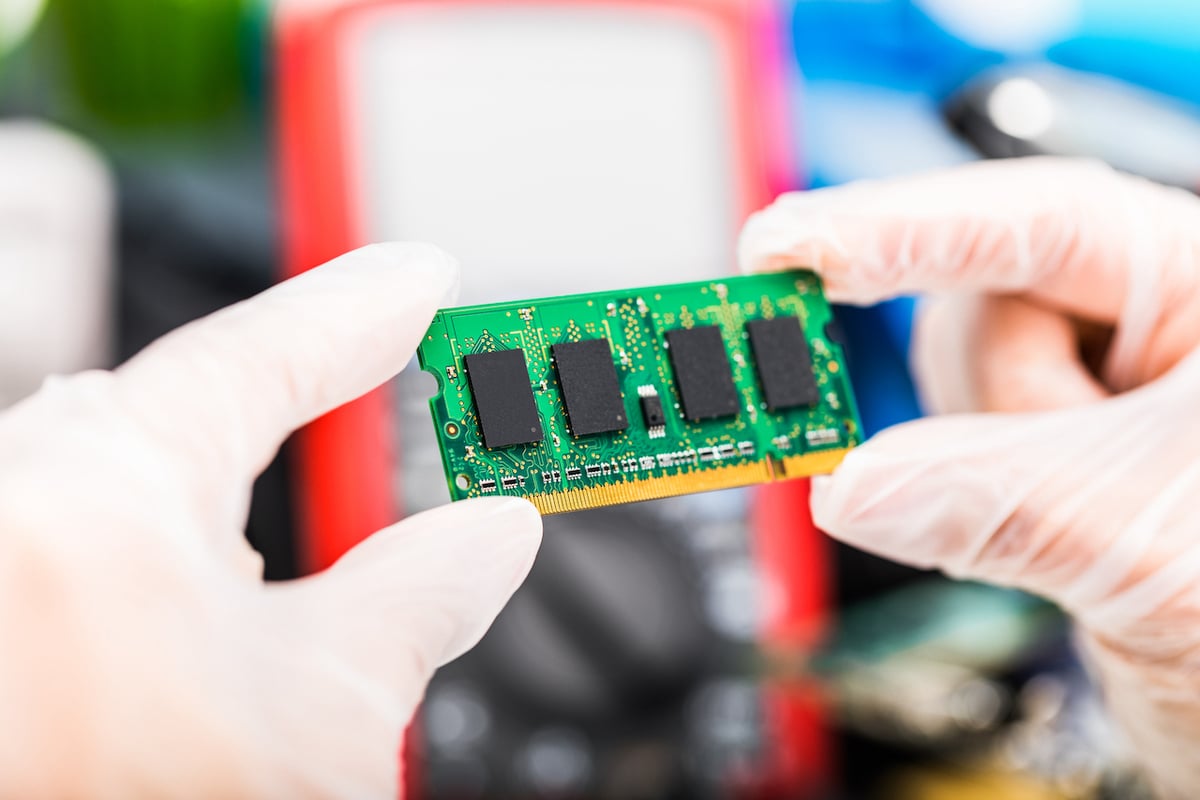
Micron Technology Poised to Surpass $1 Trillion Market Cap

- Core of AI Market: Micron Technology is positioned to surpass a $1 trillion market cap this year, driven by robust sales of its memory chips amid surging demand for AI chips, highlighting its critical role in the rapidly evolving AI landscape.
- Outstanding Financial Performance: For the second quarter of fiscal 2026, Micron reported nearly tripled year-over-year revenue at $23.86 billion, with a sequential growth of 74.9%, indicating the company's strong financial health and ability to consistently exceed market expectations.
- Significant Dividend Growth: Micron announced a 30% increase in its dividend, which, despite a current yield below 0.1%, underscores the company's solid financial position and confidence in future growth, thereby enhancing investor sentiment.
- Optimistic Market Outlook: Management anticipates a midpoint revenue of $33.5 billion for the third quarter of fiscal 2026, and given the company's history of beating guidance, there is potential for Micron to achieve a $1 trillion valuation before its upcoming earnings report.
See More

Surge in Memory Pricing Mentions Signals Semiconductor Industry Pressure
- Surge in Pricing Mentions: Bloomberg data indicates that mentions of memory pricing have exceeded 550 this year, marking the highest level since 1999, highlighting the semiconductor industry's pressures from supply shortages and AI demand.
- Rising DRAM and HBM Costs: Strong demand for AI infrastructure and data centers has driven up DRAM and high-bandwidth memory costs, benefiting memory makers like Micron (MU) and SK Hynix, while device manufacturers face increased component costs.
- Inventory and Lead Time Issues: This earnings season, executives are increasingly discussing inventory constraints and lead times, indicating the impact of rising memory costs on margins and product pricing, which underscores the challenges faced by the industry.
- Concerns Over Sustainability: Analysts caution that the surge in pricing discussions may reflect growing concerns about sustainability, as moderating spot prices and rising inventories could pressure margins if demand weakens later in the year.
See More

AI Semiconductor Rally Expands Beyond Nvidia to Multiple Companies

- Market Focus Expansion: The AI-driven semiconductor rally is broadening as investors increasingly turn to companies like Micron, AMD, and Intel, indicating a desire for diversified investment opportunities, particularly amid ongoing memory shortages.
- Micron's Market Advantage: Micron has emerged as a key beneficiary of persistent memory shortages, with analysts noting that the rally is not solely tied to AI demand, as non-AI memory products and rising DRAM prices have also boosted its margins, reflecting strong market demand for memory products.
- AMD and Intel's Resurgence: AMD and Intel have benefited from renewed enthusiasm around CPUs, with investors positioning for the rise of “agentic AI,” which is expected to require more processing power, although analysts caution that AMD's recent momentum is more closely linked to its server CPU business than its AI GPU segment.
- Arm and Credo's Outlook: Arm has attracted attention due to its deep ties with hyperscalers like Amazon and Google, with investors betting that its CPU designs could benefit from the rise in custom AI chip development, while Credo Technology has rallied on expectations of strong demand for high-speed networking products used in AI data centers.
See More
Micron Technology Sees 700% Stock Surge Amid Soaring Demand
- Surging Market Demand: Micron Technology's high-bandwidth memory (HBM) for data centers is experiencing skyrocketing demand, leading to its entire 2026 supply being sold out, with the market expected to grow from $35 billion last year to $100 billion by 2028, indicating robust growth potential.
- Rapid Revenue and Earnings Growth: Micron achieved a record revenue of $23.8 billion in its fiscal 2026 second quarter, marking a 196% year-over-year increase, with forecasts suggesting third-quarter revenue could reach $33.5 billion, reflecting an impressive growth rate of 260% driven by AI-related memory sales.
- Significant Profitability Increase: The company reported earnings of $12.07 per share in the second quarter, up 756% year-over-year, with expectations for third-quarter earnings to rise to $18.90 per share, representing an astounding growth of 1,025%, showcasing explosive profitability growth.
- Investment Risk Advisory: While Micron's current P/E ratio of 37.4 suggests its stock remains attractive, analysts express caution due to anticipated future supply-demand balance, advising investors to consider smaller positions to mitigate risk.
See More

US-China Executive Meeting Focuses on Tech Cooperation

- High-Level US-China Meeting: The meeting between US President Trump and Chinese President Xi Jinping highlighted tech cooperation, with executives from Nvidia, Tesla, and Apple present, indicating a strong American interest in the Chinese market.
- Absence of Chip Export Controls: Despite Nvidia CEO Jensen Huang's presence, discussions on chip export controls were notably absent, which could impact the sales of Nvidia's H200 chips in China, reflecting the complexities of US-China relations in high-tech sectors.
- Rare Earth Minerals Negotiations: Both sides expressed a willingness to cooperate on access to rare earth minerals, where China holds a dominant market position, with hopes to extend existing trade agreements to ensure the US secures critical resources and enhances supply chain resilience.
- Future Negotiation Outlook: Ongoing negotiations on sensitive topics like rare earth minerals are expected to continue into the summer, and if Xi visits the US in September, these issues may resurface, highlighting potential opportunities for economic collaboration between the two nations.
See More

Trump-Xi Talks Omit Chip Export Controls, Focus on Minerals

- Meeting Overview: The Trump-Xi talks did not address chip export controls, although critical minerals and market access for U.S. tech companies were expected focal points, indicating ongoing tensions in the tech sector between the two nations.
- U.S. Executive Participation: High-profile executives including Nvidia's Jensen Huang, Tesla's Elon Musk, and Apple's Tim Cook were part of the U.S. delegation, reflecting America's interest in the Chinese market, yet the lack of consensus on chip exports may hinder future collaboration opportunities.
- Rare Earth Minerals Issue: China's dominance over critical and rare earth minerals remains a sensitive topic in U.S.-China relations; while the U.S. has seen improvements in accessing these resources, uncertainty over the extension of future agreements could impact America's competitiveness in high-tech industries.
- Market Reaction Expectations: Despite the absence of concrete agreements, President Xi's statement about further opening China's market may provide opportunities for U.S. businesses, but the practical implications remain to be seen, potentially affecting market confidence in future collaborations.
See More
Micron Technology Poised to Surpass $1 Trillion Market Cap
- Core of AI Market: Micron Technology is positioned to surpass a $1 trillion market cap this year, driven by robust sales of its memory chips amid surging demand for AI chips, highlighting its critical role in the rapidly evolving AI landscape.
- Outstanding Financial Performance: For the second quarter of fiscal 2026, Micron reported nearly tripled year-over-year revenue at $23.86 billion, with a sequential growth of 74.9%, indicating the company's strong financial health and ability to consistently exceed market expectations.
- Significant Dividend Growth: Micron announced a 30% increase in its dividend, which, despite a current yield below 0.1%, underscores the company's solid financial position and confidence in future growth, thereby enhancing investor sentiment.
- Optimistic Market Outlook: Management anticipates a midpoint revenue of $33.5 billion for the third quarter of fiscal 2026, and given the company's history of beating guidance, there is potential for Micron to achieve a $1 trillion valuation before its upcoming earnings report.
See More
Surge in Memory Pricing Mentions Signals Semiconductor Industry Pressure
- Surge in Pricing Mentions: Bloomberg data indicates that mentions of memory pricing have exceeded 550 this year, marking the highest level since 1999, highlighting the semiconductor industry's pressures from supply shortages and AI demand.
- Rising DRAM and HBM Costs: Strong demand for AI infrastructure and data centers has driven up DRAM and high-bandwidth memory costs, benefiting memory makers like Micron (MU) and SK Hynix, while device manufacturers face increased component costs.
- Inventory and Lead Time Issues: This earnings season, executives are increasingly discussing inventory constraints and lead times, indicating the impact of rising memory costs on margins and product pricing, which underscores the challenges faced by the industry.
- Concerns Over Sustainability: Analysts caution that the surge in pricing discussions may reflect growing concerns about sustainability, as moderating spot prices and rising inventories could pressure margins if demand weakens later in the year.
See More
AI Semiconductor Rally Expands Beyond Nvidia to Multiple Companies
- Market Focus Expansion: The AI-driven semiconductor rally is broadening as investors increasingly turn to companies like Micron, AMD, and Intel, indicating a desire for diversified investment opportunities, particularly amid ongoing memory shortages.
- Micron's Market Advantage: Micron has emerged as a key beneficiary of persistent memory shortages, with analysts noting that the rally is not solely tied to AI demand, as non-AI memory products and rising DRAM prices have also boosted its margins, reflecting strong market demand for memory products.
- AMD and Intel's Resurgence: AMD and Intel have benefited from renewed enthusiasm around CPUs, with investors positioning for the rise of “agentic AI,” which is expected to require more processing power, although analysts caution that AMD's recent momentum is more closely linked to its server CPU business than its AI GPU segment.
- Arm and Credo's Outlook: Arm has attracted attention due to its deep ties with hyperscalers like Amazon and Google, with investors betting that its CPU designs could benefit from the rise in custom AI chip development, while Credo Technology has rallied on expectations of strong demand for high-speed networking products used in AI data centers.
See More
Micron Technology Sees 700% Stock Surge Amid Soaring Demand
- Surging Market Demand: Micron Technology's high-bandwidth memory (HBM) for data centers is experiencing skyrocketing demand, leading to its entire 2026 supply being sold out, with the market expected to grow from $35 billion last year to $100 billion by 2028, indicating robust growth potential.
- Rapid Revenue and Earnings Growth: Micron achieved a record revenue of $23.8 billion in its fiscal 2026 second quarter, marking a 196% year-over-year increase, with forecasts suggesting third-quarter revenue could reach $33.5 billion, reflecting an impressive growth rate of 260% driven by AI-related memory sales.
- Significant Profitability Increase: The company reported earnings of $12.07 per share in the second quarter, up 756% year-over-year, with expectations for third-quarter earnings to rise to $18.90 per share, representing an astounding growth of 1,025%, showcasing explosive profitability growth.
- Investment Risk Advisory: While Micron's current P/E ratio of 37.4 suggests its stock remains attractive, analysts express caution due to anticipated future supply-demand balance, advising investors to consider smaller positions to mitigate risk.
See More
US-China Executive Meeting Focuses on Tech Cooperation
- High-Level US-China Meeting: The meeting between US President Trump and Chinese President Xi Jinping highlighted tech cooperation, with executives from Nvidia, Tesla, and Apple present, indicating a strong American interest in the Chinese market.
- Absence of Chip Export Controls: Despite Nvidia CEO Jensen Huang's presence, discussions on chip export controls were notably absent, which could impact the sales of Nvidia's H200 chips in China, reflecting the complexities of US-China relations in high-tech sectors.
- Rare Earth Minerals Negotiations: Both sides expressed a willingness to cooperate on access to rare earth minerals, where China holds a dominant market position, with hopes to extend existing trade agreements to ensure the US secures critical resources and enhances supply chain resilience.
- Future Negotiation Outlook: Ongoing negotiations on sensitive topics like rare earth minerals are expected to continue into the summer, and if Xi visits the US in September, these issues may resurface, highlighting potential opportunities for economic collaboration between the two nations.
See More
Trump-Xi Talks Omit Chip Export Controls, Focus on Minerals
- Meeting Overview: The Trump-Xi talks did not address chip export controls, although critical minerals and market access for U.S. tech companies were expected focal points, indicating ongoing tensions in the tech sector between the two nations.
- U.S. Executive Participation: High-profile executives including Nvidia's Jensen Huang, Tesla's Elon Musk, and Apple's Tim Cook were part of the U.S. delegation, reflecting America's interest in the Chinese market, yet the lack of consensus on chip exports may hinder future collaboration opportunities.
- Rare Earth Minerals Issue: China's dominance over critical and rare earth minerals remains a sensitive topic in U.S.-China relations; while the U.S. has seen improvements in accessing these resources, uncertainty over the extension of future agreements could impact America's competitiveness in high-tech industries.
- Market Reaction Expectations: Despite the absence of concrete agreements, President Xi's statement about further opening China's market may provide opportunities for U.S. businesses, but the practical implications remain to be seen, potentially affecting market confidence in future collaborations.
See More