Significant Recovery in Consumer Spending During Lunar New Year
Written by Emily J. Thompson, Senior Investment Analyst
Updated: Feb 26 2026
0mins

Source: CNBC
- Market Recovery: During the Lunar New Year holiday, China's consumer market showed signs of recovery with steady increases in hotel bookings and duty-free shopping, highlighted by a record of over 18.7 million rail passengers in a single day, indicating the effectiveness of policy support measures.
- Tourism Spending Growth: While daily tourism trips grew by an average of 5.7%, spending only increased by 5.5%, down from 7% in 2025, reflecting consumers' continued budget sensitivity and persistent deflationary pressures.
- Extended Holiday Boosts Consumption: To stimulate spending, China extended the official holiday by one day, encouraging families to travel together, which drove demand for larger rooms and family-friendly configurations, thereby enhancing hotel occupancy rates.
- Policy Support Measures: Local governments issued over 2.05 billion yuan in consumption vouchers and subsidies ahead of the holiday, effectively supporting demand, although the focus appears to be on preventing consumption growth from slipping below a certain level rather than implementing sweeping stimulus.
Trade with 70% Backtested Accuracy
Stop guessing "Should I Buy MS?" and start using high-conviction signals backed by rigorous historical data.
Sign up today to access powerful investing tools and make smarter, data-driven decisions.
Analyst Views on MS
Wall Street analysts forecast MS stock price to rise
14 Analyst Rating
7 Buy
7 Hold
0 Sell
Moderate Buy
Current: 158.390

Low
132.00
Averages
185.00
High
219.00
Current: 158.390
Low
132.00
Averages
185.00
High
219.00
About MS
Morgan Stanley is a global financial services company. The Company is engaged in providing a range of investment banking, securities, wealth management and investment management services. Its segments include Institutional Securities, Wealth Management and Investment Management. Its Institutional Securities segment provides a variety of products and services to corporations, governments, financial institutions and ultra-high net worth clients. Its Wealth Management segment provides an array of financial services and solutions to individual investors and small to medium-sized businesses and institutions. Its Investment Management segment provides a range of investment strategies and products that span geographies, asset classes, and public and private markets to a diverse group of clients across institutional and intermediary channels. Its investment banking services consist of capital raising and financial advisory services, including the underwriting of debt and other products.
About the author

Emily J. Thompson
Emily J. Thompson, a Chartered Financial Analyst (CFA) with 12 years in investment research, graduated with honors from the Wharton School. Specializing in industrial and technology stocks, she provides in-depth analysis for Intellectia’s earnings and market brief reports.

Iran War Triggers Market Turmoil Amid Conflicting Statements


- Market Uncertainty: The oil markets are experiencing volatility due to conflicting statements regarding the Iran war, with both WTI and Brent crude prices initially rising before pulling back, indicating investor concerns about future developments.
- Defense Secretary Investment Controversy: U.S. Defense Secretary Pete Hegseth's broker reportedly sought to make multimillion-dollar investments in major defense companies before the war, raising questions about potential insider trading, although the Pentagon has dismissed these claims.
- Trump's Tough Rhetoric: President Trump threatened to destroy Iran's oil wells and power plants if a peace deal is not reached, which has heightened market anxiety and complicated investor expectations regarding the conflict's trajectory.
- Fed's Inflation Outlook: Federal Reserve Chair Jerome Powell stated that inflation expectations remain grounded despite rising energy prices, suggesting that the central bank does not need to respond with higher interest rates, which could influence market perceptions of future monetary policy.
See More
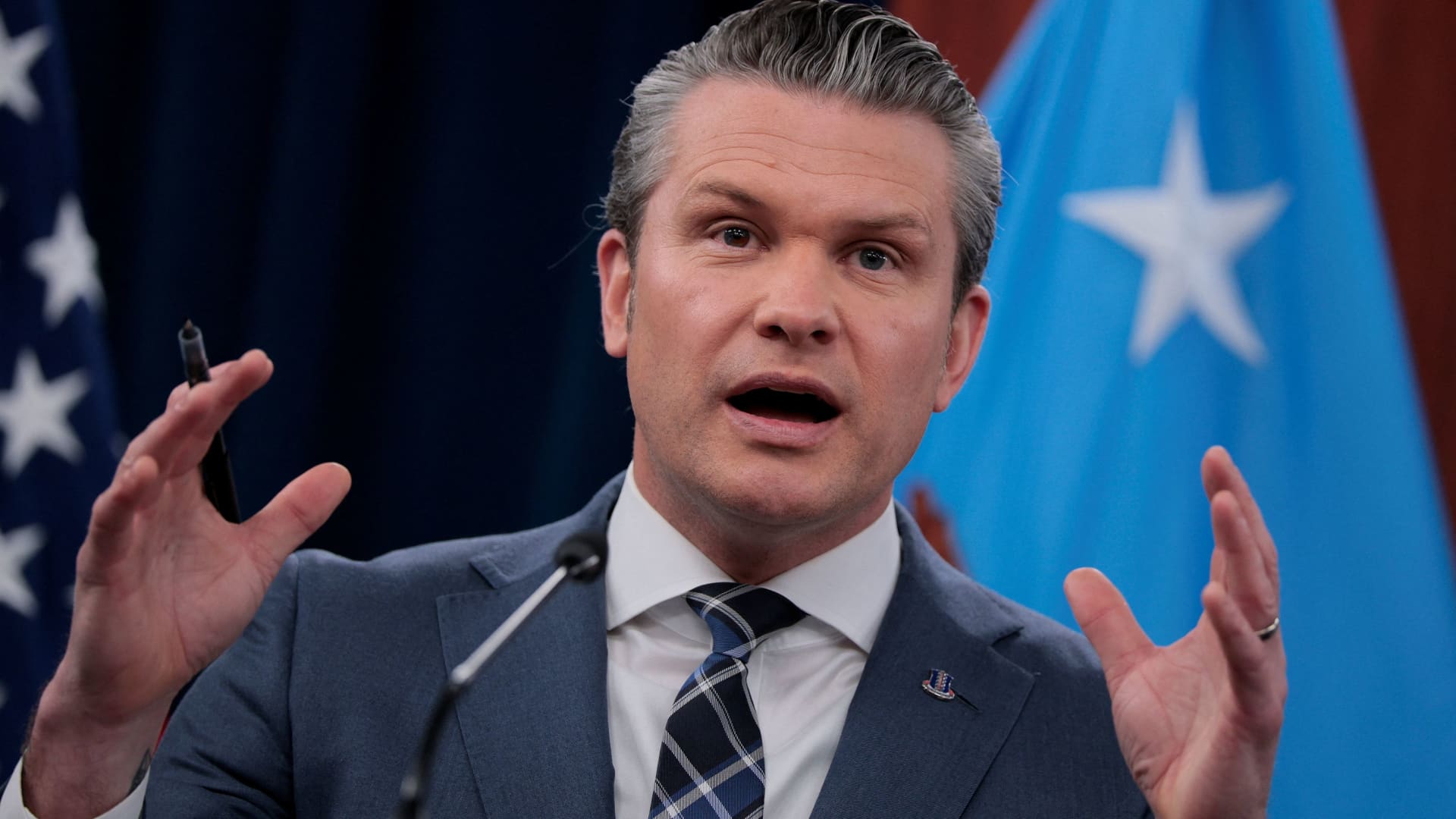
Pentagon Denies Defense Secretary's Investment Rumors


- Investment Rumors Surface: According to the Financial Times, U.S. Defense Secretary Pete Hegseth's broker sought to make a large investment in major defense companies ahead of the Iran war, although the Pentagon denied the report, labeling it as 'entirely false.'
- ETF Investment Plan: Hegseth's broker contacted BlackRock to discuss a multimillion-dollar investment in its iShares Defense Industrials Active ETF, which has approximately $3.1 billion in assets and includes stocks from major defense firms like Lockheed Martin.
- Poor Market Performance: The Defense ETF has lost 12.4% in the past month since the onset of the Iran war, reflecting cautious sentiment in the defense investment landscape, despite Hegseth's investment plans not materializing.
- Conflict Escalation: With U.S. Marines arriving in the region, the Pentagon is preparing for weeks of ground operations in Iran, indicating a potential escalation of the conflict that could further impact defense industry investment sentiment.
See More

Avis Budget Group Plans Secondary Share Offering


- Secondary Share Offering: Avis Budget Group announced a plan to issue up to 5 million shares of common stock, resulting in a nearly 9% drop in stock price during the trading session, indicating investor concerns over dilution risks.
- Diverse Use of Proceeds: The company intends to use the proceeds from the offering for general corporate purposes, including debt retirement, acquisitions, and share buybacks, reflecting its strategic intent to optimize capital structure.
- Negative Market Reaction: Despite Avis's recent aggressive promotion of spring discount deals to attract customers, rising oil prices and the easing of airport chaos have led to a more cautious market outlook on its future performance.
- Shareholder Dilution Concerns: With over 35 million shares currently outstanding, the potential dilution from the new offering raises concerns among shareholders, necessitating close monitoring of how the new funds are deployed to assess their impact on the company's long-term value.
See More

Avis Plans to Issue 5 Million Shares in Secondary Offering
- Secondary Offering Announcement: Avis Budget Group has announced plans to issue up to 5 million shares through an equity distribution agreement, potentially leading to market sales at current prices, which has raised investor concerns about shareholder dilution, resulting in a nearly 9% drop in stock price on Monday.
- Use of Proceeds: The company intends to use the proceeds from this offering for general corporate purposes, including debt retirement, acquisitions, and share buybacks, indicating a strategic move to secure funding for future growth and stability.
- Market Reaction: The announcement of the secondary offering has heightened shareholder concerns regarding dilution, with the current outstanding share count exceeding 35 million, prompting investors to closely monitor how the new funds will be deployed to assess their impact on the company's long-term value.
- Competitive Landscape: Despite Avis's recent spring discount promotions aimed at attracting customers, rising oil prices and the easing of airport chaos may negatively affect its business, necessitating careful evaluation of market dynamics on the company's performance.
See More

Rising Interest Rates Pose Risks to Stock Market
- Interest Rate Risk: Michael Wilson, Morgan Stanley's chief U.S. equity strategist, highlights that rising interest rates and expectations for tighter monetary policy are pressuring stock valuations, particularly against a backdrop of rising energy prices, leading to declines in stock values.
- Market Correction Signs: Wilson notes that the S&P 500's forward price-to-earnings multiple has dropped 17% over the next 12 months, matching prior growth scares without a recession or Fed hikes, indicating that the market correction may be nearing its end.
- Bond Yield Impact: The 10-year Treasury yield reached as high as 4.48% on Friday, closing at 4.44%, which Wilson identifies as a critical point affecting stock valuations, with the negative correlation between interest rates and stocks at its highest in several years.
- Tech Stock Outlook: Morgan Stanley sees a favorable risk/reward profile for
See More

Retirement Investor Protection Rule Struck Down Again

- Rule Repeal Impact: The U.S. court has struck down the fiduciary rule aimed at enhancing retirement investor protections for the second time, which may lead to retirement investors receiving investment advice that does not serve their best interests, thereby increasing market confusion and uncertainty.
- Historical Repetition: This event mirrors the previous repeal of a similar rule during the Obama administration, highlighting the financial industry's resistance to regulatory measures through legal challenges, potentially exposing investors to lower protection standards.
- Investment Decision Risks: Recent data shows that approximately 6 million individuals rolled nearly $700 billion into IRAs in 2022, and the absence of fiduciary rules may diminish the quality of advice surrounding these significant financial decisions, increasing risks for investors.
- Industry Reaction: The insurance industry welcomed this ruling as a victory for consumers, arguing that the Biden-era rule exceeded the Department's authority, indicating that future investors must be more cautious in selecting advisors to ensure they receive transparent and interest-aligned advice.
See More
Iran War Triggers Market Turmoil Amid Conflicting Statements
- Market Uncertainty: The oil markets are experiencing volatility due to conflicting statements regarding the Iran war, with both WTI and Brent crude prices initially rising before pulling back, indicating investor concerns about future developments.
- Defense Secretary Investment Controversy: U.S. Defense Secretary Pete Hegseth's broker reportedly sought to make multimillion-dollar investments in major defense companies before the war, raising questions about potential insider trading, although the Pentagon has dismissed these claims.
- Trump's Tough Rhetoric: President Trump threatened to destroy Iran's oil wells and power plants if a peace deal is not reached, which has heightened market anxiety and complicated investor expectations regarding the conflict's trajectory.
- Fed's Inflation Outlook: Federal Reserve Chair Jerome Powell stated that inflation expectations remain grounded despite rising energy prices, suggesting that the central bank does not need to respond with higher interest rates, which could influence market perceptions of future monetary policy.
See More
Pentagon Denies Defense Secretary's Investment Rumors
- Investment Rumors Surface: According to the Financial Times, U.S. Defense Secretary Pete Hegseth's broker sought to make a large investment in major defense companies ahead of the Iran war, although the Pentagon denied the report, labeling it as 'entirely false.'
- ETF Investment Plan: Hegseth's broker contacted BlackRock to discuss a multimillion-dollar investment in its iShares Defense Industrials Active ETF, which has approximately $3.1 billion in assets and includes stocks from major defense firms like Lockheed Martin.
- Poor Market Performance: The Defense ETF has lost 12.4% in the past month since the onset of the Iran war, reflecting cautious sentiment in the defense investment landscape, despite Hegseth's investment plans not materializing.
- Conflict Escalation: With U.S. Marines arriving in the region, the Pentagon is preparing for weeks of ground operations in Iran, indicating a potential escalation of the conflict that could further impact defense industry investment sentiment.
See More
Avis Budget Group Plans Secondary Share Offering
- Secondary Share Offering: Avis Budget Group announced a plan to issue up to 5 million shares of common stock, resulting in a nearly 9% drop in stock price during the trading session, indicating investor concerns over dilution risks.
- Diverse Use of Proceeds: The company intends to use the proceeds from the offering for general corporate purposes, including debt retirement, acquisitions, and share buybacks, reflecting its strategic intent to optimize capital structure.
- Negative Market Reaction: Despite Avis's recent aggressive promotion of spring discount deals to attract customers, rising oil prices and the easing of airport chaos have led to a more cautious market outlook on its future performance.
- Shareholder Dilution Concerns: With over 35 million shares currently outstanding, the potential dilution from the new offering raises concerns among shareholders, necessitating close monitoring of how the new funds are deployed to assess their impact on the company's long-term value.
See More
Avis Plans to Issue 5 Million Shares in Secondary Offering
- Secondary Offering Announcement: Avis Budget Group has announced plans to issue up to 5 million shares through an equity distribution agreement, potentially leading to market sales at current prices, which has raised investor concerns about shareholder dilution, resulting in a nearly 9% drop in stock price on Monday.
- Use of Proceeds: The company intends to use the proceeds from this offering for general corporate purposes, including debt retirement, acquisitions, and share buybacks, indicating a strategic move to secure funding for future growth and stability.
- Market Reaction: The announcement of the secondary offering has heightened shareholder concerns regarding dilution, with the current outstanding share count exceeding 35 million, prompting investors to closely monitor how the new funds will be deployed to assess their impact on the company's long-term value.
- Competitive Landscape: Despite Avis's recent spring discount promotions aimed at attracting customers, rising oil prices and the easing of airport chaos may negatively affect its business, necessitating careful evaluation of market dynamics on the company's performance.
See More
Rising Interest Rates Pose Risks to Stock Market
- Interest Rate Risk: Michael Wilson, Morgan Stanley's chief U.S. equity strategist, highlights that rising interest rates and expectations for tighter monetary policy are pressuring stock valuations, particularly against a backdrop of rising energy prices, leading to declines in stock values.
- Market Correction Signs: Wilson notes that the S&P 500's forward price-to-earnings multiple has dropped 17% over the next 12 months, matching prior growth scares without a recession or Fed hikes, indicating that the market correction may be nearing its end.
- Bond Yield Impact: The 10-year Treasury yield reached as high as 4.48% on Friday, closing at 4.44%, which Wilson identifies as a critical point affecting stock valuations, with the negative correlation between interest rates and stocks at its highest in several years.
- Tech Stock Outlook: Morgan Stanley sees a favorable risk/reward profile for
See More
Retirement Investor Protection Rule Struck Down Again
- Rule Repeal Impact: The U.S. court has struck down the fiduciary rule aimed at enhancing retirement investor protections for the second time, which may lead to retirement investors receiving investment advice that does not serve their best interests, thereby increasing market confusion and uncertainty.
- Historical Repetition: This event mirrors the previous repeal of a similar rule during the Obama administration, highlighting the financial industry's resistance to regulatory measures through legal challenges, potentially exposing investors to lower protection standards.
- Investment Decision Risks: Recent data shows that approximately 6 million individuals rolled nearly $700 billion into IRAs in 2022, and the absence of fiduciary rules may diminish the quality of advice surrounding these significant financial decisions, increasing risks for investors.
- Industry Reaction: The insurance industry welcomed this ruling as a victory for consumers, arguing that the Biden-era rule exceeded the Department's authority, indicating that future investors must be more cautious in selecting advisors to ensure they receive transparent and interest-aligned advice.
See More