Reasons to Steer Clear of Betting on Ingersoll Rand at This Time


Operational Challenges: Ingersoll Rand Inc. is facing difficulties due to rising operating costs, which increased 4.4% year-over-year, and high selling and administrative expenses, leading to a decline in profitability.
Debt Concerns: The company's long-term debt has risen to $4.79 billion, with increasing interest expenses, which may negatively impact its financial stability and profitability in the future.
Currency Risks: Ingersoll Rand's international operations expose it to foreign currency fluctuations, particularly with a strengthening U.S. dollar, which could affect pricing and profit margins abroad.
Earnings Estimate Revision: The Zacks Consensus Estimate for Ingersoll Rand's 2025 earnings has been revised downward by 2.1% in the past 60 days, reflecting ongoing concerns about its financial performance.
Trade with 70% Backtested Accuracy
Analyst Views on PH

About PH
About the author


Parker Hannifin to Release Q3 Fiscal 2026 Earnings

- Earnings Release Schedule: Parker Hannifin Corporation is set to announce its fiscal 2026 third quarter earnings before the market opens on April 30, 2026, which is expected to provide critical financial data reflecting the company's operational status and helping investors assess its market performance.
- Conference Call Details: Following the earnings release, the company will hold a conference call at 11:00 a.m. Eastern Time, during which it will discuss financial results and answer questions from institutional investors and security analysts, enhancing transparency and investor confidence.
- Webcast and Replay: The conference call will be webcast live on Parker's investor website, accompanied by a slide presentation, and the recording will be available for replay later that day, ensuring that investors who cannot participate live can still access the information.
- Dividend Growth Record: Parker Hannifin has increased its annual dividend per share for 69 consecutive fiscal years, ranking among the top five longest-running dividend-increase records in the S&P 500 index, demonstrating its stable financial health and commitment to shareholders.

AMAT vs PH Stock Performance Comparison

- Stock Performance: As of midday Friday, AMAT shares are up approximately 1.5%, while PH shares have only increased by about 0.2%, indicating AMAT's relative strength in the market, which may attract more investor attention.
- Market Trends: The upward trend in AMAT's stock could reflect investor confidence in its future growth potential, particularly driven by ongoing innovation in the technology sector and increasing market demand, thereby enhancing its market position.
- Investor Sentiment: Although PH shares also saw a slight increase, the relative performance of AMAT may lead investors to reassess their portfolios, considering reallocating more funds into the stronger-performing AMAT.
- Industry Impact: AMAT's robust performance could positively influence the entire semiconductor industry, prompting other related companies to focus on its market strategies and growth opportunities, thus driving overall industry advancement.

DYNF Stock Price Analysis and ETF Dynamics

- Price Fluctuation Analysis: DYNF's 52-week low is $42.10 and high is $62.41, with the latest trade at $56.83, indicating significant price movement within this range, reflecting market interest and potential investment opportunities.
- Technical Analysis Tool: Comparing the latest stock price to the 200-day moving average provides investors with valuable insights for technical analysis, aiding in trend assessment and future price predictions.
- ETF Trading Mechanism: Exchange-traded funds (ETFs) operate similarly to stocks, where investors buy and sell 'units' that can be created or destroyed based on demand, impacting liquidity and market performance.
- Inflows and Outflows Monitoring: Weekly monitoring of week-over-week changes in ETF shares outstanding highlights those experiencing notable inflows (new units created) or outflows (old units destroyed), allowing assessment of their impact on underlying assets and market trends.
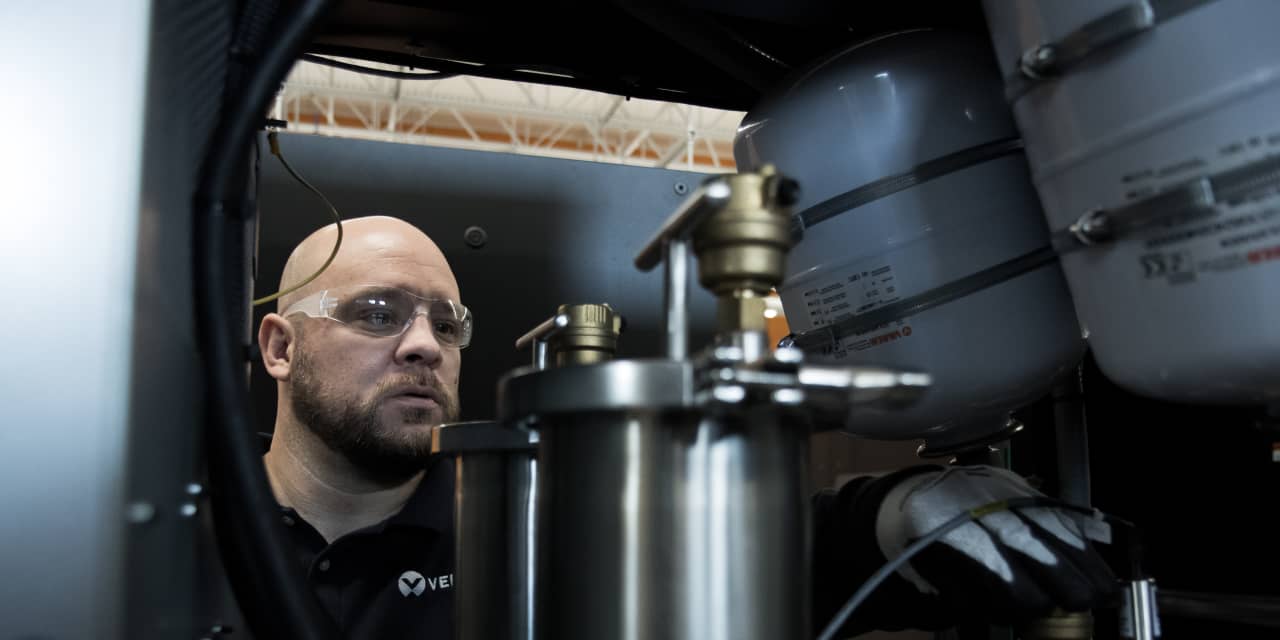
"Vertiv and Six Additional Stocks Worth Investing In Amid Market Turmoil"

- Industrial Stocks Performance: Industrial stocks, previously seen as a rising star, have recently struggled in the market.
- Impact of Oil Prices: Soaring oil prices have contributed significantly to the downturn in industrial stocks.
- Inflation Concerns: Fears of inflation are adding to the challenges faced by the industrial sector.
- Market Sentiment: A general malaise in the markets is exacerbated by ongoing conflicts in the Middle East.
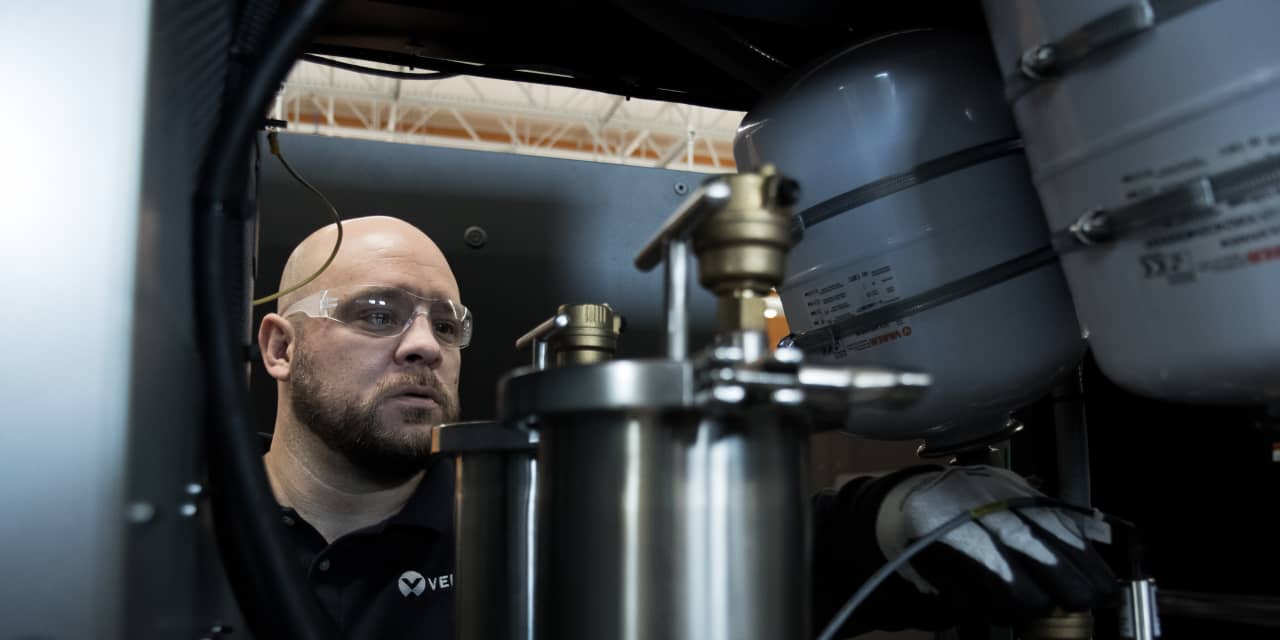
"Searching the Rubble for 7 Industrial Stocks Worth Investing In"


- Industrial Stocks Performance: Industrial stocks, previously seen as a rising star, have recently struggled due to various economic pressures.
- Impact of Oil Prices: Soaring oil prices have contributed significantly to the downturn in industrial stocks.
- Inflation Concerns: Fears of inflation are adding to the challenges faced by the industrial sector.
- Market Sentiment: A general malaise in the markets, exacerbated by ongoing conflicts in the Middle East, is affecting investor confidence.
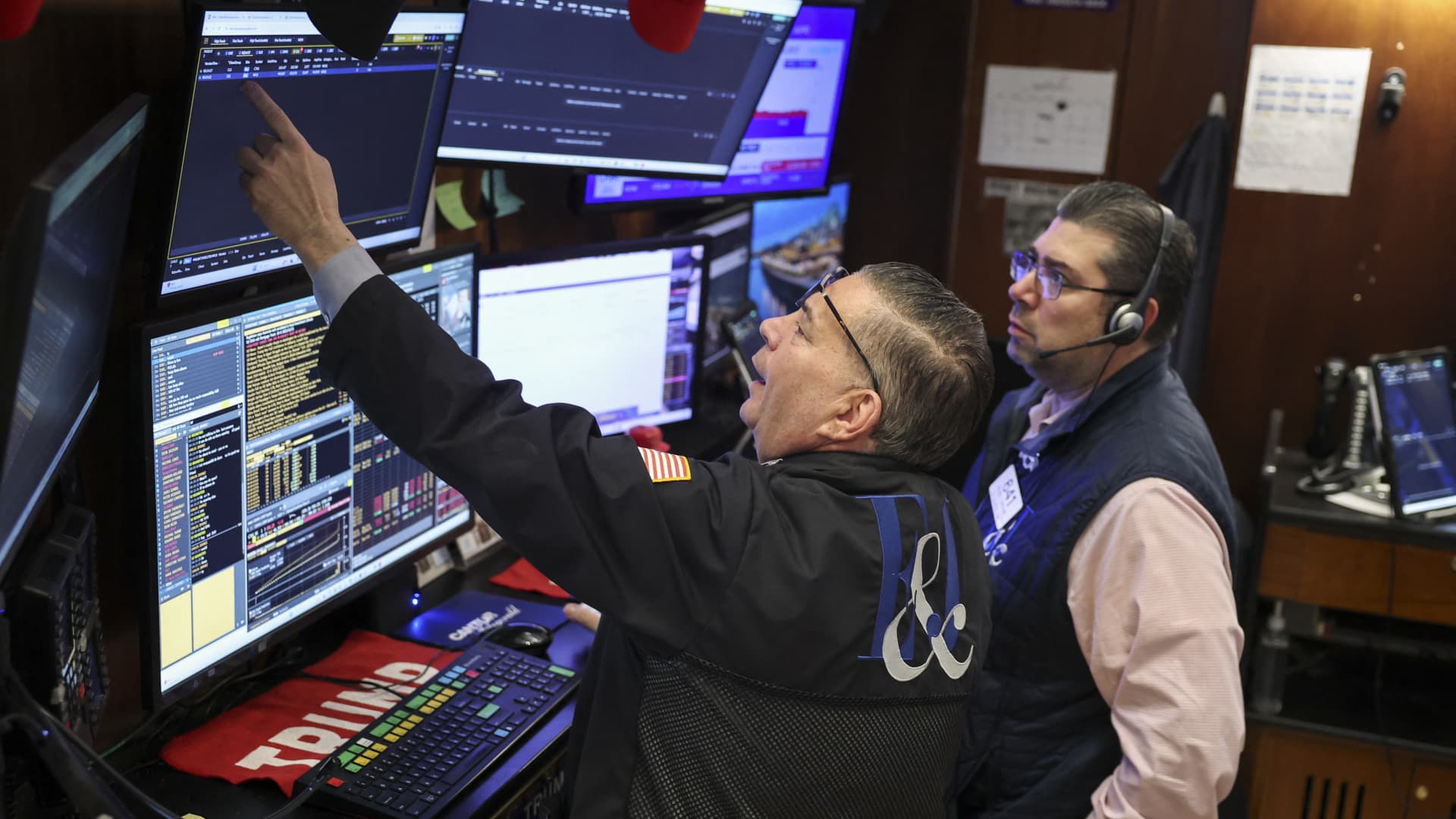
Industrials Post Best Start in 25 Years, Outlook Ahead


- Strong Sector Performance: In 2026, industrials have emerged as a star in the stock market, with the State Street Industrial Select Sector SPDR ETF (XLI) rallying over 5% year-to-date, showcasing robust market demand among the S&P 500 sectors.
- Significant Stock Gains: Among the top 20 stocks by market cap, 14 have risen this year, with GE Vernova up 37%, Caterpillar up 25%, and Lockheed Martin up 26%, reflecting a strong recovery in the sector and increased investor confidence.
- Market Challenges Intensify: Despite the strong performance of industrials, the S&P 500 index has declined nearly 4% due to geopolitical risks and ongoing concerns in artificial intelligence and private credit, highlighting the complexity and uncertainty of the market environment.
- Cautious Future Growth: Trivariate Research notes that industrials are trading at a forward price-to-earnings ratio of about 24, indicating high valuations, and future earnings revisions are necessary to sustain current performance, adding to investor scrutiny and challenges.
Parker Hannifin to Release Q3 Fiscal 2026 Earnings
- Earnings Release Schedule: Parker Hannifin Corporation is set to announce its fiscal 2026 third quarter earnings before the market opens on April 30, 2026, which is expected to provide critical financial data reflecting the company's operational status and helping investors assess its market performance.
- Conference Call Details: Following the earnings release, the company will hold a conference call at 11:00 a.m. Eastern Time, during which it will discuss financial results and answer questions from institutional investors and security analysts, enhancing transparency and investor confidence.
- Webcast and Replay: The conference call will be webcast live on Parker's investor website, accompanied by a slide presentation, and the recording will be available for replay later that day, ensuring that investors who cannot participate live can still access the information.
- Dividend Growth Record: Parker Hannifin has increased its annual dividend per share for 69 consecutive fiscal years, ranking among the top five longest-running dividend-increase records in the S&P 500 index, demonstrating its stable financial health and commitment to shareholders.
AMAT vs PH Stock Performance Comparison
- Stock Performance: As of midday Friday, AMAT shares are up approximately 1.5%, while PH shares have only increased by about 0.2%, indicating AMAT's relative strength in the market, which may attract more investor attention.
- Market Trends: The upward trend in AMAT's stock could reflect investor confidence in its future growth potential, particularly driven by ongoing innovation in the technology sector and increasing market demand, thereby enhancing its market position.
- Investor Sentiment: Although PH shares also saw a slight increase, the relative performance of AMAT may lead investors to reassess their portfolios, considering reallocating more funds into the stronger-performing AMAT.
- Industry Impact: AMAT's robust performance could positively influence the entire semiconductor industry, prompting other related companies to focus on its market strategies and growth opportunities, thus driving overall industry advancement.
DYNF Stock Price Analysis and ETF Dynamics
- Price Fluctuation Analysis: DYNF's 52-week low is $42.10 and high is $62.41, with the latest trade at $56.83, indicating significant price movement within this range, reflecting market interest and potential investment opportunities.
- Technical Analysis Tool: Comparing the latest stock price to the 200-day moving average provides investors with valuable insights for technical analysis, aiding in trend assessment and future price predictions.
- ETF Trading Mechanism: Exchange-traded funds (ETFs) operate similarly to stocks, where investors buy and sell 'units' that can be created or destroyed based on demand, impacting liquidity and market performance.
- Inflows and Outflows Monitoring: Weekly monitoring of week-over-week changes in ETF shares outstanding highlights those experiencing notable inflows (new units created) or outflows (old units destroyed), allowing assessment of their impact on underlying assets and market trends.
"Vertiv and Six Additional Stocks Worth Investing In Amid Market Turmoil"
- Industrial Stocks Performance: Industrial stocks, previously seen as a rising star, have recently struggled in the market.
- Impact of Oil Prices: Soaring oil prices have contributed significantly to the downturn in industrial stocks.
- Inflation Concerns: Fears of inflation are adding to the challenges faced by the industrial sector.
- Market Sentiment: A general malaise in the markets is exacerbated by ongoing conflicts in the Middle East.
"Searching the Rubble for 7 Industrial Stocks Worth Investing In"
- Industrial Stocks Performance: Industrial stocks, previously seen as a rising star, have recently struggled due to various economic pressures.
- Impact of Oil Prices: Soaring oil prices have contributed significantly to the downturn in industrial stocks.
- Inflation Concerns: Fears of inflation are adding to the challenges faced by the industrial sector.
- Market Sentiment: A general malaise in the markets, exacerbated by ongoing conflicts in the Middle East, is affecting investor confidence.
Industrials Post Best Start in 25 Years, Outlook Ahead
- Strong Sector Performance: In 2026, industrials have emerged as a star in the stock market, with the State Street Industrial Select Sector SPDR ETF (XLI) rallying over 5% year-to-date, showcasing robust market demand among the S&P 500 sectors.
- Significant Stock Gains: Among the top 20 stocks by market cap, 14 have risen this year, with GE Vernova up 37%, Caterpillar up 25%, and Lockheed Martin up 26%, reflecting a strong recovery in the sector and increased investor confidence.
- Market Challenges Intensify: Despite the strong performance of industrials, the S&P 500 index has declined nearly 4% due to geopolitical risks and ongoing concerns in artificial intelligence and private credit, highlighting the complexity and uncertainty of the market environment.
- Cautious Future Growth: Trivariate Research notes that industrials are trading at a forward price-to-earnings ratio of about 24, indicating high valuations, and future earnings revisions are necessary to sustain current performance, adding to investor scrutiny and challenges.