Nvidia's Shareholder Return Strategy Analysis
Written by Emily J. Thompson, Senior Investment Analyst
Updated: Mar 11 2026
0mins
Should l Buy NVDA?
Source: Fool
- Significant Revenue Growth: Nvidia's revenue surged 73% year-over-year to $68.1 billion in Q4 of fiscal 2026, primarily driven by robust performance in its data center business, further solidifying its market position in the AI sector.
- Strong Free Cash Flow: The company generated an impressive $34.9 billion in free cash flow in the fourth quarter, translating to a conversion rate of 51.2%, indicating Nvidia's ability to effectively convert revenue into cash while experiencing rapid growth, enhancing its financial flexibility.
- Share Buyback Program: Nvidia returned $41.1 billion to shareholders in fiscal 2026, predominantly through share repurchases; although the impact of these buybacks has diminished due to rising stock prices, they still provide substantial returns to shareholders.
- Prudent Capital Allocation: Nvidia's management emphasizes a careful approach to capital returns, indicating a willingness to invest in high-return areas beyond stock buybacks, demonstrating a balanced strategy between shareholder returns and business growth.
Trade with 70% Backtested Accuracy
Stop guessing "Should I Buy NVDA?" and start using high-conviction signals backed by rigorous historical data.
Sign up today to access powerful investing tools and make smarter, data-driven decisions.
Analyst Views on NVDA
Wall Street analysts forecast NVDA stock price to rise
41 Analyst Rating
39 Buy
1 Hold
1 Sell
Strong Buy
Current: 181.930

Low
200.00
Averages
264.97
High
352.00
Current: 181.930
Low
200.00
Averages
264.97
High
352.00
About NVDA
NVIDIA Corporation is a full-stack computing infrastructure company. The Company is engaged in accelerated computing to help solve the challenging computational problems. The Company’s segments include Compute & Networking and Graphics. The Compute & Networking segment includes its Data Center accelerated computing platforms and artificial intelligence (AI) solutions and software; networking; automotive platforms and autonomous and electric vehicle solutions; Jetson for robotics and other embedded platforms, and DGX Cloud computing services. The Graphics segment includes GeForce GPUs for gaming and PCs, the GeForce NOW game streaming service and related infrastructure, and solutions for gaming platforms; Quadro/NVIDIA RTX GPUs for enterprise workstation graphics; virtual GPU software for cloud-based visual and virtual computing; automotive platforms for infotainment systems, and Omniverse Enterprise software for building and operating industrial AI and digital twin applications.
About the author

Emily J. Thompson
Emily J. Thompson, a Chartered Financial Analyst (CFA) with 12 years in investment research, graduated with honors from the Wharton School. Specializing in industrial and technology stocks, she provides in-depth analysis for Intellectia’s earnings and market brief reports.

Nvidia's Future Growth Potential Analysis

- Technological Innovation: Nvidia's new Rubin GPU architecture reduces inference token costs by 10 times and requires four times fewer GPUs for AI training, which is expected to drive revenue growth and solidify its market dominance.
- Market Demand: Despite not including sales to China in its Q1 guidance, Nvidia achieved a 73% revenue growth in Q1 FY 2026, with a projected 77% growth for Q2, indicating strong demand for its products.
- Data Center Investment: The big four AI hyperscalers are projected to spend around $650 billion on AI data centers, while Nvidia anticipates global data center capital expenditures reaching $3 trillion to $4 trillion by 2030, signaling significant future market opportunities.
- Stock Valuation: Although Nvidia's stock trades at a forward P/E of 21.8, slightly above the S&P 500's 21.2, the market remains optimistic about its growth prospects, suggesting that investors should seize the current buying opportunity.
See More

Analysis of Leading Companies in AI Industry

- Nvidia's Market Dominance: Nvidia (NVDA) commands a remarkable 97% market share in the data center GPU accelerator space, with its chips being ideal for AI model training, thereby securing a customer base worth billions and solidifying its leadership in AI hardware.
- Meta's AI Investments: Meta Platforms (META) has aggressively invested in AI, automating ad creation to enhance ad performance and pricing power, which is expected to further drive growth in its social media and digital advertising businesses, ensuring its competitive edge in the industry.
- Alphabet's Diversified Strategy: Alphabet (GOOGL) excels not only in search engines but also leverages AI to accelerate Google Cloud's growth and leads in emerging markets like autonomous vehicles, showcasing its robust capabilities within the AI ecosystem.
- Future Potential of AI Technology: As AI technology continues to evolve, companies like Nvidia, Meta, and Alphabet are shifting from data centers to localized applications, anticipating significant growth opportunities over the next 10 to 25 years, further solidifying their market positions.
See More

Trump Signs Law Providing $1,000 Benefit for Newborns

- Legislative Overview: The One Big Beautiful Bill signed by Trump in July 2025 includes various tax cuts and social program changes, notably providing a $1,000 benefit for babies born between 2025 and 2028, aimed at offering financial support to newborns.
- Trump Account Mechanism: The $1,000 is not a direct payment but is deposited into a tax-advantaged account called a 'Trump Account,' which functions similarly to a traditional IRA, allowing tax-deferred growth but requiring taxes upon withdrawal at age 18, thereby encouraging families to invest for their children's futures.
- Simplified Application Process: Parents must fill out IRS Form 4547 to apply for the Trump Account, with online enrollment expected to begin in mid-2025, streamlining the application process and enhancing participation, thus promoting better financial planning for families.
- Investment Potential Analysis: Assuming an initial investment of $1,000 with an average annual return of 10%, the account could grow to $5,560 by age 18 and $17,449 by age 30, illustrating the power of compound interest and encouraging families to continue contributing to maximize wealth growth for their children.
See More

Nvidia Stock Stalls but Growth Accelerates
- Stock Performance Stagnation: Since August 2025, Nvidia's stock has remained flat, a situation unfamiliar to investors; however, the company's business continues to grow rapidly, indicating a potential strong rebound ahead.
- New Technology Driving Growth: Nvidia's new Rubin GPU architecture is entering production, reducing inference costs by 10 times and requiring four times fewer GPUs for AI training, which is expected to significantly boost the company's revenue.
- Surge in Data Center Spending: The big four AI hyperscalers are projected to spend around $650 billion on AI data centers, while Nvidia anticipates global data center capital expenditures could reach $3 trillion to $4 trillion by 2030, showcasing long-term growth potential.
- Potential Market Recovery in China: Although Nvidia did not include sales to China in its first-quarter guidance, a return of exports could add approximately $8 billion in sales, further enhancing its growth rate.
See More
The Real Reason Behind Tech Stocks Struggles

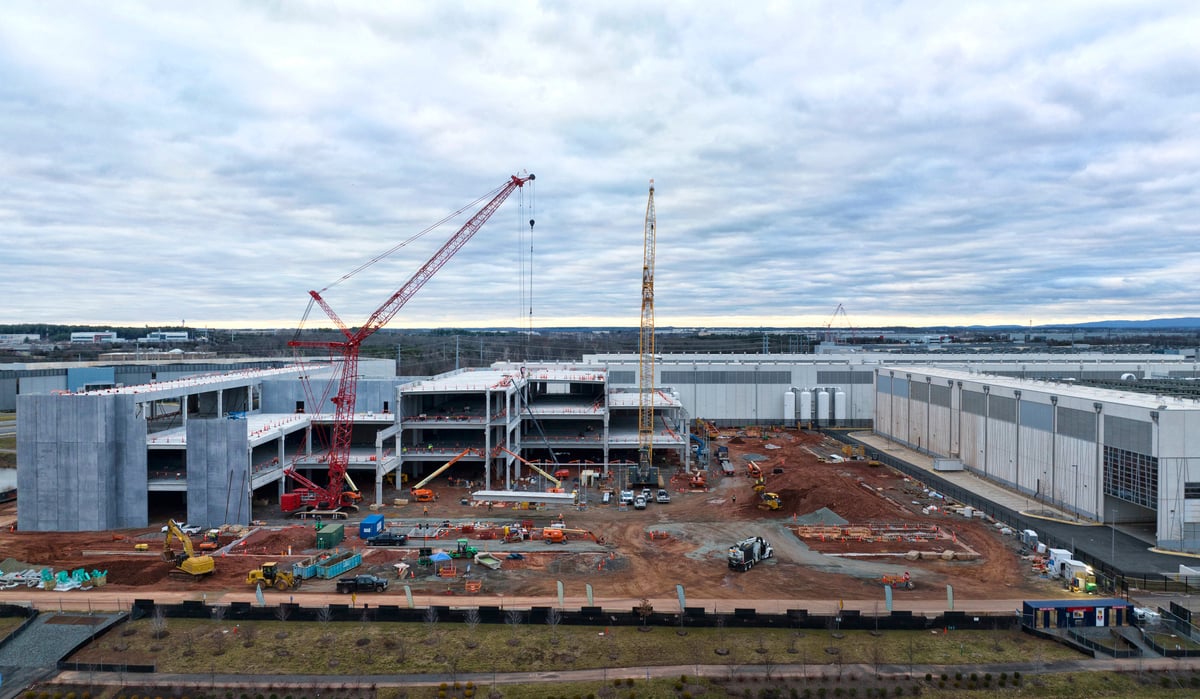
- Capex Pressure: The combined capital expenditures of the four tech giants—Alphabet, Amazon, Meta, and Microsoft—reached $410.2 billion in 2025, with projections for even higher spending in 2026, raising investor concerns about returns and leading to a pullback in tech stocks.
- Increased Market Volatility: While the Iran war may contribute to market uncertainty, the primary driver of the tech sector's decline is the massive capital expenditures on AI infrastructure, with the Nasdaq-100 index down over 3% year-to-date in 2023, indicating weakened investor confidence in tech stocks.
- Profitability Support: Despite the pressures from capital expenditures, Alphabet reported a net income of $132.2 billion over the trailing twelve months and held $126.8 billion in cash and cash equivalents at the end of 2025, demonstrating strong financial health, with Amazon, Meta, and Microsoft also in solid positions.
- Investor Sentiment Shift: As optimism around AI technology wanes, investor confidence in tech stocks has diminished, and while some analysts suggest this presents a “buy-the-dip” opportunity, the overall market sentiment remains cautious, reflecting uncertainty about future returns.
See More

Middle East Conflict Heightens Semiconductor Supply Chain Risks

- Market Reaction: Asian tech stocks fell on Thursday due to Iran's attacks on Qatar's Ras Laffan Industrial City and surging oil prices, with South Korea's SK Hynix and Samsung Electronics dropping 2.23% and 1.8% respectively, reflecting heightened concerns over supply chain disruptions.
- Helium Supply Tightness: The missile attacks on Qatar's natural gas facilities have tightened helium supplies, a crucial material for semiconductor manufacturing, as Qatar produces over a third of the world's helium, potentially increasing production costs for semiconductor companies.
- Macro Risk Impact: Analysts noted that current market fluctuations are primarily driven by the Middle East conflict and rising oil prices, with macro risks overshadowing company fundamentals, potentially leading to deferred revenues in the semiconductor sector ranging from $1.5 billion to $3 billion.
- Supply Chain Vulnerability: As the Iran conflict continues, Asia's semiconductor supply chain faces increasing risks, particularly as critical systems supporting high-tech infrastructure and electronics production are disrupted, which could impact future production capabilities.
See More
Nvidia's Future Growth Potential Analysis
- Technological Innovation: Nvidia's new Rubin GPU architecture reduces inference token costs by 10 times and requires four times fewer GPUs for AI training, which is expected to drive revenue growth and solidify its market dominance.
- Market Demand: Despite not including sales to China in its Q1 guidance, Nvidia achieved a 73% revenue growth in Q1 FY 2026, with a projected 77% growth for Q2, indicating strong demand for its products.
- Data Center Investment: The big four AI hyperscalers are projected to spend around $650 billion on AI data centers, while Nvidia anticipates global data center capital expenditures reaching $3 trillion to $4 trillion by 2030, signaling significant future market opportunities.
- Stock Valuation: Although Nvidia's stock trades at a forward P/E of 21.8, slightly above the S&P 500's 21.2, the market remains optimistic about its growth prospects, suggesting that investors should seize the current buying opportunity.
See More
Analysis of Leading Companies in AI Industry
- Nvidia's Market Dominance: Nvidia (NVDA) commands a remarkable 97% market share in the data center GPU accelerator space, with its chips being ideal for AI model training, thereby securing a customer base worth billions and solidifying its leadership in AI hardware.
- Meta's AI Investments: Meta Platforms (META) has aggressively invested in AI, automating ad creation to enhance ad performance and pricing power, which is expected to further drive growth in its social media and digital advertising businesses, ensuring its competitive edge in the industry.
- Alphabet's Diversified Strategy: Alphabet (GOOGL) excels not only in search engines but also leverages AI to accelerate Google Cloud's growth and leads in emerging markets like autonomous vehicles, showcasing its robust capabilities within the AI ecosystem.
- Future Potential of AI Technology: As AI technology continues to evolve, companies like Nvidia, Meta, and Alphabet are shifting from data centers to localized applications, anticipating significant growth opportunities over the next 10 to 25 years, further solidifying their market positions.
See More
Trump Signs Law Providing $1,000 Benefit for Newborns
- Legislative Overview: The One Big Beautiful Bill signed by Trump in July 2025 includes various tax cuts and social program changes, notably providing a $1,000 benefit for babies born between 2025 and 2028, aimed at offering financial support to newborns.
- Trump Account Mechanism: The $1,000 is not a direct payment but is deposited into a tax-advantaged account called a 'Trump Account,' which functions similarly to a traditional IRA, allowing tax-deferred growth but requiring taxes upon withdrawal at age 18, thereby encouraging families to invest for their children's futures.
- Simplified Application Process: Parents must fill out IRS Form 4547 to apply for the Trump Account, with online enrollment expected to begin in mid-2025, streamlining the application process and enhancing participation, thus promoting better financial planning for families.
- Investment Potential Analysis: Assuming an initial investment of $1,000 with an average annual return of 10%, the account could grow to $5,560 by age 18 and $17,449 by age 30, illustrating the power of compound interest and encouraging families to continue contributing to maximize wealth growth for their children.
See More
Nvidia Stock Stalls but Growth Accelerates
- Stock Performance Stagnation: Since August 2025, Nvidia's stock has remained flat, a situation unfamiliar to investors; however, the company's business continues to grow rapidly, indicating a potential strong rebound ahead.
- New Technology Driving Growth: Nvidia's new Rubin GPU architecture is entering production, reducing inference costs by 10 times and requiring four times fewer GPUs for AI training, which is expected to significantly boost the company's revenue.
- Surge in Data Center Spending: The big four AI hyperscalers are projected to spend around $650 billion on AI data centers, while Nvidia anticipates global data center capital expenditures could reach $3 trillion to $4 trillion by 2030, showcasing long-term growth potential.
- Potential Market Recovery in China: Although Nvidia did not include sales to China in its first-quarter guidance, a return of exports could add approximately $8 billion in sales, further enhancing its growth rate.
See More
The Real Reason Behind Tech Stocks Struggles
- Capex Pressure: The combined capital expenditures of the four tech giants—Alphabet, Amazon, Meta, and Microsoft—reached $410.2 billion in 2025, with projections for even higher spending in 2026, raising investor concerns about returns and leading to a pullback in tech stocks.
- Increased Market Volatility: While the Iran war may contribute to market uncertainty, the primary driver of the tech sector's decline is the massive capital expenditures on AI infrastructure, with the Nasdaq-100 index down over 3% year-to-date in 2023, indicating weakened investor confidence in tech stocks.
- Profitability Support: Despite the pressures from capital expenditures, Alphabet reported a net income of $132.2 billion over the trailing twelve months and held $126.8 billion in cash and cash equivalents at the end of 2025, demonstrating strong financial health, with Amazon, Meta, and Microsoft also in solid positions.
- Investor Sentiment Shift: As optimism around AI technology wanes, investor confidence in tech stocks has diminished, and while some analysts suggest this presents a “buy-the-dip” opportunity, the overall market sentiment remains cautious, reflecting uncertainty about future returns.
See More
Middle East Conflict Heightens Semiconductor Supply Chain Risks
- Market Reaction: Asian tech stocks fell on Thursday due to Iran's attacks on Qatar's Ras Laffan Industrial City and surging oil prices, with South Korea's SK Hynix and Samsung Electronics dropping 2.23% and 1.8% respectively, reflecting heightened concerns over supply chain disruptions.
- Helium Supply Tightness: The missile attacks on Qatar's natural gas facilities have tightened helium supplies, a crucial material for semiconductor manufacturing, as Qatar produces over a third of the world's helium, potentially increasing production costs for semiconductor companies.
- Macro Risk Impact: Analysts noted that current market fluctuations are primarily driven by the Middle East conflict and rising oil prices, with macro risks overshadowing company fundamentals, potentially leading to deferred revenues in the semiconductor sector ranging from $1.5 billion to $3 billion.
- Supply Chain Vulnerability: As the Iran conflict continues, Asia's semiconductor supply chain faces increasing risks, particularly as critical systems supporting high-tech infrastructure and electronics production are disrupted, which could impact future production capabilities.
See More