Nvidia's B300 Server Price Surges to $1M Amid Supply Constraints
Written by Emily J. Thompson, Senior Investment Analyst
Updated: 1 day ago
0mins
Should l Buy NVDA?
Source: seekingalpha
- Price Surge: The price of Nvidia's B300 servers in China has surged to around $1 million (7 million yuan) due to soaring demand and tightened U.S. export restrictions, reflecting a significant scarcity premium from late last year's price of 4 million yuan.
- Supply Chain Pressure: The B300 server, Nvidia's most powerful system for AI workloads, has seen sharp price increases as the grey market, a key supply channel, comes under pressure, indicating a strained supply chain.
- U.S. Market Comparison: In the U.S., a B300 server costs about $550,000, a slight increase from $500,000 earlier, highlighting the growing price gap between the U.S. and China due to limited supply.
- Increased Rental Demand: With prices soaring, some companies are turning to rental options, with one-year short-term contracts costing as much as 190,000 yuan per month, demonstrating the urgent demand for high-performance computing resources.
Trade with 70% Backtested Accuracy
Stop guessing "Should I Buy NVDA?" and start using high-conviction signals backed by rigorous historical data.
Sign up today to access powerful investing tools and make smarter, data-driven decisions.
Analyst Views on NVDA
Wall Street analysts forecast NVDA stock price to rise
41 Analyst Rating
39 Buy
1 Hold
1 Sell
Strong Buy
Current: 209.250

Low
200.00
Averages
264.97
High
352.00
Current: 209.250
Low
200.00
Averages
264.97
High
352.00
About NVDA
NVIDIA Corporation is an artificial intelligence (AI) infrastructure company. The Company is engaged in accelerated computing to help solve the challenging computational problems. Its segments include Compute & Networking and Graphics. The Compute & Networking segment includes its Data Center accelerated computing and networking platforms and AI solutions and software, and automotive platforms and autonomous and electric vehicle solutions, including software. The Graphics segment includes GeForce GPUs for gaming and personal computers (PCs), and Quadro/NVIDIA RTX GPUs for enterprise workstation graphics. Its technology stack includes the foundational NVIDIA CUDA development platform that runs on all NVIDIA GPUs, as well as hundreds of domain-specific software libraries, frameworks, algorithms, software development kits (SDKs), and application programming interfaces (APIs). Its platforms address four markets, which include Data Center, Gaming, Professional Visualization, and Automotive.
About the author

Emily J. Thompson
Emily J. Thompson, a Chartered Financial Analyst (CFA) with 12 years in investment research, graduated with honors from the Wharton School. Specializing in industrial and technology stocks, she provides in-depth analysis for Intellectia’s earnings and market brief reports.

SpaceX IPO Expected to Set Historic Valuation

- Valuation Target: SpaceX is targeting a $1.75 trillion valuation for its IPO, aiming to raise up to $75 billion, which would make it one of the largest IPOs in history, significantly enhancing the company's market position.
- Retail Investor Priority: The IPO will allocate up to 30% of shares to small retail investors, a move that not only increases participation opportunities for everyday investors but may also boost overall market demand for SpaceX.
- AI Chip Demand: As a major buyer of GPUs and AI chips, SpaceX plans to design its own AI processors in partnership with Tesla, although this will take years; in the meantime, reliance on external suppliers like Nvidia is expected to drive sales growth for Nvidia.
- Orbital Data Center Vision: The influx of capital will accelerate SpaceX's development of its massive Starship rocket, and if successful in establishing orbital data centers, it could create significant market opportunities for Nvidia, especially amid the rapid growth in AI computing demands.
See More
NVIDIA Has Not Sold H200 Chips to Chinese Firms Amid Trade Concerns
- Sales Delay: NVIDIA has not sold its H200 AI chips to Chinese enterprises, as reported by Secretary Howard Lutnick, who attributed the delay to China's government banning acquisitions to favor domestic market investment, highlighting the tension in US-China trade relations.
- Policy Impact: The Trump administration approved shipments of H200 chips to China in January with conditions, raising concerns among US lawmakers about potential military applications, which has further complicated sales terms and slowed supply chains.
- Export Restrictions: Lutnick mentioned that the affiliates rule blocking exports to thousands of Chinese businesses is still under consideration, linked to broader trade negotiations, indicating that policy uncertainty may affect NVIDIA's market strategy.
- Investment Potential: While NVIDIA is recognized as one of the best data center hardware stocks, analysts suggest that certain AI stocks may offer greater upside potential and lower downside risk, reflecting a diverse outlook on the AI sector.
See More

Wall Street Records Best Monthly Performance Since 2020

- Nasdaq Surge: The Nasdaq Composite surged over 15% in the past 30 days, marking its best monthly performance since 2020, reflecting strong investor confidence in tech stocks, particularly driven by a resurgence in AI infrastructure.
- S&P 500 Growth: The S&P 500 climbed 10% and is on track for its sixth consecutive quarter of double-digit year-over-year EPS growth, indicating robust corporate earnings that help maintain stable valuations amidst inflationary pressures.
- Tech Sector Outperformance: The Information Technology sector posted a remarkable 19% monthly gain, its best in over 20 years, showcasing investor optimism in the face of high inflation and rising energy prices, which could influence future investment strategies.
- Seasonal Market Trends: Despite the traditional
See More

Pentagon Secures AI Agreements with Five Tech Giants


- Agreements Secured: The Pentagon has finalized agreements with Nvidia, Microsoft, Reflection AI, and Amazon Web Services to deploy advanced AI tools on classified military networks, marking a significant step in the Defense Department's military AI strategy.
- Expanded Tech Coalition: This agreement brings the total to five tech companies collaborating with the Pentagon, joining SpaceX, OpenAI, and Google, thereby forming a robust coalition aimed at enhancing military AI applications.
- Accelerated Strategic Transformation: The Defense Department's statement indicates that these agreements are accelerating the transformation of the U.S. military into an AI-first fighting force, highlighting a strong commitment to future military technology investments.
- Development of Alternatives: The Pentagon is seeking to collaborate with these tech companies to develop alternatives to Anthropic PBC's Claude tool, reflecting ongoing tensions between the Defense Department and Silicon Valley regarding the use of AI in military operations.
See More
Semiconductor Stocks Surge as Market Confidence Rebounds

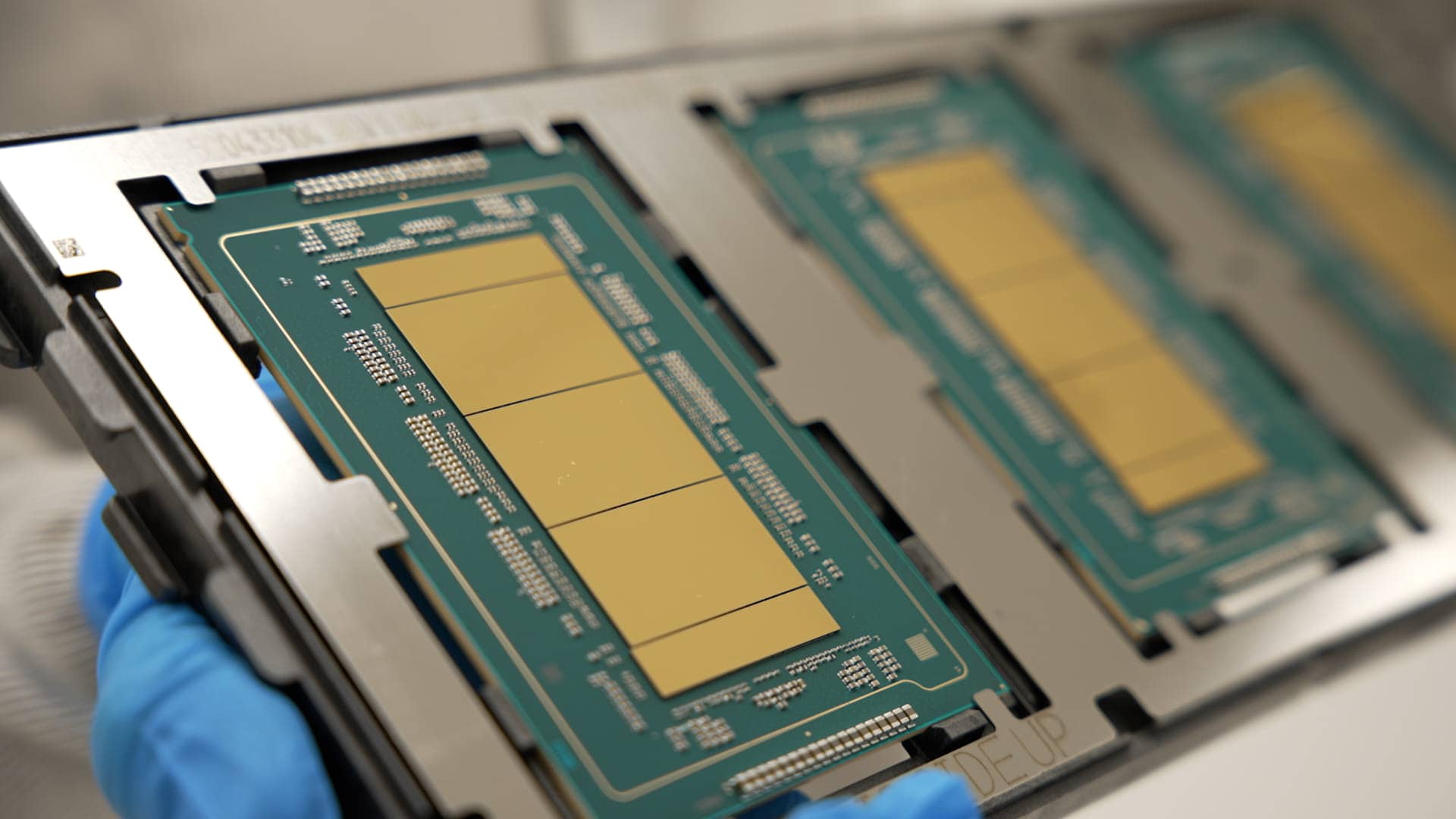
- Market Confidence Rebounds: After a 6.3% decline in March, the Nasdaq Semiconductor Index surged 35.2% in April, reflecting a renewed investor confidence in the AI infrastructure cycle, which has significantly improved overall market sentiment.
- Intel's Standout Performance: Intel achieved its best single-day performance since 1987 last Friday, driven by earnings that exceeded expectations and an optimistic guidance, further solidifying its leadership position in the semiconductor industry.
- Rising Demand Expectations: Analysts indicate that the growth in AI demand is translating into real revenue, leading to upward revisions in earnings estimates for semiconductor companies, particularly as investments in large AI infrastructure projects continue to rise.
- Geopolitical Impacts: Despite the market's optimistic growth narrative, the bottlenecks caused by the Iran war and the export restrictions on critical materials like helium may pose substantial risks to chip manufacturing, reminding investors to remain vigilant about potential challenges.
See More
Chip Stocks Rebound with Nasdaq Index Rising 35%
- Market Rebound: After a 6.3% decline in March, the Nasdaq Semiconductor Index rebounded by 35.2% in April, reflecting a restoration of investor confidence in the chip sector and improving overall market sentiment.
- Intel's Standout Performance: Intel achieved its best day since 1987 last Friday, driven by earnings that exceeded expectations and an optimistic guidance, further solidifying its leadership position in the semiconductor market.
- Growing Demand Signals: Analysts noted that the demand for AI infrastructure is translating into real revenue growth, fostering optimistic projections for chip companies, particularly as capital expenditures for large AI infrastructure projects remain robust.
- Geopolitical Impact: Despite the market's optimistic outlook on growth, the Iran war has created supply chain bottlenecks and restricted exports of critical materials like helium, which could significantly impact chip manufacturing, reminding investors to be aware of potential risk factors.
See More
SpaceX IPO Expected to Set Historic Valuation
- Valuation Target: SpaceX is targeting a $1.75 trillion valuation for its IPO, aiming to raise up to $75 billion, which would make it one of the largest IPOs in history, significantly enhancing the company's market position.
- Retail Investor Priority: The IPO will allocate up to 30% of shares to small retail investors, a move that not only increases participation opportunities for everyday investors but may also boost overall market demand for SpaceX.
- AI Chip Demand: As a major buyer of GPUs and AI chips, SpaceX plans to design its own AI processors in partnership with Tesla, although this will take years; in the meantime, reliance on external suppliers like Nvidia is expected to drive sales growth for Nvidia.
- Orbital Data Center Vision: The influx of capital will accelerate SpaceX's development of its massive Starship rocket, and if successful in establishing orbital data centers, it could create significant market opportunities for Nvidia, especially amid the rapid growth in AI computing demands.
See More
NVIDIA Has Not Sold H200 Chips to Chinese Firms Amid Trade Concerns
- Sales Delay: NVIDIA has not sold its H200 AI chips to Chinese enterprises, as reported by Secretary Howard Lutnick, who attributed the delay to China's government banning acquisitions to favor domestic market investment, highlighting the tension in US-China trade relations.
- Policy Impact: The Trump administration approved shipments of H200 chips to China in January with conditions, raising concerns among US lawmakers about potential military applications, which has further complicated sales terms and slowed supply chains.
- Export Restrictions: Lutnick mentioned that the affiliates rule blocking exports to thousands of Chinese businesses is still under consideration, linked to broader trade negotiations, indicating that policy uncertainty may affect NVIDIA's market strategy.
- Investment Potential: While NVIDIA is recognized as one of the best data center hardware stocks, analysts suggest that certain AI stocks may offer greater upside potential and lower downside risk, reflecting a diverse outlook on the AI sector.
See More
Wall Street Records Best Monthly Performance Since 2020
- Nasdaq Surge: The Nasdaq Composite surged over 15% in the past 30 days, marking its best monthly performance since 2020, reflecting strong investor confidence in tech stocks, particularly driven by a resurgence in AI infrastructure.
- S&P 500 Growth: The S&P 500 climbed 10% and is on track for its sixth consecutive quarter of double-digit year-over-year EPS growth, indicating robust corporate earnings that help maintain stable valuations amidst inflationary pressures.
- Tech Sector Outperformance: The Information Technology sector posted a remarkable 19% monthly gain, its best in over 20 years, showcasing investor optimism in the face of high inflation and rising energy prices, which could influence future investment strategies.
- Seasonal Market Trends: Despite the traditional
See More
Pentagon Secures AI Agreements with Five Tech Giants
- Agreements Secured: The Pentagon has finalized agreements with Nvidia, Microsoft, Reflection AI, and Amazon Web Services to deploy advanced AI tools on classified military networks, marking a significant step in the Defense Department's military AI strategy.
- Expanded Tech Coalition: This agreement brings the total to five tech companies collaborating with the Pentagon, joining SpaceX, OpenAI, and Google, thereby forming a robust coalition aimed at enhancing military AI applications.
- Accelerated Strategic Transformation: The Defense Department's statement indicates that these agreements are accelerating the transformation of the U.S. military into an AI-first fighting force, highlighting a strong commitment to future military technology investments.
- Development of Alternatives: The Pentagon is seeking to collaborate with these tech companies to develop alternatives to Anthropic PBC's Claude tool, reflecting ongoing tensions between the Defense Department and Silicon Valley regarding the use of AI in military operations.
See More
Semiconductor Stocks Surge as Market Confidence Rebounds
- Market Confidence Rebounds: After a 6.3% decline in March, the Nasdaq Semiconductor Index surged 35.2% in April, reflecting a renewed investor confidence in the AI infrastructure cycle, which has significantly improved overall market sentiment.
- Intel's Standout Performance: Intel achieved its best single-day performance since 1987 last Friday, driven by earnings that exceeded expectations and an optimistic guidance, further solidifying its leadership position in the semiconductor industry.
- Rising Demand Expectations: Analysts indicate that the growth in AI demand is translating into real revenue, leading to upward revisions in earnings estimates for semiconductor companies, particularly as investments in large AI infrastructure projects continue to rise.
- Geopolitical Impacts: Despite the market's optimistic growth narrative, the bottlenecks caused by the Iran war and the export restrictions on critical materials like helium may pose substantial risks to chip manufacturing, reminding investors to remain vigilant about potential challenges.
See More
Chip Stocks Rebound with Nasdaq Index Rising 35%
- Market Rebound: After a 6.3% decline in March, the Nasdaq Semiconductor Index rebounded by 35.2% in April, reflecting a restoration of investor confidence in the chip sector and improving overall market sentiment.
- Intel's Standout Performance: Intel achieved its best day since 1987 last Friday, driven by earnings that exceeded expectations and an optimistic guidance, further solidifying its leadership position in the semiconductor market.
- Growing Demand Signals: Analysts noted that the demand for AI infrastructure is translating into real revenue growth, fostering optimistic projections for chip companies, particularly as capital expenditures for large AI infrastructure projects remain robust.
- Geopolitical Impact: Despite the market's optimistic outlook on growth, the Iran war has created supply chain bottlenecks and restricted exports of critical materials like helium, which could significantly impact chip manufacturing, reminding investors to be aware of potential risk factors.
See More