Kering and Google to Launch Gucci Smart Glasses
Written by Emily J. Thompson, Senior Investment Analyst
Updated: Apr 16 2026
0mins
Should l Buy GOOG?
Source: seekingalpha
- Smart Glasses Collaboration: Kering CEO Luca de Meo announced plans to collaborate with Google to launch Gucci-branded smart glasses, expected in 2027, aiming to enhance brand sales and market competitiveness through innovative products.
- Market Expansion Strategy: This partnership is part of Kering's broader strategy to expand its eyewear and jewelry lines, intending to attract younger consumers with smart glasses, thereby strengthening Gucci's influence in the luxury market.
- Industry Competition Analysis: Kering's smart glasses initiative will compete with other developers like Meta, EssilorLuxottica, Amazon, and Snap, which have already launched their own smart glasses products in the market.
- Technological Collaboration Prospects: The partnership with Google not only aims to elevate Gucci's brand image but may also drive further development in smart glasses technology, facilitating the digital transformation of the luxury goods sector.
Trade with 70% Backtested Accuracy
Stop guessing "Should I Buy GOOG?" and start using high-conviction signals backed by rigorous historical data.
Sign up today to access powerful investing tools and make smarter, data-driven decisions.
Analyst Views on GOOG
Wall Street analysts forecast GOOG stock price to fall
15 Analyst Rating
14 Buy
1 Hold
0 Sell
Strong Buy
Current: 337.750

Low
255.00
Averages
336.08
High
400.00
Current: 337.750
Low
255.00
Averages
336.08
High
400.00
About GOOG
Alphabet Inc. is a holding company. The Company's segments include Google Services, Google Cloud, and Other Bets. The Google Services segment includes products and services such as ads, Android, Chrome, devices, Google Maps, Google Play, Search, and YouTube. The Google Cloud segment includes infrastructure and platform services, collaboration tools, and other services for enterprise customers. Its Other Bets segment is engaged in the sale of healthcare-related services and Internet services. Its Google Cloud provides enterprise-ready cloud services, including Google Cloud Platform and Google Workspace. Google Cloud Platform provides access to solutions such as artificial intelligence (AI) offerings, including its AI infrastructure, Vertex AI platform, and Gemini for Google Cloud; cybersecurity, and data and analytics. Google Workspace includes cloud-based communication and collaboration tools for enterprises, such as Calendar, Gmail, Docs, Drive, and Meet.
About the author

Emily J. Thompson
Emily J. Thompson, a Chartered Financial Analyst (CFA) with 12 years in investment research, graduated with honors from the Wharton School. Specializing in industrial and technology stocks, she provides in-depth analysis for Intellectia’s earnings and market brief reports.

Cognition AI Inc. Plans to Raise $2.5 Billion in New Funding Round

- Funding Plans: Cognition AI Inc. is in early discussions for a new funding round that could value the company at approximately $25 billion, more than doubling its previous valuation, indicating strong investor interest in AI coding platforms.
- Market Response: Following SpaceX's $60 billion acquisition of rival Cursor, investor confidence in the AI software development sector has surged, leading to increased attention on Cognition's fundraising efforts, suggesting a potential acceleration of capital inflow.
- Customer Growth: President Russell Kaplan noted a rise in inbound interest from both customers and prospective employees, reflecting potential momentum at a critical stage, particularly among enterprise clients.
- Revenue Performance: As of last June, Cognition generated around $73 million in annual recurring revenue and later raised $400 million at a $10.2 billion valuation, showcasing strong investor backing and market demand.
See More

Analysis of SoundHound AI's Future Growth Prospects


- Revenue Growth Through Acquisitions: SoundHound AI's revenue is projected to rise from $31 million in 2022 to $169 million by 2025, although much of this growth is driven by acquisitions rather than organic expansion, indicating challenges in market competitiveness.
- Declining Gross Margins: The integration of lower-margin businesses and intense competition from larger firms are expected to reduce SoundHound's gross margin from 69% in 2022 to 42% in 2025, which will impact its profitability and market appeal.
- EBITDA Improvement: Despite facing challenges, SoundHound's adjusted EBITDA is expected to improve from negative $73 million in 2022 to negative $58 million in 2025, reflecting the company's efforts in cost control and optimizing its revenue mix.
- Uncertain Market Outlook: Analysts anticipate SoundHound's revenue to grow at a 16% CAGR from 2025 to 2028, but with fewer enterprise customers and acquisitions, its growth may decelerate, leading to a pessimistic outlook for future market performance.
See More
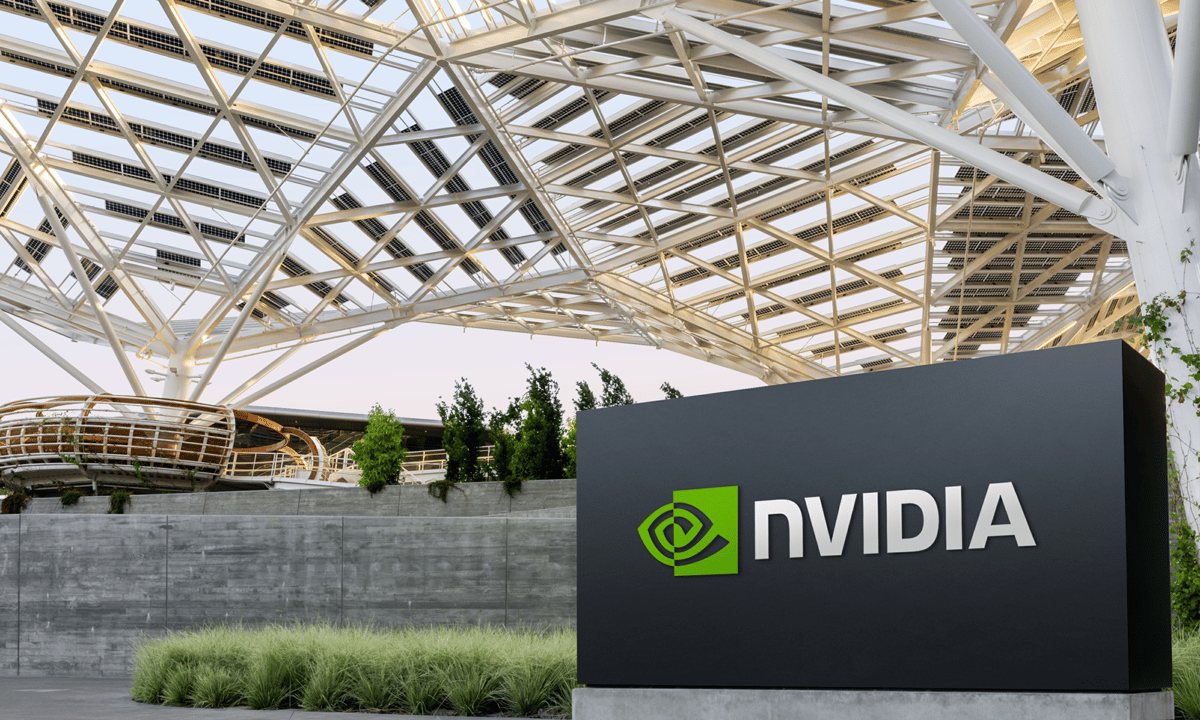
Nvidia's 1100% Stock Surge Driven by AI Opportunities


- Significant Revenue Growth: Nvidia reported $215.9 billion in revenue for fiscal year 2026, marking a 65% increase year-over-year and a nearly ninefold rise from $27 billion three years ago, highlighting its strong performance and growth potential in the AI market.
- Surge in Data Center Revenue: The company’s data center revenue reached $62.3 billion in Q4, up 75% year-over-year, primarily driven by AI demand, indicating its dominant market position and profitability in this segment.
- CUDA Ecosystem Advantage: Nvidia's CUDA software platform provides a unique competitive edge for its GPUs, creating a developer lock-in effect as businesses build their AI infrastructure on its hardware, further solidifying its market position.
- Investment Risk Warning: Despite Nvidia's strong performance in AI, investors should be cautious of the risk that AI may not deliver the expected returns, especially given the unprecedented scale of infrastructure investment and ongoing doubts about AI's actual benefits in productivity.
See More

Nvidia's AI Dominance and Associated Risks
- Significant Revenue Growth: Nvidia's fiscal 2026 revenue reached $215.9 billion, a 65% year-over-year increase, with data center revenue alone hitting $62.3 billion in Q4, driven almost entirely by AI demand, showcasing the company's robust performance in the AI market.
- Developer Lock-In Effect: Nvidia's CUDA software platform, developed over 20 years, has become the de facto standard in the AI industry, creating a strong developer lock-in effect that makes it difficult for businesses to switch to competitors' hardware when building AI infrastructure, further solidifying the company's market position.
- Technical Leadership: Nvidia's GPUs not only lead the market in technical capabilities but also positioned the company advantageously during the AI boom, making it challenging for competitors like AMD and Intel to catch up, demonstrating Nvidia's dual advantage in both hardware and software layers.
- Investment Risk Warning: Despite Nvidia's strong market position, the realization of AI investment returns remains uncertain, with numerous studies indicating minimal effects on productivity, prompting investors to carefully assess the actual return potential of AI to avoid significant losses in a bubble scenario.
See More

Google's TPU Challenges Nvidia's Market Dominance
- Market Share Competition: Google's Tensor Processing Units (TPUs), designed specifically for AI workloads since their 2015 debut, have introduced the seventh-generation TPU, Ironwood, which promises a 4x performance increase in training and inference applications, potentially threatening Nvidia's market dominance.
- Surging Customer Demand: The demand for Google's TPUs has surged, with major contracts signed by companies like Apple, Anthropic, and Meta; Anthropic plans to purchase up to 1 million TPUs by 2026, with the deal valued at tens of billions of dollars, highlighting the critical role of TPUs in AI infrastructure.
- Market Forecast: Analyst Gil Luria predicts that if Google sells its TPUs to third parties, it could capture 20% of the AI chip market, with the TPU business potentially reaching $900 billion in the long run, significantly undermining Nvidia's current 81% market share.
- Evolving Competitive Landscape: Despite Google's substantial potential in the AI chip market, Nvidia is actively expanding its AI applications and inference capabilities, with expectations that AI chip revenues will hit $1 trillion by 2030, ensuring long-term growth in its data center business.
See More

Nvidia's Dominance in AI Chip Market Faces Emerging Threats
- Market Share Analysis: IDC estimates that Nvidia still controls 81% of the AI chip market over the past three and a half years, despite rising competition from Intel, AMD, and Broadcom, demonstrating its strong position in the industry.
- Future Sales Projections: Nvidia anticipates total chip sales of $1 trillion based on the Blackwell and Vera Rubin architectures in 2026 and 2027, significantly exceeding Broadcom's $100 billion forecast, indicating its unmatched scale in the AI chip sector.
- Google's Competitive Threat: Google's seventh-generation TPU, known as Ironwood, boasts a 4x performance increase over its predecessor and has reportedly closed the gap with Nvidia's Blackwell processors, highlighting strong demand and potential threats in the AI infrastructure market.
- Potential Market Shift: Analyst Gil Luria suggests that if Google sells its TPUs to third parties, it could capture 20% of the AI chip market, which is projected to reach $1 trillion by 2030, potentially significantly impacting Nvidia's market share.
See More
Cognition AI Inc. Plans to Raise $2.5 Billion in New Funding Round
- Funding Plans: Cognition AI Inc. is in early discussions for a new funding round that could value the company at approximately $25 billion, more than doubling its previous valuation, indicating strong investor interest in AI coding platforms.
- Market Response: Following SpaceX's $60 billion acquisition of rival Cursor, investor confidence in the AI software development sector has surged, leading to increased attention on Cognition's fundraising efforts, suggesting a potential acceleration of capital inflow.
- Customer Growth: President Russell Kaplan noted a rise in inbound interest from both customers and prospective employees, reflecting potential momentum at a critical stage, particularly among enterprise clients.
- Revenue Performance: As of last June, Cognition generated around $73 million in annual recurring revenue and later raised $400 million at a $10.2 billion valuation, showcasing strong investor backing and market demand.
See More
Analysis of SoundHound AI's Future Growth Prospects
- Revenue Growth Through Acquisitions: SoundHound AI's revenue is projected to rise from $31 million in 2022 to $169 million by 2025, although much of this growth is driven by acquisitions rather than organic expansion, indicating challenges in market competitiveness.
- Declining Gross Margins: The integration of lower-margin businesses and intense competition from larger firms are expected to reduce SoundHound's gross margin from 69% in 2022 to 42% in 2025, which will impact its profitability and market appeal.
- EBITDA Improvement: Despite facing challenges, SoundHound's adjusted EBITDA is expected to improve from negative $73 million in 2022 to negative $58 million in 2025, reflecting the company's efforts in cost control and optimizing its revenue mix.
- Uncertain Market Outlook: Analysts anticipate SoundHound's revenue to grow at a 16% CAGR from 2025 to 2028, but with fewer enterprise customers and acquisitions, its growth may decelerate, leading to a pessimistic outlook for future market performance.
See More
Nvidia's 1100% Stock Surge Driven by AI Opportunities
- Significant Revenue Growth: Nvidia reported $215.9 billion in revenue for fiscal year 2026, marking a 65% increase year-over-year and a nearly ninefold rise from $27 billion three years ago, highlighting its strong performance and growth potential in the AI market.
- Surge in Data Center Revenue: The company’s data center revenue reached $62.3 billion in Q4, up 75% year-over-year, primarily driven by AI demand, indicating its dominant market position and profitability in this segment.
- CUDA Ecosystem Advantage: Nvidia's CUDA software platform provides a unique competitive edge for its GPUs, creating a developer lock-in effect as businesses build their AI infrastructure on its hardware, further solidifying its market position.
- Investment Risk Warning: Despite Nvidia's strong performance in AI, investors should be cautious of the risk that AI may not deliver the expected returns, especially given the unprecedented scale of infrastructure investment and ongoing doubts about AI's actual benefits in productivity.
See More
Nvidia's AI Dominance and Associated Risks
- Significant Revenue Growth: Nvidia's fiscal 2026 revenue reached $215.9 billion, a 65% year-over-year increase, with data center revenue alone hitting $62.3 billion in Q4, driven almost entirely by AI demand, showcasing the company's robust performance in the AI market.
- Developer Lock-In Effect: Nvidia's CUDA software platform, developed over 20 years, has become the de facto standard in the AI industry, creating a strong developer lock-in effect that makes it difficult for businesses to switch to competitors' hardware when building AI infrastructure, further solidifying the company's market position.
- Technical Leadership: Nvidia's GPUs not only lead the market in technical capabilities but also positioned the company advantageously during the AI boom, making it challenging for competitors like AMD and Intel to catch up, demonstrating Nvidia's dual advantage in both hardware and software layers.
- Investment Risk Warning: Despite Nvidia's strong market position, the realization of AI investment returns remains uncertain, with numerous studies indicating minimal effects on productivity, prompting investors to carefully assess the actual return potential of AI to avoid significant losses in a bubble scenario.
See More
Google's TPU Challenges Nvidia's Market Dominance
- Market Share Competition: Google's Tensor Processing Units (TPUs), designed specifically for AI workloads since their 2015 debut, have introduced the seventh-generation TPU, Ironwood, which promises a 4x performance increase in training and inference applications, potentially threatening Nvidia's market dominance.
- Surging Customer Demand: The demand for Google's TPUs has surged, with major contracts signed by companies like Apple, Anthropic, and Meta; Anthropic plans to purchase up to 1 million TPUs by 2026, with the deal valued at tens of billions of dollars, highlighting the critical role of TPUs in AI infrastructure.
- Market Forecast: Analyst Gil Luria predicts that if Google sells its TPUs to third parties, it could capture 20% of the AI chip market, with the TPU business potentially reaching $900 billion in the long run, significantly undermining Nvidia's current 81% market share.
- Evolving Competitive Landscape: Despite Google's substantial potential in the AI chip market, Nvidia is actively expanding its AI applications and inference capabilities, with expectations that AI chip revenues will hit $1 trillion by 2030, ensuring long-term growth in its data center business.
See More
Nvidia's Dominance in AI Chip Market Faces Emerging Threats
- Market Share Analysis: IDC estimates that Nvidia still controls 81% of the AI chip market over the past three and a half years, despite rising competition from Intel, AMD, and Broadcom, demonstrating its strong position in the industry.
- Future Sales Projections: Nvidia anticipates total chip sales of $1 trillion based on the Blackwell and Vera Rubin architectures in 2026 and 2027, significantly exceeding Broadcom's $100 billion forecast, indicating its unmatched scale in the AI chip sector.
- Google's Competitive Threat: Google's seventh-generation TPU, known as Ironwood, boasts a 4x performance increase over its predecessor and has reportedly closed the gap with Nvidia's Blackwell processors, highlighting strong demand and potential threats in the AI infrastructure market.
- Potential Market Shift: Analyst Gil Luria suggests that if Google sells its TPUs to third parties, it could capture 20% of the AI chip market, which is projected to reach $1 trillion by 2030, potentially significantly impacting Nvidia's market share.
See More