D.R. HORTON PROJECTS FY REVENUE BETWEEN USD 33.5 BILLION AND USD 34.5 BILLION, COMPARED TO IBES ESTIMATE OF USD 33.811 BILLION
Written by Emily J. Thompson, Senior Investment Analyst
Updated: Apr 21 2026
0mins
Source: moomoo
- Revenue Comparison: The forecasted revenue is estimated to be between USD 33,500 million and USD 34,500 million.
- IBES Estimate: The IBES estimate for revenue stands at USD 33,811 million.
Trade with 70% Backtested Accuracy
Stop guessing "Should I Buy DHI?" and start using high-conviction signals backed by rigorous historical data.
Sign up today to access powerful investing tools and make smarter, data-driven decisions.
Analyst Views on DHI
Wall Street analysts forecast DHI stock price to rise
13 Analyst Rating
4 Buy
7 Hold
2 Sell
Hold
Current: 157.060

Low
117.00
Averages
160.58
High
195.00
Current: 157.060
Low
117.00
Averages
160.58
High
195.00
About DHI
D.R. Horton, Inc. is a homebuilding company. The Company is primarily engaged in the acquisition and development of land and the construction and sale of residential homes, with operations in over 126 markets across 36 states. The Company’s segments include Homebuilding, Rental, Forestar, Financial Services, and Other. The Homebuilding division is primarily engaged in the acquisition and development of land and the construction and sale of residential homes. The Company’s rental segment consists of single-family and multifamily rental operations. The single-family rental operations construct and lease single-family homes within a community and then generally market each community for a bulk sale of rental homes. The Forestar segment is a residential lot development company with operations in 64 markets across 23 states. The Financial services segment provides mortgage financing and title agency services to homebuyers in many of the Company’s homebuilding markets.
About the author

Emily J. Thompson
Emily J. Thompson, a Chartered Financial Analyst (CFA) with 12 years in investment research, graduated with honors from the Wharton School. Specializing in industrial and technology stocks, she provides in-depth analysis for Intellectia’s earnings and market brief reports.

DHI Options Trading Analysis and Yield Potential

- Put Option Appeal: The current bid for the $155.00 put option is $5.30, and if an investor sells this option, they commit to buying the stock at $155.00, effectively lowering their cost basis to $149.70, making it an attractive alternative compared to the current price of $156.54.
- Yield Potential Analysis: Should the put option expire worthless, it would yield a 3.42% cash return, annualized at 29.02%, highlighting the strategy's potential profitability, particularly in a volatile market environment.
- Call Option Returns: The $160.00 call option has a current bid of $5.40, and if an investor buys DHI shares at the current price and sells this call, they could achieve a total return of 5.66% if the stock is called away, enhancing the investment's appeal.
- Risk-Reward Consideration: The $160.00 strike represents about a 2% premium, with a 52% chance of the call option expiring worthless, allowing investors to retain both their shares and the premium collected, thus improving the safety and profitability of the investment.
See More
U.S. House Passes Bipartisan Housing Bill

- Bill Passage Context: U.S. House Speaker Mike Johnson will send the 21st Century ROAD to Housing Act to President Trump, following overwhelming bipartisan support in Congress, aimed at reducing housing costs nationwide through various measures.
- Policy Measures: The bill includes limiting institutional ownership, cutting regulations, and incentivizing local governments to prioritize housing, which is expected to positively impact the housing market amid current high prices and rents.
- Presidential Signing Hurdle: Trump threatened not to sign the housing bill until his voter ID bill is passed, with Johnson planning to include it in a special budget reconciliation bill to secure a simple majority of 51 votes.
- Housing Market Status: In 2025, a record 25.2 million Americans aged 25 to 34 lived with their parents, highlighting the housing affordability crisis, despite nearly 70% being employed, with the median home price reaching $430K, a 34.4% increase since 2019.
See More

U.S. Stocks Close Mixed as Chipmakers Weigh on Market


- Mixed Market Performance: The S&P 500 index fell by 0.10% and the Nasdaq 100 index dropped by 0.43%, while the Dow Jones Industrial Average rose by 0.35%, indicating a divergence in market sentiment, particularly under pressure from chipmakers.
- Chip Sector Pressure: Ahead of Micron Technology's earnings report, chipmakers saw declines, reflecting market concerns over AI infrastructure demand, despite Micron's stock rising over 260% this year, highlighting the volatility in tech stocks.
- Oil Price Impact: WTI crude oil prices sank to a 3.5-month low, leading to a drop in bond yields, with the 10-year Treasury yield falling to 4.40%, benefiting sectors like homebuilders and airlines by enhancing profit outlooks amid lower fuel costs.
- Decline in New Home Sales: U.S. May new home sales unexpectedly fell by 7.3% to 580,000 units, below the expected 640,000, indicating weakness in the housing market that could affect future economic growth expectations.
See More
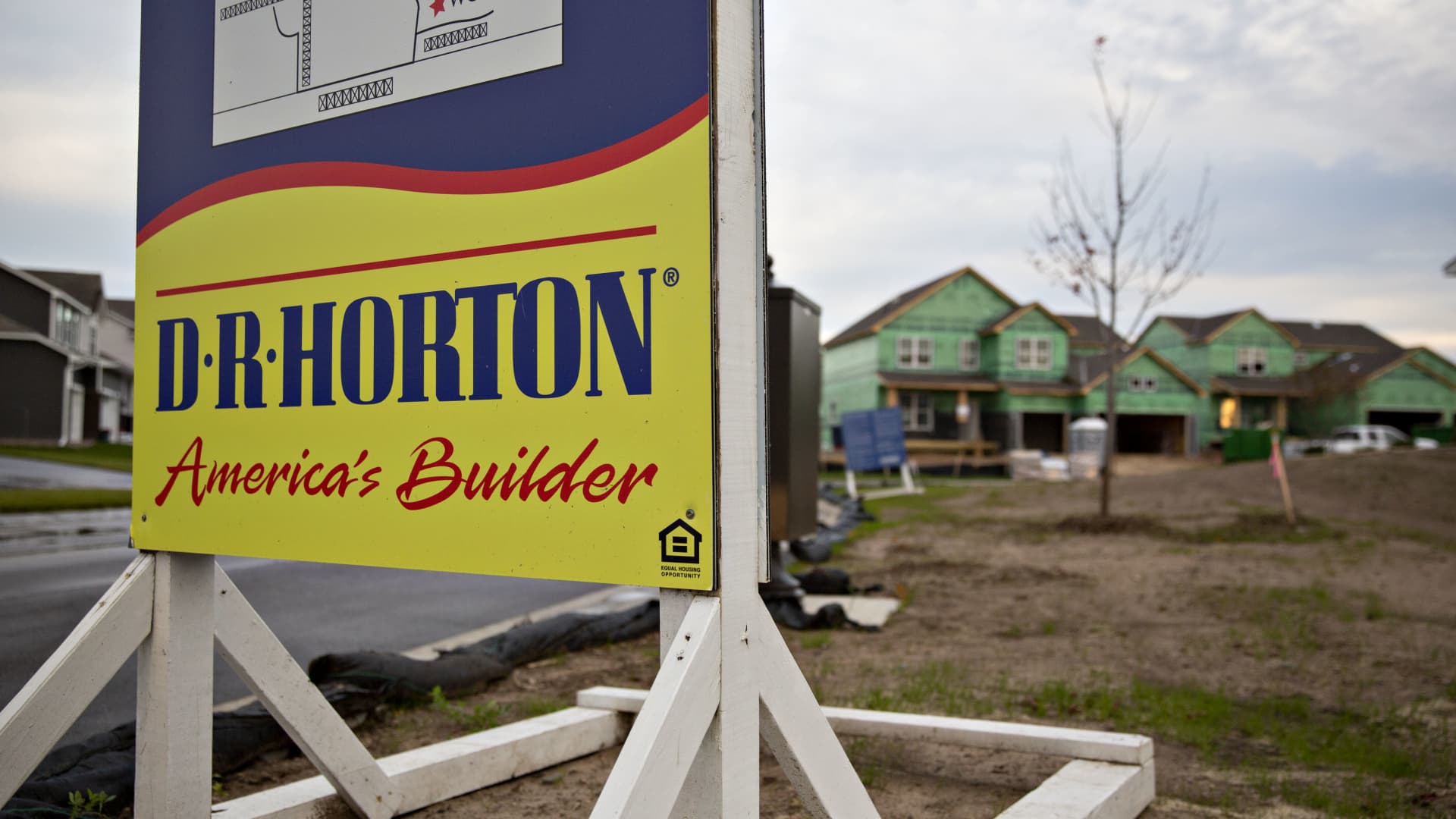
U.S. Homebuilder Stocks Surge Following Housing Bill Passage
- Homebuilder Stock Rally: U.S. homebuilder stocks surged after the House passed a bill aimed at accelerating the construction and availability of affordable housing, with the PHLX Housing Index rising 5.4% to briefly hit its highest level since February 25, indicating strong market optimism regarding housing policy.
- Long-Term Benefits Anticipated: Analysts at Evercore ISI noted that while the bill may not provide immediate benefits to homebuilders, it could significantly alleviate long-term housing supply issues, enhancing the sector's recovery prospects.
- Uncertainty Over Trump's Signature: President Trump canceled his plan to sign the bill, creating uncertainty as he did not indicate a veto; if he takes no action within 10 days, the bill will automatically become law, adding a layer of unpredictability to the market.
- Strong Individual Stock Performance: Major builders like D.R. Horton and Lennar saw their shares rise over 6%, while PulteGroup jumped more than 8%, reflecting market optimism about future housing policies, particularly in the context of the upcoming midterm elections.
See More

US Stocks Rebound as Tech Shares Benefit from AI Demand

- Market Rebound: The S&P 500 Index rose by 0.72%, the Dow Jones Industrial Average increased by 0.82%, and the Nasdaq 100 Index climbed by 0.50%, indicating a recovery from Tuesday's sharp selloff as investors look to Micron Technology's earnings report to assess AI market performance.
- Micron Technology Gains: Micron's stock has surged over 260% this year, positioning the company as a major beneficiary of the soaring demand for AI infrastructure, which has attracted significant investor interest and reflects its strong market position.
- Housing Bill Impact: The passage of the 21st Century Road to Housing Act by Congress has led to gains for homebuilders and building suppliers, with KB Home and Builders Firstsource rising over 16% and 11% respectively, highlighting the positive impact of policy support on the industry.
- Crude Oil Price Drop: WTI crude oil prices fell more than 4% to a 3.5-month low, lowering inflation expectations and boosting stock markets, particularly benefiting airline and cruise line stocks due to reduced fuel costs, demonstrating the influence of energy market fluctuations on the broader economy.
See More

Bipartisan Housing Bill Passes Congress, Boosting Real Estate Stocks

- Surge in Real Estate Stocks: The bipartisan affordable housing bill passed by both chambers of Congress led to a significant rise in real estate-related stocks, with iShares U.S. Home Construction ETF (ITB) up 7.0%, D.R. Horton (DHI) up 7.4%, and PulteGroup (PHM) up 9.3%, indicating strong market optimism regarding housing policy.
- Manufactured Housing Stocks Benefit: Stocks related to manufactured housing also saw gains, with Cavco Industries (CVCO) rising 6.3% and Champion Homes (SKY) increasing 6.9%, reflecting a growing demand for affordable housing solutions in the market.
- Mortgage Lender Stocks Rise: Mortgage lender stocks experienced a boost, particularly Rocket Companies (RKT) which surged 13%, showcasing investor confidence in its growth potential, especially with the housing bill expected to enhance loan demand.
- Real Estate Brokerages Perform Well: Real estate brokerages like AGNT and Compass saw increases of 10% and 9.1% respectively, reflecting optimistic expectations for real estate transaction activity, particularly as the new legislation may stimulate home-buying demand.
See More
DHI Options Trading Analysis and Yield Potential
- Put Option Appeal: The current bid for the $155.00 put option is $5.30, and if an investor sells this option, they commit to buying the stock at $155.00, effectively lowering their cost basis to $149.70, making it an attractive alternative compared to the current price of $156.54.
- Yield Potential Analysis: Should the put option expire worthless, it would yield a 3.42% cash return, annualized at 29.02%, highlighting the strategy's potential profitability, particularly in a volatile market environment.
- Call Option Returns: The $160.00 call option has a current bid of $5.40, and if an investor buys DHI shares at the current price and sells this call, they could achieve a total return of 5.66% if the stock is called away, enhancing the investment's appeal.
- Risk-Reward Consideration: The $160.00 strike represents about a 2% premium, with a 52% chance of the call option expiring worthless, allowing investors to retain both their shares and the premium collected, thus improving the safety and profitability of the investment.
See More
U.S. House Passes Bipartisan Housing Bill
- Bill Passage Context: U.S. House Speaker Mike Johnson will send the 21st Century ROAD to Housing Act to President Trump, following overwhelming bipartisan support in Congress, aimed at reducing housing costs nationwide through various measures.
- Policy Measures: The bill includes limiting institutional ownership, cutting regulations, and incentivizing local governments to prioritize housing, which is expected to positively impact the housing market amid current high prices and rents.
- Presidential Signing Hurdle: Trump threatened not to sign the housing bill until his voter ID bill is passed, with Johnson planning to include it in a special budget reconciliation bill to secure a simple majority of 51 votes.
- Housing Market Status: In 2025, a record 25.2 million Americans aged 25 to 34 lived with their parents, highlighting the housing affordability crisis, despite nearly 70% being employed, with the median home price reaching $430K, a 34.4% increase since 2019.
See More
U.S. Stocks Close Mixed as Chipmakers Weigh on Market
- Mixed Market Performance: The S&P 500 index fell by 0.10% and the Nasdaq 100 index dropped by 0.43%, while the Dow Jones Industrial Average rose by 0.35%, indicating a divergence in market sentiment, particularly under pressure from chipmakers.
- Chip Sector Pressure: Ahead of Micron Technology's earnings report, chipmakers saw declines, reflecting market concerns over AI infrastructure demand, despite Micron's stock rising over 260% this year, highlighting the volatility in tech stocks.
- Oil Price Impact: WTI crude oil prices sank to a 3.5-month low, leading to a drop in bond yields, with the 10-year Treasury yield falling to 4.40%, benefiting sectors like homebuilders and airlines by enhancing profit outlooks amid lower fuel costs.
- Decline in New Home Sales: U.S. May new home sales unexpectedly fell by 7.3% to 580,000 units, below the expected 640,000, indicating weakness in the housing market that could affect future economic growth expectations.
See More
U.S. Homebuilder Stocks Surge Following Housing Bill Passage
- Homebuilder Stock Rally: U.S. homebuilder stocks surged after the House passed a bill aimed at accelerating the construction and availability of affordable housing, with the PHLX Housing Index rising 5.4% to briefly hit its highest level since February 25, indicating strong market optimism regarding housing policy.
- Long-Term Benefits Anticipated: Analysts at Evercore ISI noted that while the bill may not provide immediate benefits to homebuilders, it could significantly alleviate long-term housing supply issues, enhancing the sector's recovery prospects.
- Uncertainty Over Trump's Signature: President Trump canceled his plan to sign the bill, creating uncertainty as he did not indicate a veto; if he takes no action within 10 days, the bill will automatically become law, adding a layer of unpredictability to the market.
- Strong Individual Stock Performance: Major builders like D.R. Horton and Lennar saw their shares rise over 6%, while PulteGroup jumped more than 8%, reflecting market optimism about future housing policies, particularly in the context of the upcoming midterm elections.
See More
US Stocks Rebound as Tech Shares Benefit from AI Demand
- Market Rebound: The S&P 500 Index rose by 0.72%, the Dow Jones Industrial Average increased by 0.82%, and the Nasdaq 100 Index climbed by 0.50%, indicating a recovery from Tuesday's sharp selloff as investors look to Micron Technology's earnings report to assess AI market performance.
- Micron Technology Gains: Micron's stock has surged over 260% this year, positioning the company as a major beneficiary of the soaring demand for AI infrastructure, which has attracted significant investor interest and reflects its strong market position.
- Housing Bill Impact: The passage of the 21st Century Road to Housing Act by Congress has led to gains for homebuilders and building suppliers, with KB Home and Builders Firstsource rising over 16% and 11% respectively, highlighting the positive impact of policy support on the industry.
- Crude Oil Price Drop: WTI crude oil prices fell more than 4% to a 3.5-month low, lowering inflation expectations and boosting stock markets, particularly benefiting airline and cruise line stocks due to reduced fuel costs, demonstrating the influence of energy market fluctuations on the broader economy.
See More
Bipartisan Housing Bill Passes Congress, Boosting Real Estate Stocks
- Surge in Real Estate Stocks: The bipartisan affordable housing bill passed by both chambers of Congress led to a significant rise in real estate-related stocks, with iShares U.S. Home Construction ETF (ITB) up 7.0%, D.R. Horton (DHI) up 7.4%, and PulteGroup (PHM) up 9.3%, indicating strong market optimism regarding housing policy.
- Manufactured Housing Stocks Benefit: Stocks related to manufactured housing also saw gains, with Cavco Industries (CVCO) rising 6.3% and Champion Homes (SKY) increasing 6.9%, reflecting a growing demand for affordable housing solutions in the market.
- Mortgage Lender Stocks Rise: Mortgage lender stocks experienced a boost, particularly Rocket Companies (RKT) which surged 13%, showcasing investor confidence in its growth potential, especially with the housing bill expected to enhance loan demand.
- Real Estate Brokerages Perform Well: Real estate brokerages like AGNT and Compass saw increases of 10% and 9.1% respectively, reflecting optimistic expectations for real estate transaction activity, particularly as the new legislation may stimulate home-buying demand.
See More