Implications of Iran on Oil and Defense Stocks: Potential Upcoming Opportunities.
Written by Emily J. Thompson, Senior Investment Analyst
Updated: Mar 15 2026
0mins


Source: Barron's
- Market Focus: The stock market primarily reflects future expectations rather than current conditions.
- Investment Perspective: Investors should consider long-term trends and potential developments when making decisions.
- Economic Indicators: Market movements are often influenced by forecasts and economic indicators that signal future performance.
- Strategic Planning: Successful investing requires a forward-looking approach, anticipating changes and adapting strategies accordingly.
Trade with 70% Backtested Accuracy
Stop guessing "Should I Buy XOM?" and start using high-conviction signals backed by rigorous historical data.
Sign up today to access powerful investing tools and make smarter, data-driven decisions.
Analyst Views on XOM
Wall Street analysts forecast XOM stock price to fall
19 Analyst Rating
12 Buy
7 Hold
0 Sell
Moderate Buy
Current: 136.440

Low
114.00
Averages
132.17
High
158.00
Current: 136.440
Low
114.00
Averages
132.17
High
158.00
About XOM
Exxon Mobil Corporation is an integrated fuels, lubricants and chemical company. Its principal business involves exploration for, and production of, crude oil and natural gas; the manufacture, trade, transport and sale of crude oil, natural gas, petroleum products, petrochemicals and a wide variety of specialty products; and pursuit of lower-emission and other new business opportunities, including carbon capture and storage, hydrogen, lower-emission fuels, Proxxima systems, carbon materials, and lithium. Its Upstream segment explores for and produces crude oil and natural gas. The Energy Products, Chemical Products, and Specialty Products segments manufacture and sell petroleum products and petrochemicals. The Energy Products segment includes fuels, aromatics, and catalysts and licensing. The Chemical Products segment consists of olefins, polyolefins, and intermediates. Specialty Products segment includes finished lubricants, basestocks and waxes, synthetics, and elastomers and resins.
About the author

Emily J. Thompson
Emily J. Thompson, a Chartered Financial Analyst (CFA) with 12 years in investment research, graduated with honors from the Wharton School. Specializing in industrial and technology stocks, she provides in-depth analysis for Intellectia’s earnings and market brief reports.

Exxon Mobil's Q2 Upstream Income Outlook Hits $9.6 Billion

- Upstream Income Forecast: Exxon Mobil anticipates upstream income of $9.6 billion for Q2 2026, marking its highest since September 2022, significantly up from $5.7 billion in Q1, indicating robust profitability amid rising global oil prices.
- Oil Price Volatility Impact: The outbreak of the U.S.-Iran war has caused historic volatility in global oil prices, with Brent crude surging from $70 to $113, prompting Exxon to raise its upstream income outlook by $3.5 billion to $3.9 billion, reflecting the company's agile response to market dynamics.
- Market Sentiment Shift: Retail sentiment on Stocktwits remains neutral, yet discussions surged by 240% from the previous session, indicating heightened market interest in Exxon’s outlook, which could drive further stock price increases.
- Earnings Report Preview: Exxon is set to release its complete earnings report on July 31, with Q1 earnings per share at $1.16, surpassing the $1.03 consensus estimate, and revenues reaching $85.14 billion, showcasing the company's resilience and profitability in challenging conditions.
See More
Exxon Mobil Q2 Earnings Forecast Raised
- Earnings Growth Expectation: Exxon Mobil anticipates a profit increase of approximately $3.7 billion in Q2, primarily driven by soaring oil prices during the U.S.-Iran conflict, demonstrating the company's resilience in uncertain market conditions.
- Refining Profit Improvement: The company expects an additional $3.3 billion in earnings from refining and chemicals, which not only enhances overall profitability but also reflects its competitive advantage in a high oil price environment.
- Derivative Gains: Exxon Mobil forecasts around $2.6 billion in profit from derivative positions linked to physical deliveries, indicating the company's agility in risk management and response to market volatility.
- Positive Market Reaction: Following the earnings forecast, Exxon Mobil's stock rose 0.8% in after-hours trading, reflecting investor confidence and optimism regarding the company's future performance.
See More

US Stocks Close Lower as Chipmakers Weigh on Market


- Market Decline: On Tuesday, the S&P 500 index fell by 0.45%, the Dow Jones Industrial Average dropped by 0.25%, and the Nasdaq 100 index decreased by 1.77%, indicating a broader market decline under pressure from a selloff in chipmakers, reflecting investor concerns over high valuations.
- Samsung's Earnings Disappointment: Despite Samsung Electronics reporting a 19-fold profit surge, its stock plummeted over 8% in South Korea, suggesting market skepticism regarding the future profitability of the semiconductor sector, which could impact investor confidence in related companies.
- Geopolitical Risks Heightened: Crude oil prices surged to a 1.5-week high due to attacks on shipping in the Strait of Hormuz, raising inflation expectations and pushing bond yields higher, with the 10-year T-note yield reaching a 3.5-week high of 4.54%, adding uncertainty to the market.
- Strength in Software Stocks: Despite the overall market pressure, strong performance in software stocks indicates a rotation of funds into other sectors, with companies like Workday seeing stock price increases of over 4%, providing some support for the market.
See More
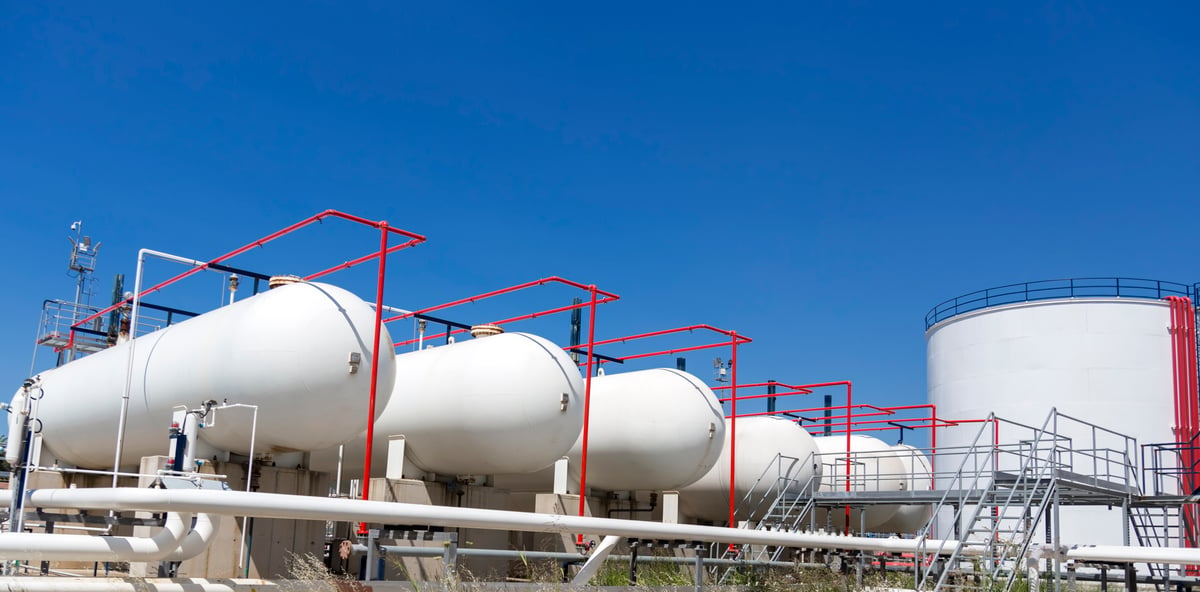
Surge in LNG Demand Boosts Energy Stocks Outlook

- Demand Growth Forecast: According to Shell's LNG Outlook 2026, global liquefied natural gas demand is expected to increase by 700 million tons by 2050, representing a 65% surge from 2025 levels, which will enhance the long-term investment value of related energy stocks.
- U.S. LNG Dominance: The U.S. has emerged as the world's largest LNG exporter, with significant growth in LNG exports over the past decade, bolstering investor confidence in LNG stocks, particularly in the context of energy independence.
- ExxonMobil's Expansion Plans: ExxonMobil is undertaking four large-scale LNG projects, expecting to double its LNG capacity by 2030, adding 40 million metric tons annually, demonstrating strong bullish sentiment towards the LNG market's future.
- Long-Term Investment Opportunities: Cheniere Energy is set to complete three expansion projects in the coming years, with projected distributable cash flow reaching $4.75 billion to $5.25 billion by 2026, further solidifying its leadership position in the LNG sector.
See More

Surging LNG Demand Creates Investment Opportunities
- Demand Growth Forecast: According to Shell's LNG Outlook 2026, global LNG demand is expected to increase by 700 million tons by 2050, representing a 65% surge from 2025 levels, which presents significant market opportunities for related companies.
- ExxonMobil's Investments: ExxonMobil is undertaking four large-scale LNG projects, expecting to double its LNG portfolio by 2030 from 2020 levels, which could increase its annual output by 40 million metric tons, demonstrating strong confidence in the LNG market.
- Cheniere Energy's Expansion: Cheniere Energy is working on three expansion projects, with one expected to be fully operational this year and the other two coming online in 2028 and 2029, projecting distributable cash flow of $4.75 billion to $5.25 billion by 2026, showcasing its stable cash flow capabilities.
- Energy Transfer's Growth: Energy Transfer reported $185 million in EBITDA growth in its natural gas liquids and refining business in the first quarter, indicating strong growth momentum in the North American midstream market while actively investing to meet energy demands from data centers.
See More

iShares Core High Dividend ETF Outperforms S&P 500


- Market Outperformance: The iShares Core High Dividend ETF has risen over 15% this year, significantly outperforming the S&P 500's 9% increase, highlighting its investment advantage in high-yield stocks and attracting more income-seeking investors.
- Quality Stock Selection: This ETF tracks an index of high-yield U.S. dividend stocks, currently holding 75 stocks with an annual dividend yield of 2.9%, nearly three times that of the S&P 500, indicating its strong competitive edge in dividend investing.
- Sector Drivers: The fund's high exposure to energy stocks, particularly ExxonMobil and Chevron, which are up 14% and 11% respectively, has significantly boosted its performance, while strong gains from healthcare stocks like AbbVie and Merck have also contributed to its growth.
- Growth Potential: Since its inception in 2011, the iShares Core High Dividend ETF has delivered over 10% annualized returns, and with its focus on high-quality dividend stocks, it is expected to continue providing stable income and growth opportunities for investors.
See More
Exxon Mobil's Q2 Upstream Income Outlook Hits $9.6 Billion
- Upstream Income Forecast: Exxon Mobil anticipates upstream income of $9.6 billion for Q2 2026, marking its highest since September 2022, significantly up from $5.7 billion in Q1, indicating robust profitability amid rising global oil prices.
- Oil Price Volatility Impact: The outbreak of the U.S.-Iran war has caused historic volatility in global oil prices, with Brent crude surging from $70 to $113, prompting Exxon to raise its upstream income outlook by $3.5 billion to $3.9 billion, reflecting the company's agile response to market dynamics.
- Market Sentiment Shift: Retail sentiment on Stocktwits remains neutral, yet discussions surged by 240% from the previous session, indicating heightened market interest in Exxon’s outlook, which could drive further stock price increases.
- Earnings Report Preview: Exxon is set to release its complete earnings report on July 31, with Q1 earnings per share at $1.16, surpassing the $1.03 consensus estimate, and revenues reaching $85.14 billion, showcasing the company's resilience and profitability in challenging conditions.
See More
Exxon Mobil Q2 Earnings Forecast Raised
- Earnings Growth Expectation: Exxon Mobil anticipates a profit increase of approximately $3.7 billion in Q2, primarily driven by soaring oil prices during the U.S.-Iran conflict, demonstrating the company's resilience in uncertain market conditions.
- Refining Profit Improvement: The company expects an additional $3.3 billion in earnings from refining and chemicals, which not only enhances overall profitability but also reflects its competitive advantage in a high oil price environment.
- Derivative Gains: Exxon Mobil forecasts around $2.6 billion in profit from derivative positions linked to physical deliveries, indicating the company's agility in risk management and response to market volatility.
- Positive Market Reaction: Following the earnings forecast, Exxon Mobil's stock rose 0.8% in after-hours trading, reflecting investor confidence and optimism regarding the company's future performance.
See More
US Stocks Close Lower as Chipmakers Weigh on Market
- Market Decline: On Tuesday, the S&P 500 index fell by 0.45%, the Dow Jones Industrial Average dropped by 0.25%, and the Nasdaq 100 index decreased by 1.77%, indicating a broader market decline under pressure from a selloff in chipmakers, reflecting investor concerns over high valuations.
- Samsung's Earnings Disappointment: Despite Samsung Electronics reporting a 19-fold profit surge, its stock plummeted over 8% in South Korea, suggesting market skepticism regarding the future profitability of the semiconductor sector, which could impact investor confidence in related companies.
- Geopolitical Risks Heightened: Crude oil prices surged to a 1.5-week high due to attacks on shipping in the Strait of Hormuz, raising inflation expectations and pushing bond yields higher, with the 10-year T-note yield reaching a 3.5-week high of 4.54%, adding uncertainty to the market.
- Strength in Software Stocks: Despite the overall market pressure, strong performance in software stocks indicates a rotation of funds into other sectors, with companies like Workday seeing stock price increases of over 4%, providing some support for the market.
See More
Surge in LNG Demand Boosts Energy Stocks Outlook
- Demand Growth Forecast: According to Shell's LNG Outlook 2026, global liquefied natural gas demand is expected to increase by 700 million tons by 2050, representing a 65% surge from 2025 levels, which will enhance the long-term investment value of related energy stocks.
- U.S. LNG Dominance: The U.S. has emerged as the world's largest LNG exporter, with significant growth in LNG exports over the past decade, bolstering investor confidence in LNG stocks, particularly in the context of energy independence.
- ExxonMobil's Expansion Plans: ExxonMobil is undertaking four large-scale LNG projects, expecting to double its LNG capacity by 2030, adding 40 million metric tons annually, demonstrating strong bullish sentiment towards the LNG market's future.
- Long-Term Investment Opportunities: Cheniere Energy is set to complete three expansion projects in the coming years, with projected distributable cash flow reaching $4.75 billion to $5.25 billion by 2026, further solidifying its leadership position in the LNG sector.
See More
Surging LNG Demand Creates Investment Opportunities
- Demand Growth Forecast: According to Shell's LNG Outlook 2026, global LNG demand is expected to increase by 700 million tons by 2050, representing a 65% surge from 2025 levels, which presents significant market opportunities for related companies.
- ExxonMobil's Investments: ExxonMobil is undertaking four large-scale LNG projects, expecting to double its LNG portfolio by 2030 from 2020 levels, which could increase its annual output by 40 million metric tons, demonstrating strong confidence in the LNG market.
- Cheniere Energy's Expansion: Cheniere Energy is working on three expansion projects, with one expected to be fully operational this year and the other two coming online in 2028 and 2029, projecting distributable cash flow of $4.75 billion to $5.25 billion by 2026, showcasing its stable cash flow capabilities.
- Energy Transfer's Growth: Energy Transfer reported $185 million in EBITDA growth in its natural gas liquids and refining business in the first quarter, indicating strong growth momentum in the North American midstream market while actively investing to meet energy demands from data centers.
See More
iShares Core High Dividend ETF Outperforms S&P 500
- Market Outperformance: The iShares Core High Dividend ETF has risen over 15% this year, significantly outperforming the S&P 500's 9% increase, highlighting its investment advantage in high-yield stocks and attracting more income-seeking investors.
- Quality Stock Selection: This ETF tracks an index of high-yield U.S. dividend stocks, currently holding 75 stocks with an annual dividend yield of 2.9%, nearly three times that of the S&P 500, indicating its strong competitive edge in dividend investing.
- Sector Drivers: The fund's high exposure to energy stocks, particularly ExxonMobil and Chevron, which are up 14% and 11% respectively, has significantly boosted its performance, while strong gains from healthcare stocks like AbbVie and Merck have also contributed to its growth.
- Growth Potential: Since its inception in 2011, the iShares Core High Dividend ETF has delivered over 10% annualized returns, and with its focus on high-quality dividend stocks, it is expected to continue providing stable income and growth opportunities for investors.
See More