Federal Reserve Stress Test Shows Resilience of Major Banks
Written by Emily J. Thompson, Senior Investment Analyst
Updated: Jun 24 2026
0mins


Source: CNBC
- Bank Resilience: The Federal Reserve's annual stress test revealed that 32 major banks could absorb over $708 billion in losses during a hypothetical global recession while continuing to lend to households and businesses, highlighting the resilience of the banking system.
- Stable Capital Ratios: The industry's common equity tier 1 capital ratio fell by 1.6 percentage points during the test but remained comfortably above the required minimums, indicating that banks can maintain capital adequacy despite a surge in unemployment to 10% and significant declines in real estate prices.
- Regulatory Policy Changes: Unlike previous years, this year's test results will not affect the capital requirements for large banks, as the Fed decided to keep stress test buffers unchanged until 2027, a policy shift that could reshape future capital requirements for banks.
- Market Focus Shift: KBW analysts noted that while the test results underscore the strength of the banking system, market attention is likely to shift towards the upcoming Basel III Endgame proposal rather than the current stress test results, which may influence future capital buffer requirements.
Trade with 70% Backtested Accuracy
Stop guessing "Should I Buy C?" and start using high-conviction signals backed by rigorous historical data.
Sign up today to access powerful investing tools and make smarter, data-driven decisions.
Analyst Views on C
Wall Street analysts forecast C stock price to fall
18 Analyst Rating
15 Buy
3 Hold
0 Sell
Strong Buy
Current: 140.130

Low
87.00
Averages
131.00
High
150.00
Current: 140.130
Low
87.00
Averages
131.00
High
150.00
About C
Citigroup Inc. is a global diversified financial services holding company. The Company’s segments include Services, Markets, Banking, Wealth and U.S. Personal Banking (USPB). The Services segment includes Treasury and Trade Solutions (TTS) and securities services. TTS provides an integrated suite of tailored cash management, trade and working capital solutions to multinational corporations, financial institutions and public sector organizations. The Markets segment provides corporate, institutional and public sector clients around the world with a full range of sales and trading services across equities, foreign exchange, rates, spread products and commodities. The Banking segment includes investment banking, which supports client capital-raising needs to help strengthen and grow their businesses. The Wealth segment includes Private Bank, Wealth at Work and Citigold and provides financial services to a range of client segments. USPB segment includes branded cards and retail services.
About the author

Emily J. Thompson
Emily J. Thompson, a Chartered Financial Analyst (CFA) with 12 years in investment research, graduated with honors from the Wharton School. Specializing in industrial and technology stocks, she provides in-depth analysis for Intellectia’s earnings and market brief reports.
Market Warning: Potential Crash Risks


- Divergence in Market: JPMorgan analysts have highlighted a significant divergence between AI hardware stocks, like Micron (MU), which has surged nearly 250% year-to-date, and major AI investors like Amazon and Microsoft, which have posted negative returns in 2026, indicating potential market risks.
- Bear Market Warning Signals: Citi Research's Bear Market Checklist reveals 10 global warning flags, the highest since the 2008 crash, although below the 17.5 flags seen before the 2000 crash, suggesting unstable market sentiment.
- Valuation Concerns: The S&P 500 Shiller CAPE Ratio has reached its highest level since 2000, while the Buffett Indicator shows a record high of 233.8% for U.S. stock market capitalization to GDP, nearing Buffett's
See More
AMD's AI Event Could Boost Stock Price


- Stock Price Upside: AMD's shares have surged 131% in the first half of 2026, and despite a recent 5% drop due to semiconductor sell-offs, the upcoming AI event could reignite investor confidence.
- Helios Platform Demand: At the July 22-23 event, AMD is expected to announce significant customer wins for its Helios server solutions, with Meta set to deploy the platform in the second half of 2026, indicating strong market demand.
- Significant Technical Advantage: The Helios system features 432GB of high-bandwidth memory, surpassing Nvidia's 288GB, positioning AMD favorably in AI infrastructure and potentially attracting more hyperscaler customers.
- Future Growth Expectations: AMD's earnings per share are projected to jump 77% to $7.39 in 2023, and if it reaches $18.30 by 2028, the stock could see a 41% increase, highlighting strong long-term growth potential.
See More
AMD Shares Surge 131% in 2026, Positive Outlook Ahead
- Stock Performance: AMD's shares have surged by 131% in the first half of 2026, although they have recently dropped nearly 5% due to a sell-off in semiconductor stocks, indicating strong market confidence in its future growth despite short-term volatility.
- AI Event Announcement: AMD is set to hold its 'Advancing AI' event on July 22-23, where it is expected to unveil new AI platforms and customer deployment details, which could further boost investor confidence, especially after last year's event showcased the Helios server architecture.
- Strong Customer Demand: The Helios platform has been adopted by Meta, which plans to deploy it in the second half of 2026, and AMD's management noted strong customer demand during the May earnings call, suggesting potential to attract more hyperscaler clients.
- Earnings Expectations: AMD's earnings per share are projected to jump by 77% to $7.39 this year, and if it reaches $18.30 by 2028, trading at 40 times earnings could push its stock price to $732, representing a potential 41% increase, highlighting its long-term growth potential.
See More

Wall Street Major Indexes End Mixed After Weak Payrolls Report
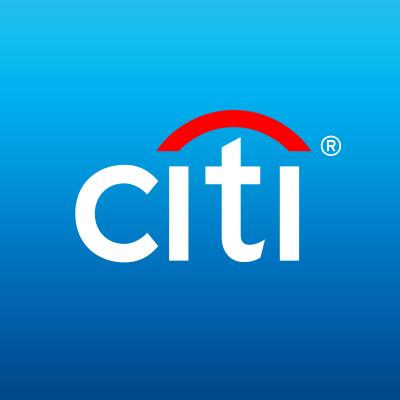

- Weak Payroll Data: The June non-farm payrolls report fell short of expectations, leading to mixed performances across major Wall Street indexes, with the Nasdaq down 0.8%, indicating concerns about the economic recovery as tech stocks like Tesla and Sandisk struggled.
- Analyst Rating Changes: DA Davidson upgraded Palantir from Neutral to Buy, raising the price target from $165 to $175, highlighting its competitive advantages in the AI era, which may attract more investor interest in its software solutions.
- Bank Stocks Downgraded: Oppenheimer downgraded Goldman Sachs and Morgan Stanley to Underperform, noting that while the banking sector is currently expanding, it remains in a mature cycle, suggesting a cautious outlook on long-term growth potential.
- Positive Energy Stock Outlook: Wolfe Research upgraded Chevron to Outperform with a price target of $210, citing that its long-term free cash flow prospects are not fully reflected in the stock price, indicating confidence in energy stocks amidst commodity price volatility.
See More
SK Hynix Considers Underwriting Fee for U.S. Listing

- Potential Fundraising Size: SK Hynix is preparing for a U.S. listing, potentially selling up to 2.5% of its outstanding shares, which could raise approximately $26.5 billion, reflecting the company's strong market position amid surging demand for AI infrastructure.
- Underwriting Fee Structure: The company is considering a fee of about 0.5% for underwriters, which, while below typical fees for large U.S. offerings, could still generate over $130 million for participating banks, highlighting the transaction's profitability potential.
- Market Leadership: As a leading supplier of high-bandwidth memory chips for NVIDIA AI processors, SK Hynix has greatly benefited from the AI investment boom, with its stock significantly rising over the past year, indicating strong investor optimism regarding long-term demand.
- Stock Volatility: Despite recent heightened volatility due to concerns over the sustainability of AI-related spending, SK Hynix's stock remains substantially higher than a year ago, demonstrating continued market confidence in its future growth prospects.
See More

Analysis of Investment Prospects in Financial Stocks

- Global Business Reach: Citigroup operates in over 90 markets, reporting FY 2025 revenue exceeding $85.2 billion, a 5% increase, with net income of $13.1 billion, reflecting a 13% growth, showcasing the success of its globalization strategy in facilitating complex financial transactions for multinational corporations.
- Dominance in U.S. Market: Wells Fargo's FY 2025 revenue was nearly $83.7 billion, with less than 2% growth and net income of $20.3 billion, a 9% increase, indicating that despite regulatory challenges, its extensive customer base and branch network in the U.S. provide stable revenue streams.
- Risks and Opportunities: Citigroup faces risks from currency fluctuations and regulatory challenges in international markets, while Wells Fargo must manage compliance costs and competition from fintech firms, with future growth potential hinging on effective risk management strategies.
- Valuation Comparison: Wells Fargo appears slightly cheaper based on forward P/E ratios, while Citigroup has a lower P/S ratio; with projected revenue growth of 10% to $93.9 billion and a 44% increase in net income to $18.8 billion in 2026, Citigroup demonstrates stronger growth potential.
See More
Market Warning: Potential Crash Risks
- Divergence in Market: JPMorgan analysts have highlighted a significant divergence between AI hardware stocks, like Micron (MU), which has surged nearly 250% year-to-date, and major AI investors like Amazon and Microsoft, which have posted negative returns in 2026, indicating potential market risks.
- Bear Market Warning Signals: Citi Research's Bear Market Checklist reveals 10 global warning flags, the highest since the 2008 crash, although below the 17.5 flags seen before the 2000 crash, suggesting unstable market sentiment.
- Valuation Concerns: The S&P 500 Shiller CAPE Ratio has reached its highest level since 2000, while the Buffett Indicator shows a record high of 233.8% for U.S. stock market capitalization to GDP, nearing Buffett's
See More
AMD's AI Event Could Boost Stock Price
- Stock Price Upside: AMD's shares have surged 131% in the first half of 2026, and despite a recent 5% drop due to semiconductor sell-offs, the upcoming AI event could reignite investor confidence.
- Helios Platform Demand: At the July 22-23 event, AMD is expected to announce significant customer wins for its Helios server solutions, with Meta set to deploy the platform in the second half of 2026, indicating strong market demand.
- Significant Technical Advantage: The Helios system features 432GB of high-bandwidth memory, surpassing Nvidia's 288GB, positioning AMD favorably in AI infrastructure and potentially attracting more hyperscaler customers.
- Future Growth Expectations: AMD's earnings per share are projected to jump 77% to $7.39 in 2023, and if it reaches $18.30 by 2028, the stock could see a 41% increase, highlighting strong long-term growth potential.
See More
AMD Shares Surge 131% in 2026, Positive Outlook Ahead
- Stock Performance: AMD's shares have surged by 131% in the first half of 2026, although they have recently dropped nearly 5% due to a sell-off in semiconductor stocks, indicating strong market confidence in its future growth despite short-term volatility.
- AI Event Announcement: AMD is set to hold its 'Advancing AI' event on July 22-23, where it is expected to unveil new AI platforms and customer deployment details, which could further boost investor confidence, especially after last year's event showcased the Helios server architecture.
- Strong Customer Demand: The Helios platform has been adopted by Meta, which plans to deploy it in the second half of 2026, and AMD's management noted strong customer demand during the May earnings call, suggesting potential to attract more hyperscaler clients.
- Earnings Expectations: AMD's earnings per share are projected to jump by 77% to $7.39 this year, and if it reaches $18.30 by 2028, trading at 40 times earnings could push its stock price to $732, representing a potential 41% increase, highlighting its long-term growth potential.
See More
Wall Street Major Indexes End Mixed After Weak Payrolls Report
- Weak Payroll Data: The June non-farm payrolls report fell short of expectations, leading to mixed performances across major Wall Street indexes, with the Nasdaq down 0.8%, indicating concerns about the economic recovery as tech stocks like Tesla and Sandisk struggled.
- Analyst Rating Changes: DA Davidson upgraded Palantir from Neutral to Buy, raising the price target from $165 to $175, highlighting its competitive advantages in the AI era, which may attract more investor interest in its software solutions.
- Bank Stocks Downgraded: Oppenheimer downgraded Goldman Sachs and Morgan Stanley to Underperform, noting that while the banking sector is currently expanding, it remains in a mature cycle, suggesting a cautious outlook on long-term growth potential.
- Positive Energy Stock Outlook: Wolfe Research upgraded Chevron to Outperform with a price target of $210, citing that its long-term free cash flow prospects are not fully reflected in the stock price, indicating confidence in energy stocks amidst commodity price volatility.
See More
SK Hynix Considers Underwriting Fee for U.S. Listing
- Potential Fundraising Size: SK Hynix is preparing for a U.S. listing, potentially selling up to 2.5% of its outstanding shares, which could raise approximately $26.5 billion, reflecting the company's strong market position amid surging demand for AI infrastructure.
- Underwriting Fee Structure: The company is considering a fee of about 0.5% for underwriters, which, while below typical fees for large U.S. offerings, could still generate over $130 million for participating banks, highlighting the transaction's profitability potential.
- Market Leadership: As a leading supplier of high-bandwidth memory chips for NVIDIA AI processors, SK Hynix has greatly benefited from the AI investment boom, with its stock significantly rising over the past year, indicating strong investor optimism regarding long-term demand.
- Stock Volatility: Despite recent heightened volatility due to concerns over the sustainability of AI-related spending, SK Hynix's stock remains substantially higher than a year ago, demonstrating continued market confidence in its future growth prospects.
See More
Analysis of Investment Prospects in Financial Stocks
- Global Business Reach: Citigroup operates in over 90 markets, reporting FY 2025 revenue exceeding $85.2 billion, a 5% increase, with net income of $13.1 billion, reflecting a 13% growth, showcasing the success of its globalization strategy in facilitating complex financial transactions for multinational corporations.
- Dominance in U.S. Market: Wells Fargo's FY 2025 revenue was nearly $83.7 billion, with less than 2% growth and net income of $20.3 billion, a 9% increase, indicating that despite regulatory challenges, its extensive customer base and branch network in the U.S. provide stable revenue streams.
- Risks and Opportunities: Citigroup faces risks from currency fluctuations and regulatory challenges in international markets, while Wells Fargo must manage compliance costs and competition from fintech firms, with future growth potential hinging on effective risk management strategies.
- Valuation Comparison: Wells Fargo appears slightly cheaper based on forward P/E ratios, while Citigroup has a lower P/S ratio; with projected revenue growth of 10% to $93.9 billion and a 44% increase in net income to $18.8 billion in 2026, Citigroup demonstrates stronger growth potential.
See More