Asset-Heavy Stocks Outperform Amid AI Risks
Written by Emily J. Thompson, Senior Investment Analyst
Updated: Mar 04 2026
0mins


Should l Buy GS?
Source: CNBC
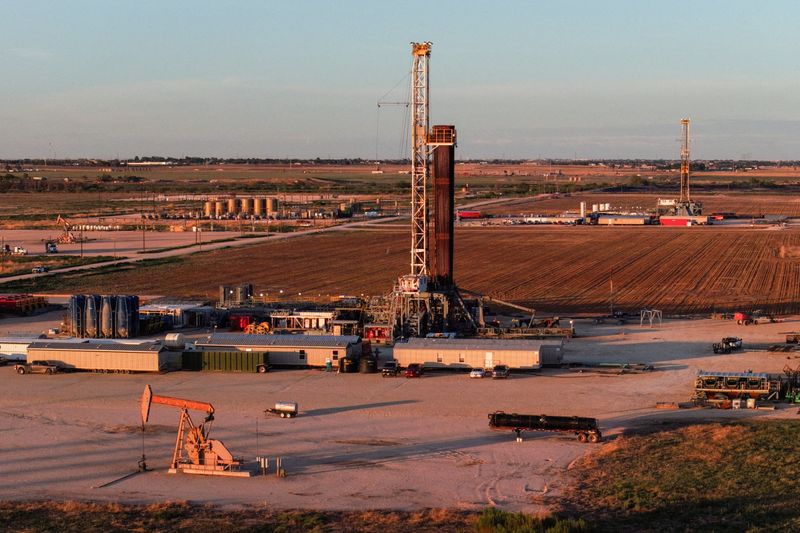
- Emergence of HALO Trade: Goldman Sachs noted that investors are shifting towards asset-heavy stocks due to concerns over AI risks, creating a trading strategy dubbed “HALO,” which emphasizes companies with real assets that are less likely to become obsolete due to AI disruptions.
- Increased Market Rotation: As sectors like software have faced sell-offs, asset-heavy businesses have significantly outperformed asset-light ones, with Goldman's asset-heavy stock basket surpassing the asset-light group by 25 percentage points since November, indicating a market preference for physical goods-producing industries.
- Strong Orders for GE Aerospace: GE Aerospace, recently added to Goldman's asset-heavy list, boasts a $190 billion order backlog, suggesting that the company will remain busy regardless of the success of the AI trade, thereby reinforcing its market position.
- Optimistic Outlook for Disney: Analysts reiterated a buy rating on Disney, citing reduced downside risks related to theme park attendance and a robust $60 billion investment over the next decade, which supports its high-quality earnings per share growth and indicates strong industry growth potential.
Trade with 70% Backtested Accuracy
Stop guessing "Should I Buy GS?" and start using high-conviction signals backed by rigorous historical data.
Sign up today to access powerful investing tools and make smarter, data-driven decisions.
Analyst Views on GS
Wall Street analysts forecast GS stock price to rise
12 Analyst Rating
5 Buy
7 Hold
0 Sell
Moderate Buy
Current: 925.870

Low
604.00
Averages
951.45
High
1100
Current: 925.870
Low
604.00
Averages
951.45
High
1100
About GS
The Goldman Sachs Group, Inc. is a global financial institution that delivers a range of financial services to a large and diversified client base that includes corporations, financial institutions, governments and individuals. Its segments include Global Banking & Markets, Asset & Wealth Management and Platform Solutions. The Global Banking & Markets segment offers a range of services, including financing, advisory services, risk distribution, and hedging for its institutional and corporate clients. It facilitates client transactions and makes markets in fixed income, equity, currency and commodity products. The Asset & Wealth Management segment manages assets and offers investment products across all asset classes to a diverse set of clients. It also provides investing and wealth advisory solutions. The Platform Solutions segment includes consumer platforms, such as partnerships offering credit cards and point-of-sale financing, and transaction banking and other platform businesses.
About the author

Emily J. Thompson
Emily J. Thompson, a Chartered Financial Analyst (CFA) with 12 years in investment research, graduated with honors from the Wharton School. Specializing in industrial and technology stocks, she provides in-depth analysis for Intellectia’s earnings and market brief reports.

Analysis of Earnings from Locking in High CD Rates

- Current CD Rate Overview: The highest CD rate available today is 4% APY, offered by Marcus by Goldman Sachs for a 9-month CD, which stands out in the current economic climate and is likely to attract more depositors.
- Interest Earnings Calculation: Investing $1,000 in a one-year CD at 1.52% APY would yield a balance of $1,015.20 at year-end, while a 4% APY CD would grow to $1,040.74, illustrating the significant impact of higher rates on earnings.
- Deposit Amount and Earnings Relationship: For a 4% APY CD, depositing $10,000 would result in a total balance of $10,407.42 at maturity, translating to $407.42 in interest, highlighting the direct correlation between deposit size and earnings.
- Diversity of CD Types: Beyond traditional CDs, various types such as Bump-up CDs, No-penalty CDs, and Jumbo CDs exist, which may offer slightly lower rates but provide greater flexibility and options to meet different depositor needs.
See More

High Financial Grit Savers Hold 49% More Retirement Savings

- Impact of Financial Grit: Savers with high Financial Grit hold 49% more in retirement savings than low-grit counterparts with identical incomes, driven by three key habits: automated contributions, staying invested, and reinvesting dividends, highlighting the significance of behavior in wealth accumulation over time.
- Cost of Living Pressures: The survey reveals that 67% of workers report excessive monthly expenses limiting their ability to save for retirement, particularly as housing, healthcare, childcare, and education costs have outpaced wage growth since 2000, creating a 'Financial Vortex' that exacerbates saving challenges.
- Importance of Investment Habits: Findings indicate that access to workplace retirement plans correlates with a 29% higher savings-to-income ratio, while early savings accounts add another 14% impact, with automation helping savers maintain consistency during emotional market fluctuations.
- Compounding Through Reinvestment: High-grit savers tend to reinvest income automatically, turning dividends and interest into additional shares, which fosters long-term growth without relying on market timing, emphasizing the power of disciplined saving behaviors.
See More
Goldman Sachs Delays U.S. Rate Cut Outlook to 2026
- Rate Cut Outlook Delayed: Goldman Sachs has postponed its U.S. interest rate cut outlook to December 2026 and March 2027, primarily due to inflation remaining stickier than expected, with projected PCE inflation around 3%, significantly above the Fed's 2% target, indicating that the conditions necessary for a policy reset will be delayed.
- Inflation Impact Analysis: The persistent high inflation, driven by energy costs, suggests that the Federal Reserve will face greater challenges in resetting policy in the coming years, potentially requiring a longer timeframe to achieve rate cuts.
- Policy Rate Unchanged: Despite the delayed rate cut outlook, Goldman maintains its terminal Fed rate forecast at 3%-3.25%, reflecting a cautious market sentiment regarding future economic conditions, particularly against the backdrop of geopolitical tensions in the Middle East.
- Economic Uncertainty: Goldman emphasizes that only after the oil shock fades, monthly inflation prints decline, and the labor market softens further, will the Fed consider rate cuts this year, highlighting the complexity and uncertainty of the current economic environment.
See More

Opportunity to Lock in High CD Rates
- Rate Change Impact: After three rate cuts by the Federal Reserve in 2025, the Fed has kept rates steady in 2026, indicating that now may be the last chance to lock in competitive CD rates, particularly for shorter-term CDs which generally offer higher rates.
- Top CD Rates: Currently, the highest CD rate is 4% APY offered by Marcus by Goldman Sachs on its 9-month CD, highlighting the competitive edge of online banks and credit unions in attracting investors in the CD market.
- Investment Earnings Example: Investing $1,000 in a one-year CD at 1.52% APY results in a year-end balance of $1,015.20, while a 4% APY CD would grow to $1,040.74, illustrating the significant impact of higher rates on earnings.
- Diversity of CD Types: Beyond traditional CDs, various types such as bump-up CDs and no-penalty CDs offer different flexibility and earning potential, catering to the diverse needs of investors in today's market.
See More

Iran War Causes Massive Global Oil Supply Shortage
- Severe Supply Disruption: The closure of the Strait of Hormuz has led to a 57% drop in Persian Gulf oil production from pre-war levels, resulting in a nearly 1 billion barrel supply shortage that Shell's CEO warns is worsening daily, threatening global oil supply stability.
- Accelerated Inventory Drawdown: With global oil consumption at approximately 100 million barrels per day, the industry is currently depleting stockpiles at a record pace of 11 to 12 million barrels daily, highlighting the urgent demand for oil that may persist for several months.
- Long Road to Recovery: Even if the Strait of Hormuz reopens immediately, oil production in the Persian Gulf won't recover quickly, with S&P Global estimating that most wells may take up to seven months to restart, exacerbating the supply crunch.
- Investment Strategy Shift: Given the likelihood of sustained high oil prices, investors should consider reducing exposure to energy-intensive sectors while increasing allocations to oil stocks to prepare for potential fuel shortages and price hikes.
See More

Global Oil Supply Gap Reaches 1 Billion Barrels
- Escalating Supply Shortage: The ongoing war with Iran has led to a global oil supply shortfall of nearly 1 billion barrels, a situation expected to worsen, which will keep oil prices elevated for the remainder of the year and pose fuel shortage risks for import-reliant Asian and European markets.
- Significant Production Decline: Oil production in the Persian Gulf has plummeted by 57% from pre-war levels, with the closure of the Strait of Hormuz preventing the global economy from meeting its daily demand of 100 million barrels, forcing the industry to deplete stockpiles at a record pace of 11 to 12 million barrels per day.
- Long Road to Recovery: Even if the Strait of Hormuz reopens immediately, Persian Gulf oil production will not return to normal overnight, with S&P Global estimating that it could take up to seven months to restart most wells, further exacerbating the supply crunch.
- Investor Strategy: Given the persistent high oil prices, investors should reduce exposure to energy-intensive sectors and increase allocations to oil stocks to prepare for potential supply shocks and price fluctuations in the future.
See More
Analysis of Earnings from Locking in High CD Rates
- Current CD Rate Overview: The highest CD rate available today is 4% APY, offered by Marcus by Goldman Sachs for a 9-month CD, which stands out in the current economic climate and is likely to attract more depositors.
- Interest Earnings Calculation: Investing $1,000 in a one-year CD at 1.52% APY would yield a balance of $1,015.20 at year-end, while a 4% APY CD would grow to $1,040.74, illustrating the significant impact of higher rates on earnings.
- Deposit Amount and Earnings Relationship: For a 4% APY CD, depositing $10,000 would result in a total balance of $10,407.42 at maturity, translating to $407.42 in interest, highlighting the direct correlation between deposit size and earnings.
- Diversity of CD Types: Beyond traditional CDs, various types such as Bump-up CDs, No-penalty CDs, and Jumbo CDs exist, which may offer slightly lower rates but provide greater flexibility and options to meet different depositor needs.
See More
High Financial Grit Savers Hold 49% More Retirement Savings
- Impact of Financial Grit: Savers with high Financial Grit hold 49% more in retirement savings than low-grit counterparts with identical incomes, driven by three key habits: automated contributions, staying invested, and reinvesting dividends, highlighting the significance of behavior in wealth accumulation over time.
- Cost of Living Pressures: The survey reveals that 67% of workers report excessive monthly expenses limiting their ability to save for retirement, particularly as housing, healthcare, childcare, and education costs have outpaced wage growth since 2000, creating a 'Financial Vortex' that exacerbates saving challenges.
- Importance of Investment Habits: Findings indicate that access to workplace retirement plans correlates with a 29% higher savings-to-income ratio, while early savings accounts add another 14% impact, with automation helping savers maintain consistency during emotional market fluctuations.
- Compounding Through Reinvestment: High-grit savers tend to reinvest income automatically, turning dividends and interest into additional shares, which fosters long-term growth without relying on market timing, emphasizing the power of disciplined saving behaviors.
See More
Goldman Sachs Delays U.S. Rate Cut Outlook to 2026
- Rate Cut Outlook Delayed: Goldman Sachs has postponed its U.S. interest rate cut outlook to December 2026 and March 2027, primarily due to inflation remaining stickier than expected, with projected PCE inflation around 3%, significantly above the Fed's 2% target, indicating that the conditions necessary for a policy reset will be delayed.
- Inflation Impact Analysis: The persistent high inflation, driven by energy costs, suggests that the Federal Reserve will face greater challenges in resetting policy in the coming years, potentially requiring a longer timeframe to achieve rate cuts.
- Policy Rate Unchanged: Despite the delayed rate cut outlook, Goldman maintains its terminal Fed rate forecast at 3%-3.25%, reflecting a cautious market sentiment regarding future economic conditions, particularly against the backdrop of geopolitical tensions in the Middle East.
- Economic Uncertainty: Goldman emphasizes that only after the oil shock fades, monthly inflation prints decline, and the labor market softens further, will the Fed consider rate cuts this year, highlighting the complexity and uncertainty of the current economic environment.
See More
Opportunity to Lock in High CD Rates
- Rate Change Impact: After three rate cuts by the Federal Reserve in 2025, the Fed has kept rates steady in 2026, indicating that now may be the last chance to lock in competitive CD rates, particularly for shorter-term CDs which generally offer higher rates.
- Top CD Rates: Currently, the highest CD rate is 4% APY offered by Marcus by Goldman Sachs on its 9-month CD, highlighting the competitive edge of online banks and credit unions in attracting investors in the CD market.
- Investment Earnings Example: Investing $1,000 in a one-year CD at 1.52% APY results in a year-end balance of $1,015.20, while a 4% APY CD would grow to $1,040.74, illustrating the significant impact of higher rates on earnings.
- Diversity of CD Types: Beyond traditional CDs, various types such as bump-up CDs and no-penalty CDs offer different flexibility and earning potential, catering to the diverse needs of investors in today's market.
See More
Iran War Causes Massive Global Oil Supply Shortage
- Severe Supply Disruption: The closure of the Strait of Hormuz has led to a 57% drop in Persian Gulf oil production from pre-war levels, resulting in a nearly 1 billion barrel supply shortage that Shell's CEO warns is worsening daily, threatening global oil supply stability.
- Accelerated Inventory Drawdown: With global oil consumption at approximately 100 million barrels per day, the industry is currently depleting stockpiles at a record pace of 11 to 12 million barrels daily, highlighting the urgent demand for oil that may persist for several months.
- Long Road to Recovery: Even if the Strait of Hormuz reopens immediately, oil production in the Persian Gulf won't recover quickly, with S&P Global estimating that most wells may take up to seven months to restart, exacerbating the supply crunch.
- Investment Strategy Shift: Given the likelihood of sustained high oil prices, investors should consider reducing exposure to energy-intensive sectors while increasing allocations to oil stocks to prepare for potential fuel shortages and price hikes.
See More
Global Oil Supply Gap Reaches 1 Billion Barrels
- Escalating Supply Shortage: The ongoing war with Iran has led to a global oil supply shortfall of nearly 1 billion barrels, a situation expected to worsen, which will keep oil prices elevated for the remainder of the year and pose fuel shortage risks for import-reliant Asian and European markets.
- Significant Production Decline: Oil production in the Persian Gulf has plummeted by 57% from pre-war levels, with the closure of the Strait of Hormuz preventing the global economy from meeting its daily demand of 100 million barrels, forcing the industry to deplete stockpiles at a record pace of 11 to 12 million barrels per day.
- Long Road to Recovery: Even if the Strait of Hormuz reopens immediately, Persian Gulf oil production will not return to normal overnight, with S&P Global estimating that it could take up to seven months to restart most wells, further exacerbating the supply crunch.
- Investor Strategy: Given the persistent high oil prices, investors should reduce exposure to energy-intensive sectors and increase allocations to oil stocks to prepare for potential supply shocks and price fluctuations in the future.
See More