Analysis of AMD's Investment Value in AI Sector
Written by Emily J. Thompson, Senior Investment Analyst
Updated: 1 day ago
0mins
Should l Buy AMD?
Source: Fool
- Market Performance Comparison: AMD's market cap stands at $69.2 billion, and while it achieved a 57% year-over-year growth in its data center business, it still lags behind Nvidia, indicating a competitive disadvantage in the AI computing sector.
- Diversified Business Structure: AMD offers a wide range of hardware from data center GPUs to OEM CPUs, which spreads risk; however, when one segment underperforms, overall growth is impacted, particularly in the context of fluctuating AI demand.
- Profitability Outlook: Although AMD's forward P/E ratio is 61 times with projected earnings to double this year, it appears relatively expensive compared to Nvidia's 26 times forward P/E, prompting investors to consider valuation carefully.
- Investment Recommendation: Despite AMD's progress in AI, given Nvidia's market leadership and more attractive valuation, investors may prefer Nvidia over AMD as a more compelling investment choice.
Trade with 70% Backtested Accuracy
Stop guessing "Should I Buy AMD?" and start using high-conviction signals backed by rigorous historical data.
Sign up today to access powerful investing tools and make smarter, data-driven decisions.
Analyst Views on AMD
Wall Street analysts forecast AMD stock price to fall
33 Analyst Rating
25 Buy
8 Hold
0 Sell
Strong Buy
Current: 449.700

Low
210.00
Averages
289.13
High
377.00
Current: 449.700
Low
210.00
Averages
289.13
High
377.00
About AMD
Advanced Micro Devices, Inc. is a global semiconductor company. The Company is focused on high-performance computing and artificial intelligence (AI). Its segments include Data Center, Client and Gaming, and Embedded. Data Center segment includes AI accelerators, microprocessors (CPUs) for servers, graphics processing units (GPUs), accelerated processing units (APUs), data processing units (DPUs), Field Programmable Gate Arrays (FPGAs), and Adaptive system-on-Chip (SoC) products for data centers. Client and Gaming segment includes CPUs, APUs, chipsets for desktops and notebooks, discrete GPUs, and semi-custom SoC products and development services. Embedded segment includes embedded CPUs, APUs, FPGAs, system on modules (SOMs), and Adaptive SoC products. It markets and sells its products under the AMD trademark. Its products include AMD EPYC, AMD Ryzen, AMD Ryzen PRO, Virtex UltraScale+, among others.
About the author

Emily J. Thompson
Emily J. Thompson, a Chartered Financial Analyst (CFA) with 12 years in investment research, graduated with honors from the Wharton School. Specializing in industrial and technology stocks, she provides in-depth analysis for Intellectia’s earnings and market brief reports.

AMD Reports Record Quarter with Strong Earnings Outlook

- Record Quarter: AMD reported what is arguably its best quarter in history, with CEO Lisa Su indicating a clear path for rapid earnings growth, signaling strong performance and sustained growth potential in the semiconductor market.
- Earnings Growth Outlook: With the launch of new products and rising market demand, AMD is poised to scale earnings quickly, further solidifying its leadership position in high-performance computing and attracting more investor interest.
- Positive Market Reaction: Despite stock prices rising in morning trading on May 14, 2026, investors remain optimistic about AMD's future performance, reflecting confidence in its innovation capabilities and growth strategy.
- Investor Focus: As the company's performance improves, analysts are beginning to reassess AMD's stock value; although the current stock price may be considered high, the long-term growth potential continues to attract investor attention.
See More

Emerging Chip Firms Aid Nuclear Security Computing

- Computing Power Challenge: Sandia National Laboratories faces pressure on computing capabilities needed for high-precision scientific calculations due to mainstream semiconductor firms like Nvidia and AMD shifting their focus to AI, impacting their nuclear weapon simulation tasks.
- Emerging Market Opportunities: The intensified competition for better AI chips has opened the market to newcomers like NextSilicon, whose chips are currently being tested by Sandia, highlighting the potential of smaller firms in the high-performance computing sector.
- Double-Precision Computing Concern: There is an increasing demand for double-precision floating-point computation at Sandia, and while AMD has released chips aimed at scientific computing, Nvidia's upcoming Rubin chips have shown a decline in double-precision performance, raising concerns in the scientific community.
- Technical Milestone: NextSilicon's chips have passed a series of general supercomputing tests and are set for more complex nuclear security computing tests this fall, showcasing advantages in power savings and self-reprogramming capabilities, potentially supporting future government systems.
See More

Asia-Pacific Markets Poised for Mixed Open Amid Geopolitical Tensions


- Geopolitical Tensions: President Trump warned Iran to
See More

Nvidia vs. Cerebras: The AI Stock Showdown

- Nvidia's Market Dominance: Nvidia's stock has surged 1,500% over the past five years, with its strong position in the AI chip market leading to $215 billion in revenue for 2022 and a gross margin exceeding 70%, demonstrating its sustained profitability and competitive edge in AI.
- Cerebras IPO Success: Cerebras began trading on May 14, soaring 68% and raising over $5.5 billion, finishing with a market cap close to $67 billion, marking a strong debut in the AI market that has captured investor interest.
- Technological Advantage Comparison: Cerebras offers AI chips that are larger than Nvidia's, claiming inference speeds up to 15 times faster than leading GPU solutions, indicating a potential competitive edge in AI computing that may attract more customers.
- Future Growth Potential: Although Cerebras is still in the early stages of its AI journey, its $20 billion deal with OpenAI and the provision of cloud computing services suggest significant future growth potential, while Nvidia maintains its market leadership through continuous innovation and industry partnerships.
See More
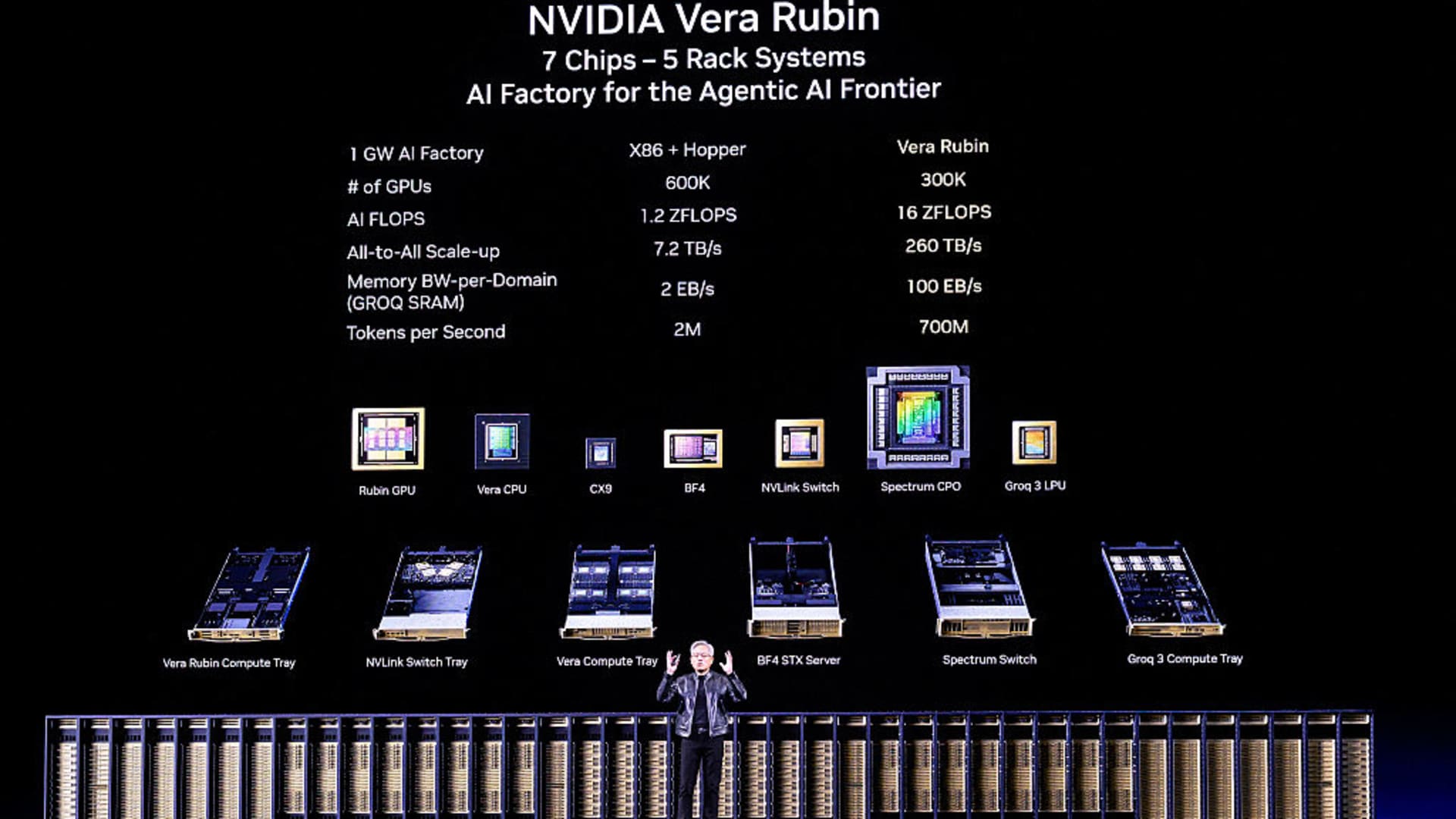
Nvidia Earnings Week Approaches, Market Anticipates Key Insights


- Nvidia Earnings Expectations: Nvidia is set to report its Q1 earnings on Wednesday, with revenue anticipated at $78.67 billion and EPS of $1.76, as analysts look for results that exceed expectations to boost stock prices and alleviate concerns about a slowing investment cycle.
- Home Depot Performance Outlook: Home Depot is expected to see only 0.8% same-store sales growth in Q1, as rising mortgage rates and a challenging economic backdrop lead analysts to predict its full-year guidance will remain flat to 2%, reflecting low market expectations for its performance.
- TJX Companies Performance: TJX anticipates a 4.1% same-store sales growth in Q1, benefiting from consumer demand for quality merchandise at affordable prices, although rising freight costs may impact margins; nonetheless, the company is viewed as a solid long-term investment.
- Google Developer Conference: Google will host its annual developer conference on Tuesday and Wednesday, with analysts warning that a lack of a
See More

AMD's Strategic Move in AI Infrastructure
- AI Strategic Shift: AMD is striving to transcend its role as a mere chip supplier by leveraging its AI roadmap and commitments to hyperscalers, aiming to establish a second platform in AI infrastructure that showcases its potential in future markets.
- Product Deployment Plans: By 2026, AMD is set to launch the MI450 and Helios series, which will significantly bolster the company's competitiveness in the AI sector, although market confidence in its execution capabilities remains cautious.
- Valuation Challenges: As of May 8, 2026, AMD's stock price reflects a wary market sentiment regarding its future growth, indicating that any missteps in execution could have a substantial impact on the company's valuation.
- Competitive Landscape Analysis: In the AI infrastructure space, AMD faces fierce competition from other tech giants, making the successful implementation of its strategy and rapid adaptation to market changes crucial for its success.
See More
AMD Reports Record Quarter with Strong Earnings Outlook
- Record Quarter: AMD reported what is arguably its best quarter in history, with CEO Lisa Su indicating a clear path for rapid earnings growth, signaling strong performance and sustained growth potential in the semiconductor market.
- Earnings Growth Outlook: With the launch of new products and rising market demand, AMD is poised to scale earnings quickly, further solidifying its leadership position in high-performance computing and attracting more investor interest.
- Positive Market Reaction: Despite stock prices rising in morning trading on May 14, 2026, investors remain optimistic about AMD's future performance, reflecting confidence in its innovation capabilities and growth strategy.
- Investor Focus: As the company's performance improves, analysts are beginning to reassess AMD's stock value; although the current stock price may be considered high, the long-term growth potential continues to attract investor attention.
See More
Emerging Chip Firms Aid Nuclear Security Computing
- Computing Power Challenge: Sandia National Laboratories faces pressure on computing capabilities needed for high-precision scientific calculations due to mainstream semiconductor firms like Nvidia and AMD shifting their focus to AI, impacting their nuclear weapon simulation tasks.
- Emerging Market Opportunities: The intensified competition for better AI chips has opened the market to newcomers like NextSilicon, whose chips are currently being tested by Sandia, highlighting the potential of smaller firms in the high-performance computing sector.
- Double-Precision Computing Concern: There is an increasing demand for double-precision floating-point computation at Sandia, and while AMD has released chips aimed at scientific computing, Nvidia's upcoming Rubin chips have shown a decline in double-precision performance, raising concerns in the scientific community.
- Technical Milestone: NextSilicon's chips have passed a series of general supercomputing tests and are set for more complex nuclear security computing tests this fall, showcasing advantages in power savings and self-reprogramming capabilities, potentially supporting future government systems.
See More
Asia-Pacific Markets Poised for Mixed Open Amid Geopolitical Tensions
- Geopolitical Tensions: President Trump warned Iran to
See More
Nvidia vs. Cerebras: The AI Stock Showdown
- Nvidia's Market Dominance: Nvidia's stock has surged 1,500% over the past five years, with its strong position in the AI chip market leading to $215 billion in revenue for 2022 and a gross margin exceeding 70%, demonstrating its sustained profitability and competitive edge in AI.
- Cerebras IPO Success: Cerebras began trading on May 14, soaring 68% and raising over $5.5 billion, finishing with a market cap close to $67 billion, marking a strong debut in the AI market that has captured investor interest.
- Technological Advantage Comparison: Cerebras offers AI chips that are larger than Nvidia's, claiming inference speeds up to 15 times faster than leading GPU solutions, indicating a potential competitive edge in AI computing that may attract more customers.
- Future Growth Potential: Although Cerebras is still in the early stages of its AI journey, its $20 billion deal with OpenAI and the provision of cloud computing services suggest significant future growth potential, while Nvidia maintains its market leadership through continuous innovation and industry partnerships.
See More
Nvidia Earnings Week Approaches, Market Anticipates Key Insights
- Nvidia Earnings Expectations: Nvidia is set to report its Q1 earnings on Wednesday, with revenue anticipated at $78.67 billion and EPS of $1.76, as analysts look for results that exceed expectations to boost stock prices and alleviate concerns about a slowing investment cycle.
- Home Depot Performance Outlook: Home Depot is expected to see only 0.8% same-store sales growth in Q1, as rising mortgage rates and a challenging economic backdrop lead analysts to predict its full-year guidance will remain flat to 2%, reflecting low market expectations for its performance.
- TJX Companies Performance: TJX anticipates a 4.1% same-store sales growth in Q1, benefiting from consumer demand for quality merchandise at affordable prices, although rising freight costs may impact margins; nonetheless, the company is viewed as a solid long-term investment.
- Google Developer Conference: Google will host its annual developer conference on Tuesday and Wednesday, with analysts warning that a lack of a
See More
AMD's Strategic Move in AI Infrastructure
- AI Strategic Shift: AMD is striving to transcend its role as a mere chip supplier by leveraging its AI roadmap and commitments to hyperscalers, aiming to establish a second platform in AI infrastructure that showcases its potential in future markets.
- Product Deployment Plans: By 2026, AMD is set to launch the MI450 and Helios series, which will significantly bolster the company's competitiveness in the AI sector, although market confidence in its execution capabilities remains cautious.
- Valuation Challenges: As of May 8, 2026, AMD's stock price reflects a wary market sentiment regarding its future growth, indicating that any missteps in execution could have a substantial impact on the company's valuation.
- Competitive Landscape Analysis: In the AI infrastructure space, AMD faces fierce competition from other tech giants, making the successful implementation of its strategy and rapid adaptation to market changes crucial for its success.
See More