Analysis of AI Stock Volatility Ahead of OpenAI IPO
Written by Emily J. Thompson, Senior Investment Analyst
Updated: 2 days ago
0mins


Should l Buy NVDA?
Source: Fool
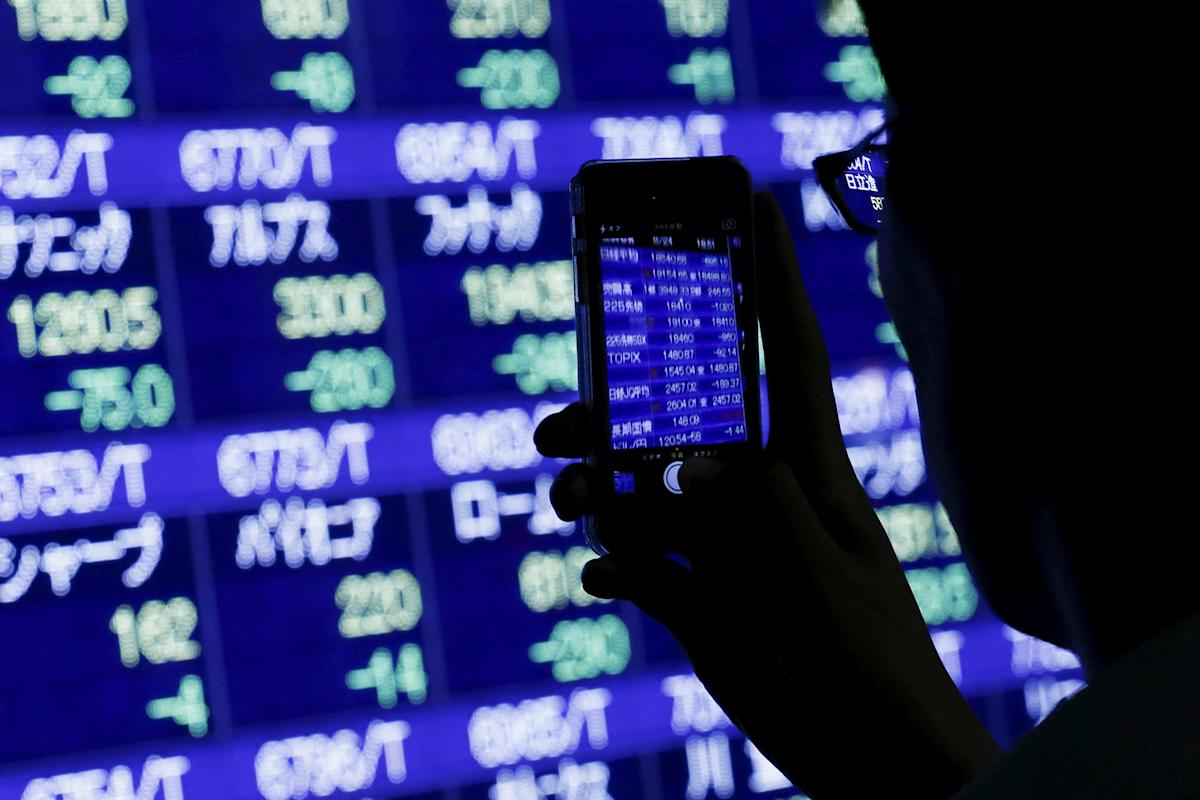
- AI Market Reaction: Last month, leading AI stocks like Nvidia, AMD, Broadcom, and Taiwan Semiconductor experienced a brief decline due to OpenAI missing revenue and user growth targets, reflecting investor concerns about the AI market outlook, especially with OpenAI and Anthropic approaching their IPOs.
- Shift in Market Influence: Nvidia has been the bellwether for the AI industry, but with OpenAI reaching 900 million users and projected revenues of $280 billion by 2028, investors are beginning to view OpenAI as the new industry indicator, potentially diminishing Nvidia's market dominance.
- User Growth Potential: The models from OpenAI and Anthropic are driving most AI software innovation, with OpenAI holding 27% and Anthropic 40% of the large language model market, indicating that their financial performance will significantly impact the entire AI sector.
- Investment Strategy Adjustment: Despite frequent short-term market fluctuations, investors should focus on the fundamentals of AI companies, seeking stocks with long-term growth potential, and avoid letting short-term noise affect their investment decisions, particularly for those holding Nvidia shares.
Trade with 70% Backtested Accuracy
Stop guessing "Should I Buy NVDA?" and start using high-conviction signals backed by rigorous historical data.
Sign up today to access powerful investing tools and make smarter, data-driven decisions.
Analyst Views on NVDA
Wall Street analysts forecast NVDA stock price to rise
41 Analyst Rating
39 Buy
1 Hold
1 Sell
Strong Buy
Current: 211.500

Low
200.00
Averages
264.97
High
352.00
Current: 211.500
Low
200.00
Averages
264.97
High
352.00
About NVDA
NVIDIA Corporation is an artificial intelligence (AI) infrastructure company. The Company is engaged in accelerated computing to help solve the challenging computational problems. Its segments include Compute & Networking and Graphics. The Compute & Networking segment includes its Data Center accelerated computing and networking platforms and AI solutions and software, and automotive platforms and autonomous and electric vehicle solutions, including software. The Graphics segment includes GeForce GPUs for gaming and personal computers (PCs), and Quadro/NVIDIA RTX GPUs for enterprise workstation graphics. Its technology stack includes the foundational NVIDIA CUDA development platform that runs on all NVIDIA GPUs, as well as hundreds of domain-specific software libraries, frameworks, algorithms, software development kits (SDKs), and application programming interfaces (APIs). Its platforms address four markets, which include Data Center, Gaming, Professional Visualization, and Automotive.
About the author

Emily J. Thompson
Emily J. Thompson, a Chartered Financial Analyst (CFA) with 12 years in investment research, graduated with honors from the Wharton School. Specializing in industrial and technology stocks, she provides in-depth analysis for Intellectia’s earnings and market brief reports.

Amazon Reports Triple-Digit AI Revenue Growth Amid E-Commerce Expansion

- AI Revenue Surge: Amazon's AI revenue has seen triple-digit growth, with CEO Andy Jassy noting that the rapid advancement of AI technology positions the company favorably for future market competition, as it plans to invest $200 billion in capital expenditures by 2026.
- E-Commerce Growth: Despite a large base, Amazon's e-commerce sales grew 12% year-over-year in Q1, with third-party sales up 14%, indicating strong market competitiveness, particularly with the addition of 600 notable brands.
- Delivery Speed Enhancement: Amazon has introduced one- and three-hour delivery options for over 90,000 items across more than 2,000 cities, significantly improving customer experience and driving sales growth, further solidifying its leadership in e-commerce.
- Advertising Business Boom: Advertising sales increased 24% year-over-year in Q1, with Amazon leveraging AI to assist advertisers in creating effective, low-cost campaigns, enhancing the competitiveness of its ad platform and attracting clients including Netflix.
See More

Emerging Markets ETF Gains 7% Year-to-Date
- Income Growth: The SPDR S&P Emerging Markets Dividend ETF (EDIV) has gained 7% year-to-date, with shares nearing $42 and an 18% rise over the past year, highlighting its strong performance in yield trades and attracting investor interest.
- Yield Structure: EDIV tracks 100 dividend-paying emerging market equities using a yield-weighted strategy, concentrating on high-yield stocks, which introduces higher country-specific risks but also provides the income profile investors seek.
- Improving Macro Environment: The VIX is near 17, down 28% over the past month, and the 10-year/2-year Treasury spread is at 0.49%, indicating a reduction in recession signals, with risk appetite returning and EDIV's quarterly distributions sharply increasing in 2025.
- Seasonal Distribution: Approximately 70% of EDIV's assets are concentrated in five countries, leading to significant seasonal distribution patterns, with the Q3 2025 payout expected to be $0.6592, indicating the stability of high-yield stocks and potential changes in future income streams.
See More

Analysis of High-Yield Dividend ETF Investment


- ETF Overview: The Fidelity High Dividend ETF (FDVV) holds 112 stocks with a dividend yield of 2.8% and a low expense ratio of 0.15%, making it appealing for investors seeking steady income despite its limited diversification.
- Sector Concentration Risk: With 26.7% of its holdings in information technology and the top four holdings being major tech companies like Nvidia and Apple, which together account for about 20.5%, investors face significant sector concentration risks.
- Performance Comparison: Since its launch in 2016, FDVV has delivered an average annual return of 13.3%, but it has underperformed the S&P 500 by 44%, indicating a lack of competitive edge in the market that may deter potential investors.
- Investment Recommendations: For those looking to avoid volatility in tech stocks, exploring other more diversified low-cost index funds or value-oriented high-dividend ETFs may be more suitable to mitigate risks associated with sector concentration.
See More

Fidelity High Dividend ETF Underperforms S&P 500
- Long-Term Underperformance: Since its launch in September 2016, the Fidelity High Dividend ETF has delivered an average annual return of 13.3%, significantly lagging behind the S&P 500's 44% higher return, indicating a lack of competitiveness in the market.
- Tech Stock Concentration Risk: The fund's top four holdings, Nvidia, Apple, Microsoft, and Broadcom, account for 20.5% of its portfolio, exposing it to substantial risks during tech stock volatility, which may not suit investors seeking diversification.
- Fees vs. Returns: With a dividend yield of 2.8% and an expense ratio of 0.15%, the fund's low fees have not translated into attractive returns, resulting in a poor ranking among dividend ETFs.
- Investment Recommendations: Given the fund's performance, investors may prefer Nasdaq-100 ETFs or other high-dividend stock ETFs for better returns and risk management, avoiding excessive concentration in the tech sector.
See More

Impact of High Oil Prices on Bitcoin: An Analysis

- Oil Price Fluctuations: At the beginning of 2023, WTI crude oil was priced around $60, spiking to nearly $113 in April before falling to $95 today; despite optimism about reopening the Strait of Hormuz, damaged infrastructure and shipping delays could take months to normalize, exerting ongoing pressure on the global economy.
- Inflationary Pressures: Inflation hit 3.3% in March, largely driven by high energy costs, with average gasoline prices exceeding $4.50 per gallon, significantly up from last year, which will impact consumer spending and subsequently suppress crypto investment.
- Bitcoin Market Performance: Bitcoin's price is fluctuating under the dual pressures of high oil prices and inflation; although it recently rebounded to $80,000, the high-interest rate environment diminishes its appeal as investors gravitate towards safer assets like Treasury bonds.
- Long-Term Investment Outlook: Despite short-term challenges, institutional investment remains strong, bolstering Bitcoin's legitimacy, while regulatory clarity is gradually improving and blockchain adoption is increasing, suggesting a positive outlook for Bitcoin over the next decade.
See More

CoreWeave Shares Plunge 11% After Earnings Report


- Earnings Report Disappointment: CoreWeave's first-quarter revenue surged 112% year-over-year to $2.08 billion, yet shares plummeted over 11% due to weaker-than-expected second-quarter guidance, indicating market concerns about future growth.
- Contract Revenue Surge: The company signed over $40 billion in new commitments during the quarter, boosting its contracted revenue backlog from $66.8 billion to $99.4 billion, with 36% expected to convert to revenue within two years, highlighting strong demand for AI infrastructure.
- Rising Capital Expenditures: CoreWeave's capital expenditures hit $6.8 billion in the quarter, with management raising full-year guidance to $31 billion to $35 billion, reflecting high investment in infrastructure despite the pressure on short-term profitability.
- Widening Net Loss: The first-quarter net loss expanded to $740 million, up from $452 million in the previous quarter, revealing structural challenges faced during rapid expansion, prompting investors to monitor the company's long-term profitability prospects.
See More
Amazon Reports Triple-Digit AI Revenue Growth Amid E-Commerce Expansion
- AI Revenue Surge: Amazon's AI revenue has seen triple-digit growth, with CEO Andy Jassy noting that the rapid advancement of AI technology positions the company favorably for future market competition, as it plans to invest $200 billion in capital expenditures by 2026.
- E-Commerce Growth: Despite a large base, Amazon's e-commerce sales grew 12% year-over-year in Q1, with third-party sales up 14%, indicating strong market competitiveness, particularly with the addition of 600 notable brands.
- Delivery Speed Enhancement: Amazon has introduced one- and three-hour delivery options for over 90,000 items across more than 2,000 cities, significantly improving customer experience and driving sales growth, further solidifying its leadership in e-commerce.
- Advertising Business Boom: Advertising sales increased 24% year-over-year in Q1, with Amazon leveraging AI to assist advertisers in creating effective, low-cost campaigns, enhancing the competitiveness of its ad platform and attracting clients including Netflix.
See More
Emerging Markets ETF Gains 7% Year-to-Date
- Income Growth: The SPDR S&P Emerging Markets Dividend ETF (EDIV) has gained 7% year-to-date, with shares nearing $42 and an 18% rise over the past year, highlighting its strong performance in yield trades and attracting investor interest.
- Yield Structure: EDIV tracks 100 dividend-paying emerging market equities using a yield-weighted strategy, concentrating on high-yield stocks, which introduces higher country-specific risks but also provides the income profile investors seek.
- Improving Macro Environment: The VIX is near 17, down 28% over the past month, and the 10-year/2-year Treasury spread is at 0.49%, indicating a reduction in recession signals, with risk appetite returning and EDIV's quarterly distributions sharply increasing in 2025.
- Seasonal Distribution: Approximately 70% of EDIV's assets are concentrated in five countries, leading to significant seasonal distribution patterns, with the Q3 2025 payout expected to be $0.6592, indicating the stability of high-yield stocks and potential changes in future income streams.
See More
Analysis of High-Yield Dividend ETF Investment
- ETF Overview: The Fidelity High Dividend ETF (FDVV) holds 112 stocks with a dividend yield of 2.8% and a low expense ratio of 0.15%, making it appealing for investors seeking steady income despite its limited diversification.
- Sector Concentration Risk: With 26.7% of its holdings in information technology and the top four holdings being major tech companies like Nvidia and Apple, which together account for about 20.5%, investors face significant sector concentration risks.
- Performance Comparison: Since its launch in 2016, FDVV has delivered an average annual return of 13.3%, but it has underperformed the S&P 500 by 44%, indicating a lack of competitive edge in the market that may deter potential investors.
- Investment Recommendations: For those looking to avoid volatility in tech stocks, exploring other more diversified low-cost index funds or value-oriented high-dividend ETFs may be more suitable to mitigate risks associated with sector concentration.
See More
Fidelity High Dividend ETF Underperforms S&P 500
- Long-Term Underperformance: Since its launch in September 2016, the Fidelity High Dividend ETF has delivered an average annual return of 13.3%, significantly lagging behind the S&P 500's 44% higher return, indicating a lack of competitiveness in the market.
- Tech Stock Concentration Risk: The fund's top four holdings, Nvidia, Apple, Microsoft, and Broadcom, account for 20.5% of its portfolio, exposing it to substantial risks during tech stock volatility, which may not suit investors seeking diversification.
- Fees vs. Returns: With a dividend yield of 2.8% and an expense ratio of 0.15%, the fund's low fees have not translated into attractive returns, resulting in a poor ranking among dividend ETFs.
- Investment Recommendations: Given the fund's performance, investors may prefer Nasdaq-100 ETFs or other high-dividend stock ETFs for better returns and risk management, avoiding excessive concentration in the tech sector.
See More
Impact of High Oil Prices on Bitcoin: An Analysis
- Oil Price Fluctuations: At the beginning of 2023, WTI crude oil was priced around $60, spiking to nearly $113 in April before falling to $95 today; despite optimism about reopening the Strait of Hormuz, damaged infrastructure and shipping delays could take months to normalize, exerting ongoing pressure on the global economy.
- Inflationary Pressures: Inflation hit 3.3% in March, largely driven by high energy costs, with average gasoline prices exceeding $4.50 per gallon, significantly up from last year, which will impact consumer spending and subsequently suppress crypto investment.
- Bitcoin Market Performance: Bitcoin's price is fluctuating under the dual pressures of high oil prices and inflation; although it recently rebounded to $80,000, the high-interest rate environment diminishes its appeal as investors gravitate towards safer assets like Treasury bonds.
- Long-Term Investment Outlook: Despite short-term challenges, institutional investment remains strong, bolstering Bitcoin's legitimacy, while regulatory clarity is gradually improving and blockchain adoption is increasing, suggesting a positive outlook for Bitcoin over the next decade.
See More
CoreWeave Shares Plunge 11% After Earnings Report
- Earnings Report Disappointment: CoreWeave's first-quarter revenue surged 112% year-over-year to $2.08 billion, yet shares plummeted over 11% due to weaker-than-expected second-quarter guidance, indicating market concerns about future growth.
- Contract Revenue Surge: The company signed over $40 billion in new commitments during the quarter, boosting its contracted revenue backlog from $66.8 billion to $99.4 billion, with 36% expected to convert to revenue within two years, highlighting strong demand for AI infrastructure.
- Rising Capital Expenditures: CoreWeave's capital expenditures hit $6.8 billion in the quarter, with management raising full-year guidance to $31 billion to $35 billion, reflecting high investment in infrastructure despite the pressure on short-term profitability.
- Widening Net Loss: The first-quarter net loss expanded to $740 million, up from $452 million in the previous quarter, revealing structural challenges faced during rapid expansion, prompting investors to monitor the company's long-term profitability prospects.
See More