Aluminum Prices Surge Following Iranian Attacks on Producers
Written by Emily J. Thompson, Senior Investment Analyst
Updated: Mar 30 2026
0mins

Should l Buy SPGI?
Source: CNBC
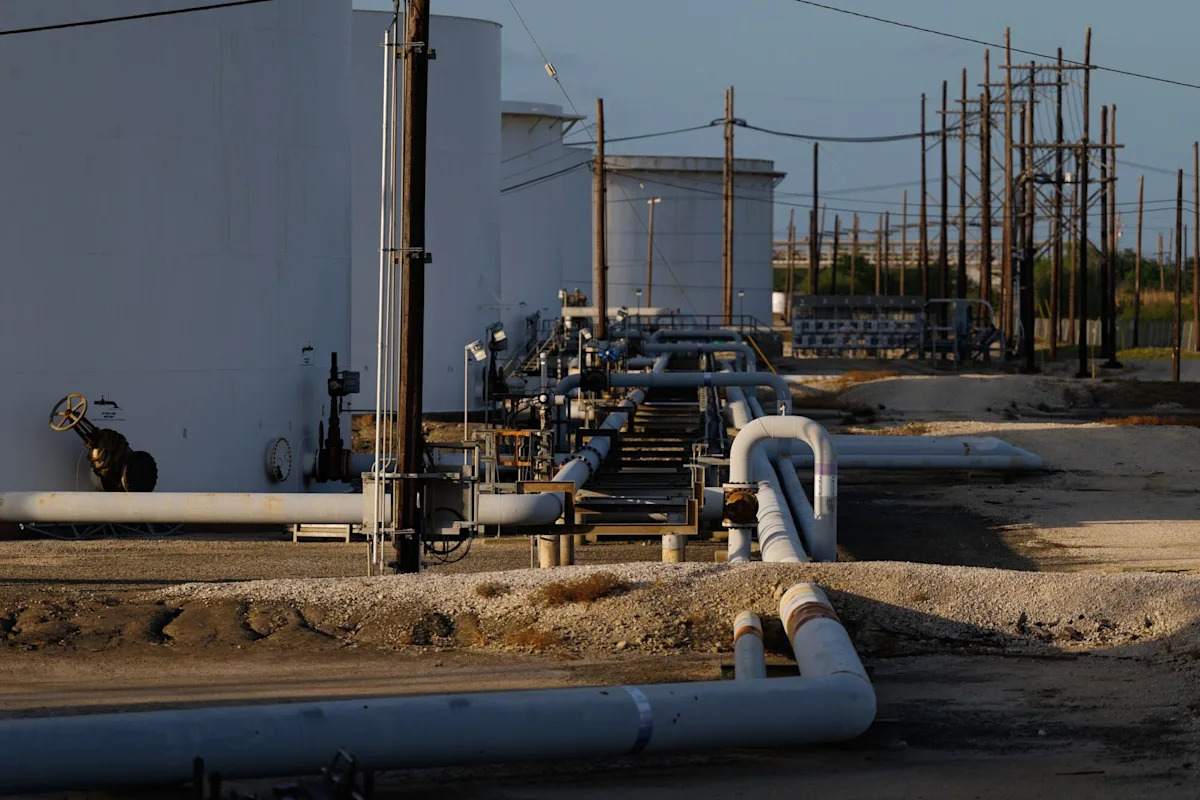
- Price Surge: Aluminum futures on the London Metal Exchange surged 5.5% due to Iranian attacks on two Middle Eastern producers, briefly reaching $3,492 per tonne, the highest since April 2022, indicating heightened fears of a supply crisis.
- Supply Crisis Risk: Approximately 9% of global aluminum supply is affected, with EGA's Al Taweelah smelter sustaining significant damage, leading to an estimated production loss of 800 to 900 kilotons in 2026, potentially pushing the global market into a full-year deficit.
- Market Shockwaves: Analysts suggest that the attacks could shift the market from temporary softness to expectations of tighter supply and higher prices, exacerbating uncertainty for commodity firms in the region.
- China's Role: As the world's largest aluminum producer, China's constrained production capacity raises concerns; analysts believe that if the government decides to restart idle smelters, it could alleviate global supply tightness, but risks of further shocks remain.
Trade with 70% Backtested Accuracy
Stop guessing "Should I Buy SPGI?" and start using high-conviction signals backed by rigorous historical data.
Sign up today to access powerful investing tools and make smarter, data-driven decisions.
Analyst Views on SPGI
Wall Street analysts forecast SPGI stock price to rise
15 Analyst Rating
14 Buy
1 Hold
0 Sell
Strong Buy
Current: 444.670

Low
546.00
Averages
617.77
High
675.00
Current: 444.670
Low
546.00
Averages
617.77
High
675.00
About SPGI
S&P Global Inc. provides essential intelligence. Its operations consist of five businesses: S&P Global Market Intelligence (Market Intelligence), S&P Global Ratings (Ratings), S&P Global Commodity Insights (Commodity Insights), S&P Global Mobility (Mobility) and S&P Dow Jones Indices (Indices). Market Intelligence is a global provider of multi-asset-class data and analytics integrated with purpose-built workflow solutions. Ratings is an independent provider of credit ratings, research, and analytics, offering investors and other market participants information, ratings and benchmarks. Commodity Insights is an independent provider of information and benchmark prices for the commodity and energy markets. Mobility is a provider of solutions serving the full automotive value chain, including vehicle manufacturers and retailers. Indices is a global index provider that maintains a variety of valuation and index benchmarks for investment advisors, wealth managers and institutional investors.
About the author

Emily J. Thompson
Emily J. Thompson, a Chartered Financial Analyst (CFA) with 12 years in investment research, graduated with honors from the Wharton School. Specializing in industrial and technology stocks, she provides in-depth analysis for Intellectia’s earnings and market brief reports.
S&P Global Energy Partners with UN SSE to Advance Energy Transition
- Partnership Agreement: S&P Global Energy and the UN Sustainable Stock Exchanges have signed a knowledge partnership agreement aimed at enhancing capital market engagement with energy transition products by providing essential data and capacity-building solutions, thereby fostering sustainable investment growth.
- Global Network Integration: This collaboration combines the UN SSE's global network of 138 exchanges with S&P Global Energy's expertise in physical commodities and low-carbon solutions, expected to enhance exchanges' capabilities in evaluating and designing sustainable commodity markets, facilitating the transition to a low-carbon economy.
- Focus Areas: The partnership will concentrate on electrification, carbon-accounted commodities, carbon pricing, clean fuels (including renewables, biofuels, sustainable aviation fuel, hydrogen), and battery metals, aiming to provide market participants with reliable data and tools to support the shift towards a net-zero emissions economy.
- Knowledge Product Development: The two organizations plan to launch a range of research publications, training sessions, and convenings focused on net-zero transition capacity building and peer learning, helping market participants better understand emerging commodity markets and accelerate the global transition to low- and zero-emissions energy.
See More

S&P Global Energy Partners with UN SSE to Advance Energy Transition
- Partnership Agreement: S&P Global Energy and the UN Sustainable Stock Exchanges have signed a knowledge partnership agreement aimed at enhancing capital market engagement with energy transition products by providing essential data and capacity-building solutions, thereby fostering sustainable investment growth.
- Improved Exchange Readiness: This collaboration combines the UN SSE's global network of 138 exchanges with S&P Global Energy's expertise in physical commodities and low-carbon solutions, which is expected to enhance exchanges' ability to evaluate and design sustainable commodity markets, facilitating the transition to a low-carbon economy.
- Focus Areas: The partnership will concentrate on electrification, carbon-accounted commodities, carbon pricing, clean fuels (including renewables, biofuels, sustainable aviation fuel, hydrogen), and battery metals, aiming to equip market participants with reliable data and practical tools.
- Knowledge Sharing and Training: The new collaboration will introduce a range of research publications, training sessions, and convenings focused on net-zero transition capacity building and knowledge products, including market insights webinars and carbon market roundtables, to support the global shift towards a low-carbon economy.
See More

Teva's FDA Approval of Long-Acting Drug Could Be Major Catalyst

- New Drug Approval Outlook: Teva's New Drug Application for long-acting schizophrenia drug olanzapine has been accepted by the FDA, and if approved, it is expected to significantly enhance patient adherence, driving sales growth and becoming the company's most meaningful catalyst.
- Specialty Drug Sales Surge: Teva's Austedo generated $2.26 billion in sales in 2025, marking a 34% year-over-year increase, with expectations to reach between $2.4 billion and $2.55 billion in 2026, showcasing strong momentum in the specialty drug sector.
- Biosimilar Market Expansion: Teva plans to launch six new biosimilars in 2026 and 2027, potentially competing with Amgen and Johnson & Johnson, which will further solidify its position as the second-largest player in the biosimilar market.
- Investor Confidence Boost: Analysts are optimistic about Teva's future, with 12 out of 15 analysts rating the stock as a
See More

Teva Pharmaceutical Shares Surge 130% with Optimistic Outlook
- FDA Approval Catalyst: Teva's long-acting olanzapine injectable suspension NDA has been accepted by the FDA, with a decision expected later this year; approval could significantly enhance patient adherence, with combined annual sales with Uzedy projected to exceed $2 billion.
- Specialty Drug Sales Surge: Teva's specialty drug Austedo generated $2.26 billion in sales in 2025, a 34% year-over-year increase, with expectations for 2026 sales to rise between $2.4 billion and $2.55 billion, reflecting strong market demand and competitive positioning in the specialty drug sector.
- Biosimilar Expansion: Teva plans to launch six new biosimilars in 2026 and 2027, further solidifying its position as the second-largest player in the biosimilar market, with anticipated competition against giants like Amgen and Johnson & Johnson, driving future revenue growth.
- Market Risk Factors: Despite several catalysts propelling stock price growth, a market crash or significant pipeline issues could derail Teva's momentum; however, the company's pipeline is relatively de-risked, and with a forward P/E of only 11.7, it presents a compelling value investment opportunity.
See More

Analysis of Occidental Petroleum's Stock Surge

- Outstanding Stock Performance: Occidental Petroleum (OXY) has seen its shares soar nearly 40% this year, significantly outperforming many energy stocks, indicating its strong competitive position in the market.
- Geopolitical Benefits: The ongoing war with Iran has disrupted global energy markets, driving up demand for U.S. oil and gas, with Occidental being a major beneficiary of the Middle East supply disruptions.
- Record Production Levels: Occidental's production has reached a record 1,434 Mboed (thousand barrels of oil equivalent per day), further solidifying its market position and attracting investor interest.
- Support from Buffett: Berkshire Hathaway's acquisition of OxyChem alleviated Occidental's debt burden and its 26.7% stake in the company boosts market confidence, even though its valuation has risen to approximately 40 times forward earnings.
See More

Occidental Petroleum Shares Surge Nearly 40% Amid Market Volatility
- Strong Stock Performance: Occidental Petroleum (OXY) has seen its shares surge nearly 40% this year, despite a recent pullback, indicating robust performance in the energy market that significantly outpaces the S&P 500's low single-digit gains.
- Record Production Levels: The company is producing a record 1,434 thousand barrels of oil equivalent per day, positioning itself as a major U.S. oil and gas producer that directly benefits from increased demand due to Middle Eastern supply disruptions, thereby solidifying its market position.
- Debt Reduction Success: Following Berkshire Hathaway's $9.7 billion acquisition of OxyChem, Occidental has successfully slashed its debt, greatly improving its financial health and boosting investor confidence, particularly with Warren Buffett's endorsement.
- Divergent Market Analysis: Despite Occidental's strong performance, its shares trade at approximately 40 times forward earnings, significantly higher than peers, leading to mixed analyst opinions; of 26 analysts, only 8 rated it as a
See More
S&P Global Energy Partners with UN SSE to Advance Energy Transition
- Partnership Agreement: S&P Global Energy and the UN Sustainable Stock Exchanges have signed a knowledge partnership agreement aimed at enhancing capital market engagement with energy transition products by providing essential data and capacity-building solutions, thereby fostering sustainable investment growth.
- Global Network Integration: This collaboration combines the UN SSE's global network of 138 exchanges with S&P Global Energy's expertise in physical commodities and low-carbon solutions, expected to enhance exchanges' capabilities in evaluating and designing sustainable commodity markets, facilitating the transition to a low-carbon economy.
- Focus Areas: The partnership will concentrate on electrification, carbon-accounted commodities, carbon pricing, clean fuels (including renewables, biofuels, sustainable aviation fuel, hydrogen), and battery metals, aiming to provide market participants with reliable data and tools to support the shift towards a net-zero emissions economy.
- Knowledge Product Development: The two organizations plan to launch a range of research publications, training sessions, and convenings focused on net-zero transition capacity building and peer learning, helping market participants better understand emerging commodity markets and accelerate the global transition to low- and zero-emissions energy.
See More
S&P Global Energy Partners with UN SSE to Advance Energy Transition
- Partnership Agreement: S&P Global Energy and the UN Sustainable Stock Exchanges have signed a knowledge partnership agreement aimed at enhancing capital market engagement with energy transition products by providing essential data and capacity-building solutions, thereby fostering sustainable investment growth.
- Improved Exchange Readiness: This collaboration combines the UN SSE's global network of 138 exchanges with S&P Global Energy's expertise in physical commodities and low-carbon solutions, which is expected to enhance exchanges' ability to evaluate and design sustainable commodity markets, facilitating the transition to a low-carbon economy.
- Focus Areas: The partnership will concentrate on electrification, carbon-accounted commodities, carbon pricing, clean fuels (including renewables, biofuels, sustainable aviation fuel, hydrogen), and battery metals, aiming to equip market participants with reliable data and practical tools.
- Knowledge Sharing and Training: The new collaboration will introduce a range of research publications, training sessions, and convenings focused on net-zero transition capacity building and knowledge products, including market insights webinars and carbon market roundtables, to support the global shift towards a low-carbon economy.
See More
Teva's FDA Approval of Long-Acting Drug Could Be Major Catalyst
- New Drug Approval Outlook: Teva's New Drug Application for long-acting schizophrenia drug olanzapine has been accepted by the FDA, and if approved, it is expected to significantly enhance patient adherence, driving sales growth and becoming the company's most meaningful catalyst.
- Specialty Drug Sales Surge: Teva's Austedo generated $2.26 billion in sales in 2025, marking a 34% year-over-year increase, with expectations to reach between $2.4 billion and $2.55 billion in 2026, showcasing strong momentum in the specialty drug sector.
- Biosimilar Market Expansion: Teva plans to launch six new biosimilars in 2026 and 2027, potentially competing with Amgen and Johnson & Johnson, which will further solidify its position as the second-largest player in the biosimilar market.
- Investor Confidence Boost: Analysts are optimistic about Teva's future, with 12 out of 15 analysts rating the stock as a
See More
Teva Pharmaceutical Shares Surge 130% with Optimistic Outlook
- FDA Approval Catalyst: Teva's long-acting olanzapine injectable suspension NDA has been accepted by the FDA, with a decision expected later this year; approval could significantly enhance patient adherence, with combined annual sales with Uzedy projected to exceed $2 billion.
- Specialty Drug Sales Surge: Teva's specialty drug Austedo generated $2.26 billion in sales in 2025, a 34% year-over-year increase, with expectations for 2026 sales to rise between $2.4 billion and $2.55 billion, reflecting strong market demand and competitive positioning in the specialty drug sector.
- Biosimilar Expansion: Teva plans to launch six new biosimilars in 2026 and 2027, further solidifying its position as the second-largest player in the biosimilar market, with anticipated competition against giants like Amgen and Johnson & Johnson, driving future revenue growth.
- Market Risk Factors: Despite several catalysts propelling stock price growth, a market crash or significant pipeline issues could derail Teva's momentum; however, the company's pipeline is relatively de-risked, and with a forward P/E of only 11.7, it presents a compelling value investment opportunity.
See More
Analysis of Occidental Petroleum's Stock Surge
- Outstanding Stock Performance: Occidental Petroleum (OXY) has seen its shares soar nearly 40% this year, significantly outperforming many energy stocks, indicating its strong competitive position in the market.
- Geopolitical Benefits: The ongoing war with Iran has disrupted global energy markets, driving up demand for U.S. oil and gas, with Occidental being a major beneficiary of the Middle East supply disruptions.
- Record Production Levels: Occidental's production has reached a record 1,434 Mboed (thousand barrels of oil equivalent per day), further solidifying its market position and attracting investor interest.
- Support from Buffett: Berkshire Hathaway's acquisition of OxyChem alleviated Occidental's debt burden and its 26.7% stake in the company boosts market confidence, even though its valuation has risen to approximately 40 times forward earnings.
See More
Occidental Petroleum Shares Surge Nearly 40% Amid Market Volatility
- Strong Stock Performance: Occidental Petroleum (OXY) has seen its shares surge nearly 40% this year, despite a recent pullback, indicating robust performance in the energy market that significantly outpaces the S&P 500's low single-digit gains.
- Record Production Levels: The company is producing a record 1,434 thousand barrels of oil equivalent per day, positioning itself as a major U.S. oil and gas producer that directly benefits from increased demand due to Middle Eastern supply disruptions, thereby solidifying its market position.
- Debt Reduction Success: Following Berkshire Hathaway's $9.7 billion acquisition of OxyChem, Occidental has successfully slashed its debt, greatly improving its financial health and boosting investor confidence, particularly with Warren Buffett's endorsement.
- Divergent Market Analysis: Despite Occidental's strong performance, its shares trade at approximately 40 times forward earnings, significantly higher than peers, leading to mixed analyst opinions; of 26 analysts, only 8 rated it as a
See More