
Key Takeaway
The Federal Reserve's June 2026 meeting marked a significant shift in monetary policy expectations, with the central bank signaling potential interest rate hikes later this year despite holding rates steady at the current meeting. Under new Chairman Kevin Warsh's leadership, the Fed's updated dot plot reveals that nine of eighteen FOMC officials now project at least one 25 basis point rate increase by year-end, with the median fed funds rate forecast rising from 3.4% to 3.8% for 2026.
This hawkish pivot reflects growing concerns about persistent inflation, with officials revising their PCE inflation forecast sharply upward to 3.6% for 2026, compared to the 2.7% projection in March. Core inflation, which excludes volatile food and energy prices, is now expected to reach 3.3%. These revisions suggest the Fed recognizes that inflationary pressures are proving more stubborn than previously anticipated, driven by a combination of strong economic activity, elevated consumer demand, and ongoing supply chain constraints that continue to filter through to consumer prices.
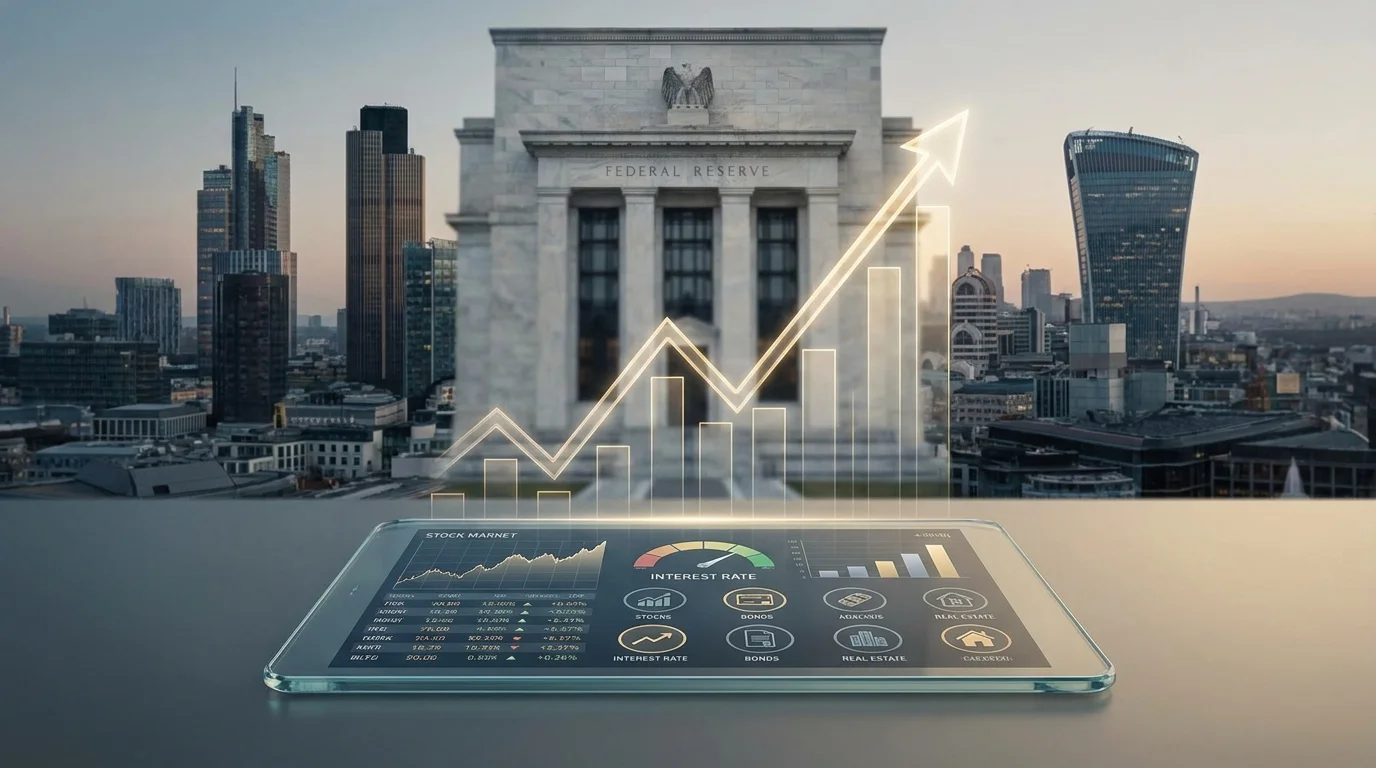
For investors, this policy shift carries profound implications across asset classes. The prospect of higher-for-longer interest rates strengthens the investment case for financial sector stocks and cash-like instruments while potentially pressuring growth stocks and long-duration bonds. The dollar's rally against major currencies, with EUR/USD trading around 1.15, reflects market repricing of the interest rate differential between the United States and other developed economies. Understanding these dynamics is essential for portfolio positioning as we navigate the second half of 2026.
Understanding the Fed's Hawkish Pivot
The Federal Reserve's June 17, 2026 meeting represented more than just a routine policy decision—it marked a fundamental recalibration of the central bank's stance on inflation and interest rates. Under Chairman Kevin Warsh, who assumed leadership earlier this year, the Fed has adopted a more cautious approach to monetary easing, removing the forward guidance that previously telegraphed future policy moves to markets.
This strategic shift reflects the Fed's growing concern that inflationary pressures are not transitory as previously hoped. The updated Summary of Economic Projections shows officials now expect headline PCE inflation to reach 3.6% in 2026, a substantial upward revision from the 2.7% forecast provided just three months ago. Core inflation expectations have similarly been adjusted higher to 3.3%, well above the Fed's 2% target. These revisions signal that policymakers believe inflation will remain elevated for longer than previously anticipated, necessitating a more restrictive monetary policy stance.
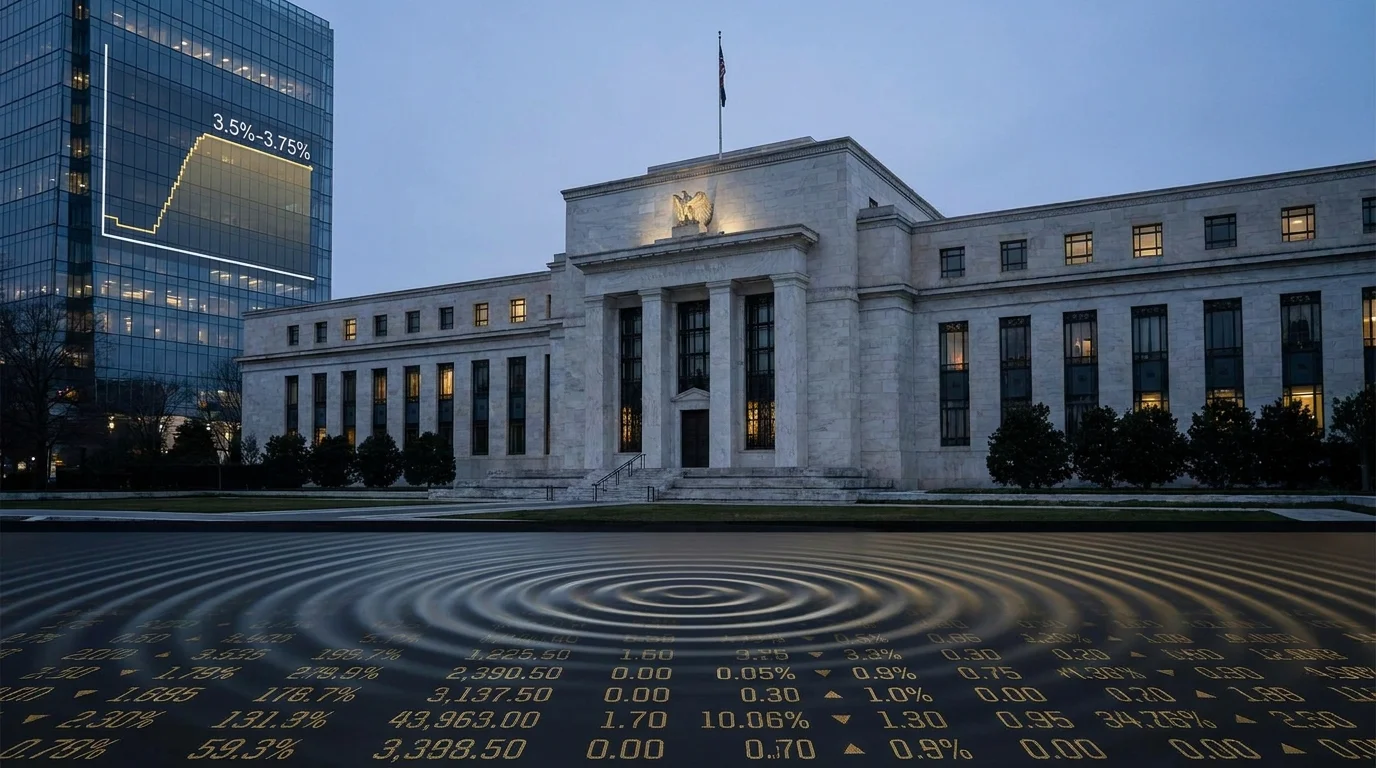
The mechanics of the hawkish shift are clearly visible in the Fed's famous dot plot, which maps individual policymakers' rate expectations. In March, the median projection indicated at least one rate cut was likely in 2026. The June update flipped that script entirely, with the median now pointing to 3.8% by year-end—implying at least one rate hike from the current 3.5%-3.75% range. Nine of eighteen officials now anticipate higher rates by December, while the longer-run neutral rate estimate has been unified at 3.0%, suggesting a higher equilibrium interest rate environment than markets had priced in.
Several factors appear to be driving this hawkish pivot. First, economic data has consistently surprised to the upside, with May's consumer price index registering 4.2% year-over-year growth—well above expectations and demonstrating the persistence of inflationary pressures. Second, the labor market remains remarkably resilient, with job gains keeping pace with workforce growth and unemployment hovering near historic lows. This combination of strong employment and elevated inflation leaves the Fed with little choice but to prioritize price stability over growth support.
Market Reactions: Stocks Rally Despite Hawkish Signals
Perhaps most surprising to market observers was the equity market's reaction to the Fed's hawkish pivot. Rather than selling off on the prospect of higher interest rates, major indexes closed higher, with the S&P 500 gaining 1.08% and the Nasdaq Composite surging 1.91%. This counterintuitive response reflects several underlying market dynamics that investors should understand.
First, the removal of forward guidance—while hawkish in substance—actually reduces policy uncertainty by eliminating the Fed's previous commitment to provide advance notice of rate moves. Markets tend to reward clarity over ambiguity, and the shift toward a more data-dependent approach gives investors greater flexibility in their own forecasting and positioning. Chairman Warsh's decision to strip the post-meeting statement down to just 130 words, its most concise form in years, exemplifies this new communication strategy.
Second, the resilience of equities suggests investors are interpreting the Fed's hawkishness as a vote of confidence in the underlying economy. By signaling its willingness to raise rates to combat inflation, the Fed is implicitly acknowledging that the economy is strong enough to withstand tighter monetary conditions. This interpretation aligns with recent economic data showing solid expansion across multiple sectors, from consumer spending to business investment.
For traders looking to capitalize on these market movements, tools like Intellectia AI's stock screener can help identify opportunities in sectors most likely to benefit from the current environment. Financial stocks, for instance, typically outperform in rising rate environments as net interest margins expand.

However, the bond market told a different story. Treasury yields rose sharply following the Fed's announcement, particularly at the short end of the curve, as traders repriced expectations for the path of policy rates. The 2-year Treasury yield climbed above 4%, reflecting market expectations of one 25 basis point hike by October 2026 with potential for further tightening through 2027. This steepening of the yield curve has significant implications for mortgage rates, corporate borrowing costs, and the overall cost of capital in the economy.
Dollar Strength and Currency Markets
The Federal Reserve's hawkish pivot has provided significant tailwinds for the U.S. dollar, which has strengthened against major trading partners' currencies. The euro has borne the brunt of this dollar rally, with EUR/USD trading around 1.15—a level that reflects the diverging monetary policy trajectories between the Federal Reserve and the European Central Bank.
This dollar strength reflects the interest rate differential widening in favor of the United States. While the Fed is signaling potential rate hikes, the ECB has maintained a more accommodative stance amid softer economic conditions in the eurozone. This divergence makes dollar-denominated assets more attractive to international investors seeking yield, driving capital flows into U.S. markets and supporting the greenback.
The implications of dollar strength extend beyond currency markets. A stronger dollar tends to pressure commodity prices, as most global commodities are priced in dollars. It also creates headwinds for U.S. multinational corporations by making their exports more expensive and reducing the value of overseas earnings when converted back to dollars. Companies with significant international revenue exposure may face margin pressure in the coming quarters as the dollar's strength persists.
For investors with international exposure, understanding these currency dynamics is crucial. Those seeking AI-powered insights on currency markets and their impact on portfolio positioning can leverage Intellectia AI's comprehensive analysis tools to navigate these complex relationships.

Emerging market currencies have also felt the pressure from dollar strength, with several developing economies seeing their currencies depreciate against the greenback. This creates challenges for countries with dollar-denominated debt and can potentially trigger capital flight as investors seek the safety and yield of U.S. assets. Central banks in emerging markets may be forced to raise rates to defend their currencies, potentially slowing economic growth in those regions.
Inflation Forecasts and Economic Outlook
The Federal Reserve's revised inflation projections paint a picture of an economy grappling with persistent price pressures that are proving more difficult to subdue than previously anticipated. The upward revision of PCE inflation to 3.6% for 2026, from the previous forecast of 2.7%, represents one of the largest single-meeting adjustments in recent Fed history and signals a fundamental reassessment of the inflation outlook.
Several factors are contributing to these elevated inflation expectations. First, consumer demand remains robust despite higher interest rates, supported by a strong labor market and accumulated household savings from the pandemic period. This persistent demand continues to outpace supply in many sectors, creating upward pressure on prices. Second, ongoing supply chain disruptions, while improved from peak levels, continue to affect certain industries, particularly those dependent on semiconductor chips and specialized manufacturing components.
The Fed's focus on core inflation—which excludes food and energy prices—provides additional insight into underlying price trends. The projection of 3.3% core inflation suggests that price pressures have broadened beyond volatile commodity categories and are becoming embedded in services sectors, which tend to be stickier and more difficult to reverse. Housing costs, healthcare services, and transportation services are all contributing to this persistent core inflation dynamic.
Chairman Warsh has made clear that the Fed remains committed to its 2% inflation target, stating that the central bank will take whatever measures are necessary to restore price stability. This hawkish rhetoric, combined with the updated projections, suggests that policymakers are prepared to accept slower economic growth and potentially higher unemployment if that's what's required to bring inflation back to target. The long-term economic outlook depends heavily on how quickly and effectively the Fed can achieve this disinflation without triggering a recession.
Investment Implications and Portfolio Strategy
The Fed's hawkish pivot creates a complex investment landscape that requires careful navigation and strategic positioning. Understanding which asset classes are likely to outperform—and which may struggle—in a higher-for-longer interest rate environment is essential for protecting and growing portfolio value in the months ahead.
Financial sector stocks stand out as primary beneficiaries of rising interest rates. Banks, insurance companies, and asset managers typically see their net interest margins expand as rates rise, improving profitability. The Financial Select Sector SPDR Fund (XLF) has already begun reflecting this optimism, with investors rotating into financials as the probability of rate hikes has increased. Within this sector, regional banks with significant loan portfolios may see the greatest earnings upside from higher yields.
Conversely, growth stocks and long-duration assets face headwinds in this environment. Technology companies and other high-growth businesses that benefited from low discount rates during the zero-interest-rate era may see their valuations compress as higher rates reduce the present value of future earnings. Similarly, long-duration bonds are vulnerable to price declines as yields rise, making shorter-duration fixed income more attractive for risk-averse investors.
For those looking to optimize their portfolio allocation in this environment, Intellectia AI's advanced screening capabilities can identify stocks best positioned to benefit from rising rates while avoiding those most vulnerable to valuation compression. The platform's AI-powered analysis helps investors stay ahead of market trends and make data-driven decisions.
Real estate investment trusts (REITs) and other rate-sensitive sectors may also face pressure as borrowing costs rise and cap rates adjust higher. Investors in these sectors should focus on quality names with strong balance sheets and pricing power that can weather the transition to a higher-rate environment. Similarly, dividend-focused investors may want to emphasize companies with sustainable payout ratios and the ability to grow dividends even as economic growth moderates.
Conclusion
The Federal Reserve's June 2026 meeting marked a decisive shift toward a more hawkish monetary policy stance, with officials signaling at least one rate hike later this year as they confront persistent inflationary pressures. This pivot—reflected in the updated dot plot, higher inflation forecasts, and removal of forward guidance—has profound implications for investors across asset classes.
While markets initially shrugged off the hawkish signals with a rally in equities, the underlying dynamics suggest a more challenging investment environment ahead. Dollar strength, rising Treasury yields, and the prospect of tighter financial conditions create both opportunities and risks that require careful portfolio positioning. Financial stocks and cash-like instruments may outperform, while growth stocks and long-duration bonds face valuation headwinds.
For investors navigating this evolving landscape, staying informed and adapting strategies to the new reality of higher-for-longer interest rates will be crucial. The Fed has made clear that restoring price stability is its top priority, even if that means accepting slower growth in the near term. Understanding these policy dynamics and their market implications is essential for making informed investment decisions in the second half of 2026 and beyond.
Ready to optimize your portfolio for the new interest rate environment? Sign up for Intellectia AI today and access AI-powered tools that help you identify opportunities, analyze market trends, and make data-driven investment decisions. Our platform provides real-time insights on stocks, sectors, and macroeconomic trends that matter most for your financial success.