
Key Takeaway
The financial markets witnessed two seismic events this week that will reshape the investment landscape for years to come. SpaceX's record-breaking IPO on June 12, 2026, propelled the rocket company's valuation past $2 trillion, making Elon Musk the world's first trillionaire and creating a new powerhouse in the Nasdaq Composite. Meanwhile, Federal Reserve Chair Kevin Warsh kicked off his tenure with a stark message to investors: interest rates are heading higher, not lower, as policymakers confront persistent inflationary pressures exacerbated by geopolitical tensions.
These developments represent a fascinating divergence in market dynamics. On one hand, we see unprecedented enthusiasm for speculative growth stocks exemplified by SpaceX's SPCX ticker climbing from a $135 IPO price to an intraday high of $225.64 within just three trading sessions—a staggering 67% gain that defies traditional valuation metrics. On the other hand, the Federal Reserve's updated dot plot reveals that nine of nineteen policymakers now anticipate at least one quarter-point rate increase by year-end 2026, a dramatic shift from March when zero officials projected hikes. This creates a challenging environment where investors must navigate between growth optimism and monetary tightening headwinds.
The implications extend far beyond SpaceX shareholders. When the world's largest economy signals higher borrowing costs while simultaneously hosting history's biggest public offering, portfolio strategies require recalibration. Technology stocks, particularly those with distant profit horizons, typically suffer in rising rate environments as future cash flows get discounted more heavily. Yet SpaceX's remarkable debut suggests that exceptional narratives can still command premium valuations, even as the Fed maintains rates at 3.50%-3.75% with hawkish forward guidance.
SpaceX's Historic Market Debut
Space Exploration Technologies Corp., trading under the ticker SPCX on the Nasdaq Composite, completed the largest initial public offering in financial history on June 12, 2026. The company founded by Elon Musk in 2002 priced its shares at $135 each, raising approximately $75 billion and achieving an implied valuation of $1.77 trillion at the offering price. This valuation immediately placed SpaceX among the top tier of American corporations, surpassing established giants like Berkshire Hathaway and approaching Amazon's market capitalization.
The demand for SpaceX shares exceeded even the most optimistic projections from Wall Street underwriters. What began as cautious optimism transformed into frenzied buying as the stock opened for public trading. SPCX closed its first day with a 19% gain, finishing at $160.95 per share and pushing the company's market value beyond $2 trillion. This extraordinary performance continued throughout the week, with shares reaching an intraday peak of $225.64 on June 16—a remarkable 67% premium to the IPO price achieved in just three trading sessions.
The trading dynamics reveal intense speculative interest mixed with genuine institutional conviction. Former Nasdaq chief Robert Greifeld issued public warnings that SpaceX was "not trading on fundamentals," citing the extreme volatility and disconnect from traditional aerospace valuation metrics. Nevertheless, the stock has maintained elevated levels, currently trading around $191.82 as of June 18, suggesting that market participants view the company's diversification beyond rocketry—including its Starlink satellite constellation and AI infrastructure investments—as justifying premium multiples.
Elon Musk's personal wealth surged past the $1 trillion threshold following the IPO, cementing his status as the world's first trillionaire. This milestone reflects not only SpaceX's valuation but also his substantial stakes in Tesla, xAI, and other ventures. The concentration of wealth and influence in Musk's enterprises raises important questions about market structure and the role of visionary entrepreneurs in shaping entire industrial sectors.
The Federal Reserve's Hawkish Pivot
While SpaceX captured headlines with its market debut, the Federal Reserve's June 17 policy meeting may prove more consequential for long-term portfolio performance. Kevin Warsh, who assumed the chairmanship following a contentious Senate confirmation process, presided over his first Federal Open Market Committee meeting and immediately established a reputation for monetary conservatism. The central bank voted unanimously to maintain the federal funds rate at 3.50%-3.75%, but the accompanying statement and economic projections signaled a significant shift in policy trajectory.
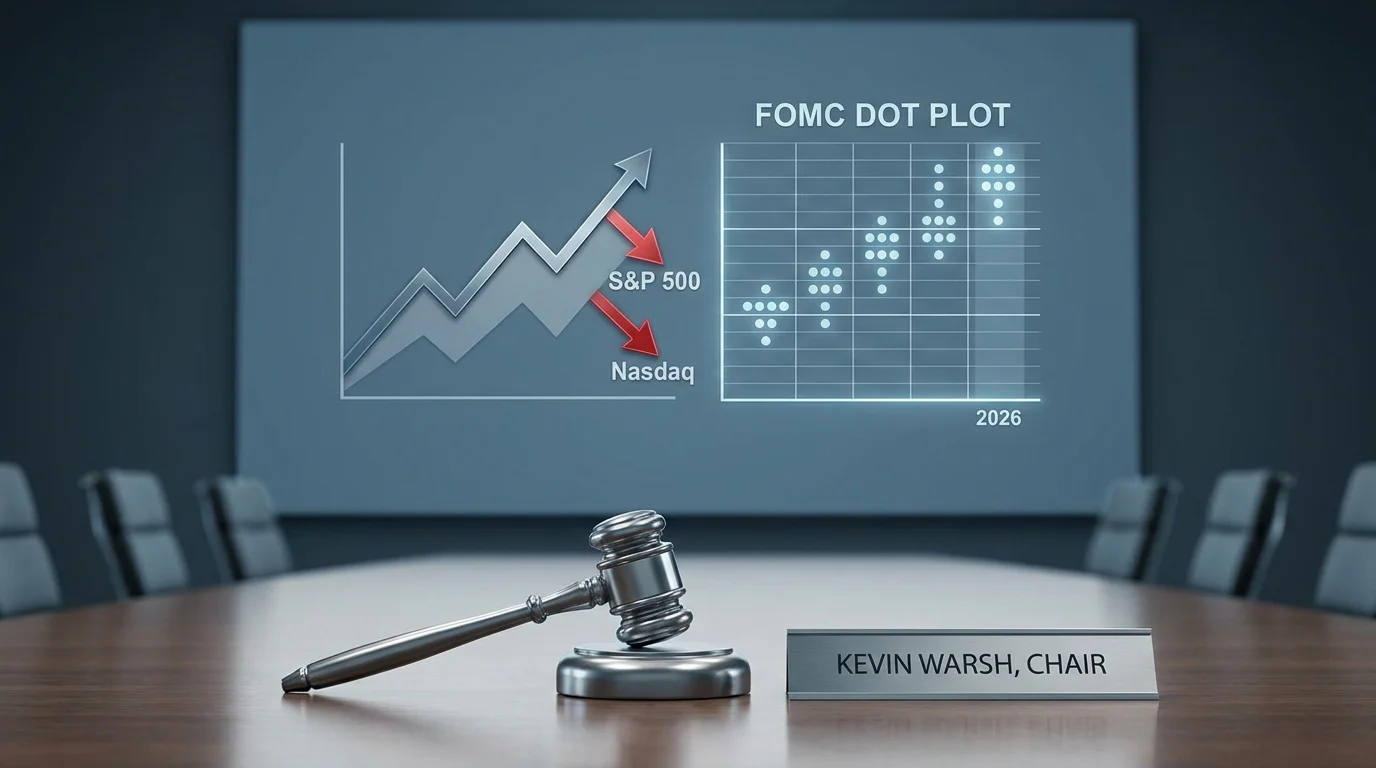
The quarterly Summary of Economic Projections, commonly known as the "dot plot," revealed that nine of nineteen FOMC participants now expect at least one interest rate increase before year-end 2026. This represents a dramatic reversal from March's projections, when not a single policymaker anticipated rate hikes. The median year-end projection for the federal funds rate rose to 3.750%, implying that the consensus view now favors tighter monetary policy than previously communicated.
Several factors drove this hawkish recalibration. Energy prices have spiked following military tensions with Iran, creating what economists term "supply-side inflation" that monetary policy struggles to address directly. Consumer and producer price indices have exceeded expectations in recent months, suggesting that inflationary pressures remain more persistent than the Fed's previous assessments assumed. Warsh himself emphasized that markets "perform best when reacting to incoming data," signaling a data-dependent approach that currently points toward restraint rather than accommodation.
The implications for equity markets are substantial. Higher interest rates increase borrowing costs for corporations, reduce the present value of future earnings, and typically strengthen the dollar—which creates headwinds for multinational companies' overseas revenue. Technology stocks, particularly those with growth profiles similar to SpaceX's pre-IPO trajectory, historically underperform during tightening cycles. Yet the simultaneous occurrence of SpaceX's euphoric debut and the Fed's hawkish shift creates a fascinating natural experiment in investor psychology versus fundamental constraints.
Market Reaction and Investor Positioning
The juxtaposition of SpaceX's speculative rally against the Federal Reserve's tightening signals has produced a bifurcated market response. Growth-oriented sectors have shown remarkable resilience, with the Nasdaq Composite posting modest gains even as rate hike expectations intensified. This suggests that investors are making nuanced distinctions between companies with genuine technological moats and those benefiting from broader liquidity conditions.
SpaceX occupies a unique position in this analysis. Unlike traditional aerospace contractors dependent on government contracts with fixed margins, SpaceX has demonstrated commercial viability through its Starlink satellite internet service, which now serves millions of subscribers globally. The company's vertical integration—controlling everything from rocket manufacturing to launch operations to satellite deployment—creates cost advantages that competitors struggle to replicate. These fundamentals, combined with ambitious plans for Mars colonization and AI infrastructure development, provide a narrative foundation that transcends typical growth stock vulnerability to interest rate changes.
For investors seeking exposure to the space economy without concentrating risk in a single position, broader sector exchange-traded funds offer diversification benefits. The ARK Space Exploration and Innovation ETF and similar vehicles provide exposure to satellite operators, launch services, and adjacent technologies while mitigating single-stock volatility. However, these funds have historically correlated closely with technology sector performance, meaning Fed policy shifts affect them indirectly through sentiment and valuation multiple compression.
Institutional positioning data reveals sophisticated hedging strategies. Options market activity in SPCX shows substantial put buying at strikes below $160, suggesting that institutional investors who received IPO allocations are protecting gains while maintaining upside exposure. Simultaneously, interest rate futures have repriced to reflect higher terminal rate expectations, with the two-year Treasury yield climbing above 4% for the first time since early 2025. This divergence—speculative enthusiasm in specific equities alongside defensive positioning in fixed income—characterizes late-cycle market behavior.
Analyzing SpaceX's $2 Trillion Valuation
Valuing SpaceX presents unique challenges that traditional aerospace analysts struggle to address. The company operates across three distinct business segments: launch services, Starlink consumer and enterprise broadband, and emerging AI infrastructure through its xAI integration and computing partnerships. Each segment carries different margin profiles, growth trajectories, and competitive dynamics that complicate consolidated valuation frameworks.
Launch services, SpaceX's original business, has achieved cost leadership through reusable rocket technology that competitors have yet to replicate at scale. The Falcon 9 rocket's first-stage reusability has reduced per-launch costs by approximately 60% compared to expendable alternatives, allowing SpaceX to capture dominant market share in commercial satellite deployment. NASA and Department of Defense contracts provide stable revenue anchors, though margins in government work remain constrained by federal acquisition regulations.
Starlink represents the most controversial component of SpaceX's valuation. With approximately 7,000 satellites in low Earth orbit and subscriber counts exceeding 5 million globally, the service has demonstrated product-market fit in underserved rural markets and maritime applications. However, achieving profitability requires massive ongoing capital expenditure for satellite replenishment, ground station expansion, and regulatory compliance across hundreds of jurisdictions. Bulls argue that Starlink's first-mover advantage in satellite broadband creates network effects that justify current valuations; bears counter that terrestrial 5G expansion and competing satellite constellations will erode pricing power before the service achieves consistent free cash flow generation.
The AI infrastructure segment adds another layer of complexity. SpaceX's xAI subsidiary has developed the Grok large language model and associated computational infrastructure, positioning the company to benefit from artificial intelligence adoption across enterprise and consumer markets. This exposure to AI—a sector commanding premium valuations throughout the technology landscape—contributes meaningfully to SpaceX's $2 trillion market capitalization. However, the competitive intensity in foundation model development raises questions about sustainable competitive advantages and capital requirements.
Analyst price targets for SPCX currently cluster around $161.25 according to MarketBeat data, suggesting that Wall Street's formal research coverage views the stock as overvalued following its post-IPO surge. This disconnect between institutional targets and market prices is not unprecedented for disruptive companies—Amazon traded at multiples that appeared indefensible by traditional metrics for much of its first decade as a public company—yet it underscores the speculative nature of current positioning.
Fed Policy Implications for Growth Investors
Kevin Warsh's stewardship of the Federal Reserve marks a philosophical departure from the accommodative approach that characterized monetary policy through much of the post-pandemic period. Warsh, who served as a Fed governor during the 2008 financial crisis before entering private equity, has consistently emphasized price stability over maximum employment in public statements. His inaugural FOMC press conference reinforced this priority, with repeated references to the central bank's inflation-fighting credibility as the foundation for sustainable economic growth.
The dot plot's revelation that nine policymakers anticipate rate increases reflects genuine concern about inflationary persistence rather than tactical communication strategy. Core personal consumption expenditures, the Fed's preferred inflation measure, have remained above the 2% target for thirty consecutive months. The energy price shocks associated with Middle East tensions have complicated the inflation outlook by simultaneously reducing real consumer purchasing power while increasing headline price indices that influence inflation expectations.
For growth investors, this environment requires careful portfolio construction. Companies with pricing power—those able to pass cost increases to customers without volume degradation—typically outperform during inflationary periods. SpaceX arguably possesses such characteristics in its Starlink business, where rural broadband alternatives remain limited and switching costs are high. However, the company's capital-intensive rocket manufacturing and satellite deployment programs face input cost pressures that could compress margins if not managed through operational efficiency gains.
Sector rotation patterns have historically favored value stocks over growth stocks during Fed tightening cycles. Financials benefit from higher net interest margins, energy companies gain from commodity price appreciation, and consumer staples offer defensive characteristics that appeal to risk-averse investors. Technology and speculative growth names, by contrast, typically underperform as discount rates rise and earnings visibility diminishes. The current cycle may prove different if artificial intelligence productivity gains materialize faster than anticipated, but historical precedents suggest caution in aggressively adding to growth positions at current valuations.
Fixed income allocations warrant particular attention in this environment. Short-duration Treasury securities offer yields exceeding 4% with minimal credit risk, providing attractive risk-adjusted returns compared to equities at elevated valuations. TIPS (Treasury Inflation-Protected Securities) provide explicit inflation hedging, though current breakeven rates suggest limited upside unless inflation surprises substantially to the upside. For investors maintaining equity exposure, covered call strategies can generate income that partially offsets potential downside while capping some upside participation.
Conclusion: Navigating Unprecedented Market Conditions
The convergence of SpaceX's historic IPO and the Federal Reserve's hawkish pivot creates an investment landscape without clear historical precedent. We've witnessed a $2 trillion company emerge from private markets during the same week that monetary policymakers signaled higher borrowing costs ahead—a combination that tests traditional assumptions about the relationship between liquidity conditions and asset valuations.
For investors, the path forward requires balancing participation in transformative technological stories with prudent risk management. SpaceX represents a genuine industrial revolution in space access and satellite communications, with competitive advantages that could justify premium valuations over extended time horizons. However, the stock's 67% post-IPO gain and current trading multiples near $200 per share incorporate substantial optimism that may prove vulnerable to either operational setbacks or broader market corrections as the Fed implements its tightening agenda.

Diversification remains essential. Rather than concentrating positions in any single growth narrative, investors should maintain exposure across sectors, geographies, and asset classes that respond differently to interest rate changes and inflation dynamics. Tools that facilitate systematic screening and analysis—such as the AI-powered screening capabilities available through modern investment platforms—can help identify opportunities in less crowded segments of the market while avoiding excessive valuation risk.
The coming quarters will test whether SpaceX can operationalize its $2 trillion valuation through revenue growth and margin expansion, or whether gravity—both literal and financial—exerts downward pressure on the stock. Similarly, markets will scrutinize Kevin Warsh's Fed for its ability to combat inflation without triggering the recessionary conditions that typically follow aggressive tightening cycles. Both narratives warrant close attention from investors positioning portfolios for an environment where liquidity is becoming scarcer but technological innovation continues accelerating.
For those seeking to refine their investment approach in these complex conditions, exploring AI-powered stock analysis tools can provide insights that complement traditional fundamental research. The intersection of space technology, artificial intelligence, and monetary policy creates both extraordinary opportunities and meaningful risks—requiring analytical frameworks that can process vast datasets and identify patterns invisible to conventional approaches.