

Key Takeaway
Quantum computing stocks have emerged as one of the hottest investment themes of 2026, with pure-play companies like IonQ, Rigetti Computing, and D-Wave Quantum gaining 50% or more since late March. The sector received a significant catalyst in May when the U.S. Department of Commerce announced $2 billion in funding under the CHIPS and Science Act, signaling federal commitment to this transformative technology. However, investors should approach this space with caution—these companies trade at extreme valuations with minimal revenue and no profits, making them among the most speculative investments in the market. While the long-term potential is enormous, with the quantum computing market projected to reach $16 billion by 2035, commercially viable, fault-tolerant quantum computers may still be a decade away.
For investors seeking exposure to this cutting-edge technology, the key is balancing the revolutionary potential against the considerable risks. Pure-play quantum stocks offer the highest upside but come with stomach-churning volatility. Large-cap tech companies like IBM and Microsoft provide a more conservative entry point with their established quantum programs. As with any emerging technology, position sizing and risk management are paramount—quantum computing should represent only a small portion of a diversified portfolio.

Understanding Quantum Computing Technology
To appreciate the investment opportunity in quantum computing stocks, one must first understand what makes this technology fundamentally different from classical computing. The device you're using to read this article operates on binary bits—tiny switches that can only exist in one of two states: 1 or 0. Every calculation, from browsing the internet to running complex financial models, ultimately breaks down into sequences of these binary operations.
Quantum computers, by contrast, leverage the strange properties of quantum mechanics to process information in entirely new ways. Instead of bits, they use quantum bits or "qubits." During computation, qubits exist in a state of superposition, meaning they can represent both 1 and 0 simultaneously. This allows quantum computers to explore vast numbers of possibilities at once, rather than sequentially like classical computers. When qubits are entangled—a phenomenon Einstein famously called "spooky action at a distance"—the computational power grows exponentially with each additional qubit.
The implications are profound. Certain classes of problems that would take even the most powerful supercomputers thousands of years to solve could potentially be cracked by quantum computers in minutes. Applications include breaking current encryption standards, optimizing complex logistics networks, simulating molecular interactions for drug discovery, and solving optimization problems across finance, materials science, and artificial intelligence. It's no wonder that governments and tech giants are pouring billions into quantum research.
However, building stable, fault-tolerant quantum computers presents immense engineering challenges. Qubits are extraordinarily fragile, requiring temperatures near absolute zero and isolation from any environmental interference. Error rates remain high, and scaling up to thousands or millions of qubits—the threshold for practical, commercial applications—has proven extremely difficult. This is why many experts believe widespread commercial quantum computing remains years, if not decades, away.
The Top Quantum Computing Stocks to Watch in 2026
The quantum computing landscape includes both pure-play companies focused exclusively on quantum technology and established tech giants with significant quantum research programs. For investors seeking maximum exposure to the quantum theme, the pure-plays offer the most direct route, though with considerably higher risk.
IonQ: The Enterprise Quantum Leader
IonQ has positioned itself as the leading enterprise-focused quantum computing company, with its stock gaining significant traction among investors seeking exposure to this emerging technology. The company recently announced the deployment of a new 256-qubit quantum system in Dublin, expanding its commercial reach into European markets. This milestone demonstrates IonQ's commitment to scaling its technology and meeting growing enterprise demand.
The company has secured partnerships with major cloud providers including Amazon Web Services, Microsoft Azure, and Google Cloud, making its quantum systems accessible to developers and researchers worldwide. Analysts maintain a strong buy consensus on IonQ, with price targets suggesting further upside potential. However, investors should note that IonQ trades at a premium valuation of approximately 95 times sales, reflecting the market's high expectations for future growth.
Rigetti Computing: The Quantum Cloud Pioneer
Rigetti Computing has carved out a unique niche in the quantum computing ecosystem with its focus on hybrid quantum-classical computing systems and its pioneering quantum cloud services. The company operates one of the few commercially available quantum cloud platforms, allowing customers to access quantum processors remotely without investing in expensive infrastructure.
In a significant development, Rigetti recently secured a major funding agreement with the U.S. Department of Commerce as part of the government's $2 billion quantum initiative. This validation from federal authorities underscores the strategic importance of quantum technology and provides Rigetti with crucial capital to advance its research and development efforts. Despite this positive news, Rigetti stock has experienced significant volatility, characteristic of early-stage technology companies.
D-Wave Quantum: The Quantum Annealing Specialist
D-Wave has taken a different approach to quantum computing, specializing in quantum annealing rather than the gate-based systems pursued by IonQ and Rigetti. Quantum annealing is particularly well-suited for optimization problems, making D-Wave's systems attractive for applications in logistics, financial modeling, and machine learning. The company was among the recipients of the Department of Commerce funding, providing additional validation of its unique technology approach.
D-Wave's Advantage quantum computer features over 5,000 qubits, making it one of the largest quantum systems commercially available. The company has attracted customers including Volkswagen, Mastercard, and various government agencies, demonstrating real-world commercial traction. However, critics argue that quantum annealing represents a narrower application of quantum technology compared to universal quantum computers.
Quantum Computing Inc.: The Underdog Contender
Quantum Computing Inc. is the smallest of the pure-play quantum stocks by market capitalization, but it has nonetheless attracted significant investor interest. The company focuses on developing quantum software and hardware solutions, with particular emphasis on photonic quantum computing technologies. While QUBT carries higher risk due to its smaller size and limited resources, some investors see it as an attractive option for those seeking exposure to quantum technology at a lower entry price.
Market Outlook: The $16 Billion Quantum Opportunity
The quantum computing market represents one of the most compelling long-term growth opportunities in technology. According to research from Markets and Markets, the global quantum computing market is projected to grow at a compound annual growth rate of 41.8%, driven by increasing investments in quantum technologies, growing adoption of cloud-based quantum services, and continued advancements in quantum hardware.
Grand View Research offers a more conservative but still impressive forecast, expecting the market to expand at a 20.5% CAGR from 2025 to 2030 as smaller, more scalable, and more accurate systems reach commercial viability. By 2035, industry estimates suggest the quantum computing market could reach $16 billion, up from approximately $360 million in 2025. This exponential growth trajectory reflects the technology's potential to transform industries ranging from pharmaceuticals to cybersecurity.
The quantum sensing market is expected to grow by 32% through 2028, with quantum communications and security products following closely behind. These adjacent markets provide additional revenue opportunities for quantum technology companies and suggest that the overall quantum ecosystem could be substantially larger than computing alone. Major corporations including IBM, Microsoft, Google, and Amazon are investing heavily in quantum research, further validating the technology's long-term commercial potential.
IBM has set particularly ambitious targets, aiming to produce the first large-scale, fault-tolerant quantum computer by 2030 and subsequently expand its capabilities tenfold within the following three years. If successful, this timeline could accelerate the commercialization of quantum technology and transform the competitive landscape for pure-play quantum companies.
Risks and Challenges: Why Quantum Stocks Are Speculative
Despite the enormous potential, quantum computing stocks carry risks that investors must carefully consider. These companies represent some of the most speculative investments in the entire market, trading at valuations that far exceed their current fundamentals. Understanding these risks is essential for anyone considering exposure to this sector.
Extreme Valuations Without Profits
The pure-play quantum computing companies trade at astronomical valuations relative to their financial performance. IonQ commands a market capitalization exceeding $21 billion despite generating only $187 million in trailing twelve-month revenue and reporting EBITDA losses of $711 million. D-Wave and Rigetti show similar patterns—high valuations paired with minimal revenue and significant losses.
These companies have no path to profitability in the near term and will require substantial additional capital to fund their research and development efforts. While the recent government funding provides a lifeline, sustained losses and potential future dilution represent ongoing risks for shareholders. Investors are essentially betting on the successful commercialization of technology that may not generate meaningful revenue for years.
Technology Timeline Uncertainty
Many researchers in the field believe that useful, fault-tolerant quantum computing at scale—the kind that would justify current market valuations—could be a decade or more away. While incremental progress continues, the engineering challenges of building stable, error-corrected quantum computers with thousands or millions of qubits remain formidable.
The risk for investors is that the technology takes longer to mature than expected, or that a fundamentally different approach emerges that renders current technologies obsolete. Quantum computing is still in its infancy, and the ultimate winners may not yet exist or may employ technologies quite different from those currently being developed by public companies.
Violent Sensitivity to Market Sentiment
With little revenue and no profits to anchor them, quantum computing stock prices move almost entirely based on investor sentiment. This makes them violently sensitive to the mood of the broader market. When risk appetite is high, money floods into speculative "moonshot" stocks like these. But when market sentiment turns, as it inevitably does, the most speculative names are the first sold and the hardest hit.
Recent trading action illustrates this volatility perfectly. After surging 50% or more from March lows, quantum stocks experienced sharp pullbacks of 5-7% in a single day as the broader tech sector faced selling pressure. Investors must be prepared for significant price swings and potential drawdowns of 50% or more from peak prices.
Investment Strategies for Quantum Computing Exposure
For investors convinced by the long-term potential of quantum computing but wary of the risks associated with pure-play stocks, several strategic approaches can provide exposure while managing downside risk. The key is finding the right balance between potential returns and acceptable risk levels.
Conservative Approach: Large-Cap Tech Exposure
Investors seeking exposure to quantum technology with lower risk should consider established technology giants with active quantum research programs. IBM stands out as the leader in this category, with decades of quantum research experience and a clear roadmap toward commercial quantum computing by 2030. Microsoft's quantum cloud offerings and strategic partnerships provide another entry point, while Alphabet's Google achieved quantum supremacy with its Sycamore processor in 2019.
These companies offer several advantages over pure-play quantum stocks. They generate substantial revenue and profits from established businesses, providing financial stability that pure-plays lack. Their quantum efforts benefit from massive R&D budgets and deep technical expertise. Most importantly, even if their quantum initiatives fail to deliver commercial success, these companies remain viable investments based on their core businesses.
Diversified Approach: Quantum Computing ETFs
For investors wanting broader exposure to the quantum theme without picking individual winners and losers, exchange-traded funds offer a diversified solution. The Defiance Quantum ETF provides exposure to 38 companies involved in quantum computing and related technologies, with top holdings including Micron Technology, IonQ, and ASML Holdings. With assets under management of $235 million and an expense ratio of 0.5%, this fund offers a cost-effective way to access the quantum computing ecosystem.
ETFs provide several benefits for quantum investors. They eliminate single-stock risk by spreading exposure across multiple companies. They automatically rebalance as the competitive landscape evolves. And they provide exposure to international players and private companies that might be difficult for individual investors to access directly.
Aggressive Approach: Pure-Play Portfolio
Investors with high risk tolerance and conviction in the quantum computing theme may choose to build a concentrated portfolio of pure-play quantum stocks. This approach involves taking positions in IonQ, Rigetti, D-Wave, and potentially Quantum Computing Inc., weighting them according to individual conviction and risk appetite.
If pursuing this strategy, position sizing is critical. Quantum computing stocks should represent only a small portion of a diversified portfolio—typically no more than 1-2% for most investors. The volatility and uncertainty inherent in these companies mean that complete loss of capital is a realistic possibility. Only invest what you can afford to lose entirely.
Conclusion: Positioning for the Quantum Future
Quantum computing represents one of the most transformative technologies on the horizon, with the potential to revolutionize industries from drug discovery to cybersecurity. The recent surge in quantum computing stocks reflects growing investor recognition of this potential, amplified by significant government support through the $2 billion CHIPS and Science Act funding. Companies like IonQ, Rigetti, and D-Wave are at the forefront of this technological revolution, each pursuing distinct approaches to commercializing quantum systems.
However, the gap between technological potential and commercial reality remains substantial. Current quantum computers are nascent, error-prone, and far from the fault-tolerant systems needed for widespread commercial adoption. The pure-play quantum companies trade at valuations that assume near-perfect execution and rapid technological progress—assumptions that may prove optimistic.
For investors, the quantum computing sector demands a long-term perspective and careful risk management. Those seeking exposure should consider their risk tolerance and investment timeline. Conservative investors may prefer large-cap tech companies with quantum initiatives or diversified ETFs. Those with higher risk tolerance might allocate a small portion of their portfolio to pure-play quantum stocks, accepting the possibility of significant volatility and potential losses.
The quantum revolution is coming, but the timeline and ultimate winners remain uncertain. By approaching this sector with realistic expectations, appropriate position sizing, and a diversified strategy, investors can position themselves to benefit from this transformative technology while protecting their portfolios from the inevitable bumps along the way.
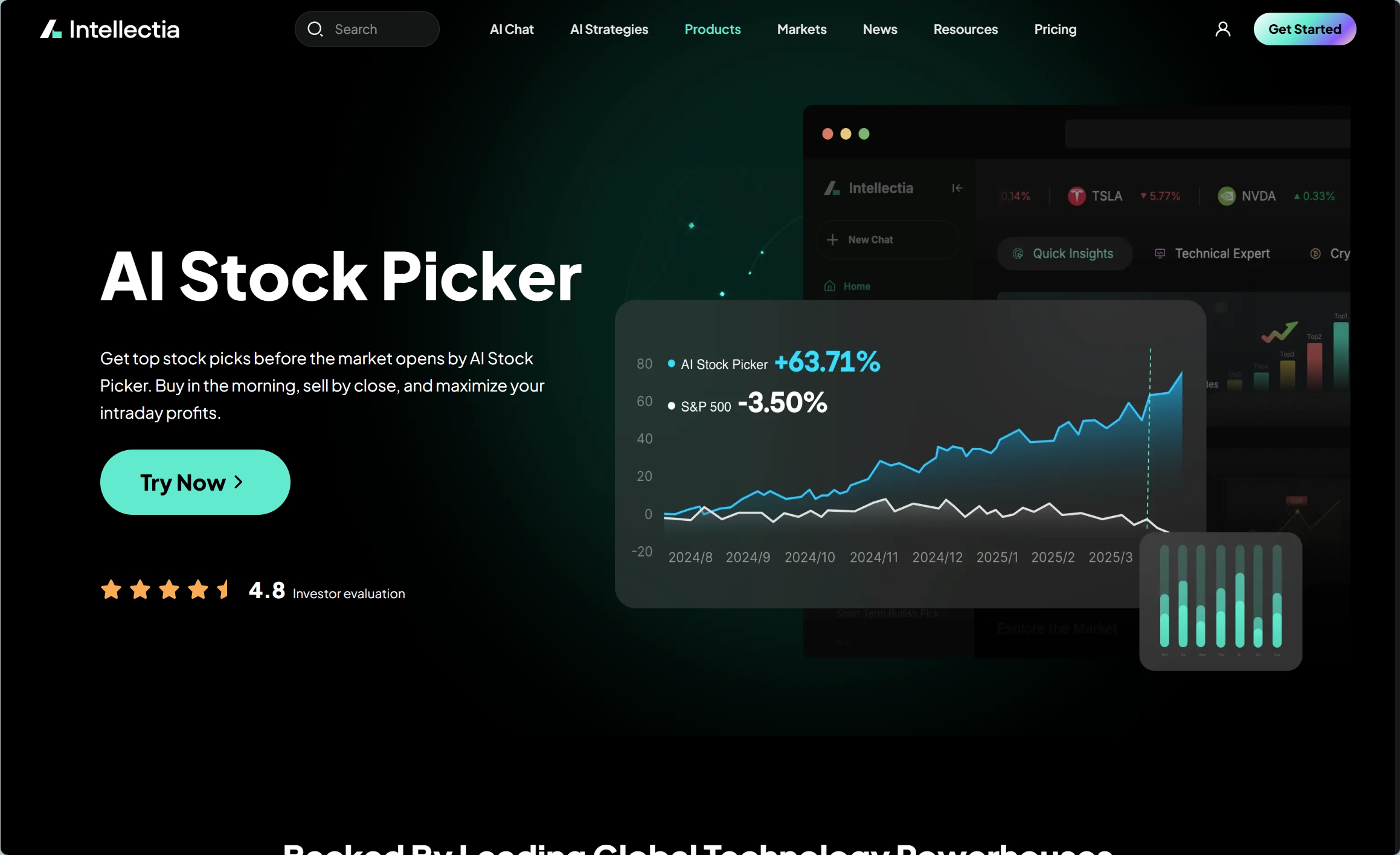
Want to identify the next breakthrough technology stocks before they surge? Try our AI Stock Picker to discover emerging opportunities in quantum computing and other cutting-edge sectors. For comprehensive market analysis and real-time insights, explore our AI Screener to find investments that match your risk profile and financial goals.