

Key Takeaway
SpaceX's long-awaited IPO has shattered every record in financial markets, launching at $135 per share and immediately surging to a $2 trillion valuation that ranks it among America's most valuable companies. This historic debut represents more than just another tech unicorn going public—it signals the commercialization of space as a genuine investable asset class.
The numbers are staggering: SpaceX raised $85.7 billion, making it the largest initial public offering in history, surpassing Saudi Aramco's previous record. The stock climbed 19% on its June 12 debut to close at $161, then extended gains to reach $192.50 by Monday, pushing the company's market capitalization toward $2.6 trillion. This extraordinary performance has made Elon Musk the world's first trillionaire on paper, cementing his status as the most consequential entrepreneur of the modern era.
For investors, the fundamental question is whether this valuation reflects sustainable value or speculative excess. SpaceX's revenue prospects are genuinely impressive, with analysts projecting $25 billion for 2026 and Musk suggesting the company could reach $1 trillion in annual revenue by 2030. However, much of this growth depends on unproven technologies, particularly the Starship program and orbital data centers. The investment thesis requires separating the proven Starlink business from the aspirational future ventures that justify much of the current valuation premium.
The Historic IPO That Changed Everything
A Record-Breaking Debut
When SpaceX began trading on the Nasdaq under ticker SPCX on June 12, 2026, it didn't just go public—it redefined what going public could mean. The company priced its shares at $135, valuing the aerospace giant at approximately $1.77 trillion, already making it one of the most valuable companies to ever hit public markets.
The opening bell revealed immediate appetite for space exposure. Shares opened at $150, representing an 11% premium to the IPO price, and continued climbing throughout the session. By the closing bell, SPCX had reached $161.11, a 19% gain that added over $300 billion to the company's valuation in a single trading day. The trading volume was unprecedented, with institutional investors scrambling to secure positions while retail buyers drove the price action through mobile trading platforms.
Monday's session brought further gains, with shares climbing another 20% to close above $192. This pushed SpaceX's market capitalization near $2.6 trillion, making it the sixth-largest U.S. company by value and leapfrogging established giants like Amazon. The speed of this appreciation has left traditional valuation models struggling to keep pace, raising important questions about how public markets should price frontier technology companies with multiple unproven revenue streams.
The Greenshoe Heard Round the World
The scale of investor demand became even clearer when underwriters exercised their full 'greenshoe' overallotment option, bringing the total IPO proceeds to $85.7 billion. This additional allocation allowed the company to capitalize on extraordinary demand while providing price stability through the underwriters' ability to support the stock in secondary trading.
SpaceX employees embraced the occasion with characteristic flair, wearing green shoes on the trading floor as a nod to the overallotment mechanism. Elon Musk re-shared photos of the celebration on X, his social media platform, demonstrating the marketing savvy that has helped build his companies' cult-like following among retail investors. This blend of technical innovation and cultural resonance has become a hallmark of Musk-led ventures, contributing to the premium valuations they command in public markets.
For investors evaluating whether to participate at current levels, the greenshoe exercise provides important signals. The decision to take additional shares indicates strong institutional confidence in the company's near-term trajectory. However, it also means more supply will eventually hit the market when the lockup period expires after third-quarter earnings, potentially creating volatility for patient investors to exploit.
Breaking Down the $2 Trillion Valuation
Starlink: The Revenue Engine
SpaceX's current financial performance is dominated by Starlink, the satellite internet constellation that has grown from an experimental project into a genuine telecommunications powerhouse. With thousands of satellites in low Earth orbit, Starlink provides broadband connectivity to remote areas that traditional infrastructure cannot economically serve, creating a natural monopoly in this addressable market.
The business model has evolved beyond direct-to-consumer subscriptions into more lucrative enterprise and government contracts. Maritime and aviation connectivity contracts generate significantly higher revenue per user than residential subscriptions, while defense and emergency response applications provide stable, long-term revenue streams. Industry analysts estimate Starlink's gross margins could eventually exceed 50% as the constellation achieves full deployment and operational efficiencies compound.
However, growth challenges are emerging just as the company goes public. Average revenue per user has declined as Starlink expands beyond its early adopter base into more price-sensitive consumer markets. Competition from terrestrial broadband providers is intensifying in suburban areas where fiber and 5G infrastructure is expanding. The company must navigate this transition while maintaining the growth rates that justify its extraordinary valuation.
Investors evaluating Starlink's contribution to SpaceX's value should consider the recurring revenue characteristics of the business model. Unlike traditional aerospace companies dependent on lumpy contract wins, Starlink generates predictable monthly subscriptions that provide the cash flow foundation for more speculative ventures. This revenue stability justifies a premium valuation multiple compared to traditional defense contractors.
Starship: The Moonshot Multiplier
While Starlink provides the current revenue base, Starship represents the technological breakthrough that could justify SpaceX's $2 trillion valuation. The fully reusable super-heavy launch system, currently in testing, promises to reduce orbital launch costs by orders of magnitude while enabling entirely new applications from space-based manufacturing to lunar colonization.
The technical achievement cannot be overstated. Starship represents the largest and most powerful rocket ever built, with a payload capacity that dwarfs anything currently operational. Successful full reusability would transform space economics from a bespoke government program into a genuine commercial industry, opening addressable markets measured in trillions rather than billions.
However, significant technical risks remain. The testing program has faced delays, and regulatory approval for frequent orbital launches is uncertain. Morningstar analyst Nicolas Owens assigned only a 7% probability to SpaceX achieving full Starship reusability combined with commercially viable orbital data centers, the two novel revenue streams underpinning much of the valuation premium in the company's prospectus.
For investors, Starship represents the ultimate call option embedded in SpaceX shares. If successful, it could multiply the company's value several times over. If unsuccessful, the core Starlink business still provides fundamental support, though likely at a valuation far below current levels. This binary outcome distribution is characteristic of frontier technology investments and requires position sizing that accounts for the possibility of significant drawdowns.
Orbital Data Centers and Beyond
Perhaps the most ambitious revenue opportunity outlined in SpaceX's prospectus involves orbital data centers. The concept leverages the natural cooling properties of space and abundant solar energy to create computing facilities that could dramatically reduce the energy costs currently constraining artificial intelligence training.
The potential market is enormous. Global data center power consumption is projected to grow exponentially as AI adoption accelerates, with some estimates suggesting the industry could consume 20% of global electricity by 2030. Space-based facilities could capture a meaningful share of this demand while avoiding the permitting and power grid constraints limiting terrestrial expansion.
However, this application remains purely conceptual. No company has successfully deployed commercial computing infrastructure in orbit, and the technical challenges of maintaining sensitive electronic equipment in the radiation environment of space are substantial. The timeline to revenue generation, if it materializes at all, likely extends well into the 2030s.
Investors should treat orbital data center projections as speculative scenarios rather than base-case assumptions. While the potential rewards justify some allocation of risk capital, the probability-weighted value contribution to current share prices should be modest. The current valuation appears to assume success across multiple unproven initiatives simultaneously, a demanding standard for any management team to achieve.
The Elon Musk Premium
World's First Trillionaire
SpaceX's IPO has made Elon Musk the world's first trillionaire on paper, a milestone that underscores the extraordinary wealth creation possible through transformative entrepreneurship. His holdings in SpaceX, combined with his existing stakes in Tesla, X, and other ventures, represent a portfolio of innovation that has fundamentally reshaped multiple industries.
This concentration of economic power in a single individual raises important governance questions for public market investors. SpaceX's dual-class share structure ensures Musk maintains effective control regardless of public ownership levels, creating potential conflicts between his personal vision and shareholder returns. The company's success depends heavily on his continued leadership and decision-making, making key-person risk a material consideration.
For investors comfortable with concentrated control structures, the Musk premium may be justified by his track record of execution against seemingly impossible timelines. Tesla's survival and subsequent dominance of the electric vehicle market demonstrates his ability to overcome technical and financial obstacles that would have destroyed less determined competitors. SpaceX itself was written off multiple times before achieving the reusability breakthroughs that enabled its current market position.
However, history offers cautionary tales of visionary founders whose companies struggled after their departure or when their attention became divided across too many ventures. Musk's simultaneous leadership of Tesla, X, and now SpaceX as a public company creates legitimate concerns about bandwidth constraints. Investors must evaluate whether the premium valuation reflects confidence in the underlying business or belief in Musk's personal abilities.
The X Factor
Musk's ownership of X, the social media platform formerly known as Twitter, creates unique synergies and conflicts for SpaceX. The platform provides unprecedented marketing reach for SpaceX announcements and launches, creating earned media value that would cost billions to replicate through traditional advertising channels. Every Starship test, every Starlink milestone, reaches hundreds of millions of users instantly through X's distribution network.
However, the association also creates reputation risk. Musk's political activities and controversial posts on X have alienated portions of the consumer market and could affect government contracting relationships. SpaceX's dependence on NASA and Department of Defense contracts makes political neutrality a valuable asset that the X association may compromise.
Investors must evaluate whether the marketing benefits outweigh the reputation costs. For a consumer-facing business like Starlink, association with polarizing political content could limit market penetration in certain demographics. For government contracting, the risks are more subtle but potentially material if procurement decisions become influenced by political considerations beyond technical and cost criteria.
Competitive Landscape and Moats
The Space Economy Takes Shape
SpaceX's IPO has validated the commercial space sector as a genuine investable category, but it also invites increased competition. Traditional aerospace giants like Boeing and Lockheed Martin are accelerating their own reusable launch programs, while new entrants backed by venture capital are targeting niche applications where SpaceX's general-purpose platforms may be over-engineered.
The competitive dynamics vary significantly across SpaceX's business segments. In launch services, the company's cost advantages and flight-proven reliability create substantial barriers to entry. Competitors face years of development and billions in investment to match SpaceX's current capabilities, during which time continued innovation may extend the lead.
In satellite internet, the competitive landscape is more contested. Amazon's Project Kuiper is deploying its own constellation, while OneWeb and other regional providers target specific geographic markets. The key differentiator may become spectrum rights and orbital slot allocation, areas where SpaceX's first-mover advantage provides regulatory protection against new entrants.
Defensibility Through Integration
SpaceX's most durable competitive advantage may be the vertical integration that enables rapid iteration and cost reduction. By manufacturing its own rockets, satellites, and ground equipment, the company eliminates supplier margins and creates feedback loops between design and operations that accelerate improvement. Competitors dependent on external suppliers cannot match this pace of innovation.
The integrated model also creates data advantages. SpaceX's launch experience provides insights that inform Starlink satellite design, while Starlink's operational data guides Starship development priorities. This knowledge compounding is difficult for competitors to replicate and may widen SpaceX's lead over time.
However, vertical integration creates concentration risk. A manufacturing defect or supply chain disruption affects multiple business segments simultaneously, potentially causing cascading failures that diversified competitors could absorb more easily. Investors must weigh these trade-offs when evaluating the sustainability of SpaceX's competitive position.
Investment Outlook and Price Targets
Analyst Perspectives
Wall Street analysts have struggled to produce traditional price targets for SpaceX given the unprecedented nature of its valuation and business model. Estimates range from conservative scenarios valuing the company primarily on Starlink's cash flows to aggressive projections incorporating successful Starship deployment and orbital data center revenue.
Morningstar's optimistic scenario ceiling of $1.97 trillion, set before the IPO, was rapidly exceeded by market trading, suggesting either analyst conservatism or market euphoria. The wide dispersion in price targets reflects genuine uncertainty about which of SpaceX's many initiatives will succeed and on what timeline.
For investors considering entry at current levels, technical indicators suggest caution. The stock's RSI above 79 indicates overbought conditions following the post-IPO surge, while the rapid appreciation may have exhausted near-term buying interest. Patient investors may find better entry points following the Q3 earnings report, which will provide the first detailed look at SpaceX's financial performance as a public company.
For those seeking to enhance their investment research capabilities, consider using Intellectia AI's stock screener to identify similar high-growth opportunities in the space and technology sectors.
Risk Factors to Monitor
Several risks could materially impact SpaceX's valuation over the coming quarters. Technical failures in the Starship program would undermine confidence in the company's growth trajectory and could trigger significant multiple compression. Regulatory delays in launch licensing or spectrum allocation could slow Starlink expansion and allow competitors to close the gap.
Macroeconomic conditions also present risks. Higher interest rates reduce the present value of distant cash flows, disproportionately affecting growth companies valued on future earnings. A recession could reduce consumer discretionary spending on premium internet services, affecting Starlink's subscription growth in developed markets.
Geopolitical factors are particularly relevant for a company dependent on government contracts and international satellite operations. Tensions with China could limit market access for Starlink, while changes in U.S. administration could affect NASA and defense procurement priorities. The company's dual-use technology creates exposure to export controls and sanctions that could constrain growth in certain markets.
The First Earnings Test
What to Expect in November
SpaceX's first earnings report as a public company, expected in November 2026, will provide crucial validation of the investment thesis. Investors will scrutinize Starlink's subscriber growth, average revenue per user trends, and gross margin progression to assess whether the satellite business can support the company's ambitious valuation.
The Starship program's status will also be closely watched. Any announcements regarding testing milestones, regulatory approvals, or commercial contracts would provide important signals about the timeline to revenue generation from this key growth driver. Management's commentary on capital allocation priorities between Starlink expansion, Starship development, and potential acquisitions will reveal strategic direction.
Guidance for 2027 revenue and profitability will be particularly important given the wide range of analyst estimates. The company's ability to meet or exceed the $25 billion revenue target for 2026 will set expectations for future growth rates and valuation multiples. Investors should pay particular attention to commentary on path to profitability, as current losses funded by growth investment will eventually need to transition to sustainable cash generation.
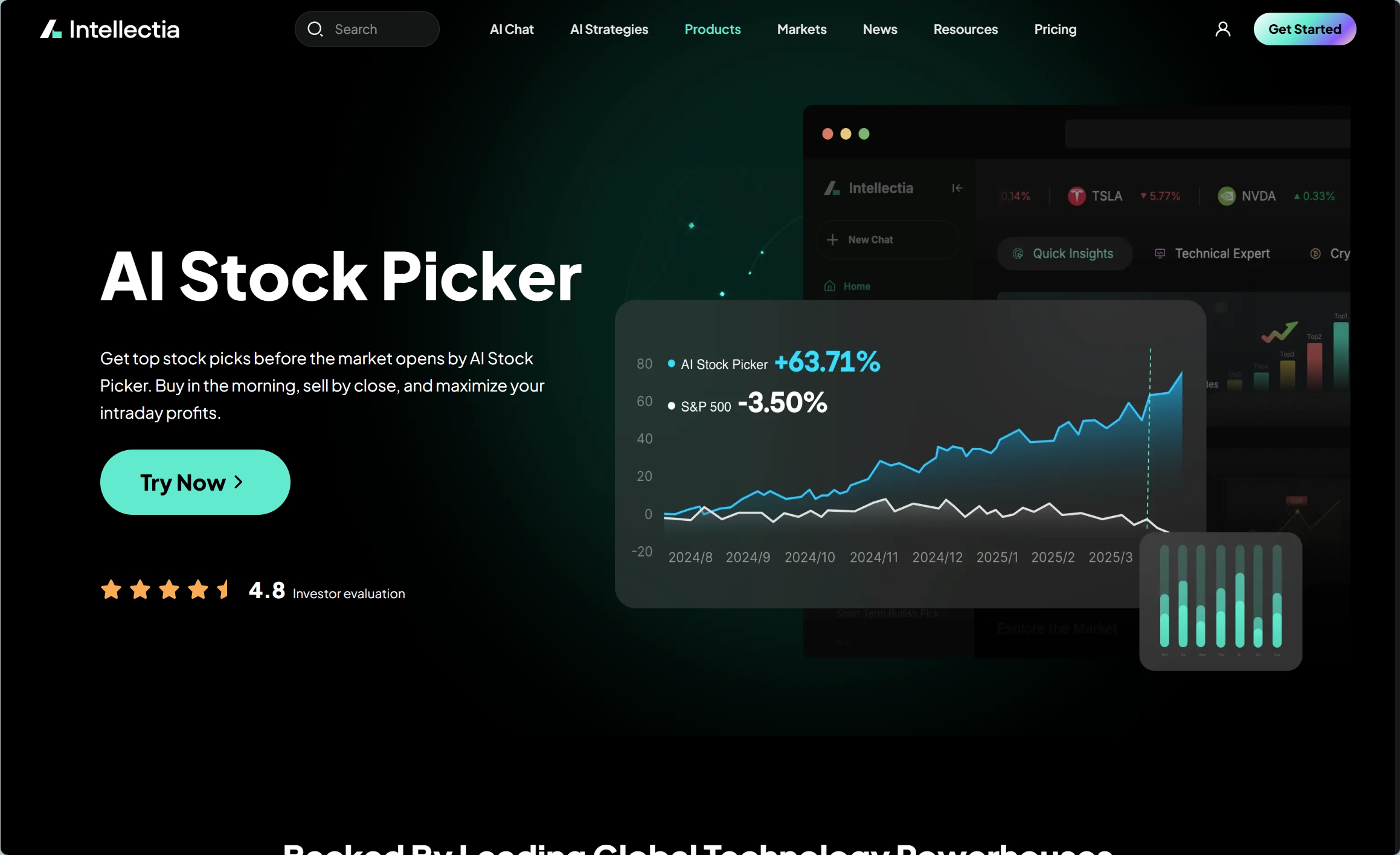
Looking for AI-powered stock analysis tools? Try Intellectia AI's stock picker to identify the best opportunities in emerging sectors like space technology.
The Lockup Expiration Overhang
A significant technical factor for the stock will be the expiration of insider lockup restrictions following the Q3 earnings report. Early employees, venture capital backers, and Musk himself will be free to sell shares, potentially flooding the market with supply and creating price pressure.
The magnitude of this effect depends on insider selling intentions. If early investors view current valuations as attractive exit points, the resulting supply could overwhelm retail demand and trigger significant price declines. Conversely, if insiders signal confidence by holding shares, the lockup expiration could pass without major disruption.
Investors should monitor any pre-expiration selling plans disclosed by major shareholders. SEC filings indicating intent to sell large blocks would be bearish signals, while commitments to hold positions through year-end would support the stock. The price action in the weeks leading up to expiration will provide important clues about market expectations for the event.
Conclusion
SpaceX's IPO represents a watershed moment for both financial markets and human space exploration. The $2 trillion valuation validates decades of private investment in commercial space capabilities and creates a public vehicle for investors to participate in the sector's growth. However, current prices appear to discount substantial success across multiple unproven initiatives, leaving limited margin of safety for disappointments.
The prudent approach for most investors is to wait for greater clarity on the company's financial performance and technical milestones before committing significant capital. The Q3 earnings report and subsequent lockup expiration will likely create volatility that presents better entry points for patient capital. Those with high conviction in Musk's execution capabilities and the inevitability of space commercialization may find current prices justified by long-term potential, but should size positions accordingly to account for substantial near-term risk.
For investors ready to explore opportunities in transformative technology companies, sign up for Intellectia AI to access advanced screening and analysis tools designed for navigating complex growth investments. Our platform combines artificial intelligence with fundamental research to identify the next generation of market leaders across emerging sectors from space technology to artificial intelligence.
The space revolution is no longer science fiction—it's a publicly traded reality. Whether SpaceX justifies its historic valuation will depend on execution across the ambitious roadmap laid out in its prospectus. For believers in humanity's expansion beyond Earth, SPCX offers a direct stake in that future. For skeptics, the current price may represent a peak in speculative enthusiasm that future earnings will struggle to validate. Either way, SpaceX has forever changed how we think about space, markets, and the limits of human ambition.