Zyrtec Becomes PGA TOUR's Official Allergy Relief Sponsor
Written by Emily J. Thompson, Senior Investment Analyst
Updated: 4 days ago
0mins

Should l Buy KVUE?
Source: CNBC
- Allergy Season Impact: According to the American College of Allergy, Asthma & Immunology, the U.S. spring allergy season typically runs from February to early June, with peak tree pollen levels occurring between March and mid-May, leading to increased allergy burdens for sufferers.
- Sponsorship Partnership: Zyrtec has recently become the PGA TOUR's first official
Trade with 70% Backtested Accuracy
Stop guessing "Should I Buy KVUE?" and start using high-conviction signals backed by rigorous historical data.
Sign up today to access powerful investing tools and make smarter, data-driven decisions.
Analyst Views on KVUE
Wall Street analysts forecast KVUE stock price to rise
8 Analyst Rating
1 Buy
7 Hold
0 Sell
Hold
Current: 18.390

Low
17.00
Averages
18.86
High
23.00
Current: 18.390
Low
17.00
Averages
18.86
High
23.00
About KVUE
Kenvue Inc. is a consumer health company. The Company’s differentiated portfolio of brands includes Tylenol, Neutrogena, Listerine, Johnson’s, BAND-AID, Aveeno, Zyrtec, and Nicorette. It operates through three segments: Self Care, Skin Health and Beauty, and Essential Health. Its Self Care product categories include pain care; cough, cold, and allergy; digestive health; smoking cessation; eye care; and other products. Self Care segments include brands such as Tylenol, Motrin, Nicorette, Benadryl, Zyrtec, Zarbee’s, ORSLTM, Rhinocort, and Calpol. The Skin Health and Beauty segment is focused on face and body care, as well as hair, sun, and other products. The Essential Health segment includes oral care, baby care, women’s health, wound care, and other products. Its portfolio includes Self Care, Skin Health and Beauty, and Essential Health products which connect with consumers across North America, Asia Pacific (APAC), Europe, Middle East, and Africa (EMEA), and Latin America (LATAM).
About the author

Emily J. Thompson
Emily J. Thompson, a Chartered Financial Analyst (CFA) with 12 years in investment research, graduated with honors from the Wharton School. Specializing in industrial and technology stocks, she provides in-depth analysis for Intellectia’s earnings and market brief reports.
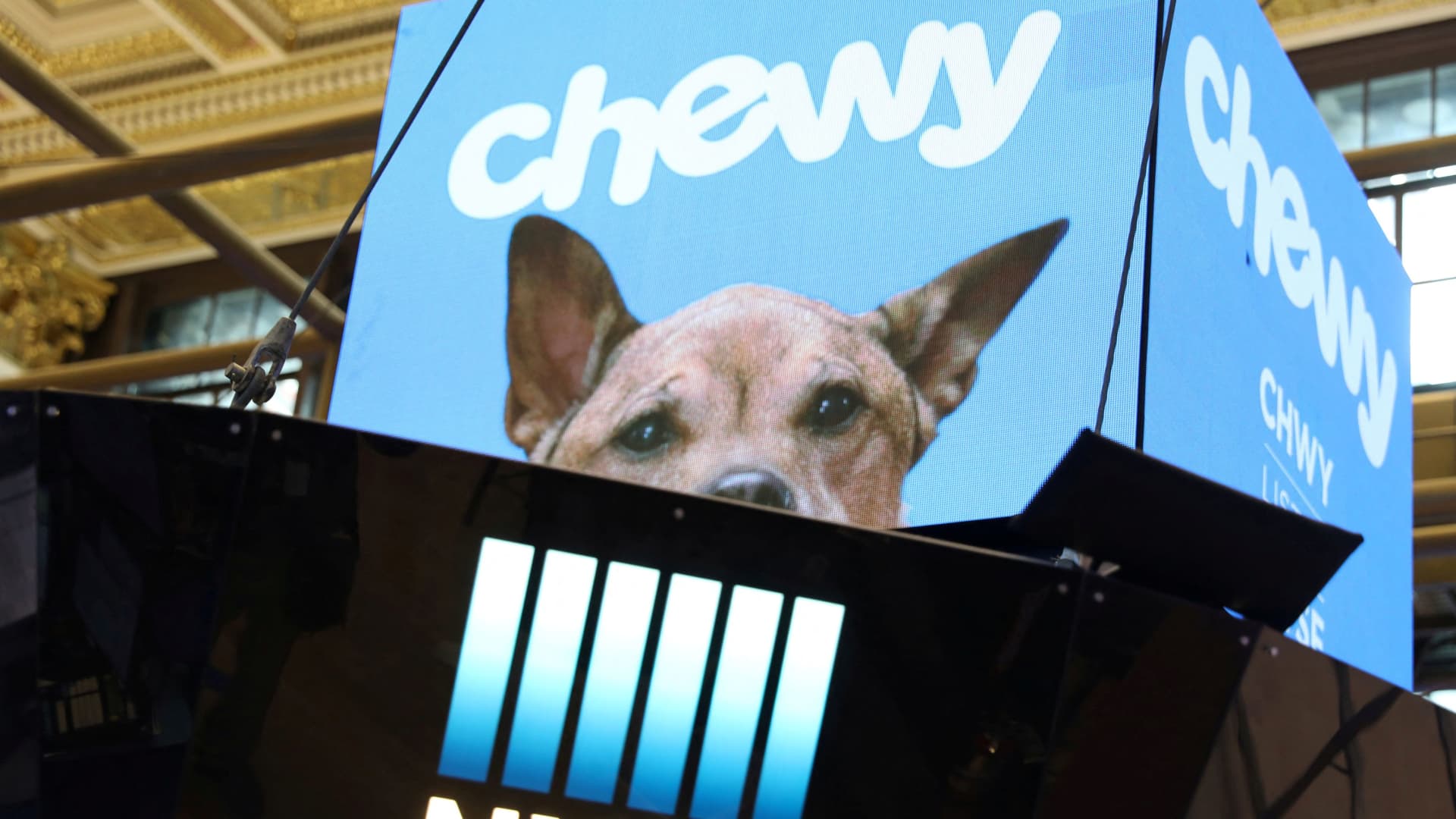
Analysis of Chewy's Undervalued Stock Reasons


- Market Misunderstanding: Many investors perceive Chewy as a low-margin, highly competitive online pet retailer, overlooking its established habit-based consumer platform, which demonstrates greater resilience amid economic uncertainty.
- Stability of Consumer Spending: Despite rising fuel costs and economic pressures, Chewy's products, such as dog food and cat litter, remain stable necessities, highlighting the difference between pet care and other discretionary consumer goods.
- Financial Performance: Chewy is expected to grow revenues by over 8%, significantly higher than the S&P 500's average growth rate, yet it trades at a forward P/E of 16.5x, indicating a roughly 25% market discount, suggesting its stock is undervalued.
- Technical Challenges: Despite strong fundamentals, Chewy's stock has fallen 23% year-to-date and is down over 78.5% from its all-time high, leading investors to adopt a wait-and-see approach ahead of its upcoming earnings report, contributing to a bearish market sentiment.
See More

The Investment Advantage of High-Quality Dividend Stocks


- Dividend Return Comparison: A study by Hartford Funds and Ned Davis Research reveals that dividend stocks have achieved an annualized return of 9.2% from 1973 to 2024, significantly outperforming non-dividend payers at 4.31%, highlighting the long-term investment value of dividend stocks.
- Microsoft's Dividend Power: Microsoft is set to pay over $27 billion in dividends over the next year, with a modest yield of 0.9%, yet its rapid growth in cloud computing and AI solutions provides robust cash flow support, ensuring substantial returns for shareholders.
- ExxonMobil's Stability: ExxonMobil's annual dividend payout of $17.18 billion benefits from its integrated operating model, which helps maintain steady cash flow amid oil price fluctuations, especially with current geopolitical tensions driving prices higher, enhancing its outlook.
- Apple's Dividends and Buybacks: Apple pays $15.27 billion in annual dividends and has repurchased $841 billion in stock since fiscal 2013, demonstrating strong cash flow and commitment to shareholder returns, while its pivot to subscription services is expected to further enhance future profitability.
See More

Dividend Stocks Outperform Non-Payers Significantly
- Dividend Return Advantage: A study by Hartford Funds and Ned Davis Research reveals that dividend stocks have achieved an annualized return of 9.2% from 1973 to 2024, more than double the 4.31% of non-payers, highlighting their stability and attractiveness for long-term investors.
- Microsoft's Dividend Power: Microsoft pays a quarterly dividend of $0.91, projecting over $27 billion in payouts to shareholders in the coming year; despite a low yield of 0.9%, its rapid growth in cloud computing and AI solutions provides robust cash flow support.
- ExxonMobil's Robust Model: ExxonMobil's quarterly dividend of $1.03 translates to nearly $17.2 billion annually, with its integrated operating model across upstream, midstream, and downstream assets enhancing its ability to withstand crude oil price fluctuations.
- Strong Bank Stock Returns: JPMorgan Chase's quarterly dividend of $1.50 results in annual payouts of $16.2 billion, benefiting from the Federal Reserve's rate hikes, as banks typically outperform during economic expansions, ensuring steady capital returns.
See More

Trump's Comments Lead to Drop in Tylenol Prescriptions for Pregnant Women

- Prescription Decline: A study published in The Lancet reveals that after Trump linked Tylenol to autism, prescriptions for acetaminophen among pregnant women dropped by 10%, indicating a significant impact on public trust in medication safety.
- Maximum Decline: The study noted a peak decline of 20% in prescriptions during the third week post-September 22, suggesting that Trump's comments directly influenced pregnant women's medication choices, potentially leaving thousands without necessary pain or fever treatment.
- Emergency Visit Data: The findings are based on nearly 90,000 emergency department visits by pregnant women and approximately 853,000 by non-pregnant women, highlighting how fear stemming from public statements can adversely affect health management decisions.
- Medication Usage Shift: Concurrently, the study found a 71% increase in prescriptions for leucovorin among children, reflecting a possible over-reliance on alternative medications due to misconceptions stemming from Trump's remarks.
See More

Zyrtec Becomes PGA TOUR's Official Allergy Relief Sponsor

- Allergy Season Impact: According to the American College of Allergy, Asthma & Immunology, the U.S. spring allergy season typically runs from February to early June, with peak tree pollen levels occurring between March and mid-May, leading to increased allergy burdens for sufferers.
- Sponsorship Partnership: Zyrtec has recently become the PGA TOUR's first official
See More

Starboard Value LP Acquires Stake in Fluor Corporation


- New Investment Activity: Starboard Value LP initiated a new position in Fluor Corporation (FLR) by acquiring 5,191,327 shares in Q4 2025, amounting to a total investment of $205.73 million, indicating confidence in Fluor's future growth prospects.
- Ownership Proportion Analysis: This acquisition accounts for 3.9% of Starboard's reportable AUM in its 13F filing, highlighting its significance within a diversified investment portfolio.
- Market Performance Review: As of February 17, 2026, Fluor's shares were priced at $48.57, reflecting a 22.2% increase over the past year, showcasing the company's recovery potential in the engineering and construction sector.
- Strategic Transformation Progress: Fluor has focused on restoring project discipline in recent years, shifting towards projects with more proportional risk structures, and if it can effectively manage project costs, it may enhance its profitability and cash flow stability.
See More
Analysis of Chewy's Undervalued Stock Reasons
- Market Misunderstanding: Many investors perceive Chewy as a low-margin, highly competitive online pet retailer, overlooking its established habit-based consumer platform, which demonstrates greater resilience amid economic uncertainty.
- Stability of Consumer Spending: Despite rising fuel costs and economic pressures, Chewy's products, such as dog food and cat litter, remain stable necessities, highlighting the difference between pet care and other discretionary consumer goods.
- Financial Performance: Chewy is expected to grow revenues by over 8%, significantly higher than the S&P 500's average growth rate, yet it trades at a forward P/E of 16.5x, indicating a roughly 25% market discount, suggesting its stock is undervalued.
- Technical Challenges: Despite strong fundamentals, Chewy's stock has fallen 23% year-to-date and is down over 78.5% from its all-time high, leading investors to adopt a wait-and-see approach ahead of its upcoming earnings report, contributing to a bearish market sentiment.
See More
The Investment Advantage of High-Quality Dividend Stocks
- Dividend Return Comparison: A study by Hartford Funds and Ned Davis Research reveals that dividend stocks have achieved an annualized return of 9.2% from 1973 to 2024, significantly outperforming non-dividend payers at 4.31%, highlighting the long-term investment value of dividend stocks.
- Microsoft's Dividend Power: Microsoft is set to pay over $27 billion in dividends over the next year, with a modest yield of 0.9%, yet its rapid growth in cloud computing and AI solutions provides robust cash flow support, ensuring substantial returns for shareholders.
- ExxonMobil's Stability: ExxonMobil's annual dividend payout of $17.18 billion benefits from its integrated operating model, which helps maintain steady cash flow amid oil price fluctuations, especially with current geopolitical tensions driving prices higher, enhancing its outlook.
- Apple's Dividends and Buybacks: Apple pays $15.27 billion in annual dividends and has repurchased $841 billion in stock since fiscal 2013, demonstrating strong cash flow and commitment to shareholder returns, while its pivot to subscription services is expected to further enhance future profitability.
See More
Dividend Stocks Outperform Non-Payers Significantly
- Dividend Return Advantage: A study by Hartford Funds and Ned Davis Research reveals that dividend stocks have achieved an annualized return of 9.2% from 1973 to 2024, more than double the 4.31% of non-payers, highlighting their stability and attractiveness for long-term investors.
- Microsoft's Dividend Power: Microsoft pays a quarterly dividend of $0.91, projecting over $27 billion in payouts to shareholders in the coming year; despite a low yield of 0.9%, its rapid growth in cloud computing and AI solutions provides robust cash flow support.
- ExxonMobil's Robust Model: ExxonMobil's quarterly dividend of $1.03 translates to nearly $17.2 billion annually, with its integrated operating model across upstream, midstream, and downstream assets enhancing its ability to withstand crude oil price fluctuations.
- Strong Bank Stock Returns: JPMorgan Chase's quarterly dividend of $1.50 results in annual payouts of $16.2 billion, benefiting from the Federal Reserve's rate hikes, as banks typically outperform during economic expansions, ensuring steady capital returns.
See More
Trump's Comments Lead to Drop in Tylenol Prescriptions for Pregnant Women
- Prescription Decline: A study published in The Lancet reveals that after Trump linked Tylenol to autism, prescriptions for acetaminophen among pregnant women dropped by 10%, indicating a significant impact on public trust in medication safety.
- Maximum Decline: The study noted a peak decline of 20% in prescriptions during the third week post-September 22, suggesting that Trump's comments directly influenced pregnant women's medication choices, potentially leaving thousands without necessary pain or fever treatment.
- Emergency Visit Data: The findings are based on nearly 90,000 emergency department visits by pregnant women and approximately 853,000 by non-pregnant women, highlighting how fear stemming from public statements can adversely affect health management decisions.
- Medication Usage Shift: Concurrently, the study found a 71% increase in prescriptions for leucovorin among children, reflecting a possible over-reliance on alternative medications due to misconceptions stemming from Trump's remarks.
See More
Zyrtec Becomes PGA TOUR's Official Allergy Relief Sponsor
- Allergy Season Impact: According to the American College of Allergy, Asthma & Immunology, the U.S. spring allergy season typically runs from February to early June, with peak tree pollen levels occurring between March and mid-May, leading to increased allergy burdens for sufferers.
- Sponsorship Partnership: Zyrtec has recently become the PGA TOUR's first official
See More
Starboard Value LP Acquires Stake in Fluor Corporation
- New Investment Activity: Starboard Value LP initiated a new position in Fluor Corporation (FLR) by acquiring 5,191,327 shares in Q4 2025, amounting to a total investment of $205.73 million, indicating confidence in Fluor's future growth prospects.
- Ownership Proportion Analysis: This acquisition accounts for 3.9% of Starboard's reportable AUM in its 13F filing, highlighting its significance within a diversified investment portfolio.
- Market Performance Review: As of February 17, 2026, Fluor's shares were priced at $48.57, reflecting a 22.2% increase over the past year, showcasing the company's recovery potential in the engineering and construction sector.
- Strategic Transformation Progress: Fluor has focused on restoring project discipline in recent years, shifting towards projects with more proportional risk structures, and if it can effectively manage project costs, it may enhance its profitability and cash flow stability.
See More