Walmart vs. Target: Competitive Analysis
Written by Emily J. Thompson, Senior Investment Analyst
Updated: 49 minutes ago
0mins
Source: NASDAQ.COM
- Market Positioning: Walmart, with a market cap of approximately $921.4 billion, focuses on value retail, while Target, valued at around $63.4 billion, emphasizes a style-led shopping experience, highlighting significant strategic differences between the two.
- Profitability Enhancement: Walmart is steadily improving its profit mix through higher-margin businesses such as advertising, third-party marketplaces, and membership services, which are expected to deepen customer engagement and support long-term margin expansion.
- Technological Investment Advantage: Walmart's investments in automation and artificial intelligence are enhancing productivity and customer experience, which should further strengthen its omnichannel model and support future market expansion.
- Competitive Assessment: Despite facing inflation and cost pressures, Walmart demonstrates stronger defensive and growth potential due to its robust grocery business and diversified revenue streams, while Target's turnaround efforts are still in the early stages.
Trade with 70% Backtested Accuracy
Stop guessing "Should I Buy TGT?" and start using high-conviction signals backed by rigorous historical data.
Sign up today to access powerful investing tools and make smarter, data-driven decisions.
Analyst Views on TGT
Wall Street analysts forecast TGT stock price to fall
26 Analyst Rating
8 Buy
14 Hold
4 Sell
Hold
Current: 139.570

Low
80.00
Averages
98.83
High
126.00
Current: 139.570
Low
80.00
Averages
98.83
High
126.00
About TGT
Target Corporation is a general merchandise retailer selling products to its guests through its stores and digital channels. The Company offers customers, referred to as guests, differentiated merchandise and everyday essentials at discounted prices. The majority of its stores offer a wide assortment of general merchandise and groceries. Its merchandise categories include apparel and accessories, beauty, food and beverage, hardlines, home furnishings and decor, household essentials, and other merchandise sales. Most of its stores are larger than over 170,000 square feet, offer a variety of general merchandise and a full line of groceries comparable to traditional supermarkets. Its digital channels include merchandise assortment, including many items found in its stores, along with a complementary assortment sold by the Company and third parties through our Target Plus digital marketplace. Its brands include A New Day, All in Motion, Art Class, Auden, Ava & Viv, among others.
About the author

Emily J. Thompson
Emily J. Thompson, a Chartered Financial Analyst (CFA) with 12 years in investment research, graduated with honors from the Wharton School. Specializing in industrial and technology stocks, she provides in-depth analysis for Intellectia’s earnings and market brief reports.

Target Unveils Trendy Back-to-School Collections

- New Product Launch: Target is introducing over 50% new items for the 2026 back-to-school season, including apparel, school supplies, and dorm decor, aimed at attracting students and families while reinforcing its position as a destination for style and design.
- Brand Partnership Expansion: Exclusive collaborations with brands like LoveShackFancy feature collections priced mostly under $25, catering to teens' fashion needs and enhancing Target's competitive edge in the market.
- Promotional Offers: Target Circle members can enjoy discounts of up to 45%, with teachers and college students receiving an additional 20% off storewide from July 5 to September 12, increasing customer shopping appeal.
- Personalized Experience: Target enhances customer shopping experiences in-store and online through expanded personalization options and AI recommendations, helping students and teachers discover essentials and further boosting brand loyalty.
See More

Walmart vs. Target: Competitive Analysis

- Market Positioning: Walmart, with a market cap of approximately $921.4 billion, focuses on value retail, while Target, valued at around $63.4 billion, emphasizes a style-led shopping experience, highlighting significant strategic differences between the two.
- Profitability Enhancement: Walmart is steadily improving its profit mix through higher-margin businesses such as advertising, third-party marketplaces, and membership services, which are expected to deepen customer engagement and support long-term margin expansion.
- Technological Investment Advantage: Walmart's investments in automation and artificial intelligence are enhancing productivity and customer experience, which should further strengthen its omnichannel model and support future market expansion.
- Competitive Assessment: Despite facing inflation and cost pressures, Walmart demonstrates stronger defensive and growth potential due to its robust grocery business and diversified revenue streams, while Target's turnaround efforts are still in the early stages.
See More

Memory Chip Shortage Drives Up Consumer Electronics Prices
- Surging Memory Prices: The skyrocketing prices of memory chips, driven by massive demand for AI data centers, are projected to reduce global personal computer shipments by 10.4% and smartphone shipments by 8.4% in 2026, directly impacting costs for retailers and consumers alike.
- Apple's Price Increase Strategy: Apple announced price hikes for MacBooks and iPads to offset rising memory costs, indicating the company is facing unprecedented challenges, with potential for further price increases in the future.
- Best Buy's Market Expectations: Best Buy's new CEO stated that the computing division is expected to be most affected by price hikes, although increased inventory in Q1 helps mitigate short-term pressure, long-term price increases are inevitable.
- Shifts in Consumer Behavior: Analysts suggest that consumers may extend device upgrade cycles due to rising prices, leading to fundamental changes in upgrade patterns for products like smartphones, necessitating retailers to collaborate with suppliers to alleviate impacts on consumers.
See More
Costco Maintains Strong Membership Retention Rates Amid Fee Increases

- Membership Growth and Revenue Increase: As of Q3 FY2026, Costco's paid membership reached 82.9 million, a 4.1% increase year-over-year, with membership income rising by 10.7%, indicating strong consumer recognition of its value proposition and enhancing its competitive position in the retail market.
- Unique Store Layouts: Costco is embracing nontraditional store setups that integrate multifloor stores with high-rise buildings, which will expand its total addressable market, especially in larger cities, thereby enhancing future growth potential.
- Dividend Policy and Returns: Since initiating dividends in 2004, Costco has increased its annual dividend for 22 consecutive years, with a 226% increase over the past decade, including a one-off $15 special dividend in January 2024, which enhances its appeal to investors seeking returns.
- Valuation Risks: Despite Costco's stock rising 145% over the past five years, its current P/E ratio stands at 46.1, surpassing many fast-growing tech stocks, prompting investors to carefully consider the potential pullback risks associated with high valuations.
See More
Costco's Investment Potential and Risks
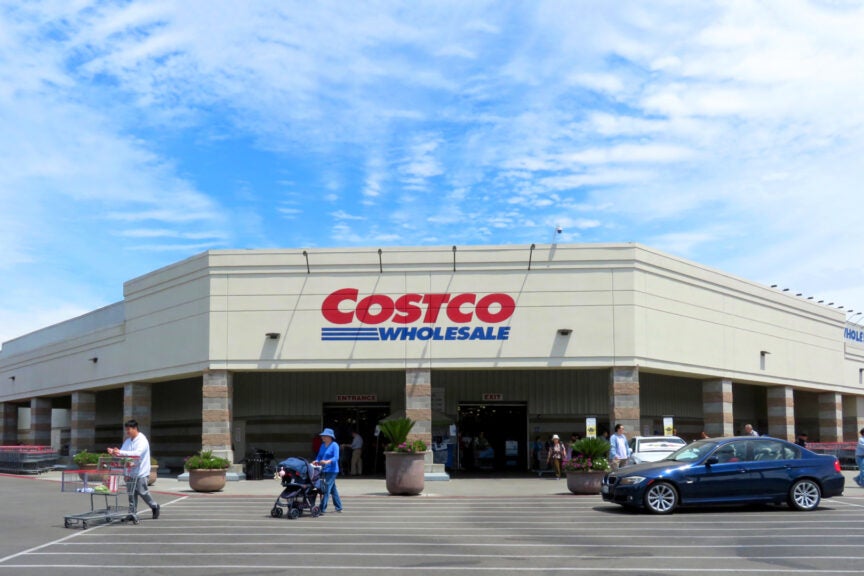
- Membership Revenue Growth: As of Q3 FY2026, Costco boasts 148.5 million cardholders and 82.9 million paid memberships, reflecting a 4.1% increase from last year, with membership income rising 10.7% due to fee hikes, underscoring strong consumer value perception and enhancing competitive positioning in retail.
- New Store Layout Strategy: Costco is adopting nontraditional multi-floor store layouts, particularly in urban areas, which will enable the company to open more locations in space-constrained regions, thereby expanding its market reach and sustaining growth potential.
- Stable Dividend Returns: Although Costco's dividend yield stands at only 0.6%, it has increased its annual dividend for 22 consecutive years since 2004, with a 226% increase over the past decade and a special $15 dividend payout in January 2024, indicating strong long-term return potential.
- Valuation Risk: Currently trading at a price-to-earnings ratio of 46.1, Costco's stock is more expensive than many fast-growing tech stocks; while high valuation does not preclude investment, caution is advised to avoid potential pullback risks, especially given a 13% decline since its all-time high on May 19.
See More
Revenue Trends Analysis for Target and Costco
- Target Quarterly Revenue: For the quarter ending May 2, 2026, Target reported a net income margin of 3% with revenues of $25.5 billion, indicating stable performance in diverse merchandise sales despite competitive market pressures.
- Costco Membership Growth: Costco's revenue reached $79.7 billion for the quarter ending May 10, 2026, with a gross margin of 13%, as its membership model not only drove sales growth but also contributed an additional $1.4 billion in revenue, further solidifying its market position.
- Seasonal Sales Fluctuations: Target's sales spikes in Q1 are primarily driven by the holiday shopping season, while Costco experiences peaks in the summer months of Q3, highlighting significant differences in their sales models that impact their revenue structures.
- Importance of Revenue for Investors: Retail revenue serves as a critical metric for assessing company size and growth potential, and the revenue trends of Target and Costco reveal their differing business models, which investors must consider for informed investment decisions.
See More
Target Unveils Trendy Back-to-School Collections
- New Product Launch: Target is introducing over 50% new items for the 2026 back-to-school season, including apparel, school supplies, and dorm decor, aimed at attracting students and families while reinforcing its position as a destination for style and design.
- Brand Partnership Expansion: Exclusive collaborations with brands like LoveShackFancy feature collections priced mostly under $25, catering to teens' fashion needs and enhancing Target's competitive edge in the market.
- Promotional Offers: Target Circle members can enjoy discounts of up to 45%, with teachers and college students receiving an additional 20% off storewide from July 5 to September 12, increasing customer shopping appeal.
- Personalized Experience: Target enhances customer shopping experiences in-store and online through expanded personalization options and AI recommendations, helping students and teachers discover essentials and further boosting brand loyalty.
See More
Walmart vs. Target: Competitive Analysis
- Market Positioning: Walmart, with a market cap of approximately $921.4 billion, focuses on value retail, while Target, valued at around $63.4 billion, emphasizes a style-led shopping experience, highlighting significant strategic differences between the two.
- Profitability Enhancement: Walmart is steadily improving its profit mix through higher-margin businesses such as advertising, third-party marketplaces, and membership services, which are expected to deepen customer engagement and support long-term margin expansion.
- Technological Investment Advantage: Walmart's investments in automation and artificial intelligence are enhancing productivity and customer experience, which should further strengthen its omnichannel model and support future market expansion.
- Competitive Assessment: Despite facing inflation and cost pressures, Walmart demonstrates stronger defensive and growth potential due to its robust grocery business and diversified revenue streams, while Target's turnaround efforts are still in the early stages.
See More
Memory Chip Shortage Drives Up Consumer Electronics Prices
- Surging Memory Prices: The skyrocketing prices of memory chips, driven by massive demand for AI data centers, are projected to reduce global personal computer shipments by 10.4% and smartphone shipments by 8.4% in 2026, directly impacting costs for retailers and consumers alike.
- Apple's Price Increase Strategy: Apple announced price hikes for MacBooks and iPads to offset rising memory costs, indicating the company is facing unprecedented challenges, with potential for further price increases in the future.
- Best Buy's Market Expectations: Best Buy's new CEO stated that the computing division is expected to be most affected by price hikes, although increased inventory in Q1 helps mitigate short-term pressure, long-term price increases are inevitable.
- Shifts in Consumer Behavior: Analysts suggest that consumers may extend device upgrade cycles due to rising prices, leading to fundamental changes in upgrade patterns for products like smartphones, necessitating retailers to collaborate with suppliers to alleviate impacts on consumers.
See More
Costco Maintains Strong Membership Retention Rates Amid Fee Increases
- Membership Growth and Revenue Increase: As of Q3 FY2026, Costco's paid membership reached 82.9 million, a 4.1% increase year-over-year, with membership income rising by 10.7%, indicating strong consumer recognition of its value proposition and enhancing its competitive position in the retail market.
- Unique Store Layouts: Costco is embracing nontraditional store setups that integrate multifloor stores with high-rise buildings, which will expand its total addressable market, especially in larger cities, thereby enhancing future growth potential.
- Dividend Policy and Returns: Since initiating dividends in 2004, Costco has increased its annual dividend for 22 consecutive years, with a 226% increase over the past decade, including a one-off $15 special dividend in January 2024, which enhances its appeal to investors seeking returns.
- Valuation Risks: Despite Costco's stock rising 145% over the past five years, its current P/E ratio stands at 46.1, surpassing many fast-growing tech stocks, prompting investors to carefully consider the potential pullback risks associated with high valuations.
See More
Costco's Investment Potential and Risks
- Membership Revenue Growth: As of Q3 FY2026, Costco boasts 148.5 million cardholders and 82.9 million paid memberships, reflecting a 4.1% increase from last year, with membership income rising 10.7% due to fee hikes, underscoring strong consumer value perception and enhancing competitive positioning in retail.
- New Store Layout Strategy: Costco is adopting nontraditional multi-floor store layouts, particularly in urban areas, which will enable the company to open more locations in space-constrained regions, thereby expanding its market reach and sustaining growth potential.
- Stable Dividend Returns: Although Costco's dividend yield stands at only 0.6%, it has increased its annual dividend for 22 consecutive years since 2004, with a 226% increase over the past decade and a special $15 dividend payout in January 2024, indicating strong long-term return potential.
- Valuation Risk: Currently trading at a price-to-earnings ratio of 46.1, Costco's stock is more expensive than many fast-growing tech stocks; while high valuation does not preclude investment, caution is advised to avoid potential pullback risks, especially given a 13% decline since its all-time high on May 19.
See More
Revenue Trends Analysis for Target and Costco
- Target Quarterly Revenue: For the quarter ending May 2, 2026, Target reported a net income margin of 3% with revenues of $25.5 billion, indicating stable performance in diverse merchandise sales despite competitive market pressures.
- Costco Membership Growth: Costco's revenue reached $79.7 billion for the quarter ending May 10, 2026, with a gross margin of 13%, as its membership model not only drove sales growth but also contributed an additional $1.4 billion in revenue, further solidifying its market position.
- Seasonal Sales Fluctuations: Target's sales spikes in Q1 are primarily driven by the holiday shopping season, while Costco experiences peaks in the summer months of Q3, highlighting significant differences in their sales models that impact their revenue structures.
- Importance of Revenue for Investors: Retail revenue serves as a critical metric for assessing company size and growth potential, and the revenue trends of Target and Costco reveal their differing business models, which investors must consider for informed investment decisions.
See More