U.S. Stocks Rebound Led by Tech Sector Amid De-escalation of U.S.-Iran Tensions
Written by Emily J. Thompson, Senior Investment Analyst
Updated: 3 days ago
0mins

Source: Fool
- Market Rebound: The S&P 500 rose 1.75% to 7,394.30, and the Nasdaq Composite jumped 2.54% to 25,809.66, reflecting a significant improvement in market sentiment due to easing U.S.-Iran tensions.
- Tech Sector Recovery: Memory stocks surged, with Micron Technology bouncing nearly 12% and Sandisk gaining 14%, while Intel rose 10% following an analyst upgrade, indicating a resurgence of confidence in tech stocks.
- Inflation Data Impact: Despite the Producer Price Index (PPI) rising 1.1% in May, bringing the annual rate to 6.5%, investor enthusiasm remained undeterred, showcasing optimism about economic recovery.
- SpaceX IPO Spotlight: SpaceX announced plans to sell 555.6 million shares at $135 each, raising $75 billion and achieving a valuation of $1.77 trillion, expected to be a record-breaking IPO that may lead investors to reassess their positions in other megacap tech stocks.
Trade with 70% Backtested Accuracy
Stop guessing "Should I Buy NVDA?" and start using high-conviction signals backed by rigorous historical data.
Sign up today to access powerful investing tools and make smarter, data-driven decisions.
Analyst Views on NVDA
Wall Street analysts forecast NVDA stock price to rise
41 Analyst Rating
39 Buy
1 Hold
1 Sell
Strong Buy
Current: 204.870

Low
200.00
Averages
264.97
High
352.00
Current: 204.870
Low
200.00
Averages
264.97
High
352.00
About NVDA
NVIDIA Corporation is an artificial intelligence (AI) infrastructure company. The Company is engaged in accelerated computing to help solve the challenging computational problems. Its segments include Compute & Networking and Graphics. The Compute & Networking segment includes its Data Center accelerated computing and networking platforms and AI solutions and software, and automotive platforms and autonomous and electric vehicle solutions, including software. The Graphics segment includes GeForce GPUs for gaming and personal computers (PCs), and Quadro/NVIDIA RTX GPUs for enterprise workstation graphics. Its technology stack includes the foundational NVIDIA CUDA development platform that runs on all NVIDIA GPUs, as well as hundreds of domain-specific software libraries, frameworks, algorithms, software development kits (SDKs), and application programming interfaces (APIs). Its platforms address four markets, which include Data Center, Gaming, Professional Visualization, and Automotive.
About the author

Emily J. Thompson
Emily J. Thompson, a Chartered Financial Analyst (CFA) with 12 years in investment research, graduated with honors from the Wharton School. Specializing in industrial and technology stocks, she provides in-depth analysis for Intellectia’s earnings and market brief reports.
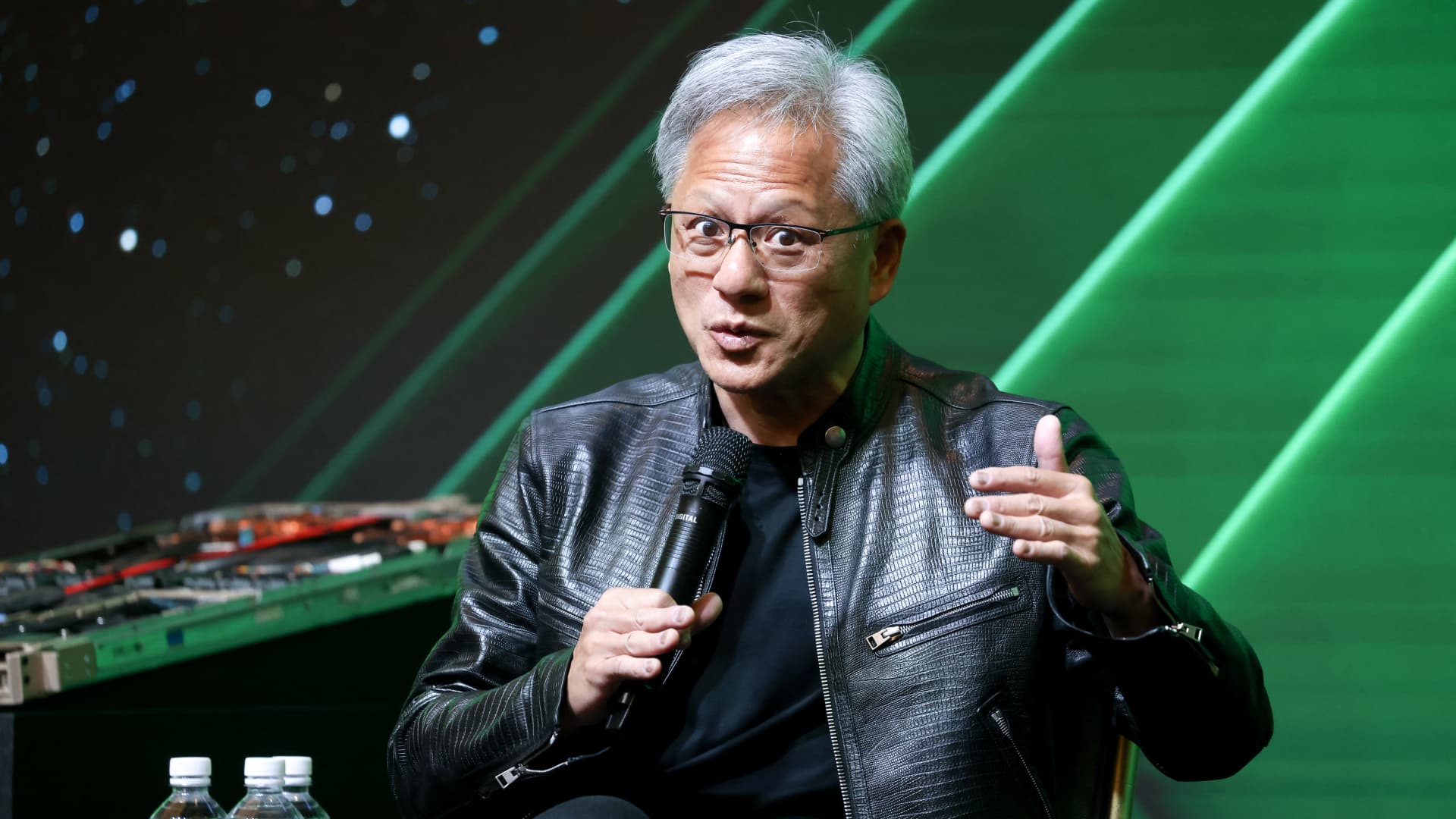
NVIDIA Reports $81.6B Q1 Revenue, Data Center Networking Up 199%

- Significant Revenue Growth: NVIDIA's Q1 revenue reached $81.6 billion, an 85% year-over-year increase, with Data Center Networking revenue hitting $14.8 billion, up 199%, demonstrating strong customer demand for complete platform ecosystems and further solidifying the company's market leadership.
- Performance Boost from Software: CFO Colette Kress noted that software optimizations have improved Hopper's inference performance by 4x over two years, and Blackwell's performance increased by 1.5x in just the last month, creating switching costs that enhance customer loyalty and retention.
- Clear Platform Lock-In: NVIDIA's total supply commitments now stand at $119 billion, with cloud service commitments expanding to $30 billion, all signed before chips even exist, providing substantial evidence of platform lock-in and showcasing customer reliance on NVIDIA's ecosystem.
- Increased Shareholder Returns: The board raised the dividend from $0.01 to $0.25 per share and authorized an additional $80 billion buyback program, reflecting strong cash flow and profitability while signaling confidence in future growth prospects.
See More
Nvidia's AI Chip Demand Soars Amid Growth
- Strong Financial Performance: Nvidia's fiscal Q1 2027 revenue surged 85% year-over-year to $81.6 billion, exceeding market expectations, particularly driven by a 92% increase in data center revenue, underscoring its dominant position in the AI sector.
- Optimistic Future Outlook: Management anticipates approximately $1 trillion in revenue from current and next-gen chips between 2025 and 2027, doubling from last year, reflecting strong confidence in AI demand, despite projecting zero revenue from the Chinese market.
- Substantial Shareholder Returns: Nvidia achieved a gross margin of nearly 75% last quarter and returned about $20 billion to shareholders while authorizing an additional $80 billion in stock buybacks, demonstrating robust cash flow and commitment to shareholders.
- Market Risks to Watch: Despite strong performance, Nvidia's price-to-earnings ratio of about 31 is slightly above market average, and it faces risks from the Chinese market and potential competition from major customers who are also developing their own chips, necessitating caution from investors.
See More

SpaceX IPO Shows Tremendous Potential


- Successful SpaceX IPO: SpaceX's IPO was executed at a fixed price, with underwriters Goldman Sachs and Morgan Stanley ensuring nearly all investors profited, reflecting strong market confidence in its future growth potential.
- Substantial Contract Revenue: SpaceX has lucrative contracts with Google worth $920 million per month and Anthropic at $1.25 billion monthly, indicating its dominant position in the compute rental market and significant profitability.
- Starlink User Growth: With 12 million subscribers, Starlink is poised to attract more users if it can rapidly manufacture satellites and expand coverage, potentially threatening services like Netflix and further increasing its market share.
- Optimistic Future Outlook: As SpaceX's divisions continue to evolve, market sentiment remains bullish, especially with the potential inclusion in the Nasdaq 100, which could attract more capital inflows and drive stock prices higher.
See More
Tech Giants Commit $700 Billion to Capital Expenditures

- Capital Expenditure Surge: Microsoft, Amazon, Alphabet, Meta, and Oracle have committed to nearly $700 billion in capital expenditures for 2026, representing an 81% increase from the previous year, which will significantly enhance their competitiveness in the semiconductor market.
- ETF Competitive Landscape: The VanEck Semiconductor ETF (SMH), iShares Semiconductor ETF (SOXX), and Invesco PHLX Semiconductor ETF (SOXQ) share similar holdings, but differ in cost and concentration, with SMH outperforming the other two.
- Portfolio Analysis: SMH's top five holdings include Nvidia at 15.55% and TSMC at 9.78%, both of which are expected to be major capital expenditure spenders, likely driving long-term growth for the ETF.
- Cost vs. Performance: While the iShares Semiconductor ETF has nearly double the expense ratio of the Invesco PHLX Semiconductor ETF, its more balanced portfolio may provide better protection during market volatility, suggesting investors should choose ETFs based on their risk tolerance.
See More

Three AI Stocks Continue to Outperform the Market


- TSMC Market Dominance: Taiwan Semiconductor Manufacturing, the world's leading semiconductor manufacturer, produces about 70% of processors and nearly 90% of advanced processors, with projections indicating a $1.5 trillion global chip market by 2030, driven by AI processor demand that boosted its sales by 32% to $121 billion in 2025, further solidifying its market position.
- Google AI Service Growth: Alphabet's Gemini AI model has doubled its user base to over 900 million in the past year, contributing to a 63% increase in Google Cloud sales to $20 billion in Q1, showcasing the extensive application of AI services and future revenue potential, with plans to gradually raise prices and introduce new features to enhance earnings.
- Nvidia's Market Share: Nvidia commands 86% of the AI data center revenue market, and despite rising competition, its latest quarter saw an 85% revenue increase to nearly $82 billion, with diluted earnings soaring 140% to $1.87 per share, reflecting its strong performance in the AI processor sector and relatively low price-to-earnings ratio.
- Future Demand Outlook: As the robotics and autonomy sectors expand, Nvidia anticipates a significant increase in demand for its high-end processors, with RBC analysts predicting the robotics industry could reach $9 trillion by 2050, further enhancing Nvidia's appeal as a long-term AI investment.
See More
TSMC's Sustained Advantage in the AI Market
- Market Leadership: Taiwan Semiconductor Manufacturing (TSMC) is the world's leading semiconductor manufacturer, producing about 70% of processors and nearly 90% of advanced processors, with projections indicating that the global chip market will reach $1.5 trillion by 2030, driven primarily by AI processor demand, which will further boost the company's sales.
- Alphabet's AI Progress: Alphabet's Gemini AI model has seen its user base double over the past year to over 900 million users, with Google Cloud sales attributed to AI services growing 63% to $20 billion in the first quarter, showcasing its strong growth potential in the AI sector.
- Nvidia's Market Share: Despite rising competition, Nvidia maintains an 86% share of the AI data center revenue market, with revenue increasing by 85% to nearly $82 billion in the most recent quarter, demonstrating its ongoing leadership and profitability in the AI processor space.
- Future Demand Outlook: As the robotics and autonomy sectors expand, Nvidia anticipates a significant increase in demand for high-end processors, with RBC analysts predicting the robotics industry could be worth $9 trillion by 2050, further solidifying Nvidia's long-term investment appeal.
See More
NVIDIA Reports $81.6B Q1 Revenue, Data Center Networking Up 199%
- Significant Revenue Growth: NVIDIA's Q1 revenue reached $81.6 billion, an 85% year-over-year increase, with Data Center Networking revenue hitting $14.8 billion, up 199%, demonstrating strong customer demand for complete platform ecosystems and further solidifying the company's market leadership.
- Performance Boost from Software: CFO Colette Kress noted that software optimizations have improved Hopper's inference performance by 4x over two years, and Blackwell's performance increased by 1.5x in just the last month, creating switching costs that enhance customer loyalty and retention.
- Clear Platform Lock-In: NVIDIA's total supply commitments now stand at $119 billion, with cloud service commitments expanding to $30 billion, all signed before chips even exist, providing substantial evidence of platform lock-in and showcasing customer reliance on NVIDIA's ecosystem.
- Increased Shareholder Returns: The board raised the dividend from $0.01 to $0.25 per share and authorized an additional $80 billion buyback program, reflecting strong cash flow and profitability while signaling confidence in future growth prospects.
See More
Nvidia's AI Chip Demand Soars Amid Growth
- Strong Financial Performance: Nvidia's fiscal Q1 2027 revenue surged 85% year-over-year to $81.6 billion, exceeding market expectations, particularly driven by a 92% increase in data center revenue, underscoring its dominant position in the AI sector.
- Optimistic Future Outlook: Management anticipates approximately $1 trillion in revenue from current and next-gen chips between 2025 and 2027, doubling from last year, reflecting strong confidence in AI demand, despite projecting zero revenue from the Chinese market.
- Substantial Shareholder Returns: Nvidia achieved a gross margin of nearly 75% last quarter and returned about $20 billion to shareholders while authorizing an additional $80 billion in stock buybacks, demonstrating robust cash flow and commitment to shareholders.
- Market Risks to Watch: Despite strong performance, Nvidia's price-to-earnings ratio of about 31 is slightly above market average, and it faces risks from the Chinese market and potential competition from major customers who are also developing their own chips, necessitating caution from investors.
See More
SpaceX IPO Shows Tremendous Potential
- Successful SpaceX IPO: SpaceX's IPO was executed at a fixed price, with underwriters Goldman Sachs and Morgan Stanley ensuring nearly all investors profited, reflecting strong market confidence in its future growth potential.
- Substantial Contract Revenue: SpaceX has lucrative contracts with Google worth $920 million per month and Anthropic at $1.25 billion monthly, indicating its dominant position in the compute rental market and significant profitability.
- Starlink User Growth: With 12 million subscribers, Starlink is poised to attract more users if it can rapidly manufacture satellites and expand coverage, potentially threatening services like Netflix and further increasing its market share.
- Optimistic Future Outlook: As SpaceX's divisions continue to evolve, market sentiment remains bullish, especially with the potential inclusion in the Nasdaq 100, which could attract more capital inflows and drive stock prices higher.
See More
Tech Giants Commit $700 Billion to Capital Expenditures
- Capital Expenditure Surge: Microsoft, Amazon, Alphabet, Meta, and Oracle have committed to nearly $700 billion in capital expenditures for 2026, representing an 81% increase from the previous year, which will significantly enhance their competitiveness in the semiconductor market.
- ETF Competitive Landscape: The VanEck Semiconductor ETF (SMH), iShares Semiconductor ETF (SOXX), and Invesco PHLX Semiconductor ETF (SOXQ) share similar holdings, but differ in cost and concentration, with SMH outperforming the other two.
- Portfolio Analysis: SMH's top five holdings include Nvidia at 15.55% and TSMC at 9.78%, both of which are expected to be major capital expenditure spenders, likely driving long-term growth for the ETF.
- Cost vs. Performance: While the iShares Semiconductor ETF has nearly double the expense ratio of the Invesco PHLX Semiconductor ETF, its more balanced portfolio may provide better protection during market volatility, suggesting investors should choose ETFs based on their risk tolerance.
See More
Three AI Stocks Continue to Outperform the Market
- TSMC Market Dominance: Taiwan Semiconductor Manufacturing, the world's leading semiconductor manufacturer, produces about 70% of processors and nearly 90% of advanced processors, with projections indicating a $1.5 trillion global chip market by 2030, driven by AI processor demand that boosted its sales by 32% to $121 billion in 2025, further solidifying its market position.
- Google AI Service Growth: Alphabet's Gemini AI model has doubled its user base to over 900 million in the past year, contributing to a 63% increase in Google Cloud sales to $20 billion in Q1, showcasing the extensive application of AI services and future revenue potential, with plans to gradually raise prices and introduce new features to enhance earnings.
- Nvidia's Market Share: Nvidia commands 86% of the AI data center revenue market, and despite rising competition, its latest quarter saw an 85% revenue increase to nearly $82 billion, with diluted earnings soaring 140% to $1.87 per share, reflecting its strong performance in the AI processor sector and relatively low price-to-earnings ratio.
- Future Demand Outlook: As the robotics and autonomy sectors expand, Nvidia anticipates a significant increase in demand for its high-end processors, with RBC analysts predicting the robotics industry could reach $9 trillion by 2050, further enhancing Nvidia's appeal as a long-term AI investment.
See More
TSMC's Sustained Advantage in the AI Market
- Market Leadership: Taiwan Semiconductor Manufacturing (TSMC) is the world's leading semiconductor manufacturer, producing about 70% of processors and nearly 90% of advanced processors, with projections indicating that the global chip market will reach $1.5 trillion by 2030, driven primarily by AI processor demand, which will further boost the company's sales.
- Alphabet's AI Progress: Alphabet's Gemini AI model has seen its user base double over the past year to over 900 million users, with Google Cloud sales attributed to AI services growing 63% to $20 billion in the first quarter, showcasing its strong growth potential in the AI sector.
- Nvidia's Market Share: Despite rising competition, Nvidia maintains an 86% share of the AI data center revenue market, with revenue increasing by 85% to nearly $82 billion in the most recent quarter, demonstrating its ongoing leadership and profitability in the AI processor space.
- Future Demand Outlook: As the robotics and autonomy sectors expand, Nvidia anticipates a significant increase in demand for high-end processors, with RBC analysts predicting the robotics industry could be worth $9 trillion by 2050, further solidifying Nvidia's long-term investment appeal.
See More