Uber to Invest $1.25 Billion in Rivian for Robotaxi Deployment
Written by Emily J. Thompson, Senior Investment Analyst
Updated: 1 hour ago
0mins

Should l Buy RIVN?
Source: Newsfilter
- Massive Investment: Uber announced plans to invest up to $1.25 billion in electric vehicle maker Rivian to deploy up to 50,000 robotaxis, which is expected to significantly drive growth in the future mobility market.
- Initial Investment Launch: Following the signing of the deal, Uber is expected to make an initial investment of $300 million, subject to regulatory approval, which will support the production of Rivian's R2 electric vehicle set to launch this spring.
- Broad Market Outlook: This partnership marks a strategic shift for Uber in the robotaxi sector, with R2 robotaxis expected to be exclusively available through Uber's platform in 25 cities across the U.S., Canada, and Europe, with San Francisco and Miami slated to be the first cities in 2028.
- Technological Integration Advantage: Uber's CEO stated that Rivian's vertically integrated design and data-driven business model will provide confidence in achieving ambitious targets, especially with support from advancements in artificial intelligence and cutting-edge semiconductor technology, which are expected to rapidly enhance Rivian's autonomous driving capabilities.
Trade with 70% Backtested Accuracy
Stop guessing "Should I Buy RIVN?" and start using high-conviction signals backed by rigorous historical data.
Sign up today to access powerful investing tools and make smarter, data-driven decisions.
Analyst Views on RIVN
Wall Street analysts forecast RIVN stock price to rise
18 Analyst Rating
8 Buy
7 Hold
3 Sell
Moderate Buy
Current: 15.530

Low
10.00
Averages
17.78
High
25.00
Current: 15.530
Low
10.00
Averages
17.78
High
25.00
About RIVN
Rivian Automotive, Inc. is an automotive manufacturer, which is engaged in developing and building category-defining electric vehicles (EVs) and accessories, as well as software and services that address the entire lifecycle of the vehicle. The Company’s R1 platform consists of two vehicles: the R1T, a two-row five-passenger pickup truck, and the R1S, a three-row seven-passenger sport utility vehicle (SUV). In the commercial market, the Company offers a Rivian Commercial Vehicle (RCV) platform. The vehicle on this platform is the Electric Delivery Van (EDV), designed and engineered by Rivian in collaboration with Amazon. The Company also offers FleetOS, its proprietary, end-to-end centralized fleet management subscription platform. It also offers a variety of services, including vehicle repair and maintenance, financing, insurance, software subscriptions and FleetOS solutions. Its value-added services include vehicle electrical architecture and software development services, and more.
About the author

Emily J. Thompson
Emily J. Thompson, a Chartered Financial Analyst (CFA) with 12 years in investment research, graduated with honors from the Wharton School. Specializing in industrial and technology stocks, she provides in-depth analysis for Intellectia’s earnings and market brief reports.

Rivian's New R2 SUVs Launching at Competitive Prices

- New Model Launch: Rivian plans to launch its new R2 SUVs this year, with prices expected to be lower than the R1 series, starting at $57,990 for the R2 Performance and projected to be as low as $45,000 for the R2 Standard by late next year, aiming to attract a broader customer base.
- Sales Growth Expectations: The company anticipates delivering up to 67,000 electric vehicles by 2026, a significant increase from approximately 42,000 last year, indicating strong sales growth potential despite fierce market competition and challenging economic conditions.
- Financial Challenges: While revenue is expected to grow, Rivian incurred an operating loss of nearly $3.6 billion last year on $5.4 billion in revenue, with razor-thin margins raising concerns about profitability, suggesting that the launch of lower-priced models may not quickly improve financial health.
- Market Risks: Rivian's stock has fallen 23% this year, as investors remain skeptical about its financial improvement potential; although the R2 models could serve as a growth catalyst, the lack of a clear path to profitability keeps investment risks high.
See More

Alibaba's Profit Decline Sparks AI Monetization Push


- Alibaba's Profit Decline: Alibaba reported a staggering 66% drop in net income for the quarter ending December 31, with revenue only increasing by 2%, indicating significant challenges in AI profitability that may drive other companies to accelerate their AI monetization efforts.
- Market Share Battle: Apple defied a 4% contraction in the overall Chinese market by achieving a 23% surge in smartphone sales in the first nine weeks, leveraging government subsidies and aggressive e-commerce discounts to capture market share from competitors, showcasing its supply chain advantages.
- Uber-Rivian Partnership: Uber is committing up to $1.25 billion to Rivian to develop a fleet of 50,000 robotaxis by 2031, with an initial $300 million investment aimed at launching services in San Francisco and Miami, enhancing Uber's hardware integration capabilities.
- Accenture's Growth Challenges: Accenture's bookings grew by 6% in Q2, but only 1% in local currencies, reflecting challenges in the public and health sectors that could impact its overall performance moving forward.
See More
Uber Invests $1.25 Billion in Rivian's Autonomous Robotaxis

- Significant Investment: Uber announced a $1.25 billion investment in Rivian to purchase 10,000 fully autonomous R2 robotaxis, with an option for an additional 40,000, which is expected to significantly boost Rivian's market demand and brand influence.
- Market Expansion Plans: The R2 robotaxis are set to launch exclusively in San Francisco and Miami in 2028, with plans to scale to 25 cities by 2031, providing Rivian with extensive market coverage and potential revenue streams.
- Technological Integration Advantage: Uber CEO Dara Khosrowshahi emphasized that Rivian's vehicle design, compute platform, and software stack's vertical integration, combined with its experience in consumer vehicles and fleet management, makes achieving these ambitious targets feasible, further enhancing Rivian's technological competitiveness.
- Sensor Technology Upgrade: Rivian's third-generation autonomy platform features a multi-modal sensor suite with 11 cameras, 5 radars, and 1 LiDAR, which will enhance its autonomous driving capabilities, ensuring safety and reliability in complex urban environments.
See More
Uber to Invest Up to $1.25 Billion in Rivian for Robotaxis
- Significant Investment: Uber plans to invest up to $1.25 billion in Rivian by 2031, reflecting strong confidence in the electric vehicle market and potentially enhancing Rivian's market valuation and financing capabilities.
- Order Potential: Under the agreement, Uber and its fleet partners will purchase 10,000 fully autonomous R2 robotaxis, with an option to expand orders by up to 40,000 vehicles starting in 2030, significantly boosting Rivian's production demand and market share.
- Market Expansion Plans: Initial launches of the robotaxis are set for 2028 in San Francisco and Miami, with plans to expand to 25 cities across the U.S., Canada, and Europe by 2031, further solidifying Rivian's position in the global electric mobility market.
- Milestone Requirements: Uber's investment is contingent upon Rivian achieving specific autonomous driving milestones by certain dates, which not only sets technological development targets for Rivian but also provides a risk control mechanism for investors.
See More
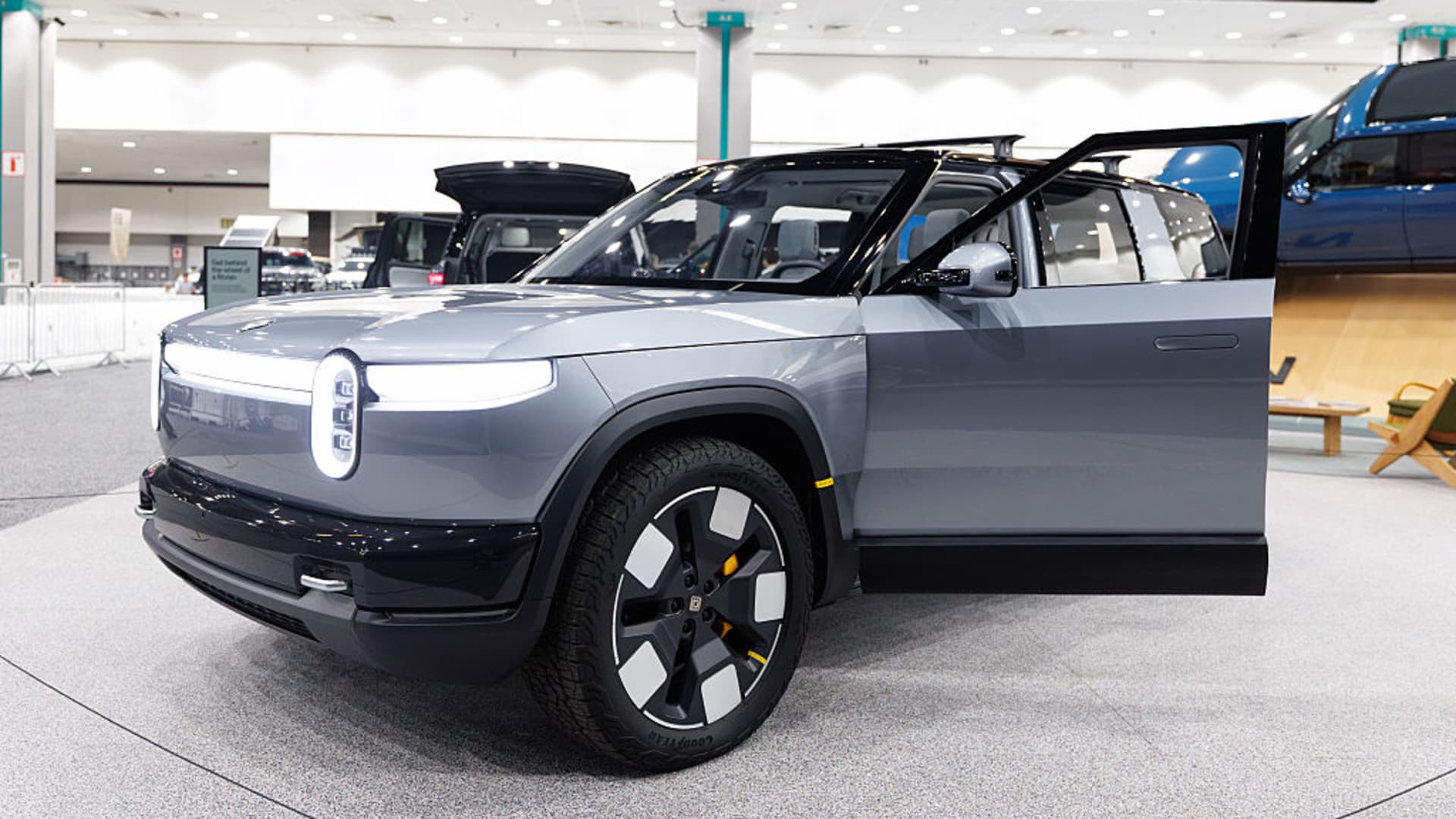
Uber to Invest $1.25 Billion in Rivian for Robotaxi Deployment
- Investment Scale: Uber plans to invest up to $1.25 billion in electric vehicle maker Rivian to support the deployment of up to 50,000 robotaxis across several countries by 2031, demonstrating strong confidence in the future mobility market.
- Order Details: Under the agreement, Uber and its fleet partners will purchase 10,000 autonomous versions of Rivian's upcoming R2 electric vehicle, with an option to buy up to 40,000 more starting in 2030, further solidifying Uber's market position in autonomous driving.
- Market Reaction: Rivian's shares rose approximately 10% following the announcement, while Uber's stock remained relatively flat, reflecting investor optimism about Rivian's growth potential and indicating Uber's strategic positioning in the robotaxi market.
- Technology Integration: Rivian CEO RJ Scaringe emphasized that the combination of artificial intelligence and advanced semiconductor technologies will enable Rivian's R2 and its autonomous driving capabilities to succeed in the robotaxi sector, signaling a significant transformation in future mobility.
See More

Uber to Invest $1.25 Billion in Rivian for Robotaxi Deployment
- Massive Investment: Uber announced plans to invest up to $1.25 billion in electric vehicle maker Rivian to deploy up to 50,000 robotaxis, which is expected to significantly drive growth in the future mobility market.
- Initial Investment Launch: Following the signing of the deal, Uber is expected to make an initial investment of $300 million, subject to regulatory approval, which will support the production of Rivian's R2 electric vehicle set to launch this spring.
- Broad Market Outlook: This partnership marks a strategic shift for Uber in the robotaxi sector, with R2 robotaxis expected to be exclusively available through Uber's platform in 25 cities across the U.S., Canada, and Europe, with San Francisco and Miami slated to be the first cities in 2028.
- Technological Integration Advantage: Uber's CEO stated that Rivian's vertically integrated design and data-driven business model will provide confidence in achieving ambitious targets, especially with support from advancements in artificial intelligence and cutting-edge semiconductor technology, which are expected to rapidly enhance Rivian's autonomous driving capabilities.
See More
Rivian's New R2 SUVs Launching at Competitive Prices
- New Model Launch: Rivian plans to launch its new R2 SUVs this year, with prices expected to be lower than the R1 series, starting at $57,990 for the R2 Performance and projected to be as low as $45,000 for the R2 Standard by late next year, aiming to attract a broader customer base.
- Sales Growth Expectations: The company anticipates delivering up to 67,000 electric vehicles by 2026, a significant increase from approximately 42,000 last year, indicating strong sales growth potential despite fierce market competition and challenging economic conditions.
- Financial Challenges: While revenue is expected to grow, Rivian incurred an operating loss of nearly $3.6 billion last year on $5.4 billion in revenue, with razor-thin margins raising concerns about profitability, suggesting that the launch of lower-priced models may not quickly improve financial health.
- Market Risks: Rivian's stock has fallen 23% this year, as investors remain skeptical about its financial improvement potential; although the R2 models could serve as a growth catalyst, the lack of a clear path to profitability keeps investment risks high.
See More
Alibaba's Profit Decline Sparks AI Monetization Push
- Alibaba's Profit Decline: Alibaba reported a staggering 66% drop in net income for the quarter ending December 31, with revenue only increasing by 2%, indicating significant challenges in AI profitability that may drive other companies to accelerate their AI monetization efforts.
- Market Share Battle: Apple defied a 4% contraction in the overall Chinese market by achieving a 23% surge in smartphone sales in the first nine weeks, leveraging government subsidies and aggressive e-commerce discounts to capture market share from competitors, showcasing its supply chain advantages.
- Uber-Rivian Partnership: Uber is committing up to $1.25 billion to Rivian to develop a fleet of 50,000 robotaxis by 2031, with an initial $300 million investment aimed at launching services in San Francisco and Miami, enhancing Uber's hardware integration capabilities.
- Accenture's Growth Challenges: Accenture's bookings grew by 6% in Q2, but only 1% in local currencies, reflecting challenges in the public and health sectors that could impact its overall performance moving forward.
See More
Uber Invests $1.25 Billion in Rivian's Autonomous Robotaxis
- Significant Investment: Uber announced a $1.25 billion investment in Rivian to purchase 10,000 fully autonomous R2 robotaxis, with an option for an additional 40,000, which is expected to significantly boost Rivian's market demand and brand influence.
- Market Expansion Plans: The R2 robotaxis are set to launch exclusively in San Francisco and Miami in 2028, with plans to scale to 25 cities by 2031, providing Rivian with extensive market coverage and potential revenue streams.
- Technological Integration Advantage: Uber CEO Dara Khosrowshahi emphasized that Rivian's vehicle design, compute platform, and software stack's vertical integration, combined with its experience in consumer vehicles and fleet management, makes achieving these ambitious targets feasible, further enhancing Rivian's technological competitiveness.
- Sensor Technology Upgrade: Rivian's third-generation autonomy platform features a multi-modal sensor suite with 11 cameras, 5 radars, and 1 LiDAR, which will enhance its autonomous driving capabilities, ensuring safety and reliability in complex urban environments.
See More
Uber to Invest Up to $1.25 Billion in Rivian for Robotaxis
- Significant Investment: Uber plans to invest up to $1.25 billion in Rivian by 2031, reflecting strong confidence in the electric vehicle market and potentially enhancing Rivian's market valuation and financing capabilities.
- Order Potential: Under the agreement, Uber and its fleet partners will purchase 10,000 fully autonomous R2 robotaxis, with an option to expand orders by up to 40,000 vehicles starting in 2030, significantly boosting Rivian's production demand and market share.
- Market Expansion Plans: Initial launches of the robotaxis are set for 2028 in San Francisco and Miami, with plans to expand to 25 cities across the U.S., Canada, and Europe by 2031, further solidifying Rivian's position in the global electric mobility market.
- Milestone Requirements: Uber's investment is contingent upon Rivian achieving specific autonomous driving milestones by certain dates, which not only sets technological development targets for Rivian but also provides a risk control mechanism for investors.
See More
Uber to Invest $1.25 Billion in Rivian for Robotaxi Deployment
- Investment Scale: Uber plans to invest up to $1.25 billion in electric vehicle maker Rivian to support the deployment of up to 50,000 robotaxis across several countries by 2031, demonstrating strong confidence in the future mobility market.
- Order Details: Under the agreement, Uber and its fleet partners will purchase 10,000 autonomous versions of Rivian's upcoming R2 electric vehicle, with an option to buy up to 40,000 more starting in 2030, further solidifying Uber's market position in autonomous driving.
- Market Reaction: Rivian's shares rose approximately 10% following the announcement, while Uber's stock remained relatively flat, reflecting investor optimism about Rivian's growth potential and indicating Uber's strategic positioning in the robotaxi market.
- Technology Integration: Rivian CEO RJ Scaringe emphasized that the combination of artificial intelligence and advanced semiconductor technologies will enable Rivian's R2 and its autonomous driving capabilities to succeed in the robotaxi sector, signaling a significant transformation in future mobility.
See More
Uber to Invest $1.25 Billion in Rivian for Robotaxi Deployment
- Massive Investment: Uber announced plans to invest up to $1.25 billion in electric vehicle maker Rivian to deploy up to 50,000 robotaxis, which is expected to significantly drive growth in the future mobility market.
- Initial Investment Launch: Following the signing of the deal, Uber is expected to make an initial investment of $300 million, subject to regulatory approval, which will support the production of Rivian's R2 electric vehicle set to launch this spring.
- Broad Market Outlook: This partnership marks a strategic shift for Uber in the robotaxi sector, with R2 robotaxis expected to be exclusively available through Uber's platform in 25 cities across the U.S., Canada, and Europe, with San Francisco and Miami slated to be the first cities in 2028.
- Technological Integration Advantage: Uber's CEO stated that Rivian's vertically integrated design and data-driven business model will provide confidence in achieving ambitious targets, especially with support from advancements in artificial intelligence and cutting-edge semiconductor technology, which are expected to rapidly enhance Rivian's autonomous driving capabilities.
See More