Trump Says China Will Purchase 200 Boeing Jets


Catch up on the top industries and stocks that were impacted, or were predicted to be impacted, by the comments, actions and policies of President Donald Trump with this daily recap compiled by The Fly.BOEING JETS:In a sit-down interview to be aired in its entirety later on Fox News, President Donald Trumpthat China's President Xi Jinping has committed to purchasing 200 Boeingjets, referring to the planes as "big ones."TRADES IN Q1:President Donald Trump made a bunch of stock and bond purchases with major American companies in Q1, spending tens of millions of dollars or more, Bill Allison of Bloomberg. The transactions were listed in documents filed with the U.S. Office of Government Ethics, which showed the president bought as much as $5M companies including in Nvidia, Oracle, Boeing, Costco. Six of Trump's trades involved Intel, with the administration taking out a 10% stake for $9B. Trump also made investments in Netflix, Paramount, and Warner Bros. Additionally, the president sold some of his stock, including $5M to $25M of his holdings in Microsoft, Meta, and Amazon.TAKEDA SETTLEMENT:The Department of Justice said Takeda Pharmaceuticalshas agreed to pay $13.67M to resolve allegations that it "knowingly caused the submission of false claims to Medicare and other federal health care programs by paying kickbacks to healthcare providers to induce prescriptions of Trintellix, an antidepressant medication that Takeda marketed and sold to treat major depressive disorder." The civil settlement resolves allegations that, from January 2014 to October 2020, Takeda paid improper remuneration to healthcare professionals to induce them to prescribe the antidepressant medication Trintellix in violation of the Anti-Kickback Statute.
Trade with 70% Backtested Accuracy
Analyst Views on BA

About BA
About the author

India Prepares Interim Report on Air India Crash Investigation

- Interim Report Preparation: The Aircraft Accident Investigation Bureau (AAIB) of India is preparing an interim report that is expected to be more comprehensive than the preliminary report released last year, aiming to explore primary causes and contributing factors of the crash to provide more information and support to victims' families.
- Accident Background: On June 12, 2025, an Air India Boeing 787 flight from Ahmedabad to London experienced a fatal accident, resulting in 260 fatalities; the preliminary report indicated that the engine fuel switches flipped almost simultaneously, starving the engines of fuel, highlighting the complexity of the incident.
- Investigation Progress: Due to the complexity of the investigation, the final report will not be ready by the anniversary of the crash, with the AAIB stating that the interim report will be submitted to government authorities, indicating that a thorough analysis of the accident's causes still requires time.
- International Collaboration: The U.S. National Transportation Safety Board (NTSB) is participating in the investigation; while the interim report does not need to be shared in advance, the final report will allow for NTSB comments, reflecting the importance of international cooperation in aviation safety investigations.

Wall Street Trading Week Outlook and Focus


- Salesforce Earnings Outlook: Salesforce is set to report earnings on Wednesday, with market concerns about its AI business still prevalent; analysts expect revenue of $11.05 billion and EPS of $3.12, and strong revenue growth could alleviate worries about slowing growth in its legacy business.
- Costco Membership Renewal Challenges: Costco will report earnings on Thursday, with expected revenue of $69.73 billion and EPS of $4.93; while high oil prices may pressure profit margins, its membership model and bulk selling strategy are likely to attract consumers, especially during periods of rising gas prices.
- Economic Data Focus: The personal consumption expenditures (PCE) price index will be released on Thursday, with a year-over-year increase expected at 3.8% and a core increase of 3.3%, which will influence the Federal Reserve's rate hike decisions, leaving the market uncertain about future rate changes.
- Investor Conference Season: This week marks the start of investor conference season, with Boeing, Johnson & Johnson, and others attending the Bernstein Strategic Decisions Conference, where analyst questions may reveal insights into market perceptions of company futures, making it a key event to watch.
Boeing's Key Challenges for the Next Decade

- Development Cost: Former CEO Dave Calhoun stated that developing the next-generation narrow-body aircraft will cost $50 billion, posing significant challenges for Boeing's funding capabilities, which may require issuing debt or raising equity, thereby impacting financial stability.
- Cash Flow Forecast: According to Wall Street consensus, Boeing is expected to generate over $10 billion in annual free cash flow by 2028; however, the underperformance of the 737 MAX has led to dual pressures on cash flow and debt, affecting future investment capacity.
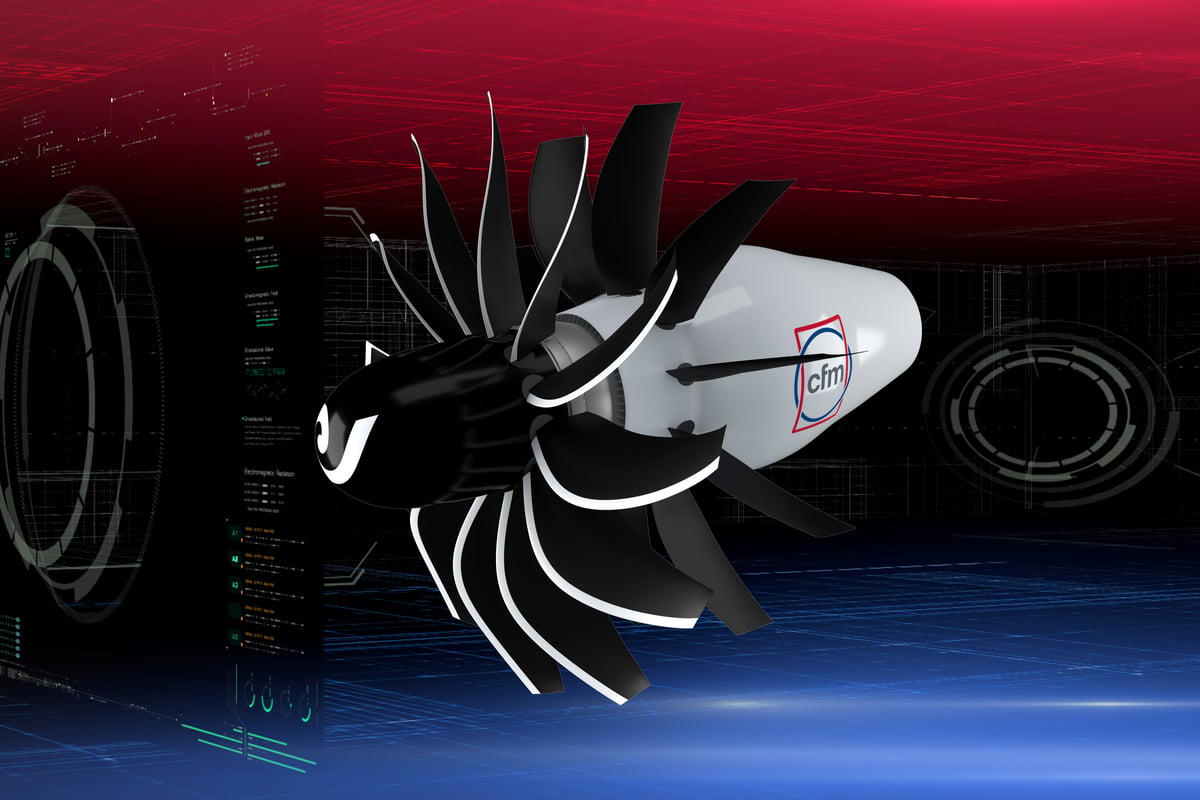
- Engine Choice Impact: Boeing is believed to prefer a ducted engine, while competitor Airbus is testing open-fan engines, which could reduce fuel consumption by 20%, potentially putting Boeing at a competitive disadvantage in terms of efficiency.
- Long-Term Strategic Uncertainty: Boeing's future over the next decade will hinge on its financing approach for the new narrow-body aircraft and engine selection; while the company is almost certain to launch a new model within ten years, investors must carefully assess the associated risks to determine whether to maintain their stock holdings.

Boeing's Future Depends on Next-Gen Narrow-Body Aircraft
- Funding and Engine Choices: Boeing's future hinges on the development of its next-generation narrow-body aircraft, which is projected to cost $50 billion, and how it finances this endeavor will directly impact its financial health and competitive position in the market.
- 737 MAX Cash Flow Issues: Since its delivery in 2017, the 737 MAX has failed to generate the expected cash flow, with high-profile crashes, COVID-19 lockdowns, and quality control issues leading to a forecasted annual free cash flow exceeding $10 billion only by 2028, indicating significant financial pressure on the company.
- Engine Technology Competition: CFM International's open-fan engine could achieve a 20% reduction in fuel consumption, and if Boeing opts for a traditional ducted engine, it risks falling behind Airbus in efficiency, potentially affecting its market share.
- Investor Risk Assessment: The upcoming launch of Boeing's new narrow-body aircraft will be a significant event in the next decade, and investors must carefully evaluate the risks associated with financing and technology choices that will influence the company's long-term development.

Three AI Stocks with Market Dominance


- Broadcom's Market Leadership: Broadcom holds approximately 70% of the custom AI accelerator market, with AI revenue soaring 106% to $8.4 billion in Q1 2026, while total net revenue increased by 29% to $19.3 billion, reflecting its strong performance amid rising AI infrastructure demand.
- Alphabet's Full-Stack Advantage: Alphabet boasts significant dominance across multiple markets, generating $60.4 billion in search revenue in Q1 2026, a 19% year-over-year increase, and its robust financial position with $64.4 billion in free cash flow provides a buffer against future market fluctuations.
- ASML's Unique Technology: ASML commands nearly 100% of the extreme ultraviolet (EUV) lithography market, reporting net sales of €8.8 billion in Q1 2026, and despite a decline from the previous quarter, it raised its full-year sales forecast to between €36 billion and €40 billion, underscoring its critical role in semiconductor production.
- Long-Term Investment Confidence: The competitive moats of Broadcom, Alphabet, and ASML instill investor confidence during market volatility, as historical performance indicates these companies can maintain strong results even in economic downturns.

Long-Term Investment Opportunities in AI Stocks
- Market Leadership: Broadcom holds approximately 70% of the custom AI accelerator market, with AI revenue soaring 106% to $8.4 billion in Q1 2026, demonstrating its strong market position amid rising demand for AI infrastructure.
- Financial Resilience: Alphabet generated $60.4 billion in revenue in Q1 2026, a 19% year-over-year increase, and boasts $64.4 billion in free cash flow, showcasing its financial strength and capacity for sustained investment during market fluctuations.
- Technological Barriers: ASML commands nearly 100% of the extreme ultraviolet (EUV) lithography market, with its latest High NA machines costing over $400 million each, highlighting its irreplaceable role and high technical barriers in semiconductor manufacturing.
- Future Growth Outlook: ASML raised its full-year net sales projection to between €36 billion and €40 billion for 2026, with the midpoint reflecting a 16% increase from 2025, indicating ongoing demand and market potential in high-end chip production.
India Prepares Interim Report on Air India Crash Investigation
- Interim Report Preparation: The Aircraft Accident Investigation Bureau (AAIB) of India is preparing an interim report that is expected to be more comprehensive than the preliminary report released last year, aiming to explore primary causes and contributing factors of the crash to provide more information and support to victims' families.
- Accident Background: On June 12, 2025, an Air India Boeing 787 flight from Ahmedabad to London experienced a fatal accident, resulting in 260 fatalities; the preliminary report indicated that the engine fuel switches flipped almost simultaneously, starving the engines of fuel, highlighting the complexity of the incident.
- Investigation Progress: Due to the complexity of the investigation, the final report will not be ready by the anniversary of the crash, with the AAIB stating that the interim report will be submitted to government authorities, indicating that a thorough analysis of the accident's causes still requires time.
- International Collaboration: The U.S. National Transportation Safety Board (NTSB) is participating in the investigation; while the interim report does not need to be shared in advance, the final report will allow for NTSB comments, reflecting the importance of international cooperation in aviation safety investigations.
Wall Street Trading Week Outlook and Focus
- Salesforce Earnings Outlook: Salesforce is set to report earnings on Wednesday, with market concerns about its AI business still prevalent; analysts expect revenue of $11.05 billion and EPS of $3.12, and strong revenue growth could alleviate worries about slowing growth in its legacy business.
- Costco Membership Renewal Challenges: Costco will report earnings on Thursday, with expected revenue of $69.73 billion and EPS of $4.93; while high oil prices may pressure profit margins, its membership model and bulk selling strategy are likely to attract consumers, especially during periods of rising gas prices.
- Economic Data Focus: The personal consumption expenditures (PCE) price index will be released on Thursday, with a year-over-year increase expected at 3.8% and a core increase of 3.3%, which will influence the Federal Reserve's rate hike decisions, leaving the market uncertain about future rate changes.
- Investor Conference Season: This week marks the start of investor conference season, with Boeing, Johnson & Johnson, and others attending the Bernstein Strategic Decisions Conference, where analyst questions may reveal insights into market perceptions of company futures, making it a key event to watch.
Boeing's Key Challenges for the Next Decade
- Development Cost: Former CEO Dave Calhoun stated that developing the next-generation narrow-body aircraft will cost $50 billion, posing significant challenges for Boeing's funding capabilities, which may require issuing debt or raising equity, thereby impacting financial stability.
- Cash Flow Forecast: According to Wall Street consensus, Boeing is expected to generate over $10 billion in annual free cash flow by 2028; however, the underperformance of the 737 MAX has led to dual pressures on cash flow and debt, affecting future investment capacity.
- Engine Choice Impact: Boeing is believed to prefer a ducted engine, while competitor Airbus is testing open-fan engines, which could reduce fuel consumption by 20%, potentially putting Boeing at a competitive disadvantage in terms of efficiency.
- Long-Term Strategic Uncertainty: Boeing's future over the next decade will hinge on its financing approach for the new narrow-body aircraft and engine selection; while the company is almost certain to launch a new model within ten years, investors must carefully assess the associated risks to determine whether to maintain their stock holdings.
Boeing's Future Depends on Next-Gen Narrow-Body Aircraft
- Funding and Engine Choices: Boeing's future hinges on the development of its next-generation narrow-body aircraft, which is projected to cost $50 billion, and how it finances this endeavor will directly impact its financial health and competitive position in the market.
- 737 MAX Cash Flow Issues: Since its delivery in 2017, the 737 MAX has failed to generate the expected cash flow, with high-profile crashes, COVID-19 lockdowns, and quality control issues leading to a forecasted annual free cash flow exceeding $10 billion only by 2028, indicating significant financial pressure on the company.
- Engine Technology Competition: CFM International's open-fan engine could achieve a 20% reduction in fuel consumption, and if Boeing opts for a traditional ducted engine, it risks falling behind Airbus in efficiency, potentially affecting its market share.
- Investor Risk Assessment: The upcoming launch of Boeing's new narrow-body aircraft will be a significant event in the next decade, and investors must carefully evaluate the risks associated with financing and technology choices that will influence the company's long-term development.
Three AI Stocks with Market Dominance
- Broadcom's Market Leadership: Broadcom holds approximately 70% of the custom AI accelerator market, with AI revenue soaring 106% to $8.4 billion in Q1 2026, while total net revenue increased by 29% to $19.3 billion, reflecting its strong performance amid rising AI infrastructure demand.
- Alphabet's Full-Stack Advantage: Alphabet boasts significant dominance across multiple markets, generating $60.4 billion in search revenue in Q1 2026, a 19% year-over-year increase, and its robust financial position with $64.4 billion in free cash flow provides a buffer against future market fluctuations.
- ASML's Unique Technology: ASML commands nearly 100% of the extreme ultraviolet (EUV) lithography market, reporting net sales of €8.8 billion in Q1 2026, and despite a decline from the previous quarter, it raised its full-year sales forecast to between €36 billion and €40 billion, underscoring its critical role in semiconductor production.
- Long-Term Investment Confidence: The competitive moats of Broadcom, Alphabet, and ASML instill investor confidence during market volatility, as historical performance indicates these companies can maintain strong results even in economic downturns.
Long-Term Investment Opportunities in AI Stocks
- Market Leadership: Broadcom holds approximately 70% of the custom AI accelerator market, with AI revenue soaring 106% to $8.4 billion in Q1 2026, demonstrating its strong market position amid rising demand for AI infrastructure.
- Financial Resilience: Alphabet generated $60.4 billion in revenue in Q1 2026, a 19% year-over-year increase, and boasts $64.4 billion in free cash flow, showcasing its financial strength and capacity for sustained investment during market fluctuations.
- Technological Barriers: ASML commands nearly 100% of the extreme ultraviolet (EUV) lithography market, with its latest High NA machines costing over $400 million each, highlighting its irreplaceable role and high technical barriers in semiconductor manufacturing.
- Future Growth Outlook: ASML raised its full-year net sales projection to between €36 billion and €40 billion for 2026, with the midpoint reflecting a 16% increase from 2025, indicating ongoing demand and market potential in high-end chip production.