Trump Administration Unveils National AI Policy Framework
Written by Emily J. Thompson, Senior Investment Analyst
Updated: Mar 20 2026
0mins

Source: CNBC
- Framework Announcement: On July 23, 2025, the Trump administration unveiled a national policy framework for artificial intelligence in Washington D.C., aiming to establish uniform safety and security measures for emerging technologies while preventing states from enacting their own AI regulations, ensuring nationwide regulatory consistency.
- Six Regulatory Proposals: The framework outlines six key regulatory measures, including implementing child safety rules and standardizing permitting and energy use for AI data centers, designed to enhance the safety of AI products and infrastructure while protecting lawful political expression and dissent rights.
- Congressional Collaboration Plan: The White House aims to work with Congress in the coming months to convert this framework into law, anticipating bipartisan support, although pushing this process faces challenges in a divided Congress, especially with Trump prioritizing other legislative efforts.
- Industry Opposition: AI industry leaders have strongly opposed state-level legislation, arguing that a
Trade with 70% Backtested Accuracy
Stop guessing "Should I Buy AMD?" and start using high-conviction signals backed by rigorous historical data.
Sign up today to access powerful investing tools and make smarter, data-driven decisions.
Analyst Views on AMD
Wall Street analysts forecast AMD stock price to fall
33 Analyst Rating
25 Buy
8 Hold
0 Sell
Strong Buy
Current: 521.540

Low
210.00
Averages
289.13
High
377.00
Current: 521.540
Low
210.00
Averages
289.13
High
377.00
About AMD
Advanced Micro Devices, Inc. is a global semiconductor company. The Company is focused on high-performance computing and artificial intelligence (AI). Its segments include Data Center, Client and Gaming, and Embedded. Data Center segment includes AI accelerators, microprocessors (CPUs) for servers, graphics processing units (GPUs), accelerated processing units (APUs), data processing units (DPUs), Field Programmable Gate Arrays (FPGAs), and Adaptive system-on-Chip (SoC) products for data centers. Client and Gaming segment includes CPUs, APUs, chipsets for desktops and notebooks, discrete GPUs, and semi-custom SoC products and development services. Embedded segment includes embedded CPUs, APUs, FPGAs, system on modules (SOMs), and Adaptive SoC products. It markets and sells its products under the AMD trademark. Its products include AMD EPYC, AMD Ryzen, AMD Ryzen PRO, Virtex UltraScale+, among others.
About the author

Emily J. Thompson
Emily J. Thompson, a Chartered Financial Analyst (CFA) with 12 years in investment research, graduated with honors from the Wharton School. Specializing in industrial and technology stocks, she provides in-depth analysis for Intellectia’s earnings and market brief reports.
AMD Expects 70% Year-over-Year CPU Revenue Growth in Q2

- Revenue Growth Expectation: AMD anticipates a 70% year-over-year increase in CPU revenue for Q2, indicating a significant market share gain in the rapidly growing AI sector, particularly within the agentic AI segment.
- Market Size Expansion: The company has revised its total addressable market (TAM) for data center CPUs from $60 billion to $120 billion, reflecting strong demand expectations driven by AI applications, which underscores the strategic importance of CPUs in this evolving landscape.
- Strengthened Customer Base: With OpenAI and Meta as anchor customers, AMD expects their forecasts for 2027 to exceed original plans, highlighting the company's strategic positioning and leadership in the AI market.
- Strong Stock Performance: AMD shares rose 2% in premarket trading on Wednesday and have climbed over 133% year-to-date, reflecting market optimism regarding its growth potential, particularly with the upcoming launch of the new Helios platform.
See More
Broadcom's Strong Quarterly Results Fail to Boost Stock Price

- Revenue Performance: Broadcom reported $22.19 billion in revenue for Q2 2026, slightly missing the $22.27 billion consensus forecast, with a 48% year-over-year increase, but failed to meet market expectations for higher AI revenue, resulting in a post-market stock decline.
- Profitability Gains: Adjusted earnings per share (EPS) rose 54% to $2.44, surpassing the expected $2.40, while adjusted EBITDA increased 52% to $15.24 billion, indicating strong performance in the AI semiconductor sector.
- AI Business Outlook: Broadcom anticipates AI semiconductor revenues of $56 billion for FY 2026 and a target of at least $100 billion for FY 2027, although market skepticism regarding these targets led to a muted stock response.
- Customer Order Situation: The company secured over $30 billion in AI semiconductor orders this quarter, reflecting robust market demand; however, the infrastructure software segment's revenue fell short of expectations for the second consecutive quarter, impacting overall market reaction.
See More

US Stock Indices Decline Amid Tensions and Economic Data


- Market Retreat: On Wednesday, the S&P 500 index fell by 0.74%, the Dow Jones Industrial Average dropped by 1.21%, and the Nasdaq 100 index decreased by 0.29%, indicating market vulnerability amid escalating US-Iran tensions that negatively impacted investor sentiment.
- Oil Price Surge: WTI crude oil prices rose over 2% to a 1.5-week high following the US interception of Iranian missiles and drones, heightening concerns about Middle Eastern stability and potentially affecting global supply chains and inflation expectations.
- Strong Employment Data: The US May ADP employment change increased by 122,000, surpassing expectations of 120,000, signaling signs of economic recovery that could support the stock market, although overall market performance remains influenced by other factors.
- Divergent Tech Stock Performance: While Marvell Technology rose over 3%, software and cybersecurity stocks faced significant declines, with Datadog and IBM dropping more than 6%, reflecting a lack of confidence in the tech sector despite some positive developments.
See More

Agentic AI Market Poised for Growth

- Surging CPU Demand: The rise of agentic AI is expected to significantly increase demand for data center CPUs, with Nvidia predicting this market could reach $200 billion in the coming years, highlighting strong market potential and investment opportunities.
- AMD's Technological Edge: As a leader in data center CPUs, AMD's new Venice CPU has begun mass production using advanced 2-nanometer technology and features 256 cores, which is expected to further enhance its market share and meet the demands of agentic AI.
- Arm Holdings' Chip Development: Arm Holdings has announced its first foray into designing its own data center CPUs, projecting $25 billion in revenue by 2031, indicating its potential in the rapidly growing market, especially within Nvidia's estimated $200 billion sector.
- Palantir's Software Strength: Palantir Technologies' AI platform is experiencing rapid growth, with its ability to structure data from various sources enabling AI agents to better understand business operations, positioning it to benefit significantly from the rise of agentic AI.
See More

AMD and Arm Poised for Data Center CPU Market Opportunities
- Surging Demand for Data Center CPUs: With the rise of agentic AI, the data center CPU market is projected to reach $200 billion in the coming years, positioning AMD's new Venice CPU to capture further market share and solidify its industry leadership.
- Arm's Market Expansion: For the first time, Arm announced it will design its own data center CPUs, projecting $25 billion in revenue by 2031, a sixfold increase from 2025, highlighting its strong potential in a rapidly growing market.
- Palantir's AI Platform Advantage: Palantir's AI platform (AIP) enhances AI agents' efficiency by structuring data from disparate sources, and with the rapid growth of agentic AI, it is expected to continue strong growth, becoming a key winner in the software sector.
- Increased Demand for High-Performance CPUs: The demand for high-core-count CPUs is rising with agentic AI, and AMD's Venice CPU, featuring 256 cores, is well-positioned to meet this need, likely driving up CPU prices and enhancing the company's overall profitability.
See More
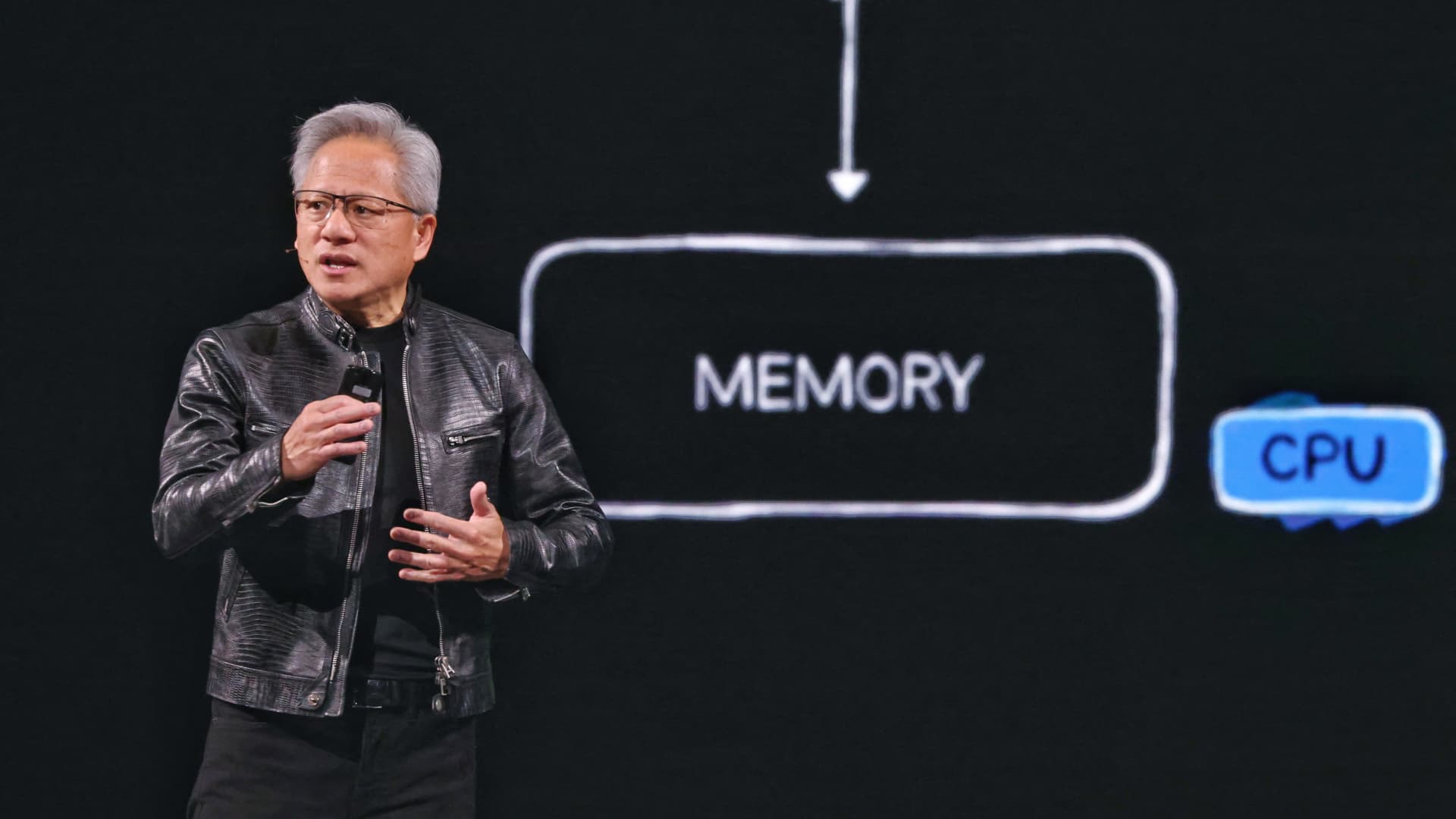
Nvidia's Massive Dividend Boost May Lead Tech Sector Shift


- Massive Dividend Increase: Nvidia's announcement to raise its quarterly dividend from $0.01 to $0.25, a staggering 2400% increase, not only showcases the company's robust cash flow driven by surging demand for AI chips but also sets a precedent that may encourage other major tech firms to adopt similar shareholder return strategies.
- Impact of Buyback Program: Alongside the dividend boost, Nvidia introduced an $80 billion share buyback program, which is expected to further bolster investor confidence and may prompt more tech companies to consider analogous capital return measures, potentially enhancing overall dividend growth in the coming years.
- Tech Sector Dividend Growth Outlook: Analysts predict that the majority of dividend growth in the next five years will stem from tech giants like Nvidia and Amazon, despite most tech stocks currently yielding under 1%; however, as cash flows increase, the pressure for shareholder returns is likely to rise.
- Market Reaction and Expectations: Nvidia's dividend hike triggered an uptick in dividend futures, reflecting market optimism regarding future dividend growth, with analysts suggesting that this could lead more companies to contemplate increasing dividends in the coming months, particularly against a backdrop of normalizing interest rates.
See More
AMD Expects 70% Year-over-Year CPU Revenue Growth in Q2
- Revenue Growth Expectation: AMD anticipates a 70% year-over-year increase in CPU revenue for Q2, indicating a significant market share gain in the rapidly growing AI sector, particularly within the agentic AI segment.
- Market Size Expansion: The company has revised its total addressable market (TAM) for data center CPUs from $60 billion to $120 billion, reflecting strong demand expectations driven by AI applications, which underscores the strategic importance of CPUs in this evolving landscape.
- Strengthened Customer Base: With OpenAI and Meta as anchor customers, AMD expects their forecasts for 2027 to exceed original plans, highlighting the company's strategic positioning and leadership in the AI market.
- Strong Stock Performance: AMD shares rose 2% in premarket trading on Wednesday and have climbed over 133% year-to-date, reflecting market optimism regarding its growth potential, particularly with the upcoming launch of the new Helios platform.
See More
Broadcom's Strong Quarterly Results Fail to Boost Stock Price
- Revenue Performance: Broadcom reported $22.19 billion in revenue for Q2 2026, slightly missing the $22.27 billion consensus forecast, with a 48% year-over-year increase, but failed to meet market expectations for higher AI revenue, resulting in a post-market stock decline.
- Profitability Gains: Adjusted earnings per share (EPS) rose 54% to $2.44, surpassing the expected $2.40, while adjusted EBITDA increased 52% to $15.24 billion, indicating strong performance in the AI semiconductor sector.
- AI Business Outlook: Broadcom anticipates AI semiconductor revenues of $56 billion for FY 2026 and a target of at least $100 billion for FY 2027, although market skepticism regarding these targets led to a muted stock response.
- Customer Order Situation: The company secured over $30 billion in AI semiconductor orders this quarter, reflecting robust market demand; however, the infrastructure software segment's revenue fell short of expectations for the second consecutive quarter, impacting overall market reaction.
See More
US Stock Indices Decline Amid Tensions and Economic Data
- Market Retreat: On Wednesday, the S&P 500 index fell by 0.74%, the Dow Jones Industrial Average dropped by 1.21%, and the Nasdaq 100 index decreased by 0.29%, indicating market vulnerability amid escalating US-Iran tensions that negatively impacted investor sentiment.
- Oil Price Surge: WTI crude oil prices rose over 2% to a 1.5-week high following the US interception of Iranian missiles and drones, heightening concerns about Middle Eastern stability and potentially affecting global supply chains and inflation expectations.
- Strong Employment Data: The US May ADP employment change increased by 122,000, surpassing expectations of 120,000, signaling signs of economic recovery that could support the stock market, although overall market performance remains influenced by other factors.
- Divergent Tech Stock Performance: While Marvell Technology rose over 3%, software and cybersecurity stocks faced significant declines, with Datadog and IBM dropping more than 6%, reflecting a lack of confidence in the tech sector despite some positive developments.
See More
Agentic AI Market Poised for Growth
- Surging CPU Demand: The rise of agentic AI is expected to significantly increase demand for data center CPUs, with Nvidia predicting this market could reach $200 billion in the coming years, highlighting strong market potential and investment opportunities.
- AMD's Technological Edge: As a leader in data center CPUs, AMD's new Venice CPU has begun mass production using advanced 2-nanometer technology and features 256 cores, which is expected to further enhance its market share and meet the demands of agentic AI.
- Arm Holdings' Chip Development: Arm Holdings has announced its first foray into designing its own data center CPUs, projecting $25 billion in revenue by 2031, indicating its potential in the rapidly growing market, especially within Nvidia's estimated $200 billion sector.
- Palantir's Software Strength: Palantir Technologies' AI platform is experiencing rapid growth, with its ability to structure data from various sources enabling AI agents to better understand business operations, positioning it to benefit significantly from the rise of agentic AI.
See More
AMD and Arm Poised for Data Center CPU Market Opportunities
- Surging Demand for Data Center CPUs: With the rise of agentic AI, the data center CPU market is projected to reach $200 billion in the coming years, positioning AMD's new Venice CPU to capture further market share and solidify its industry leadership.
- Arm's Market Expansion: For the first time, Arm announced it will design its own data center CPUs, projecting $25 billion in revenue by 2031, a sixfold increase from 2025, highlighting its strong potential in a rapidly growing market.
- Palantir's AI Platform Advantage: Palantir's AI platform (AIP) enhances AI agents' efficiency by structuring data from disparate sources, and with the rapid growth of agentic AI, it is expected to continue strong growth, becoming a key winner in the software sector.
- Increased Demand for High-Performance CPUs: The demand for high-core-count CPUs is rising with agentic AI, and AMD's Venice CPU, featuring 256 cores, is well-positioned to meet this need, likely driving up CPU prices and enhancing the company's overall profitability.
See More
Nvidia's Massive Dividend Boost May Lead Tech Sector Shift
- Massive Dividend Increase: Nvidia's announcement to raise its quarterly dividend from $0.01 to $0.25, a staggering 2400% increase, not only showcases the company's robust cash flow driven by surging demand for AI chips but also sets a precedent that may encourage other major tech firms to adopt similar shareholder return strategies.
- Impact of Buyback Program: Alongside the dividend boost, Nvidia introduced an $80 billion share buyback program, which is expected to further bolster investor confidence and may prompt more tech companies to consider analogous capital return measures, potentially enhancing overall dividend growth in the coming years.
- Tech Sector Dividend Growth Outlook: Analysts predict that the majority of dividend growth in the next five years will stem from tech giants like Nvidia and Amazon, despite most tech stocks currently yielding under 1%; however, as cash flows increase, the pressure for shareholder returns is likely to rise.
- Market Reaction and Expectations: Nvidia's dividend hike triggered an uptick in dividend futures, reflecting market optimism regarding future dividend growth, with analysts suggesting that this could lead more companies to contemplate increasing dividends in the coming months, particularly against a backdrop of normalizing interest rates.
See More