Three Top Dividend Stocks: PG, O, KO
Written by Emily J. Thompson, Senior Investment Analyst
Updated: 1 day ago
0mins

Source: Fool
- Procter & Gamble Performance: Procter & Gamble achieved a 7% year-over-year sales increase in Q3 2026, generating $4 billion in operating cash flow, showcasing its strong brand influence and marketing capabilities, with plans to pay $10 billion in dividends in 2026, enhancing shareholder value.
- Realty Income Stability: Realty Income reported adjusted funds from operations of $1.08 in Q4 2025, up from $1.05 the previous year, maintaining a 55-year record of monthly dividend payments despite challenges, with a current dividend yield of 5.1%, reflecting its financial resilience.
- Coca-Cola Growth Potential: Coca-Cola experienced a 10% year-over-year organic revenue increase in Q1 2026, with a gross margin of 61.82%, indicating expansion potential in new markets and products, and is expected to pay $8.8 billion in dividends in 2025, solidifying its status as a Dividend King.
- Dividend Investment Appeal: All three companies exhibit strong dividend-paying capabilities, with Procter & Gamble, Realty Income, and Coca-Cola yielding 2.88%, 5.05%, and 2.60% respectively, providing investors with a stable source of passive income, making them suitable for long-term investors.
Trade with 70% Backtested Accuracy
Stop guessing "Should I Buy PG?" and start using high-conviction signals backed by rigorous historical data.
Sign up today to access powerful investing tools and make smarter, data-driven decisions.
Analyst Views on PG
Wall Street analysts forecast PG stock price to rise
17 Analyst Rating
10 Buy
7 Hold
0 Sell
Moderate Buy
Current: 146.060

Low
150.00
Averages
164.50
High
180.00
Current: 146.060
Low
150.00
Averages
164.50
High
180.00
About PG
The Procter & Gamble Company is focused on providing branded consumer packaged goods to consumers across the world. The Company’s segments include Beauty, Grooming, Health Care, Fabric & Home Care and Baby, Feminine & Family Care. The Company’s products are sold in approximately 180 countries and territories primarily through mass merchandisers, e-commerce, including social commerce channels, grocery stores, membership club stores, drug stores, department stores, distributors, wholesalers, specialty beauty stores, including airport duty-free stores), high-frequency stores, pharmacies, electronics stores and professional channels. It also sells direct to individual consumers. It has operations in approximately 70 countries. It offers products under brands, such as Head & Shoulders, Herbal Essences, Pantene, Rejoice, Olay, Old Spice, Safeguard, Secret, SK-II, Braun, Gillette, Venus, Crest, Oral-B, Ariel, Downy, Gain, Tide, Always, Always Discreet, Tampax, Bounty and others.
About the author

Emily J. Thompson
Emily J. Thompson, a Chartered Financial Analyst (CFA) with 12 years in investment research, graduated with honors from the Wharton School. Specializing in industrial and technology stocks, she provides in-depth analysis for Intellectia’s earnings and market brief reports.

Procter & Gamble and Colgate's Market Dominance
- P&G's Brand Penetration: Procter & Gamble's products like Tide and Pampers are deeply integrated into consumers' daily routines, creating strong brand loyalty that ensures consumers return to these brands even under economic pressure, demonstrating long-term market stability.
- Psychological Stickiness Advantage: By encouraging consumers to upgrade within existing brands rather than switch, P&G has successfully increased the profit margins on premium products, with the CFO noting that consumers respond positively to better offerings, indicating that brand loyalty serves as a competitive moat.
- Colgate's Market Leadership: Colgate toothpaste is more ubiquitous than any other brand globally, especially in emerging markets, where its trust has been solidified through professional endorsements; the CEO stated that growth is primarily driven by these markets, showcasing its significant market share and scale advantages.
- Future Growth Potential: Morgan Stanley named Colgate-Palmolive its top consumer sector pick for 2026, and the company gained global toothpaste market share in Q1 2026, indicating that it is not only defending its position but actively expanding, suggesting strong future growth prospects.
See More

Procter & Gamble and Colgate-Palmolive's Market Dominance
- Brand Penetration: Procter & Gamble's products like Tide and Pampers are so embedded in consumers' daily lives that using them in the morning feels automatic, resulting in high brand loyalty that provides a stable revenue stream for the company over the long term.
- Market Expansion Strategy: P&G is actively promoting its brands in emerging markets such as Latin America, Southeast Asia, and Africa, where the rise of the middle class is shifting consumers from generic products to branded essentials, which is expected to drive sustained compound growth for the company.
- Trust and Brand Building: Colgate's toothpaste is arguably the most ubiquitous household product globally, especially in markets like Brazil, India, and China, where the brand has built deep trust through professional endorsements and generational habits, making it nearly impossible for competitors to displace.
- Market Leadership: Colgate gained global toothpaste market share in Q1 2026, indicating that it is not just defending its position but actively expanding; Morgan Stanley named it the top pick in the consumer sector, reflecting its strong competitive edge.
See More

Three Unstoppable Dividend Kings to Buy Now

- Strong Dividend Growth: Johnson & Johnson (JNJ) raised its dividend by 3.1% last month, marking 64 consecutive years of increases, with a current yield of 2.3%, significantly higher than the S&P 500's 1.1%, demonstrating its stability and appeal during economic downturns.
- Robust Cash Flow: Johnson & Johnson generated $20 billion in free cash flow last year, more than covering its $12.4 billion dividend payout, and its ultra-low net debt level underscores its financial health and ability to sustain dividends.
- Long-Term Growth Potential: Procter & Gamble (PG) has paid dividends for 136 consecutive years, recently extending its growth streak to 70 years, with expected operating cash flow of $20 billion this year, sufficient to cover its $10 billion dividend and $5 billion in share repurchases, ensuring stable dividend payments.
- Strategic Investments and Returns: PepsiCo (PEP) delivered a 4% dividend increase this year and plans to return about $8.9 billion in cash to shareholders, showcasing its strong cash flow and strategic investment capabilities, which are expected to support long-term revenue growth and dividend increases.
See More

Three Top Dividend Stocks: PG, O, KO

- Procter & Gamble Performance: Procter & Gamble achieved a 7% year-over-year sales increase in Q3 2026, generating $4 billion in operating cash flow, showcasing its strong brand influence and marketing capabilities, with plans to pay $10 billion in dividends in 2026, enhancing shareholder value.
- Realty Income Stability: Realty Income reported adjusted funds from operations of $1.08 in Q4 2025, up from $1.05 the previous year, maintaining a 55-year record of monthly dividend payments despite challenges, with a current dividend yield of 5.1%, reflecting its financial resilience.
- Coca-Cola Growth Potential: Coca-Cola experienced a 10% year-over-year organic revenue increase in Q1 2026, with a gross margin of 61.82%, indicating expansion potential in new markets and products, and is expected to pay $8.8 billion in dividends in 2025, solidifying its status as a Dividend King.
- Dividend Investment Appeal: All three companies exhibit strong dividend-paying capabilities, with Procter & Gamble, Realty Income, and Coca-Cola yielding 2.88%, 5.05%, and 2.60% respectively, providing investors with a stable source of passive income, making them suitable for long-term investors.
See More

Procter & Gamble Marks 70 Years of Dividend Increases
- Procter & Gamble's Strong Performance: Procter & Gamble achieved a 7% year-over-year sales increase in Q3 2026, with operating cash flow reaching $4 billion, demonstrating robust performance in the consumer goods market and enhancing shareholder value through sustained cash flow.
- Resilience of Realty Income: Realty Income reported adjusted funds from operations of $1.08 in Q4 2025, up from $1.05 the previous year, indicating stability in a challenging real estate environment, while its 5.1% monthly dividend yield attracts numerous investors.
- Coca-Cola's Market Leadership: Coca-Cola experienced a 10% organic revenue growth in Q1 2026, with a comparable operating margin of 34.5%, showcasing strong profitability, and is expected to raise its dividend to $9.2 billion in 2026, further solidifying its status as a
See More
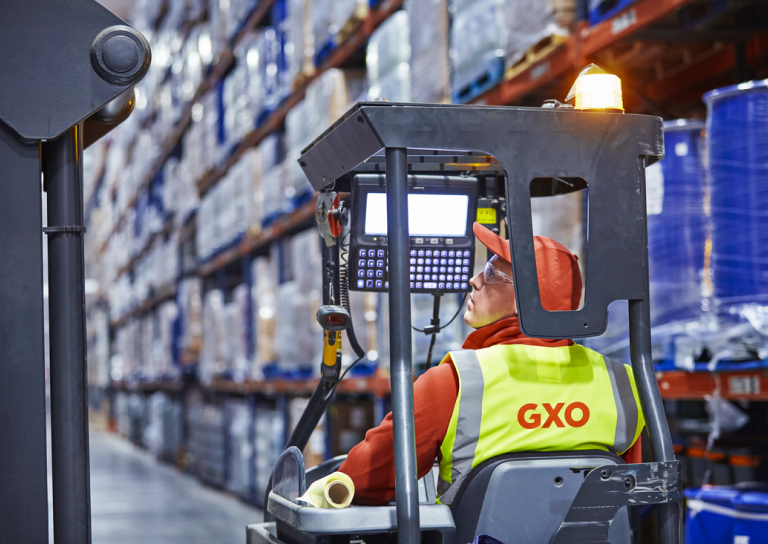
Amazon's New Logistics Service Shakes Market

- Market Reaction: Amazon's announcement to open its logistics infrastructure to external companies caused GXO Logistics' stock to plummet by 18%, indicating investor panic over Amazon's market entry, although GXO's CEO views this reaction as excessive.
- Financial Performance Exceeds Expectations: GXO reported first-quarter revenue of $3.3 billion, a 10.8% increase that surpassed market expectations of $3.22 billion, demonstrating strong performance in key sectors like aerospace and life sciences.
- Profitability Improvement: Adjusted earnings per share for GXO rose from $0.29 to $0.50, reflecting robust growth in strategic verticals such as technology and life sciences, with a 35% increase in the new business pipeline.
- Optimistic Outlook: GXO modestly raised its full-year guidance for adjusted EBITDA and earnings per share, expecting EBITDA between $935 million and $975 million, showcasing confidence in future growth, particularly in organic opportunities in North America.
See More
Procter & Gamble and Colgate's Market Dominance
- P&G's Brand Penetration: Procter & Gamble's products like Tide and Pampers are deeply integrated into consumers' daily routines, creating strong brand loyalty that ensures consumers return to these brands even under economic pressure, demonstrating long-term market stability.
- Psychological Stickiness Advantage: By encouraging consumers to upgrade within existing brands rather than switch, P&G has successfully increased the profit margins on premium products, with the CFO noting that consumers respond positively to better offerings, indicating that brand loyalty serves as a competitive moat.
- Colgate's Market Leadership: Colgate toothpaste is more ubiquitous than any other brand globally, especially in emerging markets, where its trust has been solidified through professional endorsements; the CEO stated that growth is primarily driven by these markets, showcasing its significant market share and scale advantages.
- Future Growth Potential: Morgan Stanley named Colgate-Palmolive its top consumer sector pick for 2026, and the company gained global toothpaste market share in Q1 2026, indicating that it is not only defending its position but actively expanding, suggesting strong future growth prospects.
See More
Procter & Gamble and Colgate-Palmolive's Market Dominance
- Brand Penetration: Procter & Gamble's products like Tide and Pampers are so embedded in consumers' daily lives that using them in the morning feels automatic, resulting in high brand loyalty that provides a stable revenue stream for the company over the long term.
- Market Expansion Strategy: P&G is actively promoting its brands in emerging markets such as Latin America, Southeast Asia, and Africa, where the rise of the middle class is shifting consumers from generic products to branded essentials, which is expected to drive sustained compound growth for the company.
- Trust and Brand Building: Colgate's toothpaste is arguably the most ubiquitous household product globally, especially in markets like Brazil, India, and China, where the brand has built deep trust through professional endorsements and generational habits, making it nearly impossible for competitors to displace.
- Market Leadership: Colgate gained global toothpaste market share in Q1 2026, indicating that it is not just defending its position but actively expanding; Morgan Stanley named it the top pick in the consumer sector, reflecting its strong competitive edge.
See More
Three Unstoppable Dividend Kings to Buy Now
- Strong Dividend Growth: Johnson & Johnson (JNJ) raised its dividend by 3.1% last month, marking 64 consecutive years of increases, with a current yield of 2.3%, significantly higher than the S&P 500's 1.1%, demonstrating its stability and appeal during economic downturns.
- Robust Cash Flow: Johnson & Johnson generated $20 billion in free cash flow last year, more than covering its $12.4 billion dividend payout, and its ultra-low net debt level underscores its financial health and ability to sustain dividends.
- Long-Term Growth Potential: Procter & Gamble (PG) has paid dividends for 136 consecutive years, recently extending its growth streak to 70 years, with expected operating cash flow of $20 billion this year, sufficient to cover its $10 billion dividend and $5 billion in share repurchases, ensuring stable dividend payments.
- Strategic Investments and Returns: PepsiCo (PEP) delivered a 4% dividend increase this year and plans to return about $8.9 billion in cash to shareholders, showcasing its strong cash flow and strategic investment capabilities, which are expected to support long-term revenue growth and dividend increases.
See More
Three Top Dividend Stocks: PG, O, KO
- Procter & Gamble Performance: Procter & Gamble achieved a 7% year-over-year sales increase in Q3 2026, generating $4 billion in operating cash flow, showcasing its strong brand influence and marketing capabilities, with plans to pay $10 billion in dividends in 2026, enhancing shareholder value.
- Realty Income Stability: Realty Income reported adjusted funds from operations of $1.08 in Q4 2025, up from $1.05 the previous year, maintaining a 55-year record of monthly dividend payments despite challenges, with a current dividend yield of 5.1%, reflecting its financial resilience.
- Coca-Cola Growth Potential: Coca-Cola experienced a 10% year-over-year organic revenue increase in Q1 2026, with a gross margin of 61.82%, indicating expansion potential in new markets and products, and is expected to pay $8.8 billion in dividends in 2025, solidifying its status as a Dividend King.
- Dividend Investment Appeal: All three companies exhibit strong dividend-paying capabilities, with Procter & Gamble, Realty Income, and Coca-Cola yielding 2.88%, 5.05%, and 2.60% respectively, providing investors with a stable source of passive income, making them suitable for long-term investors.
See More
Procter & Gamble Marks 70 Years of Dividend Increases
- Procter & Gamble's Strong Performance: Procter & Gamble achieved a 7% year-over-year sales increase in Q3 2026, with operating cash flow reaching $4 billion, demonstrating robust performance in the consumer goods market and enhancing shareholder value through sustained cash flow.
- Resilience of Realty Income: Realty Income reported adjusted funds from operations of $1.08 in Q4 2025, up from $1.05 the previous year, indicating stability in a challenging real estate environment, while its 5.1% monthly dividend yield attracts numerous investors.
- Coca-Cola's Market Leadership: Coca-Cola experienced a 10% organic revenue growth in Q1 2026, with a comparable operating margin of 34.5%, showcasing strong profitability, and is expected to raise its dividend to $9.2 billion in 2026, further solidifying its status as a
See More
Amazon's New Logistics Service Shakes Market
- Market Reaction: Amazon's announcement to open its logistics infrastructure to external companies caused GXO Logistics' stock to plummet by 18%, indicating investor panic over Amazon's market entry, although GXO's CEO views this reaction as excessive.
- Financial Performance Exceeds Expectations: GXO reported first-quarter revenue of $3.3 billion, a 10.8% increase that surpassed market expectations of $3.22 billion, demonstrating strong performance in key sectors like aerospace and life sciences.
- Profitability Improvement: Adjusted earnings per share for GXO rose from $0.29 to $0.50, reflecting robust growth in strategic verticals such as technology and life sciences, with a 35% increase in the new business pipeline.
- Optimistic Outlook: GXO modestly raised its full-year guidance for adjusted EBITDA and earnings per share, expecting EBITDA between $935 million and $975 million, showcasing confidence in future growth, particularly in organic opportunities in North America.
See More