Stock Performance Comparison: INTU vs. DXCM
Written by Emily J. Thompson, Senior Investment Analyst
Updated: 1 day ago
0mins

Source: NASDAQ.COM
- Stock Performance Divergence: INTU is currently down about 7%, while DXCM is up approximately 0.2%, indicating differing performances in market volatility that could impact investor confidence and decision-making.
- Market Sentiment Analysis: The decline in INTU may reflect market concerns regarding its future performance, particularly amid increasing economic uncertainty, prompting investors to reassess their portfolios.
- Investor Focus: Although DXCM's slight increase is noted, the overall market remains unstable, necessitating investors to monitor upcoming earnings reports and market dynamics for more informed investment decisions.
- Industry Impact Assessment: The performance disparity between INTU and DXCM could influence investment trends within their respective industries, particularly in technology and medical devices, leading investors to reconsider their long-term investment strategies in these companies.
Trade with 70% Backtested Accuracy
Stop guessing "Should I Buy INTU?" and start using high-conviction signals backed by rigorous historical data.
Sign up today to access powerful investing tools and make smarter, data-driven decisions.
Analyst Views on INTU
Wall Street analysts forecast INTU stock price to rise
18 Analyst Rating
16 Buy
2 Hold
0 Sell
Strong Buy
Current: 383.300

Low
700.00
Averages
814.59
High
880.00
Current: 383.300
Low
700.00
Averages
814.59
High
880.00
About INTU
Intuit Inc. offers a financial technology platform that helps consumers and small and mid-market businesses prosper by delivering financial management, compliance, and marketing products and services. It also provides specialized tax products to accounting professionals. It helps small and mid-market businesses grow and run their business all in one place, including bookkeeping, getting paid, accessing capital, paying employees, getting and retaining customers, and managing their customer relationships. The Company's offerings include TTurboTax, Credit Karma, QuickBooks, Mailchimp, and Intuit Enterprise Suite. Lacerte, ProSeries, and ProConnect Tax Online are its tax preparation offerings for professional accountants. Its financial management includes payments and capital, compliance, human capital management, and marketing products and services. For accounting professionals, the Company provides professional tax and financial management products and services.
About the author

Emily J. Thompson
Emily J. Thompson, a Chartered Financial Analyst (CFA) with 12 years in investment research, graduated with honors from the Wharton School. Specializing in industrial and technology stocks, she provides in-depth analysis for Intellectia’s earnings and market brief reports.

US Stocks Close Higher: S&P 500 Hits All-Time High


- S&P 500 Hits Record High: The S&P 500 index rose by 0.80%, closing at an all-time high, reflecting market optimism about economic recovery, particularly driven by technology stocks, which further solidifies investor confidence.
- Intel's Strong Performance: Intel's stock surged over 23% after forecasting Q2 revenue between $13.8 billion and $14.8 billion, significantly exceeding the $13.04 billion expectation, indicating strong confidence in the semiconductor industry's potential driven by artificial intelligence, which may spark increased investment in the sector.
- Consumer Confidence Rebounds: The University of Michigan's consumer sentiment index was revised upward to 49.8, surpassing the expected 48.5, suggesting an increase in consumer confidence regarding economic prospects, which could drive consumer spending and economic growth.
- International Dynamics Affecting Markets: Progress in US-Iran negotiations has boosted market sentiment; despite tensions in the Strait of Hormuz, optimism about future talks may alleviate energy price pressures and promote stock market gains.
See More

US Stocks Close Lower Amid Iran Tensions and Mixed Economic Data


- Market Weakness: On Thursday, the S&P 500 index fell by 0.41%, the Dow Jones Industrial Average dropped by 0.36%, and the Nasdaq 100 declined by 0.57%, reflecting heightened investor concerns over the escalating tensions in Iran, which erased earlier gains.
- Mixed Economic Data: Weekly initial unemployment claims rose by 6,000 to 214,000, indicating a weaker labor market than the expected 210,000, while the Chicago Fed national activity index fell to -0.20, signaling a slowdown in economic growth.
- Rising Oil Prices: WTI crude oil prices surged over 3% due to tensions in the Strait of Hormuz, potentially exacerbating the global energy crisis and influencing market sentiment and inflation expectations.
- Earnings Reports Highlight: Despite the overall market weakness, 81% of S&P 500 companies reported better-than-expected earnings, with Q1 earnings projected to rise by 12% year-over-year, showcasing resilience in certain sectors, particularly chipmakers like Texas Instruments, which rose over 19%.
See More
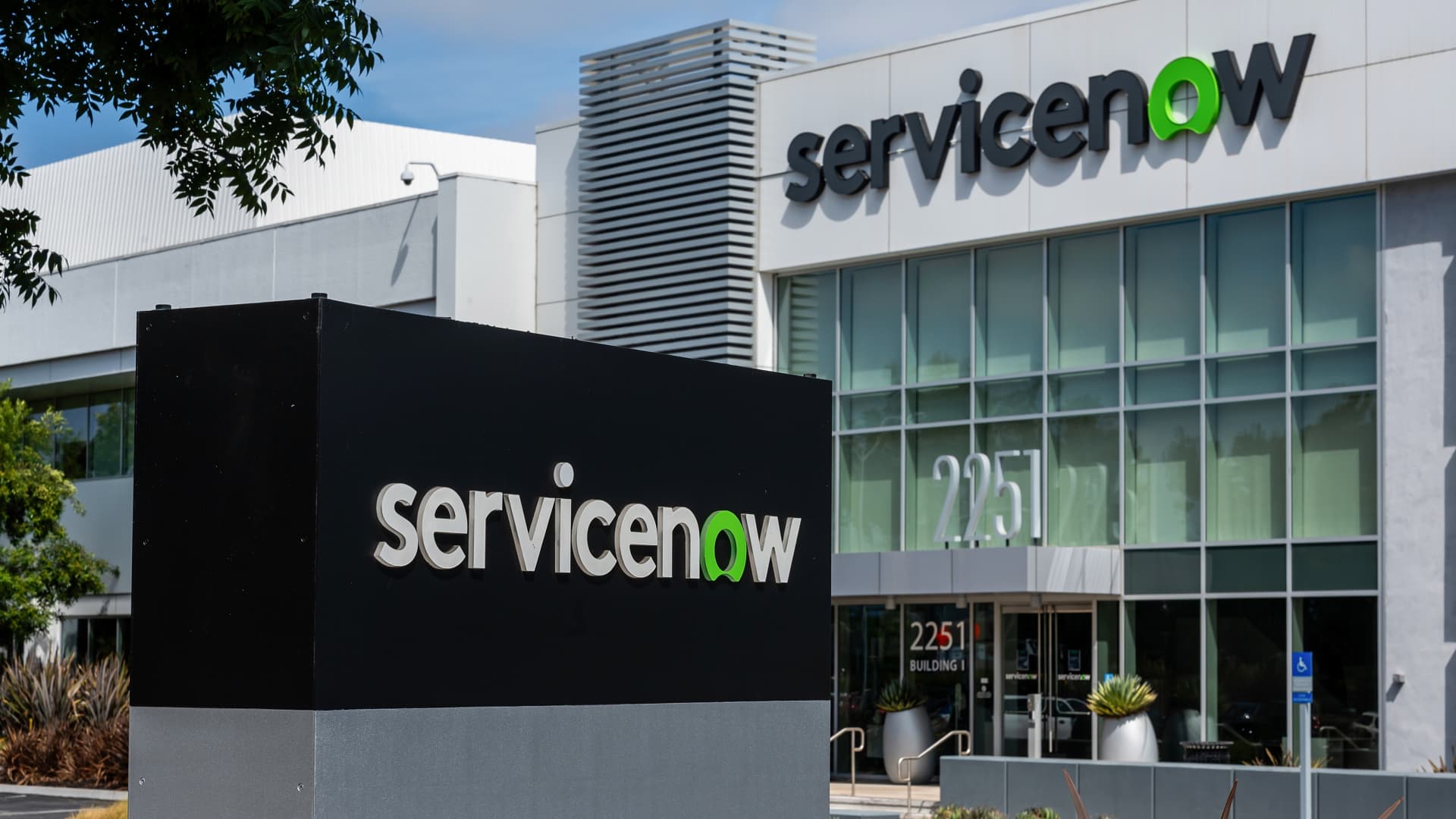
Software Stocks Plummet as ServiceNow and IBM Report Disappointing Earnings


- ServiceNow Stock Crash: ServiceNow shares plummeted 17% on Thursday, marking its worst day ever, as the company narrowly beat Wall Street estimates but cited Middle East conflict as a headwind for quarterly subscription revenue, raising concerns about future growth.
- IBM's Earnings Fail to Boost Stock: Although IBM exceeded earnings and revenue expectations, its stock dropped 9% due to maintained guidance, indicating investor caution regarding its growth potential amidst a challenging market environment.
- Software Sector Under Pressure: Salesforce and HubSpot each fell about 9%, while Adobe and Intuit dropped roughly 7%, and Oracle declined about 5%, reflecting widespread market fears that AI tools could disrupt the traditional cloud subscription model, leading to significant sector-wide declines.
- ETF Performance Decline: The iShares Expanded Tech-Software ETF (IGV) fell about 5% on Thursday and is down approximately 18% this year, illustrating investor pessimism regarding the software industry's outlook, particularly in the context of rapid advancements in AI technology.
See More

Software Stocks Plummet Amid Disappointing Earnings Reports
- Disappointing Earnings Impact: ServiceNow's shares plummeted 17% on Thursday, marking its worst day ever, as geopolitical tensions in the Middle East were cited as a 'headwind' affecting quarterly subscription revenue, highlighting the negative impact of global conflicts on software performance.
- Rising Market Concerns: IBM beat earnings and revenue estimates but maintained its guidance, resulting in a 9% stock drop, indicating investor fears that AI tools could disrupt traditional cloud subscription models, putting pressure on the entire software sector.
- Overall Downward Trend: Salesforce and HubSpot each fell about 9%, while Adobe and Intuit dropped roughly 7%, and Oracle declined about 5%, with Workday sliding 10% and down over 45% year-to-date, reflecting widespread pessimism in the software stock market.
- ETF Decline: The iShares Expanded Tech-Software ETF (IGV) fell about 5% on Thursday and is down approximately 18% year-to-date, indicating a lack of investor confidence in the software industry's growth prospects, especially amid intensifying AI competition.
See More
US Stocks Slightly Up, Led by Chipmakers
- Chipmaker Rally: Texas Instruments (TXN) surged over 16% after reporting Q1 revenue of $4.83 billion, exceeding the consensus of $4.53 billion, and forecasting Q2 revenue between $5.00 billion and $5.40 billion, solidifying its leadership in the semiconductor market.
- Strong Rental Performance: United Rentals (URI) saw its stock rise over 20% after posting Q1 revenue of $3.99 billion, above the consensus of $3.88 billion, and raising its full-year revenue forecast to $16.9 billion-$17.4 billion, indicating robust market demand and growth potential.
- Software Sector Weakness: ServiceNow (NOW) dropped more than 16% after cutting its full-year gross margin forecast to 81.5%, below the consensus of 82.1%, reflecting challenges in the software industry that may impact investor confidence.
- Mixed Economic Data: Weekly initial jobless claims rose to 214,000, exceeding expectations of 210,000, indicating a weaker labor market, while the April S&P manufacturing PMI increased to 54.0, surpassing expectations of 52.5, suggesting a rebound in manufacturing activity.
See More

US Stocks Dip Slightly as Software Sector Weighs Down Market
- Market Weakness: The S&P 500 index fell by 0.07%, the Dow Jones Industrial Average by 0.36%, and the Nasdaq 100 by 0.03%, reflecting investor concerns over stalled peace talks with Iran, which may undermine market confidence.
- Software Sector Decline: ServiceNow dropped over 15% following disappointing earnings, while IBM fell more than 7% due to underwhelming software performance, contributing to broader market pressure and highlighting challenges within the tech sector.
- Mixed Economic Data: Weekly initial unemployment claims rose to 214,000, exceeding expectations of 210,000, indicating a weaker labor market, while the April manufacturing PMI increased to 54.0, surpassing forecasts and suggesting ongoing expansion in manufacturing.
- Rising Oil Prices Impact: WTI crude oil prices increased by nearly 1% due to tensions in the Strait of Hormuz, potentially exacerbating the global energy crisis and raising inflation expectations, which could further influence bond yields.
See More
US Stocks Close Higher: S&P 500 Hits All-Time High
- S&P 500 Hits Record High: The S&P 500 index rose by 0.80%, closing at an all-time high, reflecting market optimism about economic recovery, particularly driven by technology stocks, which further solidifies investor confidence.
- Intel's Strong Performance: Intel's stock surged over 23% after forecasting Q2 revenue between $13.8 billion and $14.8 billion, significantly exceeding the $13.04 billion expectation, indicating strong confidence in the semiconductor industry's potential driven by artificial intelligence, which may spark increased investment in the sector.
- Consumer Confidence Rebounds: The University of Michigan's consumer sentiment index was revised upward to 49.8, surpassing the expected 48.5, suggesting an increase in consumer confidence regarding economic prospects, which could drive consumer spending and economic growth.
- International Dynamics Affecting Markets: Progress in US-Iran negotiations has boosted market sentiment; despite tensions in the Strait of Hormuz, optimism about future talks may alleviate energy price pressures and promote stock market gains.
See More
US Stocks Close Lower Amid Iran Tensions and Mixed Economic Data
- Market Weakness: On Thursday, the S&P 500 index fell by 0.41%, the Dow Jones Industrial Average dropped by 0.36%, and the Nasdaq 100 declined by 0.57%, reflecting heightened investor concerns over the escalating tensions in Iran, which erased earlier gains.
- Mixed Economic Data: Weekly initial unemployment claims rose by 6,000 to 214,000, indicating a weaker labor market than the expected 210,000, while the Chicago Fed national activity index fell to -0.20, signaling a slowdown in economic growth.
- Rising Oil Prices: WTI crude oil prices surged over 3% due to tensions in the Strait of Hormuz, potentially exacerbating the global energy crisis and influencing market sentiment and inflation expectations.
- Earnings Reports Highlight: Despite the overall market weakness, 81% of S&P 500 companies reported better-than-expected earnings, with Q1 earnings projected to rise by 12% year-over-year, showcasing resilience in certain sectors, particularly chipmakers like Texas Instruments, which rose over 19%.
See More
Software Stocks Plummet as ServiceNow and IBM Report Disappointing Earnings
- ServiceNow Stock Crash: ServiceNow shares plummeted 17% on Thursday, marking its worst day ever, as the company narrowly beat Wall Street estimates but cited Middle East conflict as a headwind for quarterly subscription revenue, raising concerns about future growth.
- IBM's Earnings Fail to Boost Stock: Although IBM exceeded earnings and revenue expectations, its stock dropped 9% due to maintained guidance, indicating investor caution regarding its growth potential amidst a challenging market environment.
- Software Sector Under Pressure: Salesforce and HubSpot each fell about 9%, while Adobe and Intuit dropped roughly 7%, and Oracle declined about 5%, reflecting widespread market fears that AI tools could disrupt the traditional cloud subscription model, leading to significant sector-wide declines.
- ETF Performance Decline: The iShares Expanded Tech-Software ETF (IGV) fell about 5% on Thursday and is down approximately 18% this year, illustrating investor pessimism regarding the software industry's outlook, particularly in the context of rapid advancements in AI technology.
See More
Software Stocks Plummet Amid Disappointing Earnings Reports
- Disappointing Earnings Impact: ServiceNow's shares plummeted 17% on Thursday, marking its worst day ever, as geopolitical tensions in the Middle East were cited as a 'headwind' affecting quarterly subscription revenue, highlighting the negative impact of global conflicts on software performance.
- Rising Market Concerns: IBM beat earnings and revenue estimates but maintained its guidance, resulting in a 9% stock drop, indicating investor fears that AI tools could disrupt traditional cloud subscription models, putting pressure on the entire software sector.
- Overall Downward Trend: Salesforce and HubSpot each fell about 9%, while Adobe and Intuit dropped roughly 7%, and Oracle declined about 5%, with Workday sliding 10% and down over 45% year-to-date, reflecting widespread pessimism in the software stock market.
- ETF Decline: The iShares Expanded Tech-Software ETF (IGV) fell about 5% on Thursday and is down approximately 18% year-to-date, indicating a lack of investor confidence in the software industry's growth prospects, especially amid intensifying AI competition.
See More
US Stocks Slightly Up, Led by Chipmakers
- Chipmaker Rally: Texas Instruments (TXN) surged over 16% after reporting Q1 revenue of $4.83 billion, exceeding the consensus of $4.53 billion, and forecasting Q2 revenue between $5.00 billion and $5.40 billion, solidifying its leadership in the semiconductor market.
- Strong Rental Performance: United Rentals (URI) saw its stock rise over 20% after posting Q1 revenue of $3.99 billion, above the consensus of $3.88 billion, and raising its full-year revenue forecast to $16.9 billion-$17.4 billion, indicating robust market demand and growth potential.
- Software Sector Weakness: ServiceNow (NOW) dropped more than 16% after cutting its full-year gross margin forecast to 81.5%, below the consensus of 82.1%, reflecting challenges in the software industry that may impact investor confidence.
- Mixed Economic Data: Weekly initial jobless claims rose to 214,000, exceeding expectations of 210,000, indicating a weaker labor market, while the April S&P manufacturing PMI increased to 54.0, surpassing expectations of 52.5, suggesting a rebound in manufacturing activity.
See More
US Stocks Dip Slightly as Software Sector Weighs Down Market
- Market Weakness: The S&P 500 index fell by 0.07%, the Dow Jones Industrial Average by 0.36%, and the Nasdaq 100 by 0.03%, reflecting investor concerns over stalled peace talks with Iran, which may undermine market confidence.
- Software Sector Decline: ServiceNow dropped over 15% following disappointing earnings, while IBM fell more than 7% due to underwhelming software performance, contributing to broader market pressure and highlighting challenges within the tech sector.
- Mixed Economic Data: Weekly initial unemployment claims rose to 214,000, exceeding expectations of 210,000, indicating a weaker labor market, while the April manufacturing PMI increased to 54.0, surpassing forecasts and suggesting ongoing expansion in manufacturing.
- Rising Oil Prices Impact: WTI crude oil prices increased by nearly 1% due to tensions in the Strait of Hormuz, potentially exacerbating the global energy crisis and raising inflation expectations, which could further influence bond yields.
See More