Stock Futures Modestly Lower as Market Sentiment Turns Cautious


Stock futures are modestly lower this morning. Markets are pausing after a four-day rebound, with sentiment turning cautious again as investors head into a key geopolitical deadline. The central driver remains the standoff in the Middle East, specifically the U.S. deadline for Iran to reopen the Strait of Hormuz. With Tehran rejecting both the deadline and ceasefire proposals, markets are now bracing for a potential escalation scenario rather than a negotiated outcome. That shift in expectations is pushing oil back higher and reintroducing the same inflation concerns that drove volatility throughout March.The oil move is once again dictating cross-asset behavior. Higher crude is tightening financial conditions, pressuring equities, and complicating the Federal Reserve outlook.Energy-linked assets are benefiting from the renewed supply shock narrative, while oil-sensitive sectors, particularly airlines and transports, are coming back under pressure. At the same time, defensive pockets of the market are seeing inflows, and health insurers are outperforming following favorable policy updates. Volatility is elevated and that dynamic is keeping risk appetite contained despite the recent bounce.In pre-market trading, S&P 500 futures fell 0.38%, Nasdaq futures fell 0.55% and Dow futures fell 0.30%.Check out this morning's top movers from around Wall Street, compiled by The Fly.HIGHER -Organogenesisup 17% after reporting it has met the primary endpoint in its PuraPly studyHumana, UnitedHealthand CVS Healthup 10%, 8% and 7% respectively after Centers for Medicare & Medicaid Services finalized Medicare payment policy at higher-than-expected ratesBroadcomup 3% after entering into a long-term agreement for the company to develop and supply custom TPUs for Google'sfuture generations of TPUs and a supply assurance agreement for Broadcom to supply networking and other components to be used in Google's next-generation AI racks through up to 2031Casey's General Storesup 1% after being admitted into the S&P 500 indexLOWER -ATN Internationaldown 1% after announcing Brad Martin is stepping down as CEO and member of the company's board of directorsEstee Lauderdown 1% after Spanish newspaper Expansion reported the families behind Puig and Estee Lauder are set to meet in New York this week to negotiate the terms of a potential combination of their beauty businesses with the goal of announcing an agreement in the coming weeksPrecigendown 1% after providing Q1 revenue guidance
Trade with 70% Backtested Accuracy
Analyst Views on AVGO

About AVGO
About the author


Meta's Cloud Business Plans Propel Stock Surge Over 10%


- Meta's Cloud Strategy: Meta Platforms announced plans to establish a cloud computing business to monetize its data centers, leading to a stock surge of over 10% after easing market concerns about excessive AI spending, indicating a strategic pivot towards new revenue streams for enhanced financial stability.
- AI Infrastructure Transformation: Previously, Meta only monetized AI through advertising, which, while profitable, was too cyclical to justify extensive cash flow usage; the introduction of a cloud business will provide more stable cash flow to support future AI investments.
- Competitive Landscape Shift: As the only major hyperscaler without a cloud business, Meta's strategic shift not only fills this gap but could also alter the competitive dynamics in the industry, enhancing its position in the cloud computing market.
- Economic Data Impact: The market is closely watching the upcoming nonfarm payroll data, with expectations of around 100,000 new jobs and an unemployment rate steady at 4.3%; a strong labor market could complicate the Fed's policy outlook, further influencing market sentiment.
Key Takeaways from Wednesday's Investing Club Meeting


- Market Dynamics: The S&P 500 is up at the start of the new month, while the Nasdaq faces pressure as investors take profits in semiconductor stocks like Micron, Sandisk, Nvidia, and Broadcom, indicating volatility in market sentiment.
- Nike Exit: Jim Cramer exited his position in Nike after a disappointing quarter, acknowledging a 40% loss, and despite previous confidence in a turnaround, he opted to reallocate funds to FedEx Freight for potentially better returns.
- Salesforce Stock Surge: Salesforce shares jumped over 5% after Guggenheim upgraded the stock to buy with a $228 price target, although Jim Cramer remains cautious about the company's growth prospects, noting that AI pressure won't be fatal but overall business growth is lacking.
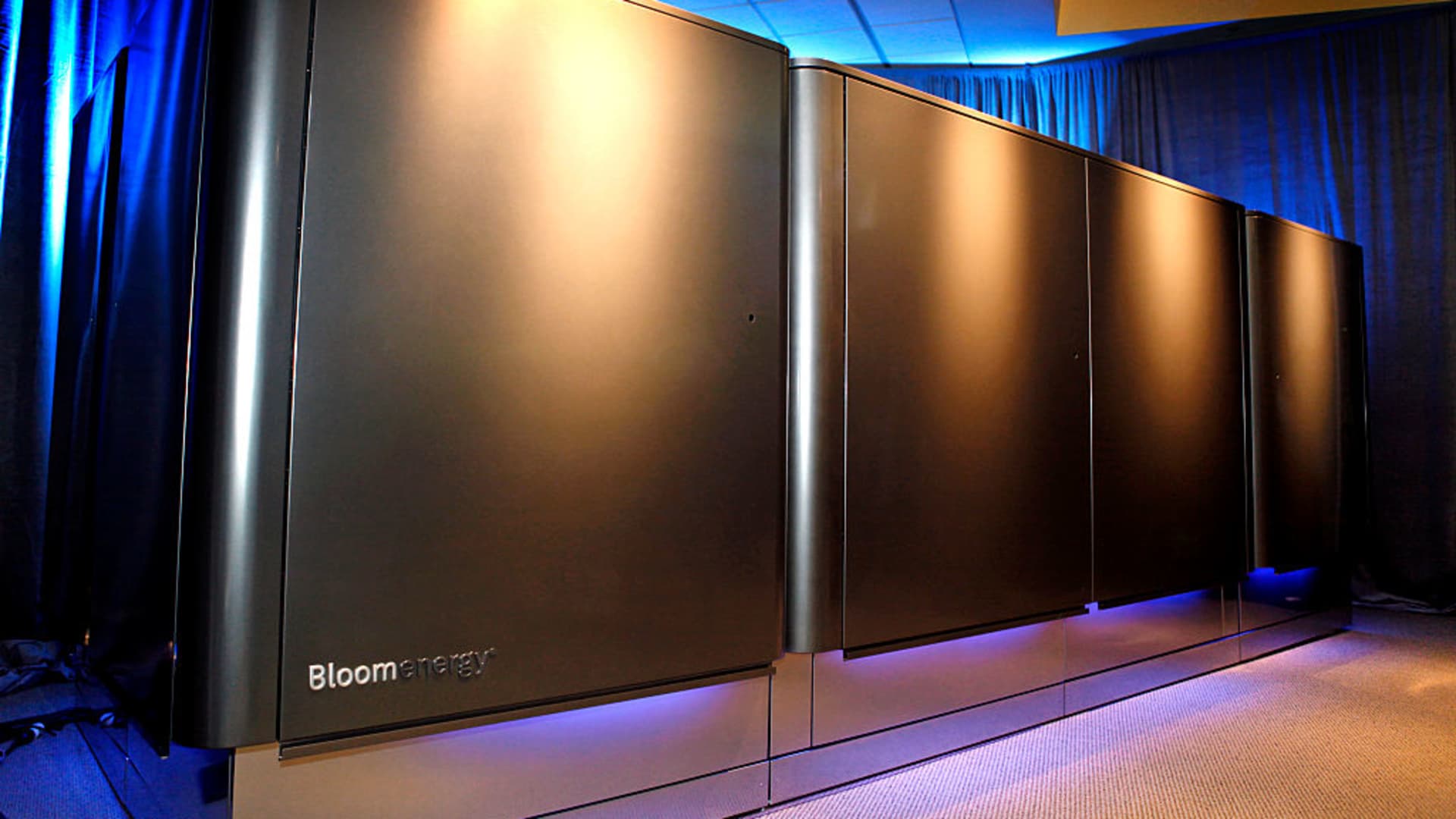
- Rapid Trade Review: Stocks mentioned at the end of the video include Micron, Constellation Brands, General Mills, Lockheed Martin, and Bloom Energy, reflecting Jim Cramer's focus on a diversified investment portfolio.

Qualcomm's AI Chip Market Potential Looks Promising
- Projected Revenue Growth: Qualcomm anticipates reaching $15 billion in data center revenue by fiscal 2029, showcasing strong potential in the rapidly growing AI market, especially as it diversifies revenue sources amid smartphone market weakness.
- Deepening Customer Partnerships: Qualcomm's multi-generational agreement with Meta Platforms, which will deploy Qualcomm's Dragonfly C1000 CPU in its servers starting this year, not only provides a stable long-term revenue stream but also enhances Qualcomm's competitive position in the data center market.
- Profitability Enhancement: Qualcomm expects its earnings per share to exceed $18.00 by fiscal 2029, with an annual growth rate of 18.5%, indicating significant profit growth potential over the next three years, which could drive stock price increases.
- Valuation Attractiveness: With a current price-to-earnings ratio of just 17 times and a sales multiple of 4.6 times, Qualcomm presents a valuation advantage compared to peers, suggesting that any acceleration in growth could lead to a premium valuation and further enhance investment appeal.
Qualcomm's Data Center Revenue Outlook
- Data Center Revenue Projection: Qualcomm anticipates its data center revenue could reach $15 billion by fiscal 2029, indicating strong potential in the rapidly growing AI market, particularly with a multi-generational agreement with Meta that ensures a long-term revenue stream.
- AI Chip Market Breakthrough: Qualcomm's focus on inference workloads for its AI chips is expected to significantly enhance its market share, especially as Deloitte predicts that inference workloads will account for two-thirds of AI computational workloads, indicating a rapid increase in market demand.
- Profitability Enhancement: Qualcomm estimates earnings per share could exceed $18 by fiscal 2029, reflecting an annual growth rate of 18.5%, which, compared to its current EPS of $10.80, suggests strong profit growth potential that could drive stock prices up by 150%.
- Competitive Advantage Strengthening: With a current P/E ratio of just 17, significantly lower than its competitors, any increase in Qualcomm's growth rate could lead to a premium valuation, paving the way for greater stock price appreciation and further solidifying its position in the AI chip market.
Intel's Stock Set to Soar to $200


- Strong Stock Performance: Intel's stock surged 7.8% on Tuesday, surpassing its historical high of $140.95, making it the third-best performer in the S&P 500 for 2026 with a nearly 285% year-to-date gain, reflecting robust market demand and investor confidence.
- Surge in CPU Demand: As AI computing shifts from training to inference, Intel's central processing units (CPUs) have become a hot commodity, with Jim Cramer highlighting that CPUs are now more valuable than graphics processing units (GPUs) in agentic AI systems, bolstering demand for Intel's products.
- Manufacturing Capacity Advantage: Intel's chip manufacturing business is seen as a key solution to industry production capacity shortages, with CEO Lip-Bu Tan prioritizing its revitalization since taking over in March 2025, aligning with the U.S. government's focus on advanced semiconductor manufacturing.
- Potential Collaboration with Apple: Although unconfirmed, a reported agreement between Intel and Apple to design and manufacture chips in the U.S. could further enhance Intel's market position, especially against rival TSMC, underscoring Intel's significance in the U.S. semiconductor industry.

Nvidia's Stock Underperforms; Needs Aggressive Buybacks

- Semiconductor Sector Surge: The Philadelphia Semiconductor Index soared over 80% in Q2, driven by a surge in AI computing demand, highlighting strong market interest in semiconductors, while Nvidia's stock only gained about 12%, failing to keep pace with industry growth.
- Intensifying Competition Impact: Nvidia faces competitive pressure from major clients like Google and Amazon, who are developing their own AI chips, leading to diminished investor confidence in Nvidia's future growth and potentially impacting its market share and profitability.
- Insufficient Buyback Plans: Despite Nvidia's plan to repurchase $80 billion in stock in FY2025, analysts argue this is inadequate and recommend the company adopt a more aggressive buyback strategy similar to Apple's to enhance earnings per share and shareholder returns.
- Increasing R&D Investments: Nvidia's R&D spending reached $13.65 billion in FY2024, a 45% increase year-over-year, yet market expectations for future growth remain clouded by competition and market dynamics, necessitating buybacks to bolster investor confidence.
Meta's Cloud Business Plans Propel Stock Surge Over 10%
- Meta's Cloud Strategy: Meta Platforms announced plans to establish a cloud computing business to monetize its data centers, leading to a stock surge of over 10% after easing market concerns about excessive AI spending, indicating a strategic pivot towards new revenue streams for enhanced financial stability.
- AI Infrastructure Transformation: Previously, Meta only monetized AI through advertising, which, while profitable, was too cyclical to justify extensive cash flow usage; the introduction of a cloud business will provide more stable cash flow to support future AI investments.
- Competitive Landscape Shift: As the only major hyperscaler without a cloud business, Meta's strategic shift not only fills this gap but could also alter the competitive dynamics in the industry, enhancing its position in the cloud computing market.
- Economic Data Impact: The market is closely watching the upcoming nonfarm payroll data, with expectations of around 100,000 new jobs and an unemployment rate steady at 4.3%; a strong labor market could complicate the Fed's policy outlook, further influencing market sentiment.
Key Takeaways from Wednesday's Investing Club Meeting
- Market Dynamics: The S&P 500 is up at the start of the new month, while the Nasdaq faces pressure as investors take profits in semiconductor stocks like Micron, Sandisk, Nvidia, and Broadcom, indicating volatility in market sentiment.
- Nike Exit: Jim Cramer exited his position in Nike after a disappointing quarter, acknowledging a 40% loss, and despite previous confidence in a turnaround, he opted to reallocate funds to FedEx Freight for potentially better returns.
- Salesforce Stock Surge: Salesforce shares jumped over 5% after Guggenheim upgraded the stock to buy with a $228 price target, although Jim Cramer remains cautious about the company's growth prospects, noting that AI pressure won't be fatal but overall business growth is lacking.
- Rapid Trade Review: Stocks mentioned at the end of the video include Micron, Constellation Brands, General Mills, Lockheed Martin, and Bloom Energy, reflecting Jim Cramer's focus on a diversified investment portfolio.
Qualcomm's AI Chip Market Potential Looks Promising
- Projected Revenue Growth: Qualcomm anticipates reaching $15 billion in data center revenue by fiscal 2029, showcasing strong potential in the rapidly growing AI market, especially as it diversifies revenue sources amid smartphone market weakness.
- Deepening Customer Partnerships: Qualcomm's multi-generational agreement with Meta Platforms, which will deploy Qualcomm's Dragonfly C1000 CPU in its servers starting this year, not only provides a stable long-term revenue stream but also enhances Qualcomm's competitive position in the data center market.
- Profitability Enhancement: Qualcomm expects its earnings per share to exceed $18.00 by fiscal 2029, with an annual growth rate of 18.5%, indicating significant profit growth potential over the next three years, which could drive stock price increases.
- Valuation Attractiveness: With a current price-to-earnings ratio of just 17 times and a sales multiple of 4.6 times, Qualcomm presents a valuation advantage compared to peers, suggesting that any acceleration in growth could lead to a premium valuation and further enhance investment appeal.
Qualcomm's Data Center Revenue Outlook
- Data Center Revenue Projection: Qualcomm anticipates its data center revenue could reach $15 billion by fiscal 2029, indicating strong potential in the rapidly growing AI market, particularly with a multi-generational agreement with Meta that ensures a long-term revenue stream.
- AI Chip Market Breakthrough: Qualcomm's focus on inference workloads for its AI chips is expected to significantly enhance its market share, especially as Deloitte predicts that inference workloads will account for two-thirds of AI computational workloads, indicating a rapid increase in market demand.
- Profitability Enhancement: Qualcomm estimates earnings per share could exceed $18 by fiscal 2029, reflecting an annual growth rate of 18.5%, which, compared to its current EPS of $10.80, suggests strong profit growth potential that could drive stock prices up by 150%.
- Competitive Advantage Strengthening: With a current P/E ratio of just 17, significantly lower than its competitors, any increase in Qualcomm's growth rate could lead to a premium valuation, paving the way for greater stock price appreciation and further solidifying its position in the AI chip market.
Intel's Stock Set to Soar to $200
- Strong Stock Performance: Intel's stock surged 7.8% on Tuesday, surpassing its historical high of $140.95, making it the third-best performer in the S&P 500 for 2026 with a nearly 285% year-to-date gain, reflecting robust market demand and investor confidence.
- Surge in CPU Demand: As AI computing shifts from training to inference, Intel's central processing units (CPUs) have become a hot commodity, with Jim Cramer highlighting that CPUs are now more valuable than graphics processing units (GPUs) in agentic AI systems, bolstering demand for Intel's products.
- Manufacturing Capacity Advantage: Intel's chip manufacturing business is seen as a key solution to industry production capacity shortages, with CEO Lip-Bu Tan prioritizing its revitalization since taking over in March 2025, aligning with the U.S. government's focus on advanced semiconductor manufacturing.
- Potential Collaboration with Apple: Although unconfirmed, a reported agreement between Intel and Apple to design and manufacture chips in the U.S. could further enhance Intel's market position, especially against rival TSMC, underscoring Intel's significance in the U.S. semiconductor industry.
Nvidia's Stock Underperforms; Needs Aggressive Buybacks
- Semiconductor Sector Surge: The Philadelphia Semiconductor Index soared over 80% in Q2, driven by a surge in AI computing demand, highlighting strong market interest in semiconductors, while Nvidia's stock only gained about 12%, failing to keep pace with industry growth.
- Intensifying Competition Impact: Nvidia faces competitive pressure from major clients like Google and Amazon, who are developing their own AI chips, leading to diminished investor confidence in Nvidia's future growth and potentially impacting its market share and profitability.
- Insufficient Buyback Plans: Despite Nvidia's plan to repurchase $80 billion in stock in FY2025, analysts argue this is inadequate and recommend the company adopt a more aggressive buyback strategy similar to Apple's to enhance earnings per share and shareholder returns.
- Increasing R&D Investments: Nvidia's R&D spending reached $13.65 billion in FY2024, a 45% increase year-over-year, yet market expectations for future growth remain clouded by competition and market dynamics, necessitating buybacks to bolster investor confidence.