Software Index Falls 26% Amid AI Concerns
Written by Emily J. Thompson, Senior Investment Analyst
Updated: Mar 10 2026
0mins


Should l Buy MSFT?
Source: Fool
- Bear Market for Software: The S&P North American Technology Software Index has fallen 26% from its September all-time high, entering bear market territory primarily due to investor concerns that AI code generation tools may reduce demand for existing software products, leading to a bearish market sentiment.
- Microsoft's Attractive Valuation: Microsoft shares currently trade at $409, with a median analyst target price of $600, implying a 47% upside; its strong position in enterprise software and the integration of generative AI to enhance productivity have drawn investor interest amid market volatility.
- Datadog's Growth Potential: Datadog's current share price is $126, with a median analyst target price of $180, indicating a 42% upside; its AI applications in IT operations have been recognized by Forrester as a leader, highlighting strong market demand for its observability and security software.
- Strong Financial Performance: Datadog reported a 29% revenue increase to $953 million in Q4, with remaining performance obligations rising 52% to $3.4 billion, indicating robust future revenue growth potential, although non-GAAP net income grew slower due to heavy R&D spending, yet the long-term outlook remains optimistic.
Trade with 70% Backtested Accuracy
Stop guessing "Should I Buy MSFT?" and start using high-conviction signals backed by rigorous historical data.
Sign up today to access powerful investing tools and make smarter, data-driven decisions.
Analyst Views on MSFT
Wall Street analysts forecast MSFT stock price to rise
34 Analyst Rating
32 Buy
2 Hold
0 Sell
Strong Buy
Current: 370.170

Low
500.00
Averages
631.36
High
678.00
Current: 370.170
Low
500.00
Averages
631.36
High
678.00
About MSFT
Microsoft Corporation is a technology company that develops and supports software, services, devices, and solutions. Its Productivity and Business Processes segment consists of products and services in its portfolio of productivity, communication, and information services, spanning a variety of devices and platforms. It comprises Microsoft 365 Commercial products and cloud services; Microsoft 365 Consumer products and cloud services; LinkedIn, and Dynamics products and cloud services. The Intelligent Cloud segment consists of its public, private, and hybrid server products and cloud services. It comprises server products and cloud services, including Azure, and enterprise and partner services, including Enterprise Support Services. Its More Personal Computing segment primarily comprises Windows and Devices, including Windows OEM licensing; Gaming, including Xbox hardware and Xbox content; Search and news advertising, comprising Bing and Copilot, Microsoft News, and Microsoft Edge.
About the author

Emily J. Thompson
Emily J. Thompson, a Chartered Financial Analyst (CFA) with 12 years in investment research, graduated with honors from the Wharton School. Specializing in industrial and technology stocks, she provides in-depth analysis for Intellectia’s earnings and market brief reports.

Microsoft's AI Business Pullback Triggers Investor Panic

- Market Share Challenges: Microsoft's AI-powered Copilot chatbot holds only a 3% global market share, with around 6% in North America, but the minuscule fraction of paying users indicates difficulties in market penetration, potentially impacting future revenue growth.
- Cloud Growth Slowdown: Revenue growth for Microsoft's Azure has decreased from 39% in September to 38%, with expectations for further deceleration in the current quarter, a trend that lags behind competitors like Alphabet, raising investor concerns about future performance.
- Capital Expenditure Pressure: Microsoft plans to invest $120 billion in AI infrastructure this fiscal year; despite strong demand, the failure to meet return expectations has led to an overreaction in the market, resulting in a 35% stock price decline.
- Long-Term Potential Remains: Despite facing short-term challenges, Microsoft remains a key global technology player, with its Windows operating system installed on two-thirds of desktop computers worldwide, and analysts' target price of $587.77 suggests over 60% upside potential.
See More
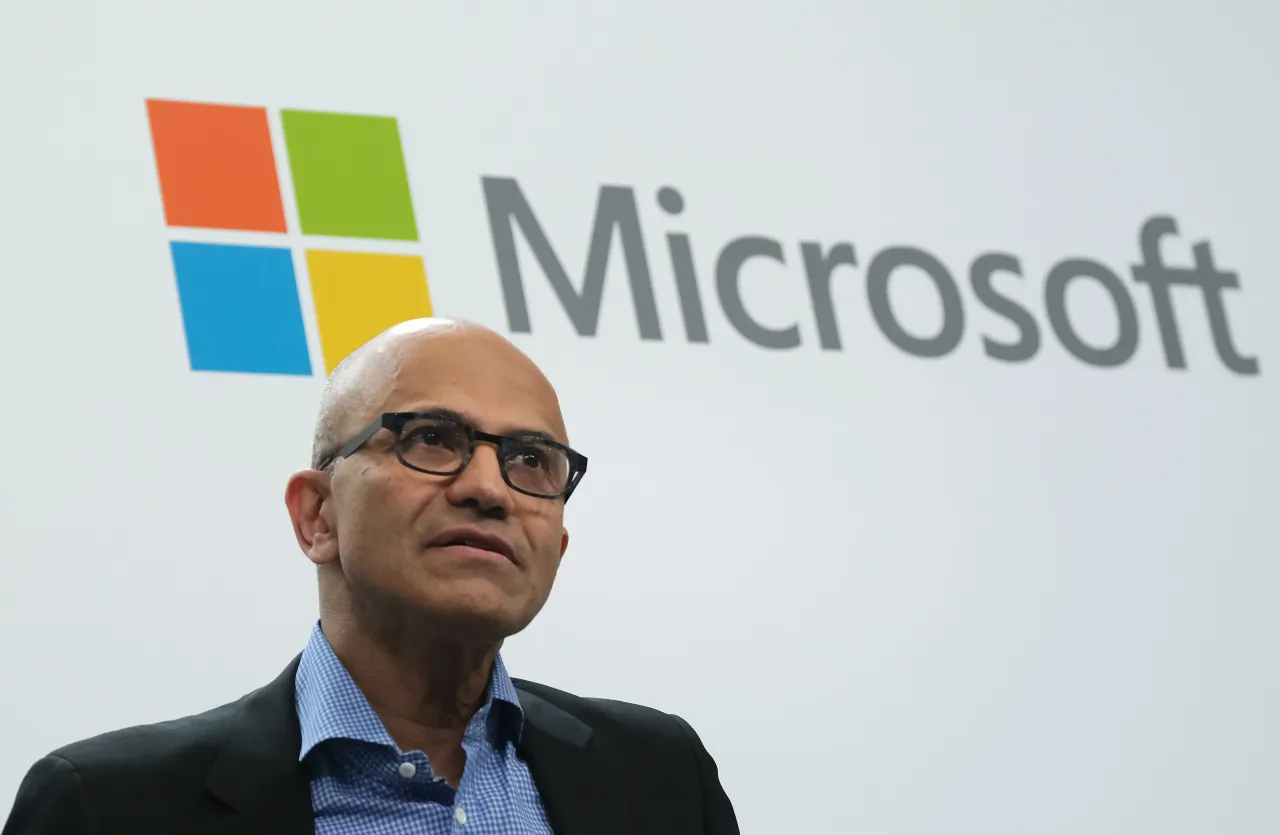
Microsoft's $5.5 Billion Singapore Investment Amid AI Challenges
- Quarterly Decline: Microsoft faced its steepest quarterly decline since the 2008 financial crisis in Q1 2026, losing nearly a quarter of its market value, which raises concerns about its profitability and market position.
- Singapore Investment Plan: The company announced a $5.5 billion investment in Singapore aimed at expanding cloud and AI infrastructure by 2029, positioning Microsoft’s technology at the heart of Singapore's digital economy and potentially driving long-term growth.
- AI Investment Return Concerns: Despite efforts to boost revenue through the AI-powered Microsoft 365 Copilot, only about 3% of commercial Office customers currently hold licenses, leading investors to express skepticism regarding the returns on its AI investments.
- Azure Division Growth: Microsoft’s Azure division reported a 39% revenue growth in the December quarter, with a backlog of $625 billion in commercial commitments, providing a strong foundation for future growth despite overall performance pressures.
See More

Microsoft's 30% Stock Drop: Unpacking the Reality Behind the Decline
- Surging Capital Expenditures: Microsoft is projected to spend $146 billion on AI infrastructure in fiscal 2026, with quarterly capital expenditures nearly doubling year-over-year to $29.9 billion, significantly impacting cash flows and profit margins.
- Significant Investment Losses: The company's investment losses in OpenAI reached $3.1 billion in a single quarter, up from $523 million a year earlier, raising concerns about the returns on AI investments and putting pressure on the stock price.
- Shift in Market Sentiment: Following the stock drop, Microsoft's valuation is no longer seen as perfect, with market expectations around AI shifting from optimism to scrutiny, prompting investors to reassess the company's long-term growth potential and profitability.
- Strong Enterprise Demand: Despite challenges, Microsoft's Azure cloud business continues to grow, and enterprise demand remains strong, indicating that the company's deep integration into global IT infrastructure is unaffected, suggesting future growth potential.
See More

Microsoft Faces Challenges but Long-Term Outlook Remains Positive
- Surge in Capital Expenditure: Microsoft is projected to invest $146 billion in AI infrastructure for fiscal 2026, with quarterly capital expenditures nearly doubling year-over-year to $29.9 billion; while this massive spending has created near-term margin pressure, it lays the groundwork for future revenue growth.
- Shift in Market Sentiment: Despite Microsoft beating earnings estimates in its latest report, the stock has dropped nearly 30% over the past six months due to a reassessment of AI investment returns, reflecting a shift from high-margin growth expectations to a more cautious outlook among investors.
- Cloud Business Continues to Grow: Facing challenges, Microsoft's Azure cloud business remains on a growth trajectory, and enterprise demand has not waned, indicating the company's deep integration within global IT infrastructure and suggesting that its core business remains robust.
- Investor Opportunity Reemerges: As the market re-prices Microsoft's valuation, investors now have the chance to enter at lower prices, capturing potential long-term growth, especially in light of the possibility that AI investments could translate into sustainable revenue streams.
See More

Benchmark Initiates Coverage on Microsoft with Buy Rating and $450 Price Target
- Coverage Initiation: Benchmark has initiated coverage on Microsoft with a Buy rating and a $450 price target, with analysts highlighting the company's leadership in artificial intelligence as a key driver for long-term growth in both enterprise and consumer markets.
- Investment Opportunity: Analysts recommend that investors capitalize on the significant drawdown in Microsoft's stock price since October 2025 to build core positions in SaaS/software, emphasizing the importance of not attempting to time the market for this essential infrastructure company.
- Strategic Investment: Microsoft's investment in OpenAI is now valued at approximately $227 billion, with analysts noting that this relationship is mutually beneficial, as OpenAI relies on Microsoft's cloud services to operate its large language models, creating a symbiotic partnership.
- Market Potential: Microsoft's total addressable market is projected to reach $730.5 billion by 2025, with a CAGR of 11.4%, approaching $1.25 trillion by 2030, indicating its extensive influence and growth potential across all layers of the technology stack.
See More

Microsoft Restructures Copilot AI Operations to Enhance Competitiveness
- Organizational Restructuring: Microsoft reorganized its Copilot AI operations in mid-March, consolidating consumer and commercial AI efforts under a unified Copilot organization led by former Snap executive Jacob Andreou, aiming to boost AI user growth to support its $145 billion capital expenditures.
- User Growth Challenges: Currently, Microsoft has about 15 million paying Copilot accounts, which, while seemingly substantial, pales in comparison to OpenAI's 50 million ChatGPT subscribers, with OpenAI projected to reach 220 million paying users by 2030, intensifying competitive pressures.
- Pricing Strategy Adjustment: Microsoft announced a 65% price increase for its high-end enterprise Copilot to $99, aiming to accelerate revenue growth and offset its massive spending on AI infrastructure, reflecting the company's focus on monetization strategies.
- Future Development Focus: AI chief Mustafa Suleyman will concentrate on superintelligence and developing new AI models, with the restructuring enabling him to deliver world-class models over the next five years, while Microsoft partners with Anthropic to introduce Claude Cowork, enhancing its competitive edge in the AI sector.
See More
Microsoft's AI Business Pullback Triggers Investor Panic
- Market Share Challenges: Microsoft's AI-powered Copilot chatbot holds only a 3% global market share, with around 6% in North America, but the minuscule fraction of paying users indicates difficulties in market penetration, potentially impacting future revenue growth.
- Cloud Growth Slowdown: Revenue growth for Microsoft's Azure has decreased from 39% in September to 38%, with expectations for further deceleration in the current quarter, a trend that lags behind competitors like Alphabet, raising investor concerns about future performance.
- Capital Expenditure Pressure: Microsoft plans to invest $120 billion in AI infrastructure this fiscal year; despite strong demand, the failure to meet return expectations has led to an overreaction in the market, resulting in a 35% stock price decline.
- Long-Term Potential Remains: Despite facing short-term challenges, Microsoft remains a key global technology player, with its Windows operating system installed on two-thirds of desktop computers worldwide, and analysts' target price of $587.77 suggests over 60% upside potential.
See More
Microsoft's $5.5 Billion Singapore Investment Amid AI Challenges
- Quarterly Decline: Microsoft faced its steepest quarterly decline since the 2008 financial crisis in Q1 2026, losing nearly a quarter of its market value, which raises concerns about its profitability and market position.
- Singapore Investment Plan: The company announced a $5.5 billion investment in Singapore aimed at expanding cloud and AI infrastructure by 2029, positioning Microsoft’s technology at the heart of Singapore's digital economy and potentially driving long-term growth.
- AI Investment Return Concerns: Despite efforts to boost revenue through the AI-powered Microsoft 365 Copilot, only about 3% of commercial Office customers currently hold licenses, leading investors to express skepticism regarding the returns on its AI investments.
- Azure Division Growth: Microsoft’s Azure division reported a 39% revenue growth in the December quarter, with a backlog of $625 billion in commercial commitments, providing a strong foundation for future growth despite overall performance pressures.
See More
Microsoft's 30% Stock Drop: Unpacking the Reality Behind the Decline
- Surging Capital Expenditures: Microsoft is projected to spend $146 billion on AI infrastructure in fiscal 2026, with quarterly capital expenditures nearly doubling year-over-year to $29.9 billion, significantly impacting cash flows and profit margins.
- Significant Investment Losses: The company's investment losses in OpenAI reached $3.1 billion in a single quarter, up from $523 million a year earlier, raising concerns about the returns on AI investments and putting pressure on the stock price.
- Shift in Market Sentiment: Following the stock drop, Microsoft's valuation is no longer seen as perfect, with market expectations around AI shifting from optimism to scrutiny, prompting investors to reassess the company's long-term growth potential and profitability.
- Strong Enterprise Demand: Despite challenges, Microsoft's Azure cloud business continues to grow, and enterprise demand remains strong, indicating that the company's deep integration into global IT infrastructure is unaffected, suggesting future growth potential.
See More
Microsoft Faces Challenges but Long-Term Outlook Remains Positive
- Surge in Capital Expenditure: Microsoft is projected to invest $146 billion in AI infrastructure for fiscal 2026, with quarterly capital expenditures nearly doubling year-over-year to $29.9 billion; while this massive spending has created near-term margin pressure, it lays the groundwork for future revenue growth.
- Shift in Market Sentiment: Despite Microsoft beating earnings estimates in its latest report, the stock has dropped nearly 30% over the past six months due to a reassessment of AI investment returns, reflecting a shift from high-margin growth expectations to a more cautious outlook among investors.
- Cloud Business Continues to Grow: Facing challenges, Microsoft's Azure cloud business remains on a growth trajectory, and enterprise demand has not waned, indicating the company's deep integration within global IT infrastructure and suggesting that its core business remains robust.
- Investor Opportunity Reemerges: As the market re-prices Microsoft's valuation, investors now have the chance to enter at lower prices, capturing potential long-term growth, especially in light of the possibility that AI investments could translate into sustainable revenue streams.
See More
Benchmark Initiates Coverage on Microsoft with Buy Rating and $450 Price Target
- Coverage Initiation: Benchmark has initiated coverage on Microsoft with a Buy rating and a $450 price target, with analysts highlighting the company's leadership in artificial intelligence as a key driver for long-term growth in both enterprise and consumer markets.
- Investment Opportunity: Analysts recommend that investors capitalize on the significant drawdown in Microsoft's stock price since October 2025 to build core positions in SaaS/software, emphasizing the importance of not attempting to time the market for this essential infrastructure company.
- Strategic Investment: Microsoft's investment in OpenAI is now valued at approximately $227 billion, with analysts noting that this relationship is mutually beneficial, as OpenAI relies on Microsoft's cloud services to operate its large language models, creating a symbiotic partnership.
- Market Potential: Microsoft's total addressable market is projected to reach $730.5 billion by 2025, with a CAGR of 11.4%, approaching $1.25 trillion by 2030, indicating its extensive influence and growth potential across all layers of the technology stack.
See More
Microsoft Restructures Copilot AI Operations to Enhance Competitiveness
- Organizational Restructuring: Microsoft reorganized its Copilot AI operations in mid-March, consolidating consumer and commercial AI efforts under a unified Copilot organization led by former Snap executive Jacob Andreou, aiming to boost AI user growth to support its $145 billion capital expenditures.
- User Growth Challenges: Currently, Microsoft has about 15 million paying Copilot accounts, which, while seemingly substantial, pales in comparison to OpenAI's 50 million ChatGPT subscribers, with OpenAI projected to reach 220 million paying users by 2030, intensifying competitive pressures.
- Pricing Strategy Adjustment: Microsoft announced a 65% price increase for its high-end enterprise Copilot to $99, aiming to accelerate revenue growth and offset its massive spending on AI infrastructure, reflecting the company's focus on monetization strategies.
- Future Development Focus: AI chief Mustafa Suleyman will concentrate on superintelligence and developing new AI models, with the restructuring enabling him to deliver world-class models over the next five years, while Microsoft partners with Anthropic to introduce Claude Cowork, enhancing its competitive edge in the AI sector.
See More