Rocket Lab Successfully Completes Dual Missions
Written by Emily J. Thompson, Senior Investment Analyst
Updated: 1 day ago
0mins
Should l Buy RKLB?
Source: stocktwits
- Successful Dual Launches: Rocket Lab completed two successful launches within a 48-hour window, with the “Bubbles” mission from Wallops Island and the “Kakushin Rising” mission from New Zealand, showcasing its rapid launch capabilities across multiple regions and boosting market confidence in its operational flexibility.
- New Navigation System: The company introduced the High-Performance Star Tracker (ST-HP), designed to enhance navigation precision and durability for long-duration missions in low Earth orbit and deep space, strengthening its satellite components portfolio and expected to drive future mission success.
- Stock Price Recovery: Following the successful missions, Rocket Lab's stock gained 1% on Thursday, reflecting market recognition of its strong momentum in launch services and space systems, with a year-to-date increase of over 21%.
- Future Growth Outlook: Roth raised Rocket Lab's price target from $90 to $100, anticipating approximately 20% annual growth in Electron rocket launches, supported by rising defense spending, further solidifying the company's leadership in the small launch market.
Trade with 70% Backtested Accuracy
Stop guessing "Should I Buy RKLB?" and start using high-conviction signals backed by rigorous historical data.
Sign up today to access powerful investing tools and make smarter, data-driven decisions.
Analyst Views on RKLB
Wall Street analysts forecast RKLB stock price to rise
11 Analyst Rating
7 Buy
4 Hold
0 Sell
Moderate Buy
Current: 84.600

Low
63.00
Averages
86.89
High
120.00
Current: 84.600
Low
63.00
Averages
86.89
High
120.00
About RKLB
Rocket Lab Corporation is an end-to-end space company. The Company designs and manufactures small and medium-class rockets, spacecraft and spacecraft components, and related software and services to support the space economy. The Company delivers reliable launch services, satellite manufacture, spacecraft design services, spacecraft components, spacecraft manufacturing, and other spacecraft and on-orbit management solutions that make it easier to access space. Its Launch Services segment provides launch and launch-related services to customers on a dedicated mission or ride-share basis. Its Space Systems segment comprises the design and manufacture of spacecraft components and spacecraft program management services, space data applications, and mission operations. Its space systems solutions are the building blocks for spacecraft, which include composite structures, reaction wheels, star trackers, solar solutions, radios, separation systems, and command and control spacecraft software.
About the author

Emily J. Thompson
Emily J. Thompson, a Chartered Financial Analyst (CFA) with 12 years in investment research, graduated with honors from the Wharton School. Specializing in industrial and technology stocks, she provides in-depth analysis for Intellectia’s earnings and market brief reports.
Rocket Lab Successfully Completes Dual Missions
- Successful Dual Launches: Rocket Lab completed two successful launches within a 48-hour window, with the “Bubbles” mission from Wallops Island and the “Kakushin Rising” mission from New Zealand, showcasing its rapid launch capabilities across multiple regions and boosting market confidence in its operational flexibility.
- New Navigation System: The company introduced the High-Performance Star Tracker (ST-HP), designed to enhance navigation precision and durability for long-duration missions in low Earth orbit and deep space, strengthening its satellite components portfolio and expected to drive future mission success.
- Stock Price Recovery: Following the successful missions, Rocket Lab's stock gained 1% on Thursday, reflecting market recognition of its strong momentum in launch services and space systems, with a year-to-date increase of over 21%.
- Future Growth Outlook: Roth raised Rocket Lab's price target from $90 to $100, anticipating approximately 20% annual growth in Electron rocket launches, supported by rising defense spending, further solidifying the company's leadership in the small launch market.
See More
Blue Origin's Ambitious Blue Ring Project Unveiled

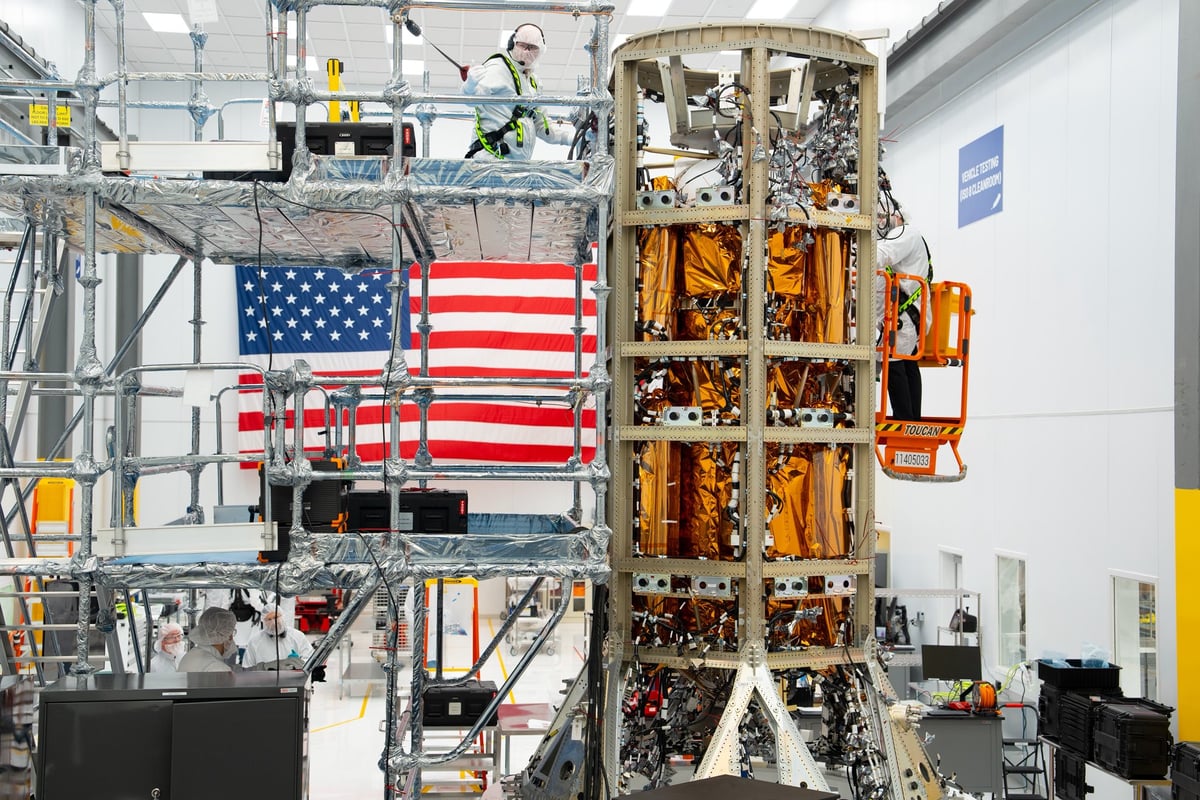
- Project Introduction: Blue Origin's Blue Ring project, led by former ULA CEO Tory Bruno, aims to develop a space tug capable of transporting and servicing satellites in Earth orbit and beyond, highlighting the company's ambitious entry into the space services market.
- Technical Specifications: The Blue Ring measures approximately 6 meters long and 2 meters wide, featuring 13 satellite attachment ports, significantly surpassing Northrop Grumman's Mission Robotic Vehicle, which has only three, indicating Blue Ring's superior satellite servicing capabilities.
- Market Potential: With over 12,000 satellites currently in Earth orbit, around 800 of which may require regular servicing, the total market opportunity is estimated to be as high as $52 billion, positioning Blue Origin to capture a significant share of this rapidly growing market.
- Investor Insights: Although Blue Origin is currently a private company, its investments in orbital services have drawn investor interest, suggesting that investors consider publicly traded companies like Northrop Grumman to capitalize on potential market opportunities.
See More

Blue Origin Unveils Enhanced Blue Ring Space Tug
- New Space Tug: Blue Origin's newly unveiled Blue Ring space tug, classified as 'GEO-Interplanetary Class,' aims to transport and service over 12,000 satellites, indicating the company's ambition in the burgeoning space market.
- Multi-Satellite Capability: With 13 satellite attachment ports, Blue Ring significantly outperforms Northrop Grumman's three-port Mission Robotic Vehicle, showcasing its technological advantage and potential service capabilities in the competitive landscape.
- Massive Market Opportunity: Estimates suggest the orbital service market could be worth up to $52 billion, particularly targeting the service needs of around 800 GEO-class satellites, reflecting Blue Origin's strategic foresight in market positioning.
- Intensifying Industry Competition: Blue Origin's entry will intensify competition with established players like Northrop Grumman, Rocket Lab, and Firefly Aerospace; while still privately held, its technological advancements may attract investor interest in related public companies.
See More
Tim Cook Steps Down as Apple CEO, New Leadership Ahead

- Leadership Transition: Apple announced that Tim Cook will step down as CEO in September, transitioning to executive chairman, with hardware engineering head John Ternus taking over, marking a significant shift in leadership that may influence future product innovation directions.
- Performance Review: Since Cook took over in 2011, Apple's profits have surged by 700%, with total stock returns reaching 3100%, demonstrating success in operational management and product line expansion, thereby boosting investor confidence.
- Service Business Growth: Under Cook, Apple's service revenue increased from 5% to 25%, with over 1 billion subscription users, showcasing the company's strategic success in diversifying revenue sources, which may continue to drive future growth.
- AI Challenges and Opportunities: New CEO Ternus faces the challenge of lagging AI innovation; while Apple has invested in on-device AI, market skepticism remains about its ability to launch revolutionary products, impacting investor expectations for future growth.
See More

Apple CEO Tim Cook to Step Down, John Ternus to Succeed
- Leadership Transition: Apple announced that CEO Tim Cook will step down in September, transitioning to executive chairman, with hardware engineering head John Ternus taking over as CEO, marking a significant shift in leadership that could impact future product innovation directions.
- Cook's Legacy: Since Tim Cook took over in 2011, Apple's total return has reached 3,100%, compared to just 731% for the S&P 500, showcasing Cook's exceptional performance in enhancing company value while setting high expectations for the new CEO.
- Service Revenue Growth: Under Cook's leadership, Apple's service revenue has surged from 5% to over 25%, with more than 1 billion paid subscriptions, indicating significant success in diversifying revenue streams, which will continue to drive profitability in the future.
- AI Innovation Challenge: Despite Cook's successes in various areas, his lag in AI innovation is seen as a major challenge for the new leadership, and Ternus's appointment may accelerate Apple's development in this critical field.
See More

Meta Strikes Major Chip Deal with AWS to Enhance AI Infrastructure

- Infrastructure Investment: Meta has signed a three-year deal with AWS to deploy hundreds of thousands of Graviton chips, aiming to enhance AI performance with an expected 60% better energy efficiency than traditional systems, showcasing Meta's strategic commitment to AI.
- Workforce Adjustment: Despite the massive infrastructure investment, Meta announced a 10% workforce reduction, indicating a shift in capital allocation from human resources to high-performance silicon, reflecting the company's focus on future technology demands.
- Intensifying Market Competition: This move by Meta comes as competitors like Alphabet and Microsoft accelerate their internal hardware development, highlighting the urgency for Meta to secure computing capacity, which could reshape the industry landscape.
- CPU Renaissance: Intel has noted that central processors are re-emerging as the foundation for AI, and Meta's choice of Graviton chips over specialized accelerators indicates confidence in general-purpose processors, potentially driving growth across the semiconductor sector.
See More
Rocket Lab Successfully Completes Dual Missions
- Successful Dual Launches: Rocket Lab completed two successful launches within a 48-hour window, with the “Bubbles” mission from Wallops Island and the “Kakushin Rising” mission from New Zealand, showcasing its rapid launch capabilities across multiple regions and boosting market confidence in its operational flexibility.
- New Navigation System: The company introduced the High-Performance Star Tracker (ST-HP), designed to enhance navigation precision and durability for long-duration missions in low Earth orbit and deep space, strengthening its satellite components portfolio and expected to drive future mission success.
- Stock Price Recovery: Following the successful missions, Rocket Lab's stock gained 1% on Thursday, reflecting market recognition of its strong momentum in launch services and space systems, with a year-to-date increase of over 21%.
- Future Growth Outlook: Roth raised Rocket Lab's price target from $90 to $100, anticipating approximately 20% annual growth in Electron rocket launches, supported by rising defense spending, further solidifying the company's leadership in the small launch market.
See More
Blue Origin's Ambitious Blue Ring Project Unveiled
- Project Introduction: Blue Origin's Blue Ring project, led by former ULA CEO Tory Bruno, aims to develop a space tug capable of transporting and servicing satellites in Earth orbit and beyond, highlighting the company's ambitious entry into the space services market.
- Technical Specifications: The Blue Ring measures approximately 6 meters long and 2 meters wide, featuring 13 satellite attachment ports, significantly surpassing Northrop Grumman's Mission Robotic Vehicle, which has only three, indicating Blue Ring's superior satellite servicing capabilities.
- Market Potential: With over 12,000 satellites currently in Earth orbit, around 800 of which may require regular servicing, the total market opportunity is estimated to be as high as $52 billion, positioning Blue Origin to capture a significant share of this rapidly growing market.
- Investor Insights: Although Blue Origin is currently a private company, its investments in orbital services have drawn investor interest, suggesting that investors consider publicly traded companies like Northrop Grumman to capitalize on potential market opportunities.
See More
Blue Origin Unveils Enhanced Blue Ring Space Tug
- New Space Tug: Blue Origin's newly unveiled Blue Ring space tug, classified as 'GEO-Interplanetary Class,' aims to transport and service over 12,000 satellites, indicating the company's ambition in the burgeoning space market.
- Multi-Satellite Capability: With 13 satellite attachment ports, Blue Ring significantly outperforms Northrop Grumman's three-port Mission Robotic Vehicle, showcasing its technological advantage and potential service capabilities in the competitive landscape.
- Massive Market Opportunity: Estimates suggest the orbital service market could be worth up to $52 billion, particularly targeting the service needs of around 800 GEO-class satellites, reflecting Blue Origin's strategic foresight in market positioning.
- Intensifying Industry Competition: Blue Origin's entry will intensify competition with established players like Northrop Grumman, Rocket Lab, and Firefly Aerospace; while still privately held, its technological advancements may attract investor interest in related public companies.
See More
Tim Cook Steps Down as Apple CEO, New Leadership Ahead
- Leadership Transition: Apple announced that Tim Cook will step down as CEO in September, transitioning to executive chairman, with hardware engineering head John Ternus taking over, marking a significant shift in leadership that may influence future product innovation directions.
- Performance Review: Since Cook took over in 2011, Apple's profits have surged by 700%, with total stock returns reaching 3100%, demonstrating success in operational management and product line expansion, thereby boosting investor confidence.
- Service Business Growth: Under Cook, Apple's service revenue increased from 5% to 25%, with over 1 billion subscription users, showcasing the company's strategic success in diversifying revenue sources, which may continue to drive future growth.
- AI Challenges and Opportunities: New CEO Ternus faces the challenge of lagging AI innovation; while Apple has invested in on-device AI, market skepticism remains about its ability to launch revolutionary products, impacting investor expectations for future growth.
See More
Apple CEO Tim Cook to Step Down, John Ternus to Succeed
- Leadership Transition: Apple announced that CEO Tim Cook will step down in September, transitioning to executive chairman, with hardware engineering head John Ternus taking over as CEO, marking a significant shift in leadership that could impact future product innovation directions.
- Cook's Legacy: Since Tim Cook took over in 2011, Apple's total return has reached 3,100%, compared to just 731% for the S&P 500, showcasing Cook's exceptional performance in enhancing company value while setting high expectations for the new CEO.
- Service Revenue Growth: Under Cook's leadership, Apple's service revenue has surged from 5% to over 25%, with more than 1 billion paid subscriptions, indicating significant success in diversifying revenue streams, which will continue to drive profitability in the future.
- AI Innovation Challenge: Despite Cook's successes in various areas, his lag in AI innovation is seen as a major challenge for the new leadership, and Ternus's appointment may accelerate Apple's development in this critical field.
See More
Meta Strikes Major Chip Deal with AWS to Enhance AI Infrastructure
- Infrastructure Investment: Meta has signed a three-year deal with AWS to deploy hundreds of thousands of Graviton chips, aiming to enhance AI performance with an expected 60% better energy efficiency than traditional systems, showcasing Meta's strategic commitment to AI.
- Workforce Adjustment: Despite the massive infrastructure investment, Meta announced a 10% workforce reduction, indicating a shift in capital allocation from human resources to high-performance silicon, reflecting the company's focus on future technology demands.
- Intensifying Market Competition: This move by Meta comes as competitors like Alphabet and Microsoft accelerate their internal hardware development, highlighting the urgency for Meta to secure computing capacity, which could reshape the industry landscape.
- CPU Renaissance: Intel has noted that central processors are re-emerging as the foundation for AI, and Meta's choice of Graviton chips over specialized accelerators indicates confidence in general-purpose processors, potentially driving growth across the semiconductor sector.
See More