Rivian Shares Up 3.87% to $16.93
Written by Emily J. Thompson, Senior Investment Analyst
Updated: 12 hours ago
0mins
Moderately bullish activity in Rivian (RIVN), with shares up 63c, or 3.87%, near $16.93. Options volume roughly in line with average with 92k contracts traded and calls leading puts for a put/call ratio of 0.25, compared to a typical level near 0.38. Implied volatility (IV30) is higher by 6.2 points near 69.31,and above the 52wk median, suggesting an expected daily move of $0.74. Put-call skew steepened, indicating increased demand for downside protection.
Trade with 70% Backtested Accuracy
Stop guessing "Should I Buy RIVN?" and start using high-conviction signals backed by rigorous historical data.
Sign up today to access powerful investing tools and make smarter, data-driven decisions.
Analyst Views on RIVN
Wall Street analysts forecast RIVN stock price to rise
18 Analyst Rating
8 Buy
7 Hold
3 Sell
Moderate Buy
Current: 16.300

Low
10.00
Averages
17.78
High
25.00
Current: 16.300
Low
10.00
Averages
17.78
High
25.00
About RIVN
Rivian Automotive, Inc. is an automotive technology company, which is engaged in developing and manufacturing category-defining electric vehicles (EVs) as well as vertically integrated technologies and services. The Company's R1 platform consists of two vehicles: the R1T, a two-row five-passenger pickup truck, and the R1S, a three-row seven-passenger sport utility vehicle (SUV). In the commercial market, the Company offers a Rivian Commercial Vehicle (RCV) platform. The vehicle on this platform is the Electric Delivery Van (EDV), designed and engineered by Rivian in collaboration with Amazon. The Company also offers FleetOS, its proprietary, end-to-end centralized fleet management subscription platform. It also offers a variety of services, including vehicle repair and maintenance, financing, insurance, joint venture, software subscriptions, and vehicle accessories, among others. Its other services include vehicle electrical architecture and software development services, and more.
About the author

Emily J. Thompson
Emily J. Thompson, a Chartered Financial Analyst (CFA) with 12 years in investment research, graduated with honors from the Wharton School. Specializing in industrial and technology stocks, she provides in-depth analysis for Intellectia’s earnings and market brief reports.

Rivian R2 SUV Deliveries Begin, Stock Rises

- R2 SUV Delivery Launch: Rivian announced that deliveries of its first mass-market model, the R2 SUV, will begin on June 9, which is expected to significantly expand the company's market reach and enhance overall sales potential.
- Pricing and Competition: With a starting price of approximately $45,000, the R2 is designed to compete with vehicles like the Tesla Model Y, and Rivian has received over 100,000 reservations, indicating strong market demand.
- Delivery Expectations Increase: Rivian now expects to deliver between 62,000 and 67,000 vehicles in 2026, a substantial increase from 42,247 vehicles delivered in 2025, reflecting the company's confidence in future growth.
- Market Sentiment Optimistic: RIVN stock has maintained a 'bullish' sentiment over the past 24 hours, with 11 analysts rating it as 'Buy', and a 12-month price target of $18.15, suggesting a potential upside of about 11%.
See More
Lucid and Rivian: A Comparative Analysis in the EV Market
- Leadership Transition: Lucid recently announced a leadership change and secured approximately $1.05 billion through public offerings and private investments, despite reporting a -364% net income margin for Q1 2026, indicating ongoing challenges in execution and production scaling.
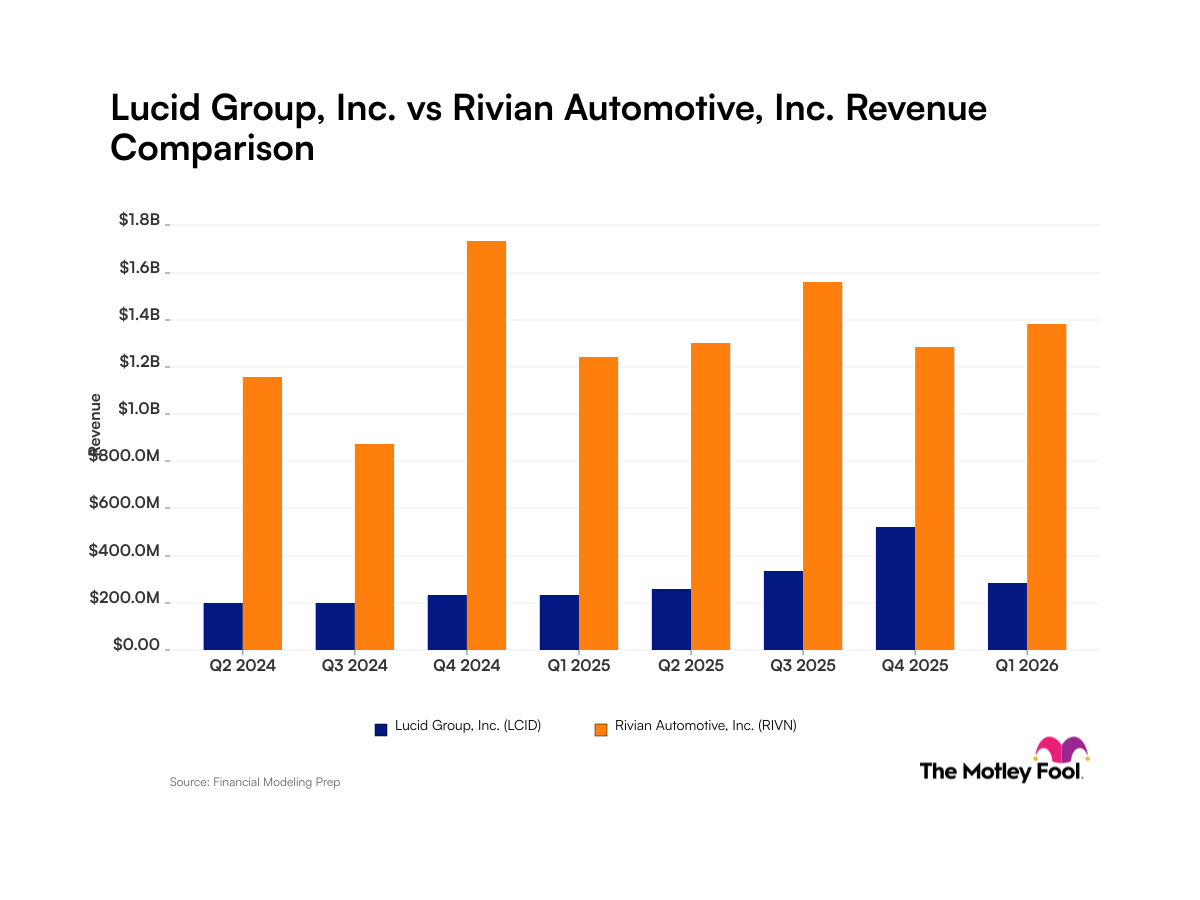
- Revenue Fluctuations: Lucid reported $200.6 million in revenue for Q2 2024, while Rivian achieved $1.2 billion in the same period, highlighting Rivian's strong performance and larger market share in the electric vehicle sector.
- Production Goals: Rivian expects to deliver between 62,000 and 67,000 EVs in 2026, reflecting nearly 50% growth over 2025, whereas Lucid continues to face persistent difficulties in production and delivery, impacting its revenue stability.
- Strategic Partnerships: Rivian's joint venture with Volkswagen provides billions in funding, while its agreement with Uber for 50,000 robotaxis further solidifies its market position, showcasing its competitive advantage in the electric vehicle landscape.
See More

SpaceX IPO to Reserve Shares for Employees


- Employee Share Program: SpaceX reserves up to 5% of its IPO stock for 'certain employees and persons,' aiming to enhance employee engagement and loyalty, which could positively impact overall company morale and market performance.
- Fundraising Target: The IPO is expected to raise up to $75 billion, reflecting strong market demand and investor confidence, potentially making it the largest tech IPO in history, following SpaceX's earlier valuation of $1.25 trillion.
- Underwriter Role: Morgan Stanley, as the underwriter for the IPO, will manage SpaceX's direct share program, allowing employees and select individuals to participate without lock-up restrictions, thereby strengthening the relationship between the company and its investors.
- Market Expectations: SpaceX's roadshow could commence this week, with a potential Nasdaq debut around June 12, positioning it to become the third tech company to exceed a $100 billion valuation on its first day of trading in the U.S., following Facebook and Alibaba.
See More
SpaceX Reveals IPO Details with Direct Share Program


- IPO Scale: SpaceX aims to raise up to $75 billion through its IPO, potentially setting a record, reflecting strong market confidence after its valuation reached $1.25 trillion post-merger with xAI, indicating robust growth prospects.
- Direct Share Program: The company reserves up to 5% of shares for 'certain employees and persons' in a direct share program, allowing employees to benefit from the IPO, breaking the traditional investor monopoly and enhancing employee engagement and loyalty.
- Partnership with Anthropic: SpaceX's agreement with Anthropic involves $1.25 billion monthly payments, with the potential for termination after six months, which could impact revenue stability and requires close monitoring of future developments.
- Market Expectations and Competition: SpaceX's roadshow may start this week, with a potential Nasdaq debut on June 12, and Morgan Stanley managing the direct share program, highlighting significant market interest while facing competition from other tech firms.
See More

Three Low-Priced Stocks Worth Considering

- Rivian's Market Challenges: Despite Rivian's revenue growth of 11% year-over-year to $1.4 billion in Q1, a 27% drop in U.S. EV demand poses significant risks to its sales performance and stock price.
- SoFi's Financial Volatility: SoFi Technologies has seen its stock price plummet due to poor financial results and a short-seller report, with a forward P/E ratio of 28.3, well above the financial sector's average of 14.5, indicating potential for significant volatility ahead.
- Adyen's Market Position: Although Adyen's recent financial results have disappointed, leading to a sell-off, its established leadership in digital payments and high switching costs for clients suggest long-term growth potential despite short-term economic challenges.
- Investment Risks and Opportunities: All three companies are priced under $20, and while they face individual challenges, they may still present high-risk, high-reward opportunities for investors under favorable market conditions.
See More

Three Stocks Facing Near-Term Challenges
- Rivian's Uncertain Outlook: Despite Rivian's revenue increasing by 11% year-over-year to $1.4 billion in Q1, a 27% drop in EV sales due to slowing demand could significantly impact future performance, particularly as it launches the new R2 model.
- SoFi's Volatility Ahead: SoFi's stock has plummeted due to poor financial results and a short-seller report, and while its forward P/E ratio of 28.3 is above the financial sector average, its online model and expanding ecosystem may yield strong returns over the next decade.
- Adyen's Market Position: Although Adyen's recent financial results and guidance have disappointed, leading to a sell-off, its leadership in digital payments and high switching costs position it well to benefit from the ongoing growth of e-commerce in the long run.
- Investment Risk Advisory: Investors should carefully assess the short-term challenges and long-term potential of Rivian, SoFi, and Adyen, especially in the context of increasing market volatility and competitive pressures.
See More
Rivian R2 SUV Deliveries Begin, Stock Rises
- R2 SUV Delivery Launch: Rivian announced that deliveries of its first mass-market model, the R2 SUV, will begin on June 9, which is expected to significantly expand the company's market reach and enhance overall sales potential.
- Pricing and Competition: With a starting price of approximately $45,000, the R2 is designed to compete with vehicles like the Tesla Model Y, and Rivian has received over 100,000 reservations, indicating strong market demand.
- Delivery Expectations Increase: Rivian now expects to deliver between 62,000 and 67,000 vehicles in 2026, a substantial increase from 42,247 vehicles delivered in 2025, reflecting the company's confidence in future growth.
- Market Sentiment Optimistic: RIVN stock has maintained a 'bullish' sentiment over the past 24 hours, with 11 analysts rating it as 'Buy', and a 12-month price target of $18.15, suggesting a potential upside of about 11%.
See More
Lucid and Rivian: A Comparative Analysis in the EV Market
- Leadership Transition: Lucid recently announced a leadership change and secured approximately $1.05 billion through public offerings and private investments, despite reporting a -364% net income margin for Q1 2026, indicating ongoing challenges in execution and production scaling.
- Revenue Fluctuations: Lucid reported $200.6 million in revenue for Q2 2024, while Rivian achieved $1.2 billion in the same period, highlighting Rivian's strong performance and larger market share in the electric vehicle sector.
- Production Goals: Rivian expects to deliver between 62,000 and 67,000 EVs in 2026, reflecting nearly 50% growth over 2025, whereas Lucid continues to face persistent difficulties in production and delivery, impacting its revenue stability.
- Strategic Partnerships: Rivian's joint venture with Volkswagen provides billions in funding, while its agreement with Uber for 50,000 robotaxis further solidifies its market position, showcasing its competitive advantage in the electric vehicle landscape.
See More
SpaceX IPO to Reserve Shares for Employees
- Employee Share Program: SpaceX reserves up to 5% of its IPO stock for 'certain employees and persons,' aiming to enhance employee engagement and loyalty, which could positively impact overall company morale and market performance.
- Fundraising Target: The IPO is expected to raise up to $75 billion, reflecting strong market demand and investor confidence, potentially making it the largest tech IPO in history, following SpaceX's earlier valuation of $1.25 trillion.
- Underwriter Role: Morgan Stanley, as the underwriter for the IPO, will manage SpaceX's direct share program, allowing employees and select individuals to participate without lock-up restrictions, thereby strengthening the relationship between the company and its investors.
- Market Expectations: SpaceX's roadshow could commence this week, with a potential Nasdaq debut around June 12, positioning it to become the third tech company to exceed a $100 billion valuation on its first day of trading in the U.S., following Facebook and Alibaba.
See More
SpaceX Reveals IPO Details with Direct Share Program
- IPO Scale: SpaceX aims to raise up to $75 billion through its IPO, potentially setting a record, reflecting strong market confidence after its valuation reached $1.25 trillion post-merger with xAI, indicating robust growth prospects.
- Direct Share Program: The company reserves up to 5% of shares for 'certain employees and persons' in a direct share program, allowing employees to benefit from the IPO, breaking the traditional investor monopoly and enhancing employee engagement and loyalty.
- Partnership with Anthropic: SpaceX's agreement with Anthropic involves $1.25 billion monthly payments, with the potential for termination after six months, which could impact revenue stability and requires close monitoring of future developments.
- Market Expectations and Competition: SpaceX's roadshow may start this week, with a potential Nasdaq debut on June 12, and Morgan Stanley managing the direct share program, highlighting significant market interest while facing competition from other tech firms.
See More
Three Low-Priced Stocks Worth Considering
- Rivian's Market Challenges: Despite Rivian's revenue growth of 11% year-over-year to $1.4 billion in Q1, a 27% drop in U.S. EV demand poses significant risks to its sales performance and stock price.
- SoFi's Financial Volatility: SoFi Technologies has seen its stock price plummet due to poor financial results and a short-seller report, with a forward P/E ratio of 28.3, well above the financial sector's average of 14.5, indicating potential for significant volatility ahead.
- Adyen's Market Position: Although Adyen's recent financial results have disappointed, leading to a sell-off, its established leadership in digital payments and high switching costs for clients suggest long-term growth potential despite short-term economic challenges.
- Investment Risks and Opportunities: All three companies are priced under $20, and while they face individual challenges, they may still present high-risk, high-reward opportunities for investors under favorable market conditions.
See More
Three Stocks Facing Near-Term Challenges
- Rivian's Uncertain Outlook: Despite Rivian's revenue increasing by 11% year-over-year to $1.4 billion in Q1, a 27% drop in EV sales due to slowing demand could significantly impact future performance, particularly as it launches the new R2 model.
- SoFi's Volatility Ahead: SoFi's stock has plummeted due to poor financial results and a short-seller report, and while its forward P/E ratio of 28.3 is above the financial sector average, its online model and expanding ecosystem may yield strong returns over the next decade.
- Adyen's Market Position: Although Adyen's recent financial results and guidance have disappointed, leading to a sell-off, its leadership in digital payments and high switching costs position it well to benefit from the ongoing growth of e-commerce in the long run.
- Investment Risk Advisory: Investors should carefully assess the short-term challenges and long-term potential of Rivian, SoFi, and Adyen, especially in the context of increasing market volatility and competitive pressures.
See More