

Redwire Stock Plummets 15.7% Following Downgrade by Jefferies
Written by Emily J. Thompson, Senior Investment Analyst
Updated: 1 day ago
0mins
Source: Fool
- Downgrade Impact: Jefferies analyst Greg Konrad downgraded Redwire from buy to hold while raising the price target, resulting in a 15.7% drop in Redwire's stock price by noon on Monday, indicating market concerns about future growth.
- Price Volatility Reasons: Despite Redwire's stock tripling year-to-date, primarily driven by excitement in the space sector, the analyst notes that the lack of profitability makes the current stock price appear excessively high, limiting further upside potential.
- Market Sentiment Shift: Following SpaceX's announcement of its IPO and setting a date, investor enthusiasm for space-related stocks surged, leading to a rush towards companies like Redwire, even though their fundamentals do not justify such high valuations.
- Investor Strategy Adjustment: Analysts warn that Redwire's high valuation may prompt investors to shift towards purchasing SpaceX stock in the coming weeks, reflecting a speculative behavior in the market regarding the space industry.
Trade with 70% Backtested Accuracy
Stop guessing "Should I Buy RDW?" and start using high-conviction signals backed by rigorous historical data.
Sign up today to access powerful investing tools and make smarter, data-driven decisions.
Analyst Views on RDW
Wall Street analysts forecast RDW stock price to fall
9 Analyst Rating
6 Buy
2 Hold
1 Sell
Moderate Buy
Current: 20.580

Low
6.00
Averages
12.50
High
22.00
Current: 20.580
Low
6.00
Averages
12.50
High
22.00
About RDW
Redwire Corporation is an integrated aerospace and defense company focused on advanced technologies. The Company is focused on aerospace infrastructure, autonomous systems and multi-domain operations leveraging digital engineering and AI automation. Its capabilities include avionics, sensors, power solutions, critical structures, mechanisms, radio frequency systems, platforms, missions, microgravity payloads and uncrewed airborne system (UAS) technology. It specializes in core avionics, such as scalable power distribution and on-board computing capabilities. These specialized avionics and sensors can be applied across multiple space environments, including Low Earth Orbit, Geostationary Orbit, Cis-lunar and deep space missions. It provides a range of sensors, including star trackers and sun sensors, which are critical for navigation and control of spacecraft. It offers a variety of solar array solutions for spacecraft spanning the spectrum of size, power needs, and orbital location.
About the author

Emily J. Thompson
Emily J. Thompson, a Chartered Financial Analyst (CFA) with 12 years in investment research, graduated with honors from the Wharton School. Specializing in industrial and technology stocks, she provides in-depth analysis for Intellectia’s earnings and market brief reports.

SpaceX IPO Details Expected Soon, Valuation Up to $1.8 Trillion

- IPO Fundraising Target: SpaceX aims to raise $75 billion by selling 555.6 million shares at $135 each, implying a valuation between $1.75 trillion and $1.8 trillion, surpassing Saudi Aramco's $29.4 billion IPO in 2019, highlighting its immense potential in the space market.
- All-Primary Offering Structure: The IPO will be structured as an all-primary offering, ensuring all proceeds flow directly to SpaceX while existing shareholders are barred from selling shares during the IPO, which preserves the company's control and may facilitate rapid inclusion in the Nasdaq 100.
- Underwriting Fee Negotiations: SpaceX is negotiating underwriting fees below 0.75%, which, while lower than traditional levels, could still generate $500 million in fees for participating banks due to the massive size of the deal, showcasing its strong fundraising capability.
- Market Sentiment Volatility: Despite attracting investor interest, there are concerns about SpaceX's proposed valuation of $1.75 trillion to $1.8 trillion, with Morningstar suggesting it may be overvalued, indicating potential stock price pressure in the months following the IPO, prompting investors to carefully assess risks.
See More

Redwire Shares Surge 168% Amid SpaceX IPO Anticipation


- Significant Stock Surge: Redwire's shares skyrocketed 168% in May, reaching $20.55, primarily driven by strong quarterly results and anticipation surrounding SpaceX's IPO, reflecting market optimism about its future growth prospects.
- Robust Financial Performance: The company reported a 58% year-over-year revenue increase to $97 million in Q1, with backlog rising to $500 million, indicating sustained demand in the space and defense sectors and substantial revenue growth potential ahead.
- Key Contract Wins: While Redwire's contracts may not be as headline-grabbing as those of SpaceX or Lockheed Martin, its role as a key supplier for these giants in sensors and energy systems is becoming increasingly vital, particularly in military drones and AI data centers.
- Optimistic Market Outlook: With a market cap of only $4 billion and a price-to-sales ratio of 8.3, Redwire remains undervalued compared to some hot stocks in the sector, suggesting that as demand for solar arrays and other orbital solutions grows, it could achieve steady revenue growth in the coming years.
See More

Redwire Stock Rises on SpaceX IPO Hopes
- Significant Revenue Growth: Redwire reported a 58% year-over-year revenue increase to $97 million in Q1, indicating strong market demand in the space economy and suggesting continued performance growth in the future.
- Increased Backlog: The company's backlog rose to $500 million, reflecting its ability to win multiple contracts, with a book-to-bill ratio of 1.92, indicating substantial revenue growth potential ahead.
- Unique Market Positioning: As a key supplier in the space and defense sectors, Redwire focuses on sensors, energy systems, and spacecraft platforms, particularly in solar systems for AI data centers, which could see a surge in demand.
- Relatively Reasonable Valuation: Although Redwire is not yet profitable, it trades at a price-to-sales ratio of 8.3, lower than some hot stocks, suggesting that its role as the
See More

NASDAQ 100 Pre-Market Activity Overview


- Market Indicator Decline: The NASDAQ 100 Pre-Market Indicator decreased by 6.17 points to 30,507.69, indicating cautious market sentiment that may influence short-term investor decisions.
- Active Stock Performance: Nokia Corporation (NOK) rose by $0.4691 to $16.72 with a trading volume of 14,771,250 shares, and its current mean recommendation is in the 'buy range', reflecting market confidence in its future performance.
- Tech Stock Dynamics: NVIDIA Corporation (NVDA) increased by $2.9 to $227.26 with a volume of 7,031,708 shares, showcasing its strong performance in the tech sector despite overall market volatility.
- Other Stock Fluctuations: The Direxion Daily TSLA Bull 2X ETF (TSLL) gained $0.16 to $14.63, representing a 65.12% increase from its 52-week low, indicating strong investor interest and positive market sentiment towards this ETF.
See More
Alphabet's $80 Billion AI Investment Plan

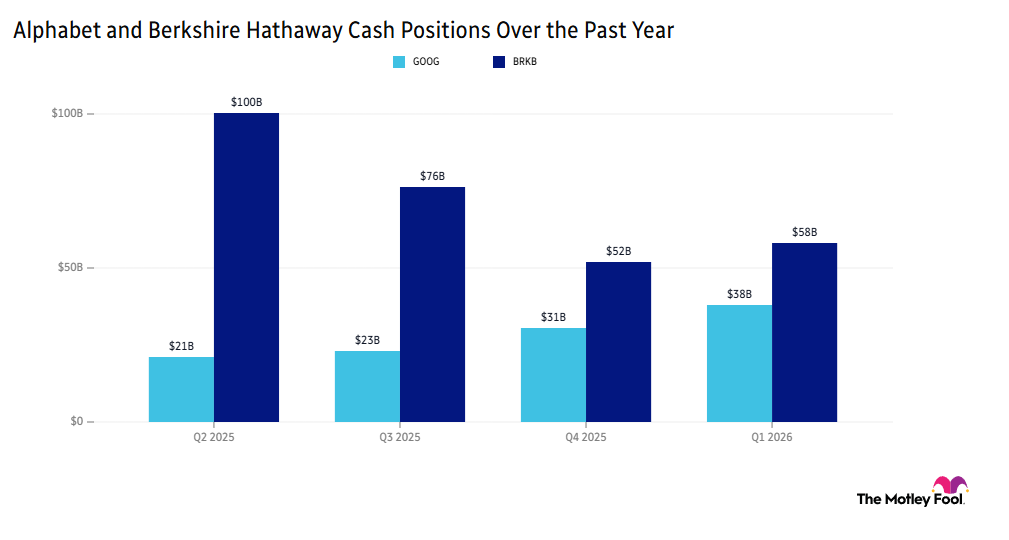
- Historic Stock Sale: Alphabet confirmed it will sell $80 billion in stock, including a $10 billion stake to Berkshire Hathaway, to raise capital for AI compute infrastructure to meet unprecedented customer demand, although its stock fell about 2.5% ahead of the opening bell.
- Berkshire's Increased Stake: Berkshire's current holding in Alphabet is valued at around $20 billion, and this additional $10 billion investment is likely to make it the third-largest portfolio holding, behind Apple and American Express, reflecting confidence in Alphabet's growth potential.
- Strong HPE Performance: Hewlett Packard Enterprise's quarterly results exceeded expectations, with cloud and AI revenue driving its stock up over 25% in pre-market trading, and management now expects revenue growth of 29%-33% for the full year, indicating robust market demand.
- Space Stock Volatility: Ahead of the SpaceX IPO, space-related stocks like Rocket Lab and Redwire fell 14.7% and 15.83% respectively, as investors opted to reduce exposure due to concerns over short-term volatility, despite Rocket Lab outperforming the S&P 500 by 204% since July 2025.
See More

Blue Origin's New Glenn Rocket Set to Return to Flight by End of 2026
- Flight Timeline Confirmation: Blue Origin CEO Dave Limp announced that the New Glenn rocket is set to return to flight by the end of 2026, alleviating investor fears that last week's launchpad explosion could delay recovery until 2028, demonstrating the company's confidence in its recovery timeline.
- Infrastructure Damage Assessment: Limp revealed that critical infrastructure at Launch Complex 36 in Cape Canaveral, Florida, survived the explosion, including fuel storage systems and the New Glenn booster, indicating the company's ability to quickly restore launch capabilities.
- NASA Clarifies Timeline: NASA Administrator Jared Isaacman clarified that his earlier mention of a 2028 timeline referred to future lunar base missions, not New Glenn's return, further boosting market confidence in Blue Origin's recovery efforts.
- Positive Market Reaction: Following Limp's announcement, space stocks rebounded in overnight trading, with Rocket One surging 18%, and companies like AST SpaceMobile and Rocket Lab USA also seeing gains, reflecting investor optimism in the space sector.
See More
SpaceX IPO Details Expected Soon, Valuation Up to $1.8 Trillion
- IPO Fundraising Target: SpaceX aims to raise $75 billion by selling 555.6 million shares at $135 each, implying a valuation between $1.75 trillion and $1.8 trillion, surpassing Saudi Aramco's $29.4 billion IPO in 2019, highlighting its immense potential in the space market.
- All-Primary Offering Structure: The IPO will be structured as an all-primary offering, ensuring all proceeds flow directly to SpaceX while existing shareholders are barred from selling shares during the IPO, which preserves the company's control and may facilitate rapid inclusion in the Nasdaq 100.
- Underwriting Fee Negotiations: SpaceX is negotiating underwriting fees below 0.75%, which, while lower than traditional levels, could still generate $500 million in fees for participating banks due to the massive size of the deal, showcasing its strong fundraising capability.
- Market Sentiment Volatility: Despite attracting investor interest, there are concerns about SpaceX's proposed valuation of $1.75 trillion to $1.8 trillion, with Morningstar suggesting it may be overvalued, indicating potential stock price pressure in the months following the IPO, prompting investors to carefully assess risks.
See More
Redwire Shares Surge 168% Amid SpaceX IPO Anticipation
- Significant Stock Surge: Redwire's shares skyrocketed 168% in May, reaching $20.55, primarily driven by strong quarterly results and anticipation surrounding SpaceX's IPO, reflecting market optimism about its future growth prospects.
- Robust Financial Performance: The company reported a 58% year-over-year revenue increase to $97 million in Q1, with backlog rising to $500 million, indicating sustained demand in the space and defense sectors and substantial revenue growth potential ahead.
- Key Contract Wins: While Redwire's contracts may not be as headline-grabbing as those of SpaceX or Lockheed Martin, its role as a key supplier for these giants in sensors and energy systems is becoming increasingly vital, particularly in military drones and AI data centers.
- Optimistic Market Outlook: With a market cap of only $4 billion and a price-to-sales ratio of 8.3, Redwire remains undervalued compared to some hot stocks in the sector, suggesting that as demand for solar arrays and other orbital solutions grows, it could achieve steady revenue growth in the coming years.
See More
Redwire Stock Rises on SpaceX IPO Hopes
- Significant Revenue Growth: Redwire reported a 58% year-over-year revenue increase to $97 million in Q1, indicating strong market demand in the space economy and suggesting continued performance growth in the future.
- Increased Backlog: The company's backlog rose to $500 million, reflecting its ability to win multiple contracts, with a book-to-bill ratio of 1.92, indicating substantial revenue growth potential ahead.
- Unique Market Positioning: As a key supplier in the space and defense sectors, Redwire focuses on sensors, energy systems, and spacecraft platforms, particularly in solar systems for AI data centers, which could see a surge in demand.
- Relatively Reasonable Valuation: Although Redwire is not yet profitable, it trades at a price-to-sales ratio of 8.3, lower than some hot stocks, suggesting that its role as the
See More
NASDAQ 100 Pre-Market Activity Overview
- Market Indicator Decline: The NASDAQ 100 Pre-Market Indicator decreased by 6.17 points to 30,507.69, indicating cautious market sentiment that may influence short-term investor decisions.
- Active Stock Performance: Nokia Corporation (NOK) rose by $0.4691 to $16.72 with a trading volume of 14,771,250 shares, and its current mean recommendation is in the 'buy range', reflecting market confidence in its future performance.
- Tech Stock Dynamics: NVIDIA Corporation (NVDA) increased by $2.9 to $227.26 with a volume of 7,031,708 shares, showcasing its strong performance in the tech sector despite overall market volatility.
- Other Stock Fluctuations: The Direxion Daily TSLA Bull 2X ETF (TSLL) gained $0.16 to $14.63, representing a 65.12% increase from its 52-week low, indicating strong investor interest and positive market sentiment towards this ETF.
See More
Alphabet's $80 Billion AI Investment Plan
- Historic Stock Sale: Alphabet confirmed it will sell $80 billion in stock, including a $10 billion stake to Berkshire Hathaway, to raise capital for AI compute infrastructure to meet unprecedented customer demand, although its stock fell about 2.5% ahead of the opening bell.
- Berkshire's Increased Stake: Berkshire's current holding in Alphabet is valued at around $20 billion, and this additional $10 billion investment is likely to make it the third-largest portfolio holding, behind Apple and American Express, reflecting confidence in Alphabet's growth potential.
- Strong HPE Performance: Hewlett Packard Enterprise's quarterly results exceeded expectations, with cloud and AI revenue driving its stock up over 25% in pre-market trading, and management now expects revenue growth of 29%-33% for the full year, indicating robust market demand.
- Space Stock Volatility: Ahead of the SpaceX IPO, space-related stocks like Rocket Lab and Redwire fell 14.7% and 15.83% respectively, as investors opted to reduce exposure due to concerns over short-term volatility, despite Rocket Lab outperforming the S&P 500 by 204% since July 2025.
See More
Blue Origin's New Glenn Rocket Set to Return to Flight by End of 2026
- Flight Timeline Confirmation: Blue Origin CEO Dave Limp announced that the New Glenn rocket is set to return to flight by the end of 2026, alleviating investor fears that last week's launchpad explosion could delay recovery until 2028, demonstrating the company's confidence in its recovery timeline.
- Infrastructure Damage Assessment: Limp revealed that critical infrastructure at Launch Complex 36 in Cape Canaveral, Florida, survived the explosion, including fuel storage systems and the New Glenn booster, indicating the company's ability to quickly restore launch capabilities.
- NASA Clarifies Timeline: NASA Administrator Jared Isaacman clarified that his earlier mention of a 2028 timeline referred to future lunar base missions, not New Glenn's return, further boosting market confidence in Blue Origin's recovery efforts.
- Positive Market Reaction: Following Limp's announcement, space stocks rebounded in overnight trading, with Rocket One surging 18%, and companies like AST SpaceMobile and Rocket Lab USA also seeing gains, reflecting investor optimism in the space sector.
See More





