Quality Long-Term Investment Choices
Written by Emily J. Thompson, Senior Investment Analyst
Updated: Mar 23 2026
0mins

Should l Buy HD?
Source: Fool
- Alpine Income Property Trust: With a market cap of $287 million, Alpine recently acquired 177,441 square feet of property for $20.7 million, which is expected to drive earnings growth and maintain a high dividend yield of 6.08%, significantly above the S&P 500's 1.2%.
- REIT Advantages: As a Real Estate Investment Trust, Alpine avoids federal corporate income taxes by returning most profits to shareholders as dividends, providing a stable source of passive income that attracts investors looking for real estate exposure without the management hassles.
- Home Depot's Market Potential: Despite current consumer spending pressures from high inflation and a weak job market, Home Depot, with a market cap of $319 billion, is poised for growth as mortgage rates are expected to decline, unlocking significant home improvement demand.
- Attractive Valuation and Dividend Appeal: Home Depot's forward P/E ratio of 21 aligns with market averages, and its 2.88% dividend yield adds extra appeal for investors, highlighting its potential in long-term investment strategies.
Trade with 70% Backtested Accuracy
Stop guessing "Should I Buy HD?" and start using high-conviction signals backed by rigorous historical data.
Sign up today to access powerful investing tools and make smarter, data-driven decisions.
Analyst Views on HD
Wall Street analysts forecast HD stock price to rise
23 Analyst Rating
17 Buy
5 Hold
1 Sell
Moderate Buy
Current: 310.460

Low
320.00
Averages
401.47
High
441.00
Current: 310.460
Low
320.00
Averages
401.47
High
441.00
About HD
The Home Depot, Inc. is a home improvement retailer. It offers its customers an assortment of home improvement products, building materials, lawn and garden products, decor products, and facilities maintenance, repair, and operations (MRO) products, in stores and online. It also provides a number of services, including home improvement installation services, and tool and equipment rental. It operates over 2,359 stores located throughout the U.S. (including the Commonwealth of Puerto Rico and the territories of the U.S. Virgin Islands and Guam), Canada, and Mexico. Its stores average over 104,000 square feet of enclosed space, with over 24,000 additional square feet of outside garden area. It also maintains a network of distribution and fulfillment centers, as well as mobile applications and e-commerce websites in the U.S., Canada, and Mexico. It serves two primary customer groups, including both do-it-yourself (DIY) and do-it-for-me (DIFM) customers and professional customers (Pros).
About the author

Emily J. Thompson
Emily J. Thompson, a Chartered Financial Analyst (CFA) with 12 years in investment research, graduated with honors from the Wharton School. Specializing in industrial and technology stocks, she provides in-depth analysis for Intellectia’s earnings and market brief reports.
The Home Depot Acquires Mingledorff's to Expand HVAC Distribution
- Acquisition Completed: SRS Distribution Inc. has finalized its acquisition of Mingledorff's, LLC, which operates 42 branches in the Southeastern U.S. and specializes in HVAC equipment wholesale distribution, expected to enhance SRS's competitiveness in the HVAC market.
- Market Expansion: This acquisition increases The Home Depot's total potential market value to $1.2 trillion, further solidifying its position in the HVAC sector and catering to the diverse needs of professional customers.
- Strategic Integration: By integrating Mingledorff's expertise with SRS's distribution network, The Home Depot can offer a more comprehensive range of products and services, thereby enhancing customer experience and promoting cross-selling synergies.
- Leadership Statement: The Home Depot CEO Ted Decker stated that this acquisition is a key step in addressing professional customer needs, aiming to strengthen market competitiveness through a richer product offering.
See More

Home Depot Canada Foundation Launches Orange Door Project Spring Campaign
- Fundraising Goal: The Home Depot Canada Foundation aims to raise $1.3 million during the 2026 spring Orange Door Project campaign to support youth-serving organizations nationwide, continuing its efforts to combat youth homelessness.
- Historical Achievement: In 2025, the foundation raised $2.9 million, demonstrating its ongoing impact and customer support in addressing youth homelessness.
- Donation Matching: On May 23, Home Depot will match all donations made in-store and online for the first time, amplifying the impact of every contribution and encouraging more customer participation.
- TradeWorx™ Initiative: By selling TradeWorx™ baseball caps, the foundation not only provides skills training and certifications to youth but also helps over 200 young people secure stable job opportunities, promoting their independence and housing stability.
See More

Tech Boom vs. Consumer Struggles: A Tale of Two Markets

- Tech Stock Surge: Driven by soaring demand for memory components and CPUs, tech stocks like Alphabet and Nvidia have shown strong performance, propelling major indices such as the Nasdaq Composite and S&P 500 to significant gains over the past month, reflecting heightened confidence among technology investors.
- Consumer Sector Struggles: While the retail and consumer discretionary sectors are not in dire straits, cyclical companies like Home Depot have seen stock prices drop over 23% in the last three months due to rising inflation and energy costs, highlighting the reality of squeezed consumer spending.
- Rising Macroeconomic Concerns: Analysts warn that despite the robust performance of tech stocks, the market's divergence indicates underlying economic fragility, especially as both the consumer price index and producer price index have shown significant increases, with PPI rising 6% year-over-year, the largest since December 2022.
- Surging Energy Prices: Gasoline prices have surged 28.4% year-over-year, with the average price per gallon now at $4.51, reflecting tensions in the global oil market, as Brent crude and West Texas Intermediate trade around $105 and $100 per barrel, respectively, further exacerbating economic pressures on consumers.
See More
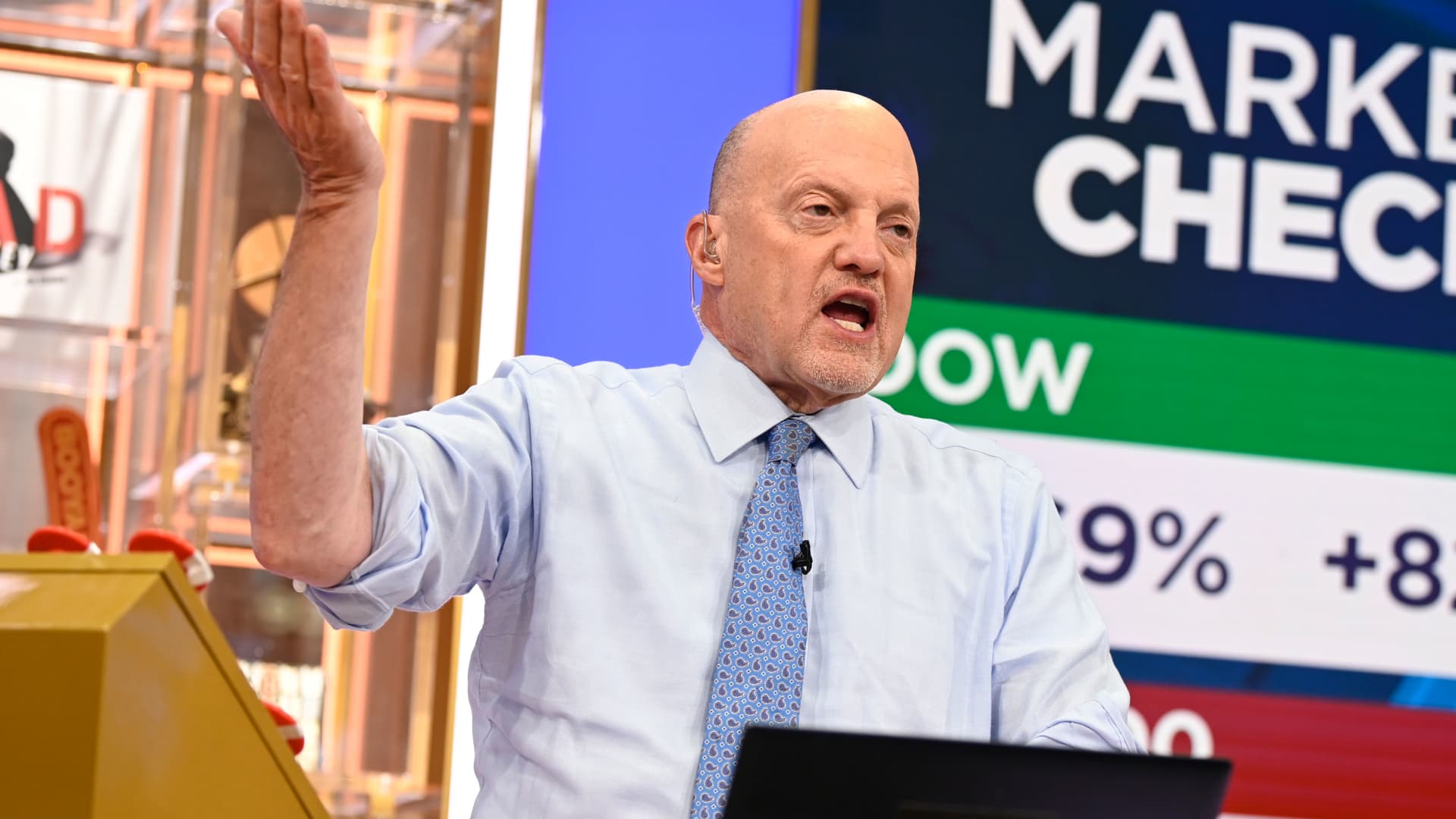
Stock Market Gains at Risk Without Rate Cuts, Says Jim Cramer
- Inflation Pressure Intensifies: The consumer price index rose 0.6% in April, pushing the annual inflation rate to 3.8%, which diminishes the likelihood of Federal Reserve rate cuts and impacts the sustainability of stock market gains.
- Bond Market Impact: The hotter-than-expected inflation data caused the 2-year Treasury yield to briefly reach 4%, indicating that investors are dialing back expectations for future rate cuts, potentially putting more pressure on the stock market.
- Sector Rotation Weakness: While the rotation into previously beaten-down sectors like healthcare is encouraging, Cramer warns that without support from the bond market, sustained stock market gains will be challenging, urging investors to remain cautious.
- War's Economic Impact: Cramer highlights that rising oil prices due to the Iran war are increasing costs across various categories, further narrowing investors' opportunities, particularly affecting stocks like Home Depot that rely on lower borrowing costs.
See More

US Stocks Retreat as Cramer Analyzes Market Dynamics

- Market Pullback: On Tuesday, the S&P 500 retreated due to a hotter-than-expected April consumer price index and spikes in oil and bond yields, indicating market sensitivity to rising rates, with Jim Cramer noting this adjustment is necessary for AI-related stocks.
- Home Depot Outlook: Despite struggling in a high-interest-rate environment, Jim Cramer remains bullish on Home Depot, believing it will outperform Lowe's, with Citi rating Home Depot as a buy, reflecting confidence in its future earnings potential.
- Nvidia Price Fluctuation: Nvidia shares slipped from a fresh intraday high ahead of its earnings report, although Wells Fargo raised its price target to $325, Jim Cramer advises investors to hold onto the stock, emphasizing its critical role in the market.
- Rapid Recap: At the end of the video, Jim Cramer mentioned stocks including FedEx, On Holding, Under Armour, Lowe's, and eBay, highlighting his focus on a diversified investment portfolio.
See More

Citi Analyst Upgrades Lowe's to Buy Amid Recovery Prospects
- Sales Growth Trend: Citi Research analyst Steven Zaccone highlights that Lowe's has achieved four consecutive quarters of same-store sales growth, indicating a stronger market exposure in the DIY-led recovery, which has prompted an upgrade of its stock rating from Hold to Buy, reflecting market confidence in its future performance.
- Macro Risk Assessment: Despite external risks from geopolitical conflicts, interest rates, and the housing market, Zaccone believes that Lowe's shares present an attractive risk/reward profile after the recent pullback, especially against the backdrop of strong spring performance, with expectations for the company to exceed first-quarter forecasts.
- Market Demand Potential: Zaccone anticipates that 2026 will be a year of gradual improvement, even if growth is slightly lower, as pent-up demand for home improvement spending is expected to rise due to increased existing home sales and lower rates, providing support for Lowe's long-term growth.
- Competitor Analysis: While Zaccone has slightly trimmed his full-year estimates for Home Depot, he maintains a Buy rating, asserting that Home Depot remains the highest-quality investment option for an eventual housing recovery, bolstered by unmatched scale and customer penetration.
See More
The Home Depot Acquires Mingledorff's to Expand HVAC Distribution
- Acquisition Completed: SRS Distribution Inc. has finalized its acquisition of Mingledorff's, LLC, which operates 42 branches in the Southeastern U.S. and specializes in HVAC equipment wholesale distribution, expected to enhance SRS's competitiveness in the HVAC market.
- Market Expansion: This acquisition increases The Home Depot's total potential market value to $1.2 trillion, further solidifying its position in the HVAC sector and catering to the diverse needs of professional customers.
- Strategic Integration: By integrating Mingledorff's expertise with SRS's distribution network, The Home Depot can offer a more comprehensive range of products and services, thereby enhancing customer experience and promoting cross-selling synergies.
- Leadership Statement: The Home Depot CEO Ted Decker stated that this acquisition is a key step in addressing professional customer needs, aiming to strengthen market competitiveness through a richer product offering.
See More
Home Depot Canada Foundation Launches Orange Door Project Spring Campaign
- Fundraising Goal: The Home Depot Canada Foundation aims to raise $1.3 million during the 2026 spring Orange Door Project campaign to support youth-serving organizations nationwide, continuing its efforts to combat youth homelessness.
- Historical Achievement: In 2025, the foundation raised $2.9 million, demonstrating its ongoing impact and customer support in addressing youth homelessness.
- Donation Matching: On May 23, Home Depot will match all donations made in-store and online for the first time, amplifying the impact of every contribution and encouraging more customer participation.
- TradeWorx™ Initiative: By selling TradeWorx™ baseball caps, the foundation not only provides skills training and certifications to youth but also helps over 200 young people secure stable job opportunities, promoting their independence and housing stability.
See More
Tech Boom vs. Consumer Struggles: A Tale of Two Markets
- Tech Stock Surge: Driven by soaring demand for memory components and CPUs, tech stocks like Alphabet and Nvidia have shown strong performance, propelling major indices such as the Nasdaq Composite and S&P 500 to significant gains over the past month, reflecting heightened confidence among technology investors.
- Consumer Sector Struggles: While the retail and consumer discretionary sectors are not in dire straits, cyclical companies like Home Depot have seen stock prices drop over 23% in the last three months due to rising inflation and energy costs, highlighting the reality of squeezed consumer spending.
- Rising Macroeconomic Concerns: Analysts warn that despite the robust performance of tech stocks, the market's divergence indicates underlying economic fragility, especially as both the consumer price index and producer price index have shown significant increases, with PPI rising 6% year-over-year, the largest since December 2022.
- Surging Energy Prices: Gasoline prices have surged 28.4% year-over-year, with the average price per gallon now at $4.51, reflecting tensions in the global oil market, as Brent crude and West Texas Intermediate trade around $105 and $100 per barrel, respectively, further exacerbating economic pressures on consumers.
See More
Stock Market Gains at Risk Without Rate Cuts, Says Jim Cramer
- Inflation Pressure Intensifies: The consumer price index rose 0.6% in April, pushing the annual inflation rate to 3.8%, which diminishes the likelihood of Federal Reserve rate cuts and impacts the sustainability of stock market gains.
- Bond Market Impact: The hotter-than-expected inflation data caused the 2-year Treasury yield to briefly reach 4%, indicating that investors are dialing back expectations for future rate cuts, potentially putting more pressure on the stock market.
- Sector Rotation Weakness: While the rotation into previously beaten-down sectors like healthcare is encouraging, Cramer warns that without support from the bond market, sustained stock market gains will be challenging, urging investors to remain cautious.
- War's Economic Impact: Cramer highlights that rising oil prices due to the Iran war are increasing costs across various categories, further narrowing investors' opportunities, particularly affecting stocks like Home Depot that rely on lower borrowing costs.
See More
US Stocks Retreat as Cramer Analyzes Market Dynamics
- Market Pullback: On Tuesday, the S&P 500 retreated due to a hotter-than-expected April consumer price index and spikes in oil and bond yields, indicating market sensitivity to rising rates, with Jim Cramer noting this adjustment is necessary for AI-related stocks.
- Home Depot Outlook: Despite struggling in a high-interest-rate environment, Jim Cramer remains bullish on Home Depot, believing it will outperform Lowe's, with Citi rating Home Depot as a buy, reflecting confidence in its future earnings potential.
- Nvidia Price Fluctuation: Nvidia shares slipped from a fresh intraday high ahead of its earnings report, although Wells Fargo raised its price target to $325, Jim Cramer advises investors to hold onto the stock, emphasizing its critical role in the market.
- Rapid Recap: At the end of the video, Jim Cramer mentioned stocks including FedEx, On Holding, Under Armour, Lowe's, and eBay, highlighting his focus on a diversified investment portfolio.
See More
Citi Analyst Upgrades Lowe's to Buy Amid Recovery Prospects
- Sales Growth Trend: Citi Research analyst Steven Zaccone highlights that Lowe's has achieved four consecutive quarters of same-store sales growth, indicating a stronger market exposure in the DIY-led recovery, which has prompted an upgrade of its stock rating from Hold to Buy, reflecting market confidence in its future performance.
- Macro Risk Assessment: Despite external risks from geopolitical conflicts, interest rates, and the housing market, Zaccone believes that Lowe's shares present an attractive risk/reward profile after the recent pullback, especially against the backdrop of strong spring performance, with expectations for the company to exceed first-quarter forecasts.
- Market Demand Potential: Zaccone anticipates that 2026 will be a year of gradual improvement, even if growth is slightly lower, as pent-up demand for home improvement spending is expected to rise due to increased existing home sales and lower rates, providing support for Lowe's long-term growth.
- Competitor Analysis: While Zaccone has slightly trimmed his full-year estimates for Home Depot, he maintains a Buy rating, asserting that Home Depot remains the highest-quality investment option for an eventual housing recovery, bolstered by unmatched scale and customer penetration.
See More