Puma Reports Q4 Revenue of $75.5M
Reports Q4 revenue $75.5M vs. $59.1M last year. "Our financial performance in the fourth quarter and full year 2025 demonstrates continued momentum, with net income marking our third consecutive year of profitability, a testament to our disciplined execution and careful fiscal stewardship," said Alan H. Auerbach, Chairman, Chief Executive Officer and President of Puma. "Our current guidance forecasts that we will continue to be profitable in 2026, which we believe is a result of this continued financial discipline. In parallel, we continue to advance alisertib clinically through ALISCA(TM)-Breast1 and ALISCA(TM)-Lung1, targeting patient populations in chemotherapy-naive HER2-negative, hormone receptor-positive metastatic breast cancer and extensive-stage small cell lung cancer."
Trade with 70% Backtested Accuracy
Analyst Views on PBYI


No data
About PBYI
About the author


Puma Biotechnology Q1 2026 Earnings Call Highlights

- Revenue Performance: Puma reported total revenue of $44.8 million for Q1 2026, with product revenue at $42 million, impacted by an inventory drawdown of approximately $7.9 million, indicating shifts in sales dynamics through specialty pharmacies and distributors.
- Clinical Progress: In the ALISCA-Lung1 trial, Puma plans to increase alisertib dosage from 60 mg to 70 mg, with hopes to begin enrollment for the 70 mg cohort in the second half of 2026, demonstrating the company's ongoing commitment to R&D in small cell lung cancer.
- Outlook Adjustment: Puma raised its 2026 NERLYNX net product revenue guidance to a range of $202 million to $206 million, up from the previous $194 million to $198 million, reflecting increased confidence in future sales growth.
- Financial Status: The company reported a net loss of $3.8 million for Q1, translating to a loss of $0.07 per share; however, management anticipates full-year net income between $16 million and $19 million, indicating a trend towards improved profitability.

Puma Biotechnology Grants Stock Awards to New Employees
- Stock Award Program: On May 5, 2026, Puma Biotechnology approved the grant of 59,750 restricted stock units to six new non-executive employees, aimed at attracting talent and enhancing the company's appeal.
- Vesting Conditions: Under the 2017 Employment Inducement Incentive Award Plan, the stock units will vest over three years, with one-third vesting on the first anniversary and one-sixth every six months thereafter, ensuring continued employee service.
- Product Development Progress: Puma focuses on developing innovative cancer treatment products, with its NERLYNX® receiving FDA approval in 2017 for extended adjuvant treatment of early HER2-positive breast cancer, demonstrating the company's ongoing commitment in the oncology sector.
- Clinical Trial Initiation: In February 2024, Puma initiated the ALISCA™-Lung1 Phase II clinical trial for small cell lung cancer, marking a significant step in the development of the anti-cancer drug alisertib, which is expected to drive future market growth.
Puma Biotechnology Grants Stock Awards to New Employees
- Stock Award Program: On April 1, 2026, Puma Biotechnology approved the grant of 31,625 restricted stock units to five new non-executive employees, aimed at attracting talent and enhancing the company's appeal.
- Vesting Conditions: Under the 2017 Employment Inducement Incentive Award Plan, the stock units will vest over three years, with one-third vesting on the first anniversary and one-sixth every six months thereafter, ensuring continued employee service.
- Clinical Trial Progress: Puma is conducting two Phase II clinical trials, ALISCA™-Lung1 and ALISCA™-Breast1, targeting small cell lung cancer and HER2-negative, HR-positive metastatic breast cancer, demonstrating the company's ongoing commitment to cancer drug development.
- Market Authorization Status: Puma's NERLYNX® received FDA approval in 2017 for extended adjuvant treatment of early-stage HER2-positive breast cancer, further solidifying its market position in cancer care.
Nike Expected to Report Significant Quarterly Profit Decline

- Profit Decline Expected: Nike is anticipated to report a significant decline in quarterly profit, with North American sales rising 9% overshadowed by a 17% revenue drop in China, highlighting the company's complex challenges in global markets.
- Slow Transformation Progress: Under CEO Elliott Hill, Nike is undergoing a massive turnaround, and while some progress has been made, the company has made it clear that overall improvement will take time, making it difficult for investors to assess the sustainability of recovery.
- Increased External Pressures: The global trade war and new conflicts in the Middle East have led to rising gas prices, which are expected to push consumer prices higher, potentially forcing shoppers to cut back on discretionary spending, thereby impacting Nike's sales.
- Future Outlook: Nike is set to provide financial guidance during an analyst call, with expected earnings per share of 28 cents and revenue of $11.24 billion, as investors will be keen to monitor performance in North America's holiday quarter and updates on the turnaround plan.
Dick's Sporting Goods Exceeds Holiday Expectations but Issues Weak Guidance

- Holiday Performance Exceeds Expectations: Dick's Sporting Goods reported an adjusted EPS of $3.45 for the holiday quarter, surpassing the $2.87 expected by analysts, with revenue reaching $6.23 billion, a significant increase from $3.89 billion a year earlier, indicating strong sales during the holiday season.
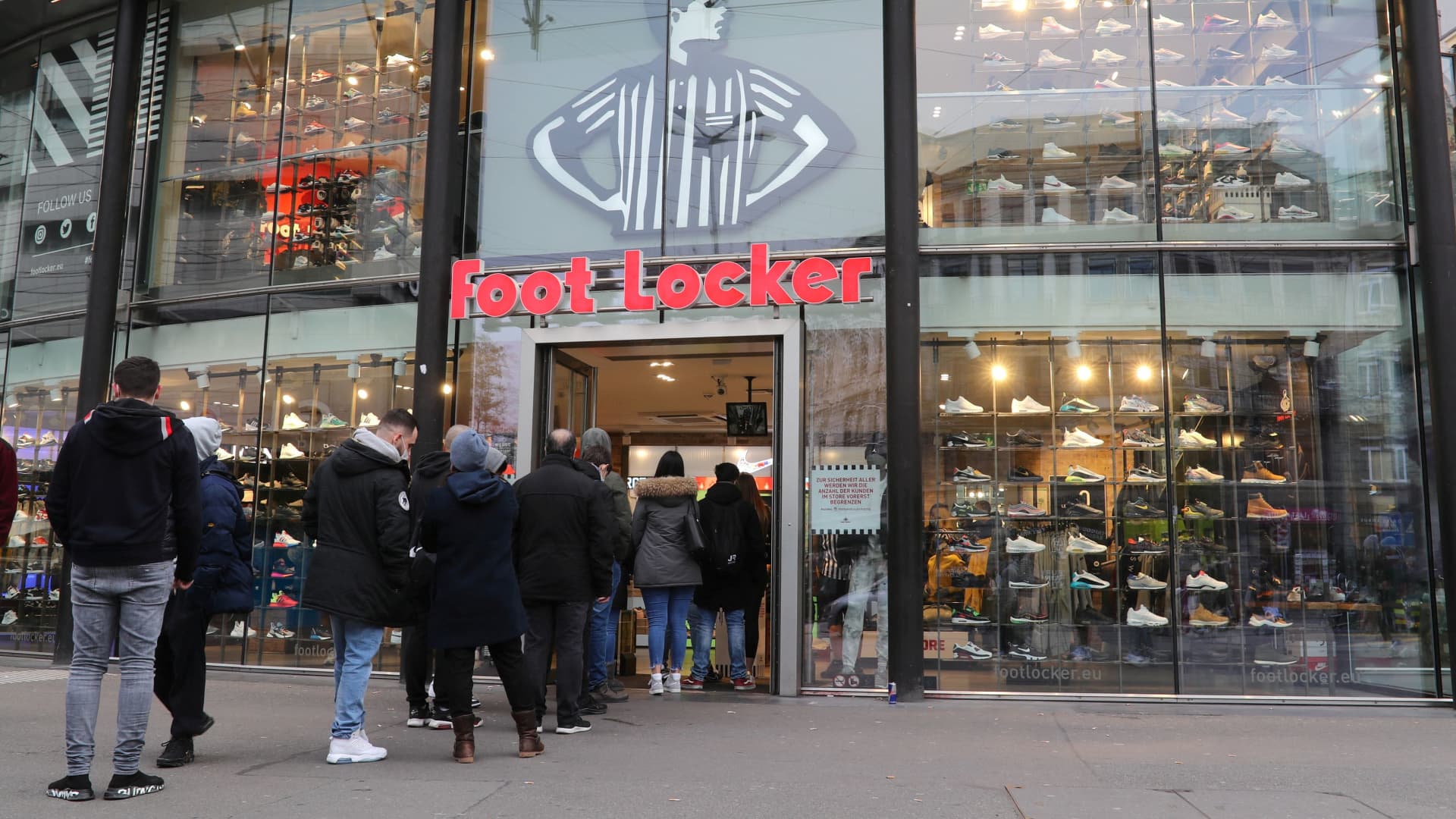
- Weak Profit Guidance: Despite the strong holiday performance, Dick's expects adjusted EPS for fiscal 2026 to be between $13.50 and $14.50, below the $14.67 anticipated by analysts, reflecting ongoing cost pressures from the Foot Locker acquisition.
- Acquisition Cost Impact: The company anticipates costs associated with the Foot Locker merger to range between $500 million and $750 million, with approximately $390 million already recorded in fiscal 2025, indicating that the integration process will negatively affect future financial performance.
- Store Adjustment Plan: Following the acquisition, Dick's has closed 57 underperforming Foot Locker stores and initiated a pilot program with 11

Adidas Disappoints with 2026 Outlook, Shares Drop
- 2026 Profit Outlook: Adidas forecasts an operating profit of around €2.3 billion ($2.68 billion) for 2026, despite a €400 million negative impact from U.S. tariffs and unfavorable currency fluctuations, which is 15% below overall market expectations, potentially disappointing investors.
- Sales Growth Forecast: The company anticipates high single-digit revenue growth in 2026 based on 2025's total of €24.8 billion ($28.86 billion), indicating that Adidas faces significant challenges in a global sportswear market characterized by excess supply and shifting consumer preferences.
- Stock Price Volatility: Adidas shares fell as much as 8% on Wednesday morning, hitting a fresh 52-week low, and have nearly halved over the past year, reflecting ongoing investor skepticism about the company's future, particularly as it navigates turnarounds alongside competitors Puma and Nike.
- Executive Contract Extension: Adidas also announced the extension of CEO Bjørn Gulden's contract until 2030, signaling confidence in his strategic direction, as Gulden has been working to stabilize the company following its split with rapper Ye, which triggered a significant crisis for the brand.
Puma Biotechnology Q1 2026 Earnings Call Highlights
- Revenue Performance: Puma reported total revenue of $44.8 million for Q1 2026, with product revenue at $42 million, impacted by an inventory drawdown of approximately $7.9 million, indicating shifts in sales dynamics through specialty pharmacies and distributors.
- Clinical Progress: In the ALISCA-Lung1 trial, Puma plans to increase alisertib dosage from 60 mg to 70 mg, with hopes to begin enrollment for the 70 mg cohort in the second half of 2026, demonstrating the company's ongoing commitment to R&D in small cell lung cancer.
- Outlook Adjustment: Puma raised its 2026 NERLYNX net product revenue guidance to a range of $202 million to $206 million, up from the previous $194 million to $198 million, reflecting increased confidence in future sales growth.
- Financial Status: The company reported a net loss of $3.8 million for Q1, translating to a loss of $0.07 per share; however, management anticipates full-year net income between $16 million and $19 million, indicating a trend towards improved profitability.
Puma Biotechnology Grants Stock Awards to New Employees
- Stock Award Program: On May 5, 2026, Puma Biotechnology approved the grant of 59,750 restricted stock units to six new non-executive employees, aimed at attracting talent and enhancing the company's appeal.
- Vesting Conditions: Under the 2017 Employment Inducement Incentive Award Plan, the stock units will vest over three years, with one-third vesting on the first anniversary and one-sixth every six months thereafter, ensuring continued employee service.
- Product Development Progress: Puma focuses on developing innovative cancer treatment products, with its NERLYNX® receiving FDA approval in 2017 for extended adjuvant treatment of early HER2-positive breast cancer, demonstrating the company's ongoing commitment in the oncology sector.
- Clinical Trial Initiation: In February 2024, Puma initiated the ALISCA™-Lung1 Phase II clinical trial for small cell lung cancer, marking a significant step in the development of the anti-cancer drug alisertib, which is expected to drive future market growth.
Puma Biotechnology Grants Stock Awards to New Employees
- Stock Award Program: On April 1, 2026, Puma Biotechnology approved the grant of 31,625 restricted stock units to five new non-executive employees, aimed at attracting talent and enhancing the company's appeal.
- Vesting Conditions: Under the 2017 Employment Inducement Incentive Award Plan, the stock units will vest over three years, with one-third vesting on the first anniversary and one-sixth every six months thereafter, ensuring continued employee service.
- Clinical Trial Progress: Puma is conducting two Phase II clinical trials, ALISCA™-Lung1 and ALISCA™-Breast1, targeting small cell lung cancer and HER2-negative, HR-positive metastatic breast cancer, demonstrating the company's ongoing commitment to cancer drug development.
- Market Authorization Status: Puma's NERLYNX® received FDA approval in 2017 for extended adjuvant treatment of early-stage HER2-positive breast cancer, further solidifying its market position in cancer care.
Nike Expected to Report Significant Quarterly Profit Decline
- Profit Decline Expected: Nike is anticipated to report a significant decline in quarterly profit, with North American sales rising 9% overshadowed by a 17% revenue drop in China, highlighting the company's complex challenges in global markets.
- Slow Transformation Progress: Under CEO Elliott Hill, Nike is undergoing a massive turnaround, and while some progress has been made, the company has made it clear that overall improvement will take time, making it difficult for investors to assess the sustainability of recovery.
- Increased External Pressures: The global trade war and new conflicts in the Middle East have led to rising gas prices, which are expected to push consumer prices higher, potentially forcing shoppers to cut back on discretionary spending, thereby impacting Nike's sales.
- Future Outlook: Nike is set to provide financial guidance during an analyst call, with expected earnings per share of 28 cents and revenue of $11.24 billion, as investors will be keen to monitor performance in North America's holiday quarter and updates on the turnaround plan.
Dick's Sporting Goods Exceeds Holiday Expectations but Issues Weak Guidance
- Holiday Performance Exceeds Expectations: Dick's Sporting Goods reported an adjusted EPS of $3.45 for the holiday quarter, surpassing the $2.87 expected by analysts, with revenue reaching $6.23 billion, a significant increase from $3.89 billion a year earlier, indicating strong sales during the holiday season.
- Weak Profit Guidance: Despite the strong holiday performance, Dick's expects adjusted EPS for fiscal 2026 to be between $13.50 and $14.50, below the $14.67 anticipated by analysts, reflecting ongoing cost pressures from the Foot Locker acquisition.
- Acquisition Cost Impact: The company anticipates costs associated with the Foot Locker merger to range between $500 million and $750 million, with approximately $390 million already recorded in fiscal 2025, indicating that the integration process will negatively affect future financial performance.
- Store Adjustment Plan: Following the acquisition, Dick's has closed 57 underperforming Foot Locker stores and initiated a pilot program with 11
Adidas Disappoints with 2026 Outlook, Shares Drop
- 2026 Profit Outlook: Adidas forecasts an operating profit of around €2.3 billion ($2.68 billion) for 2026, despite a €400 million negative impact from U.S. tariffs and unfavorable currency fluctuations, which is 15% below overall market expectations, potentially disappointing investors.
- Sales Growth Forecast: The company anticipates high single-digit revenue growth in 2026 based on 2025's total of €24.8 billion ($28.86 billion), indicating that Adidas faces significant challenges in a global sportswear market characterized by excess supply and shifting consumer preferences.
- Stock Price Volatility: Adidas shares fell as much as 8% on Wednesday morning, hitting a fresh 52-week low, and have nearly halved over the past year, reflecting ongoing investor skepticism about the company's future, particularly as it navigates turnarounds alongside competitors Puma and Nike.
- Executive Contract Extension: Adidas also announced the extension of CEO Bjørn Gulden's contract until 2030, signaling confidence in his strategic direction, as Gulden has been working to stabilize the company following its split with rapper Ye, which triggered a significant crisis for the brand.