Political Pressure Mounts for Consumer Rebates Amid Nike Class Action
Written by Emily J. Thompson, Senior Investment Analyst
Updated: May 14 2026
0mins
Source: Yahoo Finance
- Political Pressure: Senator Mark Kelly of Arizona has accused the administration's tariff policy of increasing household costs, asserting that savings should be returned to consumers rather than benefiting large corporations, highlighting growing dissatisfaction with current policies.
- Nike Faces Lawsuit: Nike is facing a proposed consumer class action lawsuit alleging that the company retained tariff-related savings while passing costs onto consumers, suggesting that if Nike receives refunds, customers should also benefit, reflecting market expectations for pricing transparency.
- Price Increase Impact: The lawsuit claims Nike raised shoe prices by $5 to $10 and clothing prices by $2 to $10 due to tariffs, indicating the profound impact of tariff policies on retailers' pricing strategies, which may prompt Nike to reassess its pricing and refund practices.
- Stock Decline and Confidence: Nike's stock has fallen over 33% since the beginning of the year, with analysts suggesting the company may be undergoing a long-term 'generational reset', although insider purchases by executives like CEO Elliott Hill and Apple CEO Tim Cook indicate confidence in the stock's future potential.
Trade with 70% Backtested Accuracy
Stop guessing "Should I Buy NKE?" and start using high-conviction signals backed by rigorous historical data.
Sign up today to access powerful investing tools and make smarter, data-driven decisions.
Analyst Views on NKE
Wall Street analysts forecast NKE stock price to rise
21 Analyst Rating
14 Buy
7 Hold
0 Sell
Moderate Buy
Current: 43.620

Low
62.00
Averages
76.11
High
110.00
Current: 43.620
Low
62.00
Averages
76.11
High
110.00
About NKE
NIKE, Inc. is engaged in the designing, marketing and distributing of athletic footwear, apparel, equipment and accessories and services for sports and fitness activities. The Company's operating segments include North America; Europe, Middle East & Africa (EMEA); Greater China; and Asia Pacific & Latin America (APLA). It sells a line of equipment and accessories under the NIKE Brand name, including bags, socks, sport balls, eyewear, timepieces, digital devices, bats, gloves, protective equipment and other equipment designed for sports activities. It also designs products specifically for the Jordan Brand and Converse. The Jordan Brand designs, distributes and licenses athletic and casual footwear, apparel and accessories predominantly focused on basketball performance and culture using the Jumpman trademark. The Company also designs, distributes and licenses casual sneakers, apparel and accessories under the Chuck Taylor, All Star, One Star, Star Chevron and Jack Purcell trademarks.
About the author

Emily J. Thompson
Emily J. Thompson, a Chartered Financial Analyst (CFA) with 12 years in investment research, graduated with honors from the Wharton School. Specializing in industrial and technology stocks, she provides in-depth analysis for Intellectia’s earnings and market brief reports.
Nike Faces Challenges and Opportunities Amid Turnaround Efforts

- Disappointing Financial Performance: With $46.5 billion in trailing-12-month revenue, Nike, a leader in the global sports footwear and apparel market, has seen its stock plummet 75% from its peak, and about 68% over the past five years, negatively impacting investor confidence amid ongoing turnaround efforts.
- Weak Growth Forecast: Analysts project Nike's revenue to grow at a compound annual rate of only 1.7% between fiscal 2025 and fiscal 2028, which is insufficient for long-term investors seeking substantial returns, potentially affecting its market performance.
- Attractive Dividend Yield: Currently, Nike offers a forward dividend yield of 3.6% and has paid dividends for 24 consecutive years, indicating the durability of its distribution, which may entice value investors to enter at this undervalued price point.
- Intense Market Competition: Despite Nike's strong brand recognition and global distribution capabilities, competition remains fierce, and the investment returns over the next five years carry significant uncertainty, necessitating cautious decision-making from investors to mitigate potential risks.
See More
Nike's World Cup Marketing Strategy and Stock Performance
- World Cup Marketing Campaign: Nike launched the 'Rip The Script' campaign featuring stars like Cristiano Ronaldo and Kylian Mbappe, aiming to leverage celebrity influence to enhance brand visibility, despite a 4% stock drop this week indicating market concerns over its recovery strategy.
- Product Innovation and Expansion: Nike introduced the SB FC Pack, blending football with skate culture through new apparel and footwear, hoping to attract younger consumers despite facing stiff market competition with a diversified product line.
- Recovery Strategy: Nike's CEO highlighted football as a key pillar of its recovery strategy, expecting to enhance presentations at over 5,000 retail locations by the end of the World Cup, aiming to capitalize on the event to drive growth in the coming quarters.
- Investor Sentiment Shift: Although JPMorgan upgraded Nike to 'Overweight', recent retail investor sentiment has turned neutral, reflecting caution regarding Nike's stock trajectory, particularly against the backdrop of a 28% decline over the past year.
See More
Halper Sadeh Investigates Nike Executives for Breach of Duties
- Shareholder Rights Protection: Halper Sadeh LLC is investigating whether certain Nike executives breached their fiduciary duties to shareholders, which, if confirmed, could lead to corporate governance reforms and fund recovery, thereby enhancing shareholder value.
- Legal Fee Arrangement: The firm promises to handle the case on a contingency fee basis, meaning shareholders will not incur out-of-pocket legal expenses, thus lowering the economic barrier for participation and encouraging more shareholders to assert their rights.
- Importance of Shareholder Involvement: Shareholder participation can improve company policies and oversight mechanisms, fostering transparency and accountability, which in turn enhances management efficiency and shareholder value, carrying significant strategic implications.
- Global Investor Representation: Halper Sadeh LLC represents investors worldwide, focusing on combating securities fraud and corporate misconduct, and has successfully implemented corporate reforms that have recovered millions for defrauded investors, highlighting its influence in protecting investor rights.
See More

Lululemon's Q1 Earnings Disappoint, Outlook Dims

- Weak Performance: Lululemon's Q1 revenue grew only 4% to $2.47 billion, surpassing expectations, yet comparable sales in North America fell 5%, indicating weakness in its core market and negatively impacting overall performance.
- Declining Gross Margin: The company's gross margin dropped by 410 basis points to 54.2%, with 280 basis points attributed to tariff impacts, while fixed cost deleverage due to falling North American sales exacerbated the situation, leading to a 37% decline in operating income to $276.9 million, highlighting challenges in cost management.
- Pessimistic Guidance: Lululemon forecasts a revenue decline of 2%-3% for Q2, estimating between $2.45 billion and $2.475 billion, significantly below the market expectation of $2.59 billion, reflecting ongoing difficulties in returning to growth.
- Management Changes: Following the ousting of the former CEO, the company is currently led by two interim co-CEOs until new CEO Heidi O'Neill takes over in September, which has led to a lack of confidence in future strategies, resulting in an 11% drop in stock price post-earnings report.
See More
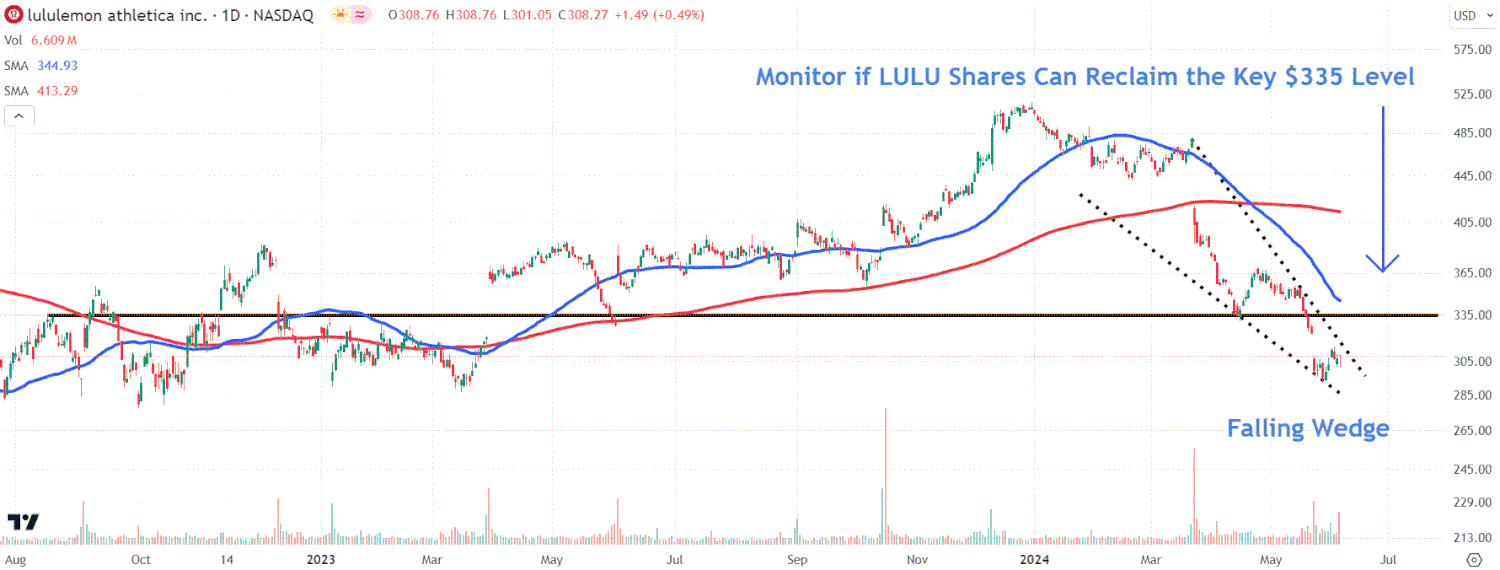
Lululemon Meets Q1 Estimates but Lowers Full-Year Guidance
- Q1 Performance Meets Expectations: Lululemon reported Q1 revenue of $2.47 billion, surpassing the consensus estimate of $2.43 billion, although the 4% year-over-year growth indicates stagnation in its core North American market.
- Guidance Downgrade: The company projected Q2 revenue between $2.45 billion and $2.475 billion, significantly lower than the market expectation of $2.59 billion, highlighting ongoing market challenges and internal management issues.
- Gross Margin Decline: Lululemon's gross margin fell by 410 basis points to 54.2% due to tariff impacts and fixed cost deleverage, which pressured profitability and led to a 37% drop in operating income to $276.9 million.
- New CEO Incoming: New CEO Heidi O'Neill will take over in three months, and while there have been some successes with new product launches, the overall turnaround appears to be on hold, raising concerns about investor confidence in the interim.
See More

Quantinuum's IPO Performance and Market Impact


- Quantum Computing IPO: Quantinuum debuted on Nasdaq with an initial price of $60, opening at $68 and peaking at a 13% gain before closing flat at $60.38, indicating market volatility and investor caution in the quantum sector.
- Divergent Industry Performance: While Quantinuum's performance was lackluster, other quantum firms like IonQ and D-Wave Quantum saw significant gains of 76.8% and 46.2% respectively over the past three months, highlighting the mixed opportunities and risks in the industry.
- SpaceX IPO Buzz: SpaceX is set to become the largest IPO in history, with JPMorgan Chase CEO Jamie Dimon discussing it with high-net-worth clients, which has sparked interest in space-related stocks, with companies like Redwire and Rocket Lab experiencing substantial price increases.
- Lululemon's Earnings Decline: Following its earnings report, Lululemon's shares dropped sharply as it lowered its annual outlook, reflecting a 63% decline over the past year, despite efforts to revitalize the brand with new CEO Heidi O'Neill starting in September.
See More
Nike Faces Challenges and Opportunities Amid Turnaround Efforts
- Disappointing Financial Performance: With $46.5 billion in trailing-12-month revenue, Nike, a leader in the global sports footwear and apparel market, has seen its stock plummet 75% from its peak, and about 68% over the past five years, negatively impacting investor confidence amid ongoing turnaround efforts.
- Weak Growth Forecast: Analysts project Nike's revenue to grow at a compound annual rate of only 1.7% between fiscal 2025 and fiscal 2028, which is insufficient for long-term investors seeking substantial returns, potentially affecting its market performance.
- Attractive Dividend Yield: Currently, Nike offers a forward dividend yield of 3.6% and has paid dividends for 24 consecutive years, indicating the durability of its distribution, which may entice value investors to enter at this undervalued price point.
- Intense Market Competition: Despite Nike's strong brand recognition and global distribution capabilities, competition remains fierce, and the investment returns over the next five years carry significant uncertainty, necessitating cautious decision-making from investors to mitigate potential risks.
See More
Nike's World Cup Marketing Strategy and Stock Performance
- World Cup Marketing Campaign: Nike launched the 'Rip The Script' campaign featuring stars like Cristiano Ronaldo and Kylian Mbappe, aiming to leverage celebrity influence to enhance brand visibility, despite a 4% stock drop this week indicating market concerns over its recovery strategy.
- Product Innovation and Expansion: Nike introduced the SB FC Pack, blending football with skate culture through new apparel and footwear, hoping to attract younger consumers despite facing stiff market competition with a diversified product line.
- Recovery Strategy: Nike's CEO highlighted football as a key pillar of its recovery strategy, expecting to enhance presentations at over 5,000 retail locations by the end of the World Cup, aiming to capitalize on the event to drive growth in the coming quarters.
- Investor Sentiment Shift: Although JPMorgan upgraded Nike to 'Overweight', recent retail investor sentiment has turned neutral, reflecting caution regarding Nike's stock trajectory, particularly against the backdrop of a 28% decline over the past year.
See More
Halper Sadeh Investigates Nike Executives for Breach of Duties
- Shareholder Rights Protection: Halper Sadeh LLC is investigating whether certain Nike executives breached their fiduciary duties to shareholders, which, if confirmed, could lead to corporate governance reforms and fund recovery, thereby enhancing shareholder value.
- Legal Fee Arrangement: The firm promises to handle the case on a contingency fee basis, meaning shareholders will not incur out-of-pocket legal expenses, thus lowering the economic barrier for participation and encouraging more shareholders to assert their rights.
- Importance of Shareholder Involvement: Shareholder participation can improve company policies and oversight mechanisms, fostering transparency and accountability, which in turn enhances management efficiency and shareholder value, carrying significant strategic implications.
- Global Investor Representation: Halper Sadeh LLC represents investors worldwide, focusing on combating securities fraud and corporate misconduct, and has successfully implemented corporate reforms that have recovered millions for defrauded investors, highlighting its influence in protecting investor rights.
See More
Lululemon's Q1 Earnings Disappoint, Outlook Dims
- Weak Performance: Lululemon's Q1 revenue grew only 4% to $2.47 billion, surpassing expectations, yet comparable sales in North America fell 5%, indicating weakness in its core market and negatively impacting overall performance.
- Declining Gross Margin: The company's gross margin dropped by 410 basis points to 54.2%, with 280 basis points attributed to tariff impacts, while fixed cost deleverage due to falling North American sales exacerbated the situation, leading to a 37% decline in operating income to $276.9 million, highlighting challenges in cost management.
- Pessimistic Guidance: Lululemon forecasts a revenue decline of 2%-3% for Q2, estimating between $2.45 billion and $2.475 billion, significantly below the market expectation of $2.59 billion, reflecting ongoing difficulties in returning to growth.
- Management Changes: Following the ousting of the former CEO, the company is currently led by two interim co-CEOs until new CEO Heidi O'Neill takes over in September, which has led to a lack of confidence in future strategies, resulting in an 11% drop in stock price post-earnings report.
See More
Lululemon Meets Q1 Estimates but Lowers Full-Year Guidance
- Q1 Performance Meets Expectations: Lululemon reported Q1 revenue of $2.47 billion, surpassing the consensus estimate of $2.43 billion, although the 4% year-over-year growth indicates stagnation in its core North American market.
- Guidance Downgrade: The company projected Q2 revenue between $2.45 billion and $2.475 billion, significantly lower than the market expectation of $2.59 billion, highlighting ongoing market challenges and internal management issues.
- Gross Margin Decline: Lululemon's gross margin fell by 410 basis points to 54.2% due to tariff impacts and fixed cost deleverage, which pressured profitability and led to a 37% drop in operating income to $276.9 million.
- New CEO Incoming: New CEO Heidi O'Neill will take over in three months, and while there have been some successes with new product launches, the overall turnaround appears to be on hold, raising concerns about investor confidence in the interim.
See More
Quantinuum's IPO Performance and Market Impact
- Quantum Computing IPO: Quantinuum debuted on Nasdaq with an initial price of $60, opening at $68 and peaking at a 13% gain before closing flat at $60.38, indicating market volatility and investor caution in the quantum sector.
- Divergent Industry Performance: While Quantinuum's performance was lackluster, other quantum firms like IonQ and D-Wave Quantum saw significant gains of 76.8% and 46.2% respectively over the past three months, highlighting the mixed opportunities and risks in the industry.
- SpaceX IPO Buzz: SpaceX is set to become the largest IPO in history, with JPMorgan Chase CEO Jamie Dimon discussing it with high-net-worth clients, which has sparked interest in space-related stocks, with companies like Redwire and Rocket Lab experiencing substantial price increases.
- Lululemon's Earnings Decline: Following its earnings report, Lululemon's shares dropped sharply as it lowered its annual outlook, reflecting a 63% decline over the past year, despite efforts to revitalize the brand with new CEO Heidi O'Neill starting in September.
See More