Palantir Shares Dip Slightly, Analysts Remain Optimistic
Written by Emily J. Thompson, Senior Investment Analyst
Updated: 1 hour ago
0mins
Source: seekingalpha
- Stock Decline: Palantir Technologies (PLTR) shares fell 0.63% to $136.56 in afternoon trading on Friday, ending a six-session winning streak, indicating market caution regarding its short-term performance.
- Significant Revenue Growth: Recent analysis shows that Palantir's commercial revenue for Q1 2026 was approximately 95% higher than a year earlier, demonstrating rapid expansion in both commercial and government sectors, although valuation remains challenging to justify.
- Strong Government Demand: Palantir's government revenue increased by 76% year-over-year, indicating sustained strong demand for its services in government contracts, further solidifying its position in the data analytics market.
- Optimistic Analyst Ratings: Among 31 analysts on Wall Street, 19 rated PLTR as a buy or higher, reflecting confidence in its future growth potential, despite the stock's approximately 22% decline year-to-date.
Trade with 70% Backtested Accuracy
Stop guessing "Should I Buy PLTR?" and start using high-conviction signals backed by rigorous historical data.
Sign up today to access powerful investing tools and make smarter, data-driven decisions.
Analyst Views on PLTR
Wall Street analysts forecast PLTR stock price to rise
17 Analyst Rating
5 Buy
10 Hold
2 Sell
Hold
Current: 137.415

Low
50.00
Averages
192.88
High
255.00
Current: 137.415
Low
50.00
Averages
192.88
High
255.00
About PLTR
Palantir Technologies Inc. is engaged in building software to assist in counterterrorism investigations and operations. The Company has built four principal software platforms, including Palantir Gotham (Gotham), Palantir Foundry (Foundry), Palantir Apollo (Apollo), and Palantir Artificial Intelligence Platform (AIP). Apollo is a cloud-agnostic, single control layer that coordinates ongoing delivery of new features, security updates, and platform configurations, helping to ensure the continuous operation of critical systems. Gotham enables users to identify patterns hidden deep within datasets, ranging from signals intelligence sources to reports from confidential informants. Foundry transforms the ways organizations operate by creating a central operating system for their data. AIP enables responsible artificial intelligence (AI)-advantage across the enterprise by using primary, core components built to effectively activate large language models and other AI within any organization.
About the author

Emily J. Thompson
Emily J. Thompson, a Chartered Financial Analyst (CFA) with 12 years in investment research, graduated with honors from the Wharton School. Specializing in industrial and technology stocks, she provides in-depth analysis for Intellectia’s earnings and market brief reports.

Palantir's Revenue Growth Accelerates Amid Market Correction

- Significant Revenue Growth: Palantir achieved an impressive 85% year-over-year revenue growth in Q1, reaching $1.63 billion, demonstrating strong demand in both commercial and government sectors, particularly in the U.S. market.
- Outstanding Profit Margin: The company reported a net income margin of 53% in Q1, a rarity in the tech industry, indicating Palantir's ability to maintain profitability while undergoing rapid growth.
- Notable Stock Price Correction: Since peaking in October, Palantir's stock has fallen approximately 35%, and despite strong fundamentals, concerns over its high valuation have led to sideways and slight downward trading.
- Valuation Risks: With a current P/E ratio of 152, significantly higher than its peers, analysts suggest that Palantir must double or triple its earnings post-2026 to justify its current high valuation.
See More

Palantir Stock Pullback Raises Growth Concerns
- Stock Pullback: Palantir's stock has fallen approximately 35% since its peak in October, indicating a decline in market enthusiasm for its AI offerings, despite reporting an impressive 85% year-over-year revenue growth to $1.63 billion in Q1.
- Strong Profitability: The company achieved a net income margin of 53% in Q1, significantly higher than many tech firms, demonstrating its ability to maintain profitability during a growth phase, yet limiting future margin expansion potential.
- Valuation Pressure: With a P/E ratio of 152, Palantir's stock is considerably more expensive than its peers, necessitating a doubling or tripling of earnings by 2026 to justify its current high valuation, assuming the share price stabilizes.
- Uncertain Market Outlook: While Palantir's AIP product line is closely tied to the generative AI expansion, investor skepticism about its ability to sustain growth suggests a prudent approach of waiting for more favorable investment opportunities.
See More
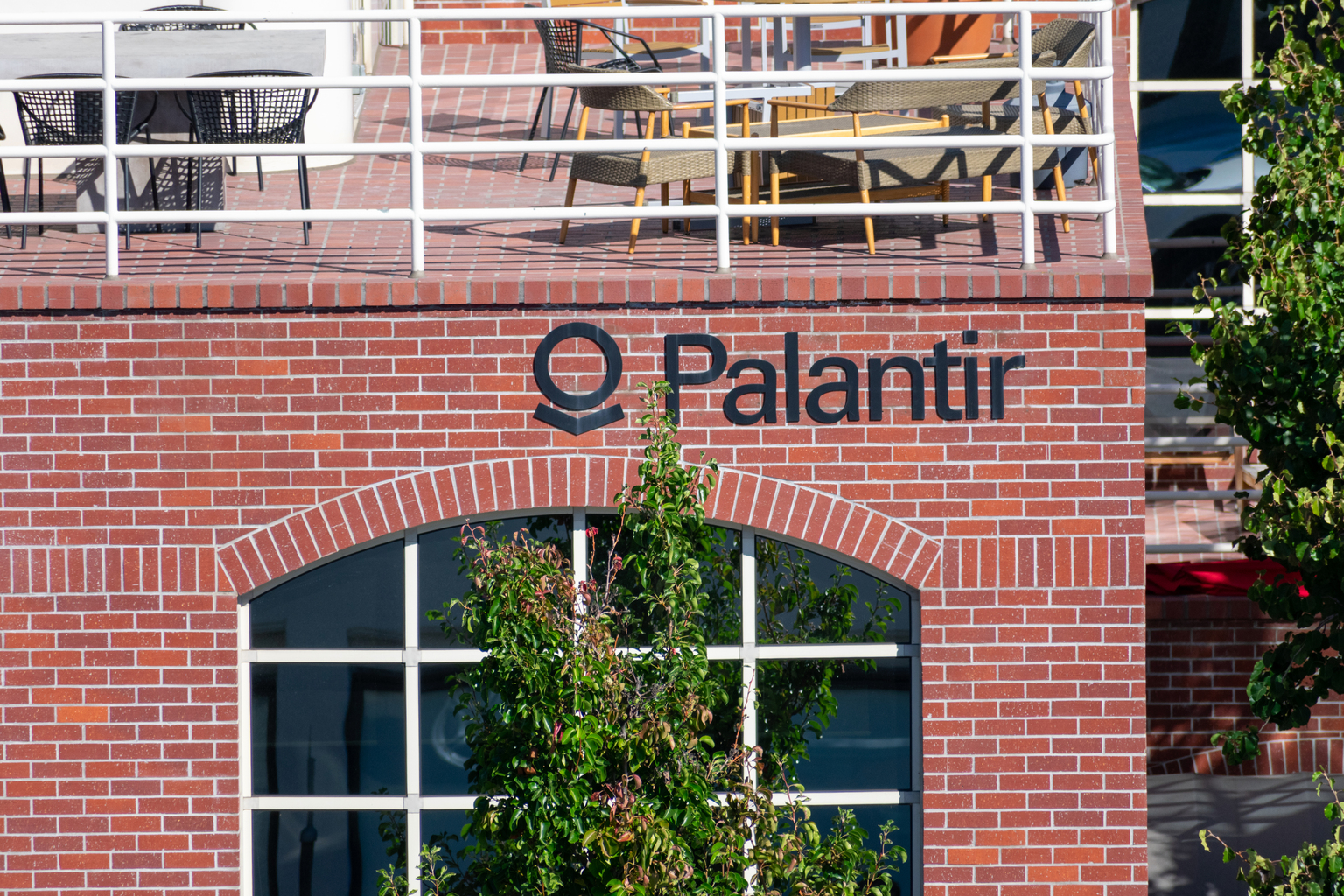
Palantir Shares Dip Slightly, Analysts Remain Optimistic
- Stock Decline: Palantir Technologies (PLTR) shares fell 0.63% to $136.56 in afternoon trading on Friday, ending a six-session winning streak, indicating market caution regarding its short-term performance.
- Significant Revenue Growth: Recent analysis shows that Palantir's commercial revenue for Q1 2026 was approximately 95% higher than a year earlier, demonstrating rapid expansion in both commercial and government sectors, although valuation remains challenging to justify.
- Strong Government Demand: Palantir's government revenue increased by 76% year-over-year, indicating sustained strong demand for its services in government contracts, further solidifying its position in the data analytics market.
- Optimistic Analyst Ratings: Among 31 analysts on Wall Street, 19 rated PLTR as a buy or higher, reflecting confidence in its future growth potential, despite the stock's approximately 22% decline year-to-date.
See More

SpaceX's Dual-Class Share Structure Sparks Governance Debate


- Dual-Class Structure Overview: SpaceX's IPO filing introduces a dual-class share structure that grants CEO Elon Musk significant control, with Class B shares carrying 10 votes per share compared to 1 vote for Class A, positioning Musk as the dominant decision-maker among shareholders.
- Governance Controversy: While dual-class structures are not uncommon in founder-led companies, their tendency to concentrate power has drawn fierce criticism from governance watchdogs, who argue that this undermines accountability and may blind management to necessary strategic changes.
- Divergent Investor Sentiments: Some investors feel that Musk's successful track record and public persona make governance concerns less significant if high returns are achieved, while others question whether he can effectively manage multiple high-profile ventures simultaneously.
- Market Performance Research: A 2024 study from Harvard Law School indicates that companies with dual or multi-class structures outperformed their single-class counterparts over five and ten years, although another study suggests that the valuation premium tends to diminish seven to nine years post-IPO.
See More

SpaceX IPO Could Trigger AI Bubble


- AI Stock Resurgence: Since late last year, AI stocks have surged again due to a shortage of memory chips and strong demand growth, with major indexes hitting all-time highs following the Iran war, reflecting market volatility and investor caution.
- SpaceX Financials: Ahead of its IPO, SpaceX's financials reveal a mere 15.4% revenue growth to $4.7 billion in Q1, alongside a GAAP operating loss of $1.9 billion, indicating a lack of profitability despite a potential valuation of $2 trillion.
- Valuation Risks: If SpaceX goes public at a $2 trillion valuation, it would imply a price-to-sales ratio exceeding 100, starkly contrasting with the S&P 500 median of 3, suggesting overly optimistic market expectations and potential bubble risks.
- Market Reaction Expectations: The SpaceX IPO could lead to volatility in AI stocks; if it underperforms, it may trigger sell-offs in other AI stocks, reminiscent of the 1999 dot-com bubble, prompting investors to remain vigilant about market sentiment shifts.
See More

SpaceX Financials Reveal Slowing Growth and Widening Losses
- Financial Performance Analysis: SpaceX's latest S-1 filing reveals a mere 15.4% revenue growth to $4.7 billion in Q1, alongside a GAAP operating loss of $1.9 billion, indicating a significant decline in profitability compared to a $27 million profit a year ago.
- Valuation Risk Warning: If SpaceX goes public at a $2 trillion valuation, its $19.3 billion revenue would imply a price-to-sales ratio exceeding 100, starkly contrasting with the S&P 500 median of just 3, suggesting overly optimistic market expectations for future growth.
- Market Bubble Concerns: The IPO of SpaceX could trigger volatility in AI stocks; if its stock performs poorly, it may lead investors to question the valuations of other AI companies, potentially causing a chain reaction reminiscent of the 1999 dot-com bubble.
- Insider Share Strategy: To navigate the traditional 180-day IPO lockup period, SpaceX has devised a mechanism allowing insiders to sell a portion of their shares early if the stock price reaches a certain level, reflecting the company's acute awareness of market reactions and concerns over stock price fluctuations.
See More
Palantir's Revenue Growth Accelerates Amid Market Correction
- Significant Revenue Growth: Palantir achieved an impressive 85% year-over-year revenue growth in Q1, reaching $1.63 billion, demonstrating strong demand in both commercial and government sectors, particularly in the U.S. market.
- Outstanding Profit Margin: The company reported a net income margin of 53% in Q1, a rarity in the tech industry, indicating Palantir's ability to maintain profitability while undergoing rapid growth.
- Notable Stock Price Correction: Since peaking in October, Palantir's stock has fallen approximately 35%, and despite strong fundamentals, concerns over its high valuation have led to sideways and slight downward trading.
- Valuation Risks: With a current P/E ratio of 152, significantly higher than its peers, analysts suggest that Palantir must double or triple its earnings post-2026 to justify its current high valuation.
See More
Palantir Stock Pullback Raises Growth Concerns
- Stock Pullback: Palantir's stock has fallen approximately 35% since its peak in October, indicating a decline in market enthusiasm for its AI offerings, despite reporting an impressive 85% year-over-year revenue growth to $1.63 billion in Q1.
- Strong Profitability: The company achieved a net income margin of 53% in Q1, significantly higher than many tech firms, demonstrating its ability to maintain profitability during a growth phase, yet limiting future margin expansion potential.
- Valuation Pressure: With a P/E ratio of 152, Palantir's stock is considerably more expensive than its peers, necessitating a doubling or tripling of earnings by 2026 to justify its current high valuation, assuming the share price stabilizes.
- Uncertain Market Outlook: While Palantir's AIP product line is closely tied to the generative AI expansion, investor skepticism about its ability to sustain growth suggests a prudent approach of waiting for more favorable investment opportunities.
See More
Palantir Shares Dip Slightly, Analysts Remain Optimistic
- Stock Decline: Palantir Technologies (PLTR) shares fell 0.63% to $136.56 in afternoon trading on Friday, ending a six-session winning streak, indicating market caution regarding its short-term performance.
- Significant Revenue Growth: Recent analysis shows that Palantir's commercial revenue for Q1 2026 was approximately 95% higher than a year earlier, demonstrating rapid expansion in both commercial and government sectors, although valuation remains challenging to justify.
- Strong Government Demand: Palantir's government revenue increased by 76% year-over-year, indicating sustained strong demand for its services in government contracts, further solidifying its position in the data analytics market.
- Optimistic Analyst Ratings: Among 31 analysts on Wall Street, 19 rated PLTR as a buy or higher, reflecting confidence in its future growth potential, despite the stock's approximately 22% decline year-to-date.
See More
SpaceX's Dual-Class Share Structure Sparks Governance Debate
- Dual-Class Structure Overview: SpaceX's IPO filing introduces a dual-class share structure that grants CEO Elon Musk significant control, with Class B shares carrying 10 votes per share compared to 1 vote for Class A, positioning Musk as the dominant decision-maker among shareholders.
- Governance Controversy: While dual-class structures are not uncommon in founder-led companies, their tendency to concentrate power has drawn fierce criticism from governance watchdogs, who argue that this undermines accountability and may blind management to necessary strategic changes.
- Divergent Investor Sentiments: Some investors feel that Musk's successful track record and public persona make governance concerns less significant if high returns are achieved, while others question whether he can effectively manage multiple high-profile ventures simultaneously.
- Market Performance Research: A 2024 study from Harvard Law School indicates that companies with dual or multi-class structures outperformed their single-class counterparts over five and ten years, although another study suggests that the valuation premium tends to diminish seven to nine years post-IPO.
See More
SpaceX IPO Could Trigger AI Bubble
- AI Stock Resurgence: Since late last year, AI stocks have surged again due to a shortage of memory chips and strong demand growth, with major indexes hitting all-time highs following the Iran war, reflecting market volatility and investor caution.
- SpaceX Financials: Ahead of its IPO, SpaceX's financials reveal a mere 15.4% revenue growth to $4.7 billion in Q1, alongside a GAAP operating loss of $1.9 billion, indicating a lack of profitability despite a potential valuation of $2 trillion.
- Valuation Risks: If SpaceX goes public at a $2 trillion valuation, it would imply a price-to-sales ratio exceeding 100, starkly contrasting with the S&P 500 median of 3, suggesting overly optimistic market expectations and potential bubble risks.
- Market Reaction Expectations: The SpaceX IPO could lead to volatility in AI stocks; if it underperforms, it may trigger sell-offs in other AI stocks, reminiscent of the 1999 dot-com bubble, prompting investors to remain vigilant about market sentiment shifts.
See More
SpaceX Financials Reveal Slowing Growth and Widening Losses
- Financial Performance Analysis: SpaceX's latest S-1 filing reveals a mere 15.4% revenue growth to $4.7 billion in Q1, alongside a GAAP operating loss of $1.9 billion, indicating a significant decline in profitability compared to a $27 million profit a year ago.
- Valuation Risk Warning: If SpaceX goes public at a $2 trillion valuation, its $19.3 billion revenue would imply a price-to-sales ratio exceeding 100, starkly contrasting with the S&P 500 median of just 3, suggesting overly optimistic market expectations for future growth.
- Market Bubble Concerns: The IPO of SpaceX could trigger volatility in AI stocks; if its stock performs poorly, it may lead investors to question the valuations of other AI companies, potentially causing a chain reaction reminiscent of the 1999 dot-com bubble.
- Insider Share Strategy: To navigate the traditional 180-day IPO lockup period, SpaceX has devised a mechanism allowing insiders to sell a portion of their shares early if the stock price reaches a certain level, reflecting the company's acute awareness of market reactions and concerns over stock price fluctuations.
See More