Oil Price Outlook and Investment Recommendations
Written by Emily J. Thompson, Senior Investment Analyst
Updated: Apr 15 2026
0mins
Source: CNBC
- Oil Price Forecast: Analysts predict that oil prices will remain above pre-war levels due to constrained global supply, despite record monthly gains in March, indicating a challenging price outlook ahead.
- Investment Strategy Shift: Wells Fargo advises investors to consider taking profits in the energy sector, as year-to-date performance has been the strongest since 2000, with risks skewed to the downside, suggesting pressure on prices by year-end.
- Market Volatility Insights: Investment strategy analyst Mason Mendez highlights the historical volatility of oil markets, where prices can swing rapidly due to emerging or fading risks, drawing parallels to past events like the Gulf War and the Ukraine invasion.
- Future Price Expectations: While downgrading the energy sector to unfavorable, Wells Fargo raised its 2026 price targets for WTI and Brent crude to $70-$80 and $75-$85 per barrel, respectively, viewing recent outperformance as an opportunity for profit-taking and reallocating to industrial and precious metals.
Trade with 70% Backtested Accuracy
Stop guessing "Should I Buy WFC?" and start using high-conviction signals backed by rigorous historical data.
Sign up today to access powerful investing tools and make smarter, data-driven decisions.
Analyst Views on WFC
Wall Street analysts forecast WFC stock price to rise
17 Analyst Rating
10 Buy
6 Hold
1 Sell
Moderate Buy
Current: 77.540

Low
74.00
Averages
98.66
High
113.00
Current: 77.540
Low
74.00
Averages
98.66
High
113.00
About WFC
Wells Fargo & Company is a financial services company. The Company provides a diversified set of banking, investment and mortgage products and services, as well as consumer and commercial finance, to individuals, businesses and institutions. The Company operates through four segments: Consumer Banking and Lending, Commercial Banking, Corporate and Investment Banking, and Wealth & Investment Management. The Company provides consumer financial products and services, including checking and savings accounts, credit and debit cards, and auto, residential mortgage, and small business lending. In addition, the Company offers financial planning, private banking, investment management, and fiduciary services. It also provides financial solutions to businesses through products and services including traditional commercial loans and lines of credit, letters of credit, asset-based lending and leasing, trade financing, treasury management, and investment banking services.
About the author

Emily J. Thompson
Emily J. Thompson, a Chartered Financial Analyst (CFA) with 12 years in investment research, graduated with honors from the Wharton School. Specializing in industrial and technology stocks, she provides in-depth analysis for Intellectia’s earnings and market brief reports.

S&P Global Spins Off Mobility Business into Standalone Company


- Spinoff Announcement: S&P Global is spinning off its Mobility business into a standalone entity named Mobility Global, which will begin trading on the NYSE under the ticker MBGL on July 1, allowing S&P to concentrate more resources on its core operations and enhance its competitive edge in the market.
- Shareholder Benefits: As part of the spinoff, shareholders will receive one share of Mobility Global common stock for each share of S&P Global common stock held as of the close on June 15, with the distribution expected to be effective on July 1, thereby increasing shareholder value and engagement.
- Financial Performance: The Mobility segment generated $454 million in revenue last quarter, reflecting an 8% year-over-year increase, and while it remains the smallest business unit, its operating profit grew by 9%, indicating potential for growth post-spinoff.
- Market Outlook: Analysts are bullish on the spinoff, with 93% rating S&P Global stock as a buy and projecting a 28% upside over the next 12 months, showcasing strong market confidence in S&P Global's future growth trajectory despite an 18% decline in stock price this year.
See More

S&P Global Spins Off Mobility Business
- Mobility Spin-Off: S&P Global will spin off its Mobility business into a standalone company, Mobility Global, effective July 1, marking a strategic shift that is expected to enhance resource allocation efficiency towards its core businesses.
- Shareholder Distribution: Shareholders will receive one share of Mobility Global common stock for each share of S&P Global common stock held as of the close on June 15, which is anticipated to enhance shareholder returns.
- Analyst Optimism: With 93% of analysts rating S&P Global stock as a buy and a median price target of $543, indicating a potential 28% upside over the next 12 months, this reflects strong market confidence in the company's growth prospects post-spin-off.
- Strong Financial Performance: Although the Mobility segment generated only $454 million in revenue last quarter, its operating profit grew by 9%, demonstrating S&P Global's robust performance in its core businesses and its ongoing ability to increase dividends, further solidifying its market leadership.
See More
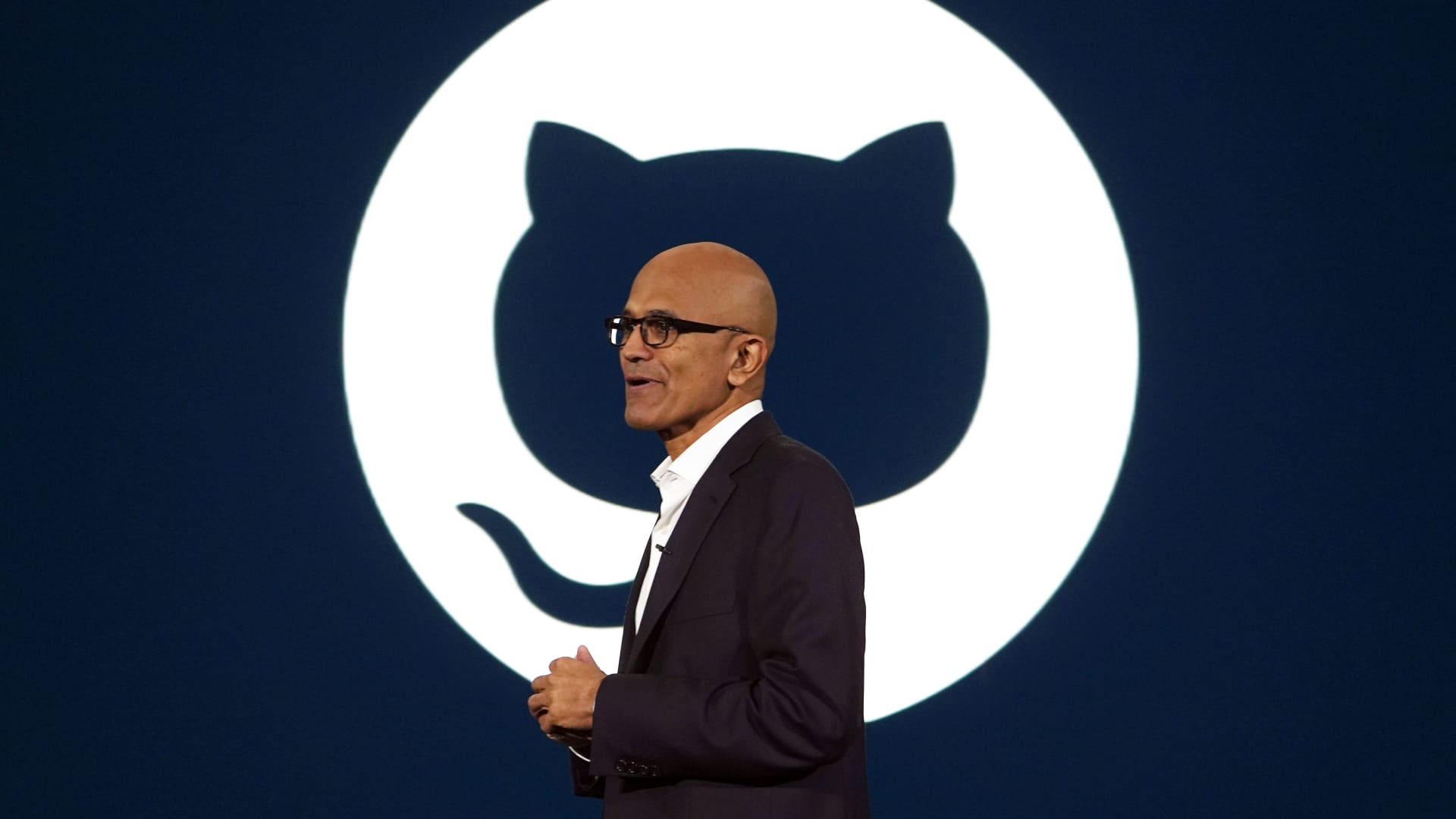
Microsoft Doubles Down on AI Strategy with New Models


- Price Target Increase: Wells Fargo raised Microsoft's stock price target from $625 to $650, indicating a 44% upside from last Friday's close, reflecting optimistic market expectations for Microsoft's future performance.
- AI Model Launch: Microsoft is expected to unveil a suite of homegrown AI tools at its 'Build' conference in California, including a coding model that complements GitHub Copilot, further solidifying its competitive edge at the software layer.
- Partnership Disclosure: The company is set to disclose details about its lucrative partnerships with major AI startups, which could serve as a short-term catalyst for stock price appreciation, enhancing market confidence in its AI business.
- Market Performance Analysis: Despite a nearly 7% decline in stock price since the beginning of the year, 56 out of 60 analysts covering Microsoft have rated it as a buy or strong buy, indicating strong recognition of its long-term growth potential.
See More

Boston Scientific Shares Drop 15% Amid Analyst Downgrades

- Product Line Weakness: Boston Scientific acknowledged potential stagnation in sales of its Watchman heart implant line, contributing to a 15% drop in stock price this week, reflecting market concerns about future growth prospects.
- Analyst Downgrades: Wells Fargo analyst Lawrence Biegelsen downgraded Boston Scientific's rating from overweight to equal weight and reduced the price target from $75 to $55, indicating a pessimistic outlook on the company's future performance.
- Revenue Growth Guidance: Despite facing challenges, Boston Scientific maintained its guidance for organic revenue growth of 6.5% to 8% for 2026, demonstrating confidence in long-term growth potential.
- Increased Market Competition: Analysts noted that new drugs under development by pharmaceutical companies could heighten competitive pressure, particularly in other product categories like urology, further impacting the company's market position.
See More

Boston Scientific Shares Plummet Amid Weak Product Forecast
- Product Line Weakness: Boston Scientific CEO Mike Mahoney indicated at Bernstein's Annual Strategic Decisions Conference that sales of the Watchman heart implants may stagnate, with revenue expected to remain flat in both the current and following quarters, reflecting a shift in market demand away from standalone procedures, which could impact overall performance.
- Analyst Downgrades: Amid increasing pessimism, Wells Fargo analyst Lawrence Biegelsen downgraded the stock from overweight to equal weight and reduced the price target from $75 to $55, highlighting concerns over the new Watchman forecast and weakness in other product lines, such as urology.
- Significant Market Reaction: As of early Friday morning, Boston Scientific's shares had dropped by 15%, reflecting investor concerns about the company's future growth potential, particularly in the face of increasing competition that could affect its market share.
- Positive Long-Term Outlook: Despite short-term challenges, Boston Scientific maintained its guidance for organic revenue growth of 6.5% to 8% for 2026, indicating the company's long-term potential in the medical device sector, suggesting that investors may view this week's stock decline as an opportunity to acquire quality shares at a discount in a vibrant industry.
See More

IBM Invests $5 Billion in New Cybersecurity Platform

- Significant Investment: IBM has announced a $5 billion investment in a new cybersecurity platform aimed at addressing vulnerabilities in open-source software, which not only underscores the company's commitment to cybersecurity but also enhances its competitive position in the enterprise market.
- Project Partnerships: Dubbed Project Lightwell, the initiative has already attracted major U.S. banks such as Goldman Sachs, Morgan Stanley, JPMorgan, and Bank of America as early adopters, indicating strong market confidence and demand for IBM's new platform.
- Innovation Driven by Technology: CEO Arvind Krishna noted that Anthropic's Mythos model was a pivotal factor in driving this investment, highlighting the potential of large language models to discover and exploit vulnerabilities in code, which could reshape the cybersecurity landscape.
- Collaborative Industry Outlook: IBM and Red Hat are dedicating 20,000 software engineers to assist partners in securing software, with Krishna emphasizing that cybersecurity firms should be viewed as partners rather than competitors, a collaborative approach that could enhance overall industry security capabilities.
See More
S&P Global Spins Off Mobility Business into Standalone Company
- Spinoff Announcement: S&P Global is spinning off its Mobility business into a standalone entity named Mobility Global, which will begin trading on the NYSE under the ticker MBGL on July 1, allowing S&P to concentrate more resources on its core operations and enhance its competitive edge in the market.
- Shareholder Benefits: As part of the spinoff, shareholders will receive one share of Mobility Global common stock for each share of S&P Global common stock held as of the close on June 15, with the distribution expected to be effective on July 1, thereby increasing shareholder value and engagement.
- Financial Performance: The Mobility segment generated $454 million in revenue last quarter, reflecting an 8% year-over-year increase, and while it remains the smallest business unit, its operating profit grew by 9%, indicating potential for growth post-spinoff.
- Market Outlook: Analysts are bullish on the spinoff, with 93% rating S&P Global stock as a buy and projecting a 28% upside over the next 12 months, showcasing strong market confidence in S&P Global's future growth trajectory despite an 18% decline in stock price this year.
See More
S&P Global Spins Off Mobility Business
- Mobility Spin-Off: S&P Global will spin off its Mobility business into a standalone company, Mobility Global, effective July 1, marking a strategic shift that is expected to enhance resource allocation efficiency towards its core businesses.
- Shareholder Distribution: Shareholders will receive one share of Mobility Global common stock for each share of S&P Global common stock held as of the close on June 15, which is anticipated to enhance shareholder returns.
- Analyst Optimism: With 93% of analysts rating S&P Global stock as a buy and a median price target of $543, indicating a potential 28% upside over the next 12 months, this reflects strong market confidence in the company's growth prospects post-spin-off.
- Strong Financial Performance: Although the Mobility segment generated only $454 million in revenue last quarter, its operating profit grew by 9%, demonstrating S&P Global's robust performance in its core businesses and its ongoing ability to increase dividends, further solidifying its market leadership.
See More
Microsoft Doubles Down on AI Strategy with New Models
- Price Target Increase: Wells Fargo raised Microsoft's stock price target from $625 to $650, indicating a 44% upside from last Friday's close, reflecting optimistic market expectations for Microsoft's future performance.
- AI Model Launch: Microsoft is expected to unveil a suite of homegrown AI tools at its 'Build' conference in California, including a coding model that complements GitHub Copilot, further solidifying its competitive edge at the software layer.
- Partnership Disclosure: The company is set to disclose details about its lucrative partnerships with major AI startups, which could serve as a short-term catalyst for stock price appreciation, enhancing market confidence in its AI business.
- Market Performance Analysis: Despite a nearly 7% decline in stock price since the beginning of the year, 56 out of 60 analysts covering Microsoft have rated it as a buy or strong buy, indicating strong recognition of its long-term growth potential.
See More
Boston Scientific Shares Drop 15% Amid Analyst Downgrades
- Product Line Weakness: Boston Scientific acknowledged potential stagnation in sales of its Watchman heart implant line, contributing to a 15% drop in stock price this week, reflecting market concerns about future growth prospects.
- Analyst Downgrades: Wells Fargo analyst Lawrence Biegelsen downgraded Boston Scientific's rating from overweight to equal weight and reduced the price target from $75 to $55, indicating a pessimistic outlook on the company's future performance.
- Revenue Growth Guidance: Despite facing challenges, Boston Scientific maintained its guidance for organic revenue growth of 6.5% to 8% for 2026, demonstrating confidence in long-term growth potential.
- Increased Market Competition: Analysts noted that new drugs under development by pharmaceutical companies could heighten competitive pressure, particularly in other product categories like urology, further impacting the company's market position.
See More
Boston Scientific Shares Plummet Amid Weak Product Forecast
- Product Line Weakness: Boston Scientific CEO Mike Mahoney indicated at Bernstein's Annual Strategic Decisions Conference that sales of the Watchman heart implants may stagnate, with revenue expected to remain flat in both the current and following quarters, reflecting a shift in market demand away from standalone procedures, which could impact overall performance.
- Analyst Downgrades: Amid increasing pessimism, Wells Fargo analyst Lawrence Biegelsen downgraded the stock from overweight to equal weight and reduced the price target from $75 to $55, highlighting concerns over the new Watchman forecast and weakness in other product lines, such as urology.
- Significant Market Reaction: As of early Friday morning, Boston Scientific's shares had dropped by 15%, reflecting investor concerns about the company's future growth potential, particularly in the face of increasing competition that could affect its market share.
- Positive Long-Term Outlook: Despite short-term challenges, Boston Scientific maintained its guidance for organic revenue growth of 6.5% to 8% for 2026, indicating the company's long-term potential in the medical device sector, suggesting that investors may view this week's stock decline as an opportunity to acquire quality shares at a discount in a vibrant industry.
See More
IBM Invests $5 Billion in New Cybersecurity Platform
- Significant Investment: IBM has announced a $5 billion investment in a new cybersecurity platform aimed at addressing vulnerabilities in open-source software, which not only underscores the company's commitment to cybersecurity but also enhances its competitive position in the enterprise market.
- Project Partnerships: Dubbed Project Lightwell, the initiative has already attracted major U.S. banks such as Goldman Sachs, Morgan Stanley, JPMorgan, and Bank of America as early adopters, indicating strong market confidence and demand for IBM's new platform.
- Innovation Driven by Technology: CEO Arvind Krishna noted that Anthropic's Mythos model was a pivotal factor in driving this investment, highlighting the potential of large language models to discover and exploit vulnerabilities in code, which could reshape the cybersecurity landscape.
- Collaborative Industry Outlook: IBM and Red Hat are dedicating 20,000 software engineers to assist partners in securing software, with Krishna emphasizing that cybersecurity firms should be viewed as partners rather than competitors, a collaborative approach that could enhance overall industry security capabilities.
See More