Nvidia's Capital Allocation Sparks Debate
Written by Emily J. Thompson, Senior Investment Analyst
Updated: 3 hours ago
0mins
Should l Buy NVDA?
Source: Fool
- Market Leadership: As of March 27, Nvidia boasts a market capitalization of approximately $4.1 trillion, surpassing Apple by $420 billion, equivalent to Chevron's market cap, underscoring its dominant position in the AI boom.
- Massive Buyback Spending: Nvidia spent over $40 billion on share buybacks in fiscal 2026, representing 33% of its $120 billion net income and nearly seven times its $6.1 billion capital expenditures, highlighting the management's focus on capital allocation.
- Debate on R&D vs. Buybacks: Critics argue that Nvidia should allocate more of its buyback funds towards research and development or enhancing hardware and software capabilities to strengthen its competitive position, especially given the company's ongoing growth.
- AI Investment Outlook: Nvidia's future is closely tied to AI; if AI fails to meet expectations, the company's financials will suffer, yet its stock buyback strategy may be seen as wise if AI advances successfully.
Trade with 70% Backtested Accuracy
Stop guessing "Should I Buy NVDA?" and start using high-conviction signals backed by rigorous historical data.
Sign up today to access powerful investing tools and make smarter, data-driven decisions.
Analyst Views on NVDA
Wall Street analysts forecast NVDA stock price to rise
41 Analyst Rating
39 Buy
1 Hold
1 Sell
Strong Buy
Current: 171.240

Low
200.00
Averages
264.97
High
352.00
Current: 171.240
Low
200.00
Averages
264.97
High
352.00
About NVDA
NVIDIA Corporation is a full-stack computing infrastructure company. The Company is engaged in accelerated computing to help solve the challenging computational problems. The Company’s segments include Compute & Networking and Graphics. The Compute & Networking segment includes its Data Center accelerated computing platforms and artificial intelligence (AI) solutions and software; networking; automotive platforms and autonomous and electric vehicle solutions; Jetson for robotics and other embedded platforms, and DGX Cloud computing services. The Graphics segment includes GeForce GPUs for gaming and PCs, the GeForce NOW game streaming service and related infrastructure, and solutions for gaming platforms; Quadro/NVIDIA RTX GPUs for enterprise workstation graphics; virtual GPU software for cloud-based visual and virtual computing; automotive platforms for infotainment systems, and Omniverse Enterprise software for building and operating industrial AI and digital twin applications.
About the author

Emily J. Thompson
Emily J. Thompson, a Chartered Financial Analyst (CFA) with 12 years in investment research, graduated with honors from the Wharton School. Specializing in industrial and technology stocks, she provides in-depth analysis for Intellectia’s earnings and market brief reports.
Nvidia's Stock Could Double in Three Years

- Stock Performance: Nvidia's shares have surged approximately 525% over the past three years, establishing it as a top market performer; while another similar increase may be unlikely, significant upside remains.
- AI Chip Sales Forecast: Nvidia anticipates cumulative sales of its Blackwell and Rubin chips to reach $1 trillion by the end of 2027, indicating robust growth potential in the AI chip sector.
- Revenue Projections: Wall Street analysts expect Nvidia to add another $110 billion in sales next fiscal year, which, combined with the current $480 billion projection, could lead to total revenues of $600 billion, further solidifying its market position.
- Profitability Analysis: Assuming Nvidia maintains a 50% profit margin and trades at a reasonable 30 times trailing earnings in three years, the stock price could reach $370, indicating substantial upside from its current price of $168.
See More

Nvidia Advances Space Data Center Concept
- Potential of Space Data Centers: Nvidia's Space-1 Vera Rubin module, announced on March 16, aims to address data transmission bottlenecks in space by enabling real-time data analysis, thereby laying the groundwork for future orbital data centers.
- Market Demand and Challenges: While the concept of space data centers garners interest, practical implementation faces high launch costs and technical hurdles, with Nvidia's advancements potentially serving as a first step in overcoming these obstacles.
- Partnerships: Nvidia collaborates with several space tech companies, including Starcloud, which successfully launched the first satellite operating an Nvidia H100 GPU in space, showcasing its strategic positioning in the space market.
- Investment Outlook: Although market expectations for Nvidia's future growth have moderated, the current forward P/E ratio of 21.4 still reflects its core position in AI and data centers, with the success of space data centers likely to further enhance its market value.
See More
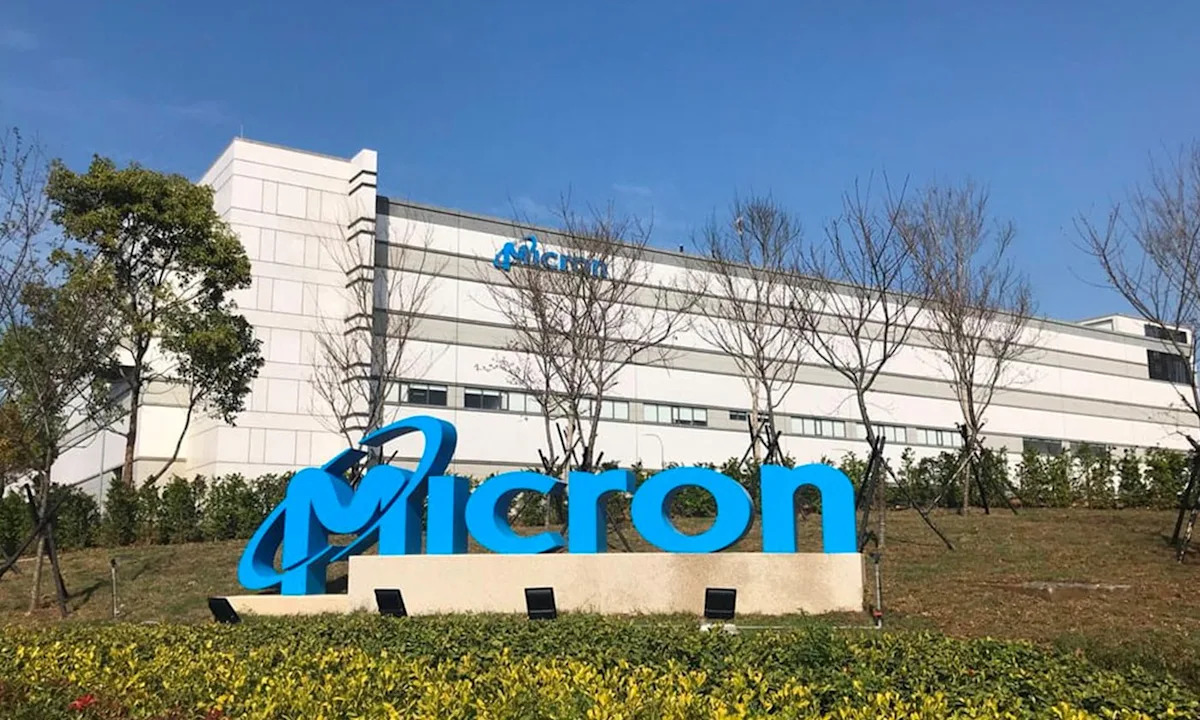
Micron Technology Surpasses Earnings Expectations, Optimistic Outlook Ahead

- Strong Earnings Report: Micron Technology reported a revenue of $23.9 billion for Q2 FY2026, a staggering 300% increase year-over-year, surpassing Wall Street's expectation of $18.7 billion, indicating robust market demand and pricing conditions.
- Significant Profit Growth: The earnings per share reached $12.20, nearly an 8-fold increase year-over-year, exceeding analysts' expectations of $12.05, reflecting the company's strong performance and enhanced profitability in the memory market.
- Optimistic Future Outlook: Micron anticipates revenue of $33.5 billion for the current quarter, a 3.6-fold increase from the previous year, significantly above the consensus estimate of $24.3 billion, showcasing the company's confidence in future growth.
- Huge Market Potential: Analysts project Micron's earnings per share to reach $57.76 for FY2026 and $98.26 for FY2027, suggesting that the stock price could soar to $2,024 based on the S&P 500's forward earnings multiple, representing a potential increase of 5.6 times.
See More

Palantir Stock Price Forecast and Market Performance

- Stock Performance Volatility: Since the beginning of 2023, Palantir has been a top performer, with a $10,000 investment now worth nearly $223,000; however, the stock has declined by 31% from its November peak, raising concerns about its future trajectory.
- Significant Revenue Growth: In Q4 2023, Palantir's revenue surged 70% year-over-year to $1.4 billion, reflecting strong demand in the AI sector, with projections of 62% growth in 2026 and 43% in 2027.
- Valuation Concerns: Currently, Palantir trades at nearly 250 times trailing earnings, significantly above the software industry average, indicating that its future growth is already priced in, prompting investors to carefully assess its long-term value.
- Uncertain Future Outlook: Despite expectations of 536% revenue growth over the next five years, if the stock price remains stagnant, investor returns may be limited, leading analysts to recommend evaluating other potentially more lucrative stocks before investing.
See More

Wall Street Doubts AI's Promised Boom

- Microsoft's Capital Expenditure Surge: Microsoft announced a staggering $37.5 billion in capital expenditures for Q2 2026, a 66% year-over-year increase, with two-thirds allocated to AI-supporting hardware, which, despite Wall Street's skepticism, is viewed as a crucial investment for future growth.
- Meta's AI-Driven Growth: Meta forecasts capital expenditures between $115 billion and $135 billion for 2026, significantly up from $72.2 billion in 2025, with CEO Mark Zuckerberg stating that AI acceleration will enhance user engagement and advertising revenue, as evidenced by a 24% year-over-year revenue increase to $59.9 billion in Q4.
- Nvidia's Market Outlook: Nvidia's latest GPU, Vera Rubin, is designed for AI inference, with estimated orders reaching $1 trillion by the end of 2027, and a record revenue of $215.9 billion for fiscal 2026, although market sentiment remains cautious, its leadership in the AI sector remains robust.
- Investor Strategy Adjustment: In light of declining stock prices for Microsoft, Meta, and Nvidia, investors should consider maintaining their holdings and increasing their position in Microsoft during its price dip, as these companies still possess strong growth potential despite the current negative market sentiment.
See More

Alphabet Unveils New AI Technology, Further Strengthening Market Leadership

- AI Model Innovation: Alphabet's Gemini AI model leads in video and image generation, with OpenAI's shutdown of the Sora app effectively ceding market dominance to Alphabet, showcasing its robust capabilities in AI innovation.
- Custom Chip Advantage: The TPU developed in collaboration with Broadcom provides Alphabet with significant cost advantages in AI training and inference, allowing for lower operational costs that further solidify its market position.
- Memory Compression Algorithm: The newly introduced TurboQuant algorithm can reduce working memory requirements by at least 6x while increasing processing speeds by 8x, representing a technological advancement that will help Alphabet further lower costs and enhance efficiency in the AI sector.
- Optimistic Market Outlook: Although TurboQuant has yet to be deployed, its potential cost advantages position Alphabet favorably for future AI developments, likely attracting more investor interest in its stock and driving further price appreciation.
See More
Nvidia's Stock Could Double in Three Years
- Stock Performance: Nvidia's shares have surged approximately 525% over the past three years, establishing it as a top market performer; while another similar increase may be unlikely, significant upside remains.
- AI Chip Sales Forecast: Nvidia anticipates cumulative sales of its Blackwell and Rubin chips to reach $1 trillion by the end of 2027, indicating robust growth potential in the AI chip sector.
- Revenue Projections: Wall Street analysts expect Nvidia to add another $110 billion in sales next fiscal year, which, combined with the current $480 billion projection, could lead to total revenues of $600 billion, further solidifying its market position.
- Profitability Analysis: Assuming Nvidia maintains a 50% profit margin and trades at a reasonable 30 times trailing earnings in three years, the stock price could reach $370, indicating substantial upside from its current price of $168.
See More
Nvidia Advances Space Data Center Concept
- Potential of Space Data Centers: Nvidia's Space-1 Vera Rubin module, announced on March 16, aims to address data transmission bottlenecks in space by enabling real-time data analysis, thereby laying the groundwork for future orbital data centers.
- Market Demand and Challenges: While the concept of space data centers garners interest, practical implementation faces high launch costs and technical hurdles, with Nvidia's advancements potentially serving as a first step in overcoming these obstacles.
- Partnerships: Nvidia collaborates with several space tech companies, including Starcloud, which successfully launched the first satellite operating an Nvidia H100 GPU in space, showcasing its strategic positioning in the space market.
- Investment Outlook: Although market expectations for Nvidia's future growth have moderated, the current forward P/E ratio of 21.4 still reflects its core position in AI and data centers, with the success of space data centers likely to further enhance its market value.
See More
Micron Technology Surpasses Earnings Expectations, Optimistic Outlook Ahead
- Strong Earnings Report: Micron Technology reported a revenue of $23.9 billion for Q2 FY2026, a staggering 300% increase year-over-year, surpassing Wall Street's expectation of $18.7 billion, indicating robust market demand and pricing conditions.
- Significant Profit Growth: The earnings per share reached $12.20, nearly an 8-fold increase year-over-year, exceeding analysts' expectations of $12.05, reflecting the company's strong performance and enhanced profitability in the memory market.
- Optimistic Future Outlook: Micron anticipates revenue of $33.5 billion for the current quarter, a 3.6-fold increase from the previous year, significantly above the consensus estimate of $24.3 billion, showcasing the company's confidence in future growth.
- Huge Market Potential: Analysts project Micron's earnings per share to reach $57.76 for FY2026 and $98.26 for FY2027, suggesting that the stock price could soar to $2,024 based on the S&P 500's forward earnings multiple, representing a potential increase of 5.6 times.
See More
Palantir Stock Price Forecast and Market Performance
- Stock Performance Volatility: Since the beginning of 2023, Palantir has been a top performer, with a $10,000 investment now worth nearly $223,000; however, the stock has declined by 31% from its November peak, raising concerns about its future trajectory.
- Significant Revenue Growth: In Q4 2023, Palantir's revenue surged 70% year-over-year to $1.4 billion, reflecting strong demand in the AI sector, with projections of 62% growth in 2026 and 43% in 2027.
- Valuation Concerns: Currently, Palantir trades at nearly 250 times trailing earnings, significantly above the software industry average, indicating that its future growth is already priced in, prompting investors to carefully assess its long-term value.
- Uncertain Future Outlook: Despite expectations of 536% revenue growth over the next five years, if the stock price remains stagnant, investor returns may be limited, leading analysts to recommend evaluating other potentially more lucrative stocks before investing.
See More
Wall Street Doubts AI's Promised Boom
- Microsoft's Capital Expenditure Surge: Microsoft announced a staggering $37.5 billion in capital expenditures for Q2 2026, a 66% year-over-year increase, with two-thirds allocated to AI-supporting hardware, which, despite Wall Street's skepticism, is viewed as a crucial investment for future growth.
- Meta's AI-Driven Growth: Meta forecasts capital expenditures between $115 billion and $135 billion for 2026, significantly up from $72.2 billion in 2025, with CEO Mark Zuckerberg stating that AI acceleration will enhance user engagement and advertising revenue, as evidenced by a 24% year-over-year revenue increase to $59.9 billion in Q4.
- Nvidia's Market Outlook: Nvidia's latest GPU, Vera Rubin, is designed for AI inference, with estimated orders reaching $1 trillion by the end of 2027, and a record revenue of $215.9 billion for fiscal 2026, although market sentiment remains cautious, its leadership in the AI sector remains robust.
- Investor Strategy Adjustment: In light of declining stock prices for Microsoft, Meta, and Nvidia, investors should consider maintaining their holdings and increasing their position in Microsoft during its price dip, as these companies still possess strong growth potential despite the current negative market sentiment.
See More
Alphabet Unveils New AI Technology, Further Strengthening Market Leadership
- AI Model Innovation: Alphabet's Gemini AI model leads in video and image generation, with OpenAI's shutdown of the Sora app effectively ceding market dominance to Alphabet, showcasing its robust capabilities in AI innovation.
- Custom Chip Advantage: The TPU developed in collaboration with Broadcom provides Alphabet with significant cost advantages in AI training and inference, allowing for lower operational costs that further solidify its market position.
- Memory Compression Algorithm: The newly introduced TurboQuant algorithm can reduce working memory requirements by at least 6x while increasing processing speeds by 8x, representing a technological advancement that will help Alphabet further lower costs and enhance efficiency in the AI sector.
- Optimistic Market Outlook: Although TurboQuant has yet to be deployed, its potential cost advantages position Alphabet favorably for future AI developments, likely attracting more investor interest in its stock and driving further price appreciation.
See More