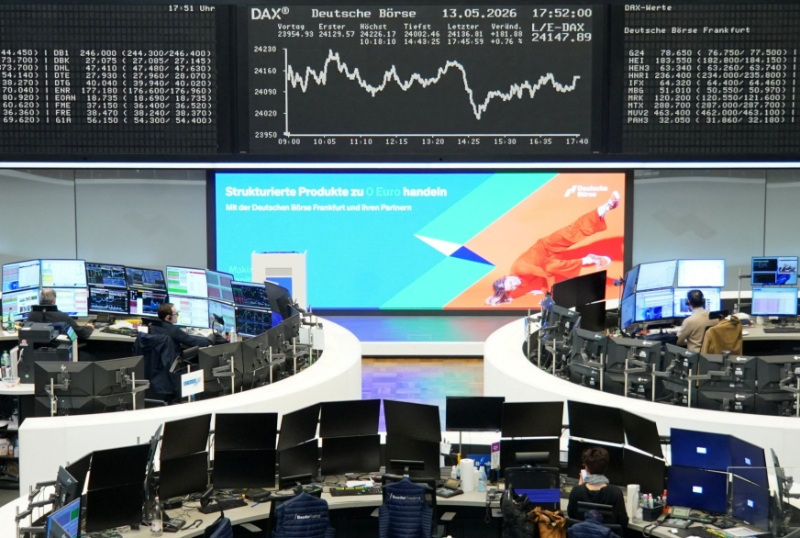
Nvidia's AI Chips Drive Investor Frenzy
Written by Emily J. Thompson, Senior Investment Analyst
Updated: 55 minutes ago
0mins
Should l Buy NVDA?
Source: Fool
- Strong Earnings Outlook: Nvidia anticipates first-quarter revenue of $78 billion for fiscal 2027, representing a 77% year-over-year increase, indicating sustained strong demand in the AI chip market that could further drive stock price upward.
- Robust Profitability: The company has maintained a gross margin exceeding 70% in recent quarters, with expectations of sustaining margins above 74% as production efficiency improves, showcasing its high profitability and competitive edge in the market.
- Excellent Historical Performance: Following its last three first-quarter earnings reports, Nvidia's stock rose by 23%, 20%, and 5.2%, indicating a positive market reaction to its earnings, which may recur in the upcoming report.
- Increased Market Confidence: With progress on U.S. import tariff agreements and potential peace developments in the Middle East, investor confidence is bolstered, potentially providing additional support for Nvidia's stock price and reinforcing its leadership position in the AI sector.
Trade with 70% Backtested Accuracy
Stop guessing "Should I Buy NVDA?" and start using high-conviction signals backed by rigorous historical data.
Sign up today to access powerful investing tools and make smarter, data-driven decisions.
Analyst Views on NVDA
Wall Street analysts forecast NVDA stock price to rise
41 Analyst Rating
39 Buy
1 Hold
1 Sell
Strong Buy
Current: 235.740

Low
200.00
Averages
264.97
High
352.00
Current: 235.740
Low
200.00
Averages
264.97
High
352.00
About NVDA
NVIDIA Corporation is an artificial intelligence (AI) infrastructure company. The Company is engaged in accelerated computing to help solve the challenging computational problems. Its segments include Compute & Networking and Graphics. The Compute & Networking segment includes its Data Center accelerated computing and networking platforms and AI solutions and software, and automotive platforms and autonomous and electric vehicle solutions, including software. The Graphics segment includes GeForce GPUs for gaming and personal computers (PCs), and Quadro/NVIDIA RTX GPUs for enterprise workstation graphics. Its technology stack includes the foundational NVIDIA CUDA development platform that runs on all NVIDIA GPUs, as well as hundreds of domain-specific software libraries, frameworks, algorithms, software development kits (SDKs), and application programming interfaces (APIs). Its platforms address four markets, which include Data Center, Gaming, Professional Visualization, and Automotive.
About the author

Emily J. Thompson
Emily J. Thompson, a Chartered Financial Analyst (CFA) with 12 years in investment research, graduated with honors from the Wharton School. Specializing in industrial and technology stocks, she provides in-depth analysis for Intellectia’s earnings and market brief reports.

Nvidia's AI Chips Drive Investor Frenzy

- Strong Earnings Outlook: Nvidia anticipates first-quarter revenue of $78 billion for fiscal 2027, representing a 77% year-over-year increase, indicating sustained strong demand in the AI chip market that could further drive stock price upward.
- Robust Profitability: The company has maintained a gross margin exceeding 70% in recent quarters, with expectations of sustaining margins above 74% as production efficiency improves, showcasing its high profitability and competitive edge in the market.
- Excellent Historical Performance: Following its last three first-quarter earnings reports, Nvidia's stock rose by 23%, 20%, and 5.2%, indicating a positive market reaction to its earnings, which may recur in the upcoming report.
- Increased Market Confidence: With progress on U.S. import tariff agreements and potential peace developments in the Middle East, investor confidence is bolstered, potentially providing additional support for Nvidia's stock price and reinforcing its leadership position in the AI sector.
See More

Nvidia's Market Cap Surpasses Germany's Economy
- Market Cap Milestone: Nvidia's market capitalization reached $5.7 trillion in mid-May 2026, surpassing Germany's projected GDP of $5.45 trillion for the same year, marking its position as the world's most valuable company and highlighting its significance in the global economy.
- Economic Comparison: Nvidia's valuation exceeds that of Germany and all other European economies, including the UK, France, Italy, and Spain, reflecting the dominance of US tech giants in the global market landscape.
- Market Consolidation: The combined market capitalization of the five largest US companies stands at $20.81 trillion, significantly exceeding the total GDP of Europe's five largest economies, which amounts to $18.14 trillion, showcasing the formidable strength and market influence of the US tech sector.
- Future Growth Potential: Nvidia CEO Jensen Huang anticipates that surging demand for artificial intelligence could drive the company's sales towards $1 trillion within two years, further solidifying its market leadership and attracting investor interest.
See More

Cerebras Systems Soars 68% on First Trading Day


- IPO Performance: Cerebras Systems surged 68% on its first trading day, reaching a market value of nearly $67 billion, indicating strong investor interest in its AI chip technology and reflecting optimism in the AI sector.
- Record Financing: The IPO priced at $185, opened at $350, and closed at $311, raising over $5.5 billion, marking the largest IPO of the year and further solidifying Cerebras' financial strength in the AI industry.
- Significant Technological Edge: Cerebras' wafer-scale engine (WSE) is 58 times larger than Nvidia's B200 chip, offering 2,600 times the memory bandwidth, significantly enhancing processing speed for AI tasks and strengthening its competitive position in the market.
- Rapid Revenue Growth: Cerebras' revenue skyrocketed more than tenfold in three years, from $24 million in 2022 to over $290 million in 2024, demonstrating robust market demand and an 80% increase in spending from its top 10 customers, despite ongoing operational losses.
See More
Nvidia and Alphabet Compete for Market Valuation Supremacy

- Valuation Comparison: Nvidia's market cap reaches $5.5 trillion, making it the world's largest company, while Alphabet's market cap stands at $4.8 trillion, highlighting the intensifying competition between the two tech giants.
- Cloud Service Growth: Alphabet's total revenue increased by 22% year-over-year to $109.9 billion in Q1, with cloud sales soaring 63% to approximately $20 billion, indicating strong demand and market potential in the cloud computing sector.
- Investment Plans: Alphabet plans to ramp up capital expenditures in 2027 to meet surging demand for cloud services, with its backlog nearly doubling quarter-over-quarter to $460 billion, showcasing robust growth momentum ahead.
- Nvidia's Outlook: Nvidia CEO Jensen Huang projects $1 trillion in purchase orders for its AI systems by 2027; while some market success may be priced in, Nvidia still has strong performance potential amid ongoing AI demand growth.
See More
Nvidia vs Alphabet: Race for $5 Trillion Valuation

- Valuation Comparison: Nvidia currently holds a market cap of $5.5 trillion, surpassing Alphabet's $4.8 trillion, highlighting Nvidia's unique position and market dominance in the tech sector.
- Cloud Services Growth: Alphabet's total revenue increased by 22% year-over-year to $109.9 billion in Q1, with cloud revenue soaring by 63% to approximately $20 billion, indicating strong demand and future potential in cloud computing.
- Capital Expenditure Plans: Alphabet plans to ramp up capital expenditures in 2027 to meet surging demand for cloud services, with its backlog nearly doubling from $230 billion to $460 billion quarter-over-quarter, reflecting confidence in long-term growth.
- AI Chip Demand: Nvidia's CEO Jensen Huang projected $1 trillion in purchase orders for its Vera Rubin and Blackwell platforms by 2027, indicating sustained growth in demand for AI chips, which could positively influence Nvidia's stock performance.
See More

Samsung Chairman Apologizes Over Wage Dispute Ahead of Possible Strike

- Apology Over Wage Dispute: Samsung Electronics Chairman Jay Y. Lee publicly apologized on Saturday for the wage dispute with the South Korean labor union, which has caused anxiety among customers and the public, emphasizing the company's commitment to resolving the issue through dialogue to maintain customer trust.
- Government Intervention Urged: The South Korean labor minister met with Samsung management, urging the company to take proactive steps to resolve the dispute, reflecting the government's high concern over a potential strike that could pose significant risks to economic growth and financial markets.
- Strike Threat Escalates: Despite Samsung's proposal to resume pay talks unconditionally, the union remains committed to a planned strike starting next week, raising market concerns about the operational stability of the world's largest memory chipmaker amid the breakdown of negotiations.
- Historical Context Revisited: Lee previously apologized in 2020 for executives' interference in union activities and vowed to guarantee labor rights, with this incident reigniting scrutiny over Samsung's internal management and labor relations, potentially impacting the company's reputation and future labor relations.
See More
Nvidia's AI Chips Drive Investor Frenzy
- Strong Earnings Outlook: Nvidia anticipates first-quarter revenue of $78 billion for fiscal 2027, representing a 77% year-over-year increase, indicating sustained strong demand in the AI chip market that could further drive stock price upward.
- Robust Profitability: The company has maintained a gross margin exceeding 70% in recent quarters, with expectations of sustaining margins above 74% as production efficiency improves, showcasing its high profitability and competitive edge in the market.
- Excellent Historical Performance: Following its last three first-quarter earnings reports, Nvidia's stock rose by 23%, 20%, and 5.2%, indicating a positive market reaction to its earnings, which may recur in the upcoming report.
- Increased Market Confidence: With progress on U.S. import tariff agreements and potential peace developments in the Middle East, investor confidence is bolstered, potentially providing additional support for Nvidia's stock price and reinforcing its leadership position in the AI sector.
See More
Nvidia's Market Cap Surpasses Germany's Economy
- Market Cap Milestone: Nvidia's market capitalization reached $5.7 trillion in mid-May 2026, surpassing Germany's projected GDP of $5.45 trillion for the same year, marking its position as the world's most valuable company and highlighting its significance in the global economy.
- Economic Comparison: Nvidia's valuation exceeds that of Germany and all other European economies, including the UK, France, Italy, and Spain, reflecting the dominance of US tech giants in the global market landscape.
- Market Consolidation: The combined market capitalization of the five largest US companies stands at $20.81 trillion, significantly exceeding the total GDP of Europe's five largest economies, which amounts to $18.14 trillion, showcasing the formidable strength and market influence of the US tech sector.
- Future Growth Potential: Nvidia CEO Jensen Huang anticipates that surging demand for artificial intelligence could drive the company's sales towards $1 trillion within two years, further solidifying its market leadership and attracting investor interest.
See More
Cerebras Systems Soars 68% on First Trading Day
- IPO Performance: Cerebras Systems surged 68% on its first trading day, reaching a market value of nearly $67 billion, indicating strong investor interest in its AI chip technology and reflecting optimism in the AI sector.
- Record Financing: The IPO priced at $185, opened at $350, and closed at $311, raising over $5.5 billion, marking the largest IPO of the year and further solidifying Cerebras' financial strength in the AI industry.
- Significant Technological Edge: Cerebras' wafer-scale engine (WSE) is 58 times larger than Nvidia's B200 chip, offering 2,600 times the memory bandwidth, significantly enhancing processing speed for AI tasks and strengthening its competitive position in the market.
- Rapid Revenue Growth: Cerebras' revenue skyrocketed more than tenfold in three years, from $24 million in 2022 to over $290 million in 2024, demonstrating robust market demand and an 80% increase in spending from its top 10 customers, despite ongoing operational losses.
See More
Nvidia and Alphabet Compete for Market Valuation Supremacy
- Valuation Comparison: Nvidia's market cap reaches $5.5 trillion, making it the world's largest company, while Alphabet's market cap stands at $4.8 trillion, highlighting the intensifying competition between the two tech giants.
- Cloud Service Growth: Alphabet's total revenue increased by 22% year-over-year to $109.9 billion in Q1, with cloud sales soaring 63% to approximately $20 billion, indicating strong demand and market potential in the cloud computing sector.
- Investment Plans: Alphabet plans to ramp up capital expenditures in 2027 to meet surging demand for cloud services, with its backlog nearly doubling quarter-over-quarter to $460 billion, showcasing robust growth momentum ahead.
- Nvidia's Outlook: Nvidia CEO Jensen Huang projects $1 trillion in purchase orders for its AI systems by 2027; while some market success may be priced in, Nvidia still has strong performance potential amid ongoing AI demand growth.
See More
Nvidia vs Alphabet: Race for $5 Trillion Valuation
- Valuation Comparison: Nvidia currently holds a market cap of $5.5 trillion, surpassing Alphabet's $4.8 trillion, highlighting Nvidia's unique position and market dominance in the tech sector.
- Cloud Services Growth: Alphabet's total revenue increased by 22% year-over-year to $109.9 billion in Q1, with cloud revenue soaring by 63% to approximately $20 billion, indicating strong demand and future potential in cloud computing.
- Capital Expenditure Plans: Alphabet plans to ramp up capital expenditures in 2027 to meet surging demand for cloud services, with its backlog nearly doubling from $230 billion to $460 billion quarter-over-quarter, reflecting confidence in long-term growth.
- AI Chip Demand: Nvidia's CEO Jensen Huang projected $1 trillion in purchase orders for its Vera Rubin and Blackwell platforms by 2027, indicating sustained growth in demand for AI chips, which could positively influence Nvidia's stock performance.
See More
Samsung Chairman Apologizes Over Wage Dispute Ahead of Possible Strike
- Apology Over Wage Dispute: Samsung Electronics Chairman Jay Y. Lee publicly apologized on Saturday for the wage dispute with the South Korean labor union, which has caused anxiety among customers and the public, emphasizing the company's commitment to resolving the issue through dialogue to maintain customer trust.
- Government Intervention Urged: The South Korean labor minister met with Samsung management, urging the company to take proactive steps to resolve the dispute, reflecting the government's high concern over a potential strike that could pose significant risks to economic growth and financial markets.
- Strike Threat Escalates: Despite Samsung's proposal to resume pay talks unconditionally, the union remains committed to a planned strike starting next week, raising market concerns about the operational stability of the world's largest memory chipmaker amid the breakdown of negotiations.
- Historical Context Revisited: Lee previously apologized in 2020 for executives' interference in union activities and vowed to guarantee labor rights, with this incident reigniting scrutiny over Samsung's internal management and labor relations, potentially impacting the company's reputation and future labor relations.
See More