Micron Technology Rises 4.4%, Western Digital Increases by 4.8%
Written by Emily J. Thompson, Senior Investment Analyst
Updated: Feb 02 2026
0mins
Source: moomoo
Micron Technology Growth: Micron Technology reported a growth of 4.4% in its recent financial results, indicating a positive trend in its performance.
Western Digital Performance: Western Digital experienced a slightly higher growth rate of 4.8%, showcasing its strong position in the market.
Industry Context: Both companies are key players in the semiconductor and storage solutions sectors, reflecting overall industry health.
Market Implications: The growth figures suggest a potential recovery or expansion in demand for memory and storage products, which could impact future investments and strategies in the tech sector.
Trade with 70% Backtested Accuracy
Stop guessing "Should I Buy WDC?" and start using high-conviction signals backed by rigorous historical data.
Sign up today to access powerful investing tools and make smarter, data-driven decisions.
Analyst Views on WDC
Wall Street analysts forecast WDC stock price to fall
19 Analyst Rating
15 Buy
4 Hold
0 Sell
Strong Buy
Current: 488.740

Low
135.00
Averages
189.74
High
250.00
Current: 488.740
Low
135.00
Averages
189.74
High
250.00
About WDC
Western Digital Corporation is a developer, manufacturer and provider of data storage devices and solutions on hard disk drives (HDD) technologies. The Company manufactures, markets, and sells data storage devices and solutions through its sales personnel, dealers, distributors, retailers, and subsidiaries. Its portfolio of technology and products addresses end markets: Cloud, Client, and Consumer. Cloud is comprised primarily of products for public or private cloud environments and enterprise customers. Through the Client end market, the Company provides its original equipment manufacturer (OEM) and channel customers with a broad array of high-performance HDD solutions across desktops and notebooks. The Consumer end market offers a range of retail and other end-user products. Its product portfolio includes Internal HDD, Data Center Drives, Data Center Platforms, External Drives, Portable Drives, network-attached storage (NAS) for Home and Office, and Accessories.
About the author

Emily J. Thompson
Emily J. Thompson, a Chartered Financial Analyst (CFA) with 12 years in investment research, graduated with honors from the Wharton School. Specializing in industrial and technology stocks, she provides in-depth analysis for Intellectia’s earnings and market brief reports.
S&P 500 and Nasdaq Futures Rise as Investors Await Economic Data


- Market Recovery: On Wednesday, S&P 500 and Nasdaq futures rose by 16.75 points (0.23%) and 239.75 points (0.82%), respectively, indicating investor optimism as they await crucial economic data, despite losses in the previous session.
- Oil Price Decline: Oil prices fell after a three-day rally, providing some relief to the markets; however, investors remain wary that ongoing conflicts could keep energy prices elevated, adding inflationary pressures that may complicate the Federal Reserve's policy outlook.
- Fed Policy Expectations: With Kevin Warsh confirmed to the Federal Reserve board, markets are anxious about a potentially more hawkish stance, as the probability of a 25-basis-point hike in December has risen to 28%, reflecting uncertainty regarding future monetary policy.
- Chip Stock Stabilization: Following a selloff in the previous session, chip stocks showed signs of stabilization, with Micron Technology (MU.O) rising 6.2% and Western Digital (WDC.O) gaining 3.1%, indicating a gradual recovery in market confidence towards the semiconductor sector.
See More

Surge in Semiconductor Stocks Raises Market Concerns

- Increased Market Reliance: As of Monday, the 19 semiconductor and semi-equipment stocks in the S&P 500 accounted for 18% of the index's weighting, indicating a growing reliance on this high-growth sector, where any correction could pose risks to the broader market.
- Rising Revenue and Profit Expectations: According to Gartner, global semiconductor revenue is expected to rise 64% to $1.3 trillion, while S&P 500 semiconductor companies are projected to see earnings growth of about 95% this year, reflecting a robust recovery in the industry and its role as an economic health indicator.
- Overbought Technical Indicators: The Philadelphia Semiconductor Index's relative strength index hit 85.5 last Friday, marking its highest overbought level since the tech bubble peak in 2000, prompting investors to be cautious of potential market pullbacks.
- Cautious Investor Sentiment: Despite the strong performance of the semiconductor sector, some investors, including Michael Burry, are holding puts, indicating a cautious outlook on future trends, especially if the AI theme shows signs of weakness.
See More

KLA and Sandisk Lead Stock Split Trends

- KLA Stock Split: KLA Corp announced a 10-for-1 stock split effective June 11, making its shares more accessible at nearly $1,900, which is expected to attract retail investors and enhance market participation.
- Market Share Advantage: KLA commands over 50% of the semiconductor process control market, with total returns exceeding 51,000% since 1994, demonstrating its strong competitive position and sustainable market presence.
- Sandisk's Rapid Growth: Since its spin-off from Western Digital in 2025, Sandisk's stock has surged over 4,162% in the past year, driven by soaring enterprise demand for high-performance NAND flash storage, highlighting its critical role in AI data center development.
- Future Earnings Expectations: Analysts have raised Sandisk's projected earnings per share for fiscal 2027 from $10 to $169.26, which, if accurate, could provide further impetus for a stock split, attracting more retail investors to the stock.
See More

Memory Chip Market Presents New Investment Opportunities

- Surge in Memory Demand: As demand for high-end memory surpasses manufacturers' supply capabilities, Sandisk's stock has skyrocketed approximately 4000% in a year, meaning a $25,000 investment a year ago is now worth over $1 million, highlighting the immense potential in the memory market.
- AI Chip Market Dynamics: Nvidia and Broadcom, as leading AI chip companies, achieved quarterly sales growth of 73% and 20% respectively, indicating sustained strong demand for AI processing platforms, which has attracted investor attention.
- Emergence of Smaller Memory Firms: Silicon Motion Technology doubled its sales year-over-year in Q1 and achieved a net profit margin close to 20%, with a market cap under $10 billion, sparking interest in the investment value of smaller memory companies due to its growth potential.
- Optimistic Market Outlook: Micron's sales nearly tripled year-over-year with a 771% surge in net income, coupled with strong future earnings guidance, indicating that the memory industry is experiencing rapid growth similar to that of AI chips a few years ago.
See More
Semiconductor Stocks Plunge, Qualcomm Drops 13%
- Market Pullback: Following a hotter-than-expected consumer inflation reading, semiconductor stocks experienced a broad decline on Tuesday, with Qualcomm plunging 13%, marking its worst session since 2020, indicating investor concerns about future growth prospects.
- Industry Impact: Intel shares fell 8%, while On Semiconductor and Skyworks Solutions dropped over 6%, and the iShares Semiconductor ETF sank 5%, reflecting the sector's vulnerability amid high inflation and geopolitical risks.
- Shifting AI Demand: Although recent AI demand has driven chip stocks higher, expectations of a transition from AI training to agents may affect demand for other AI components, leading to declines in memory chip makers like Micron and Sandisk, which fell 6% and 8%, respectively.
- Price Increase Trend: Memory chip manufacturers are raising prices amid ongoing supply shortages, and while Sandisk's stock has surged more than sixfold since the beginning of the year, market confidence in its future performance has been undermined by weak sales forecasts.
See More
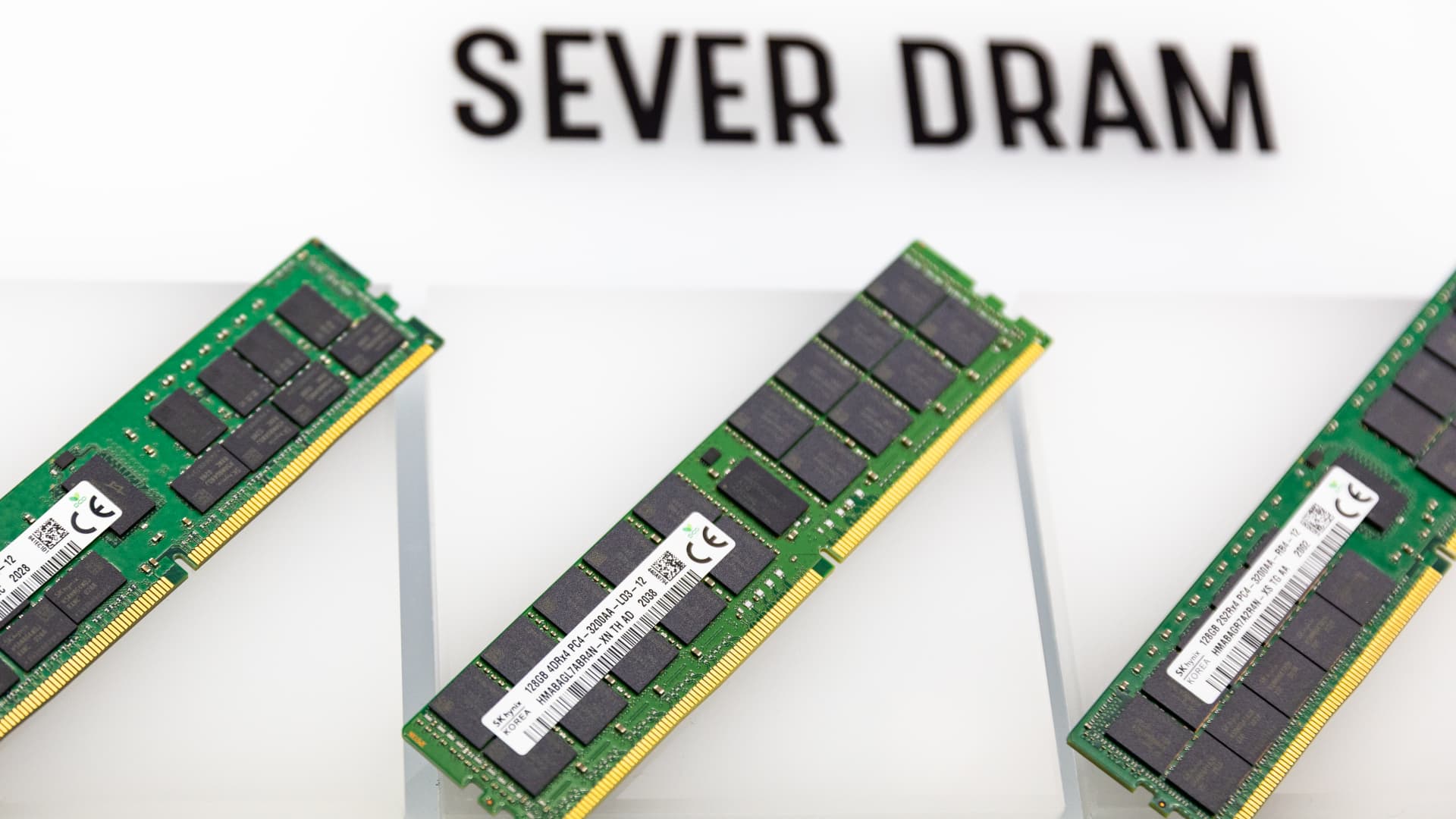
Memory Chip ETF DRAM Leads Semiconductor Boom
- Retail Investment Surge: The DRAM ETF has seen retail purchases exceed $200 million daily in less than four weeks, surpassing the dollar-volume pace of Tesla-leveraged ETF TSLL and Bitcoin ETF BITO, indicating a strong bullish sentiment among retail investors towards memory and AI infrastructure, with expectations of this buying frenzy continuing.
- Margin Expansion: Memory manufacturers are enhancing pricing power due to soaring demand, with projections indicating profit margins exceeding 70% by 2026, which will significantly boost the profitability of related companies, especially amid the increasing demand for AI workloads.
- Concentration of ETF Assets: The three largest holdings in the DRAM ETF—Samsung Electronics, SK Hynix, and Micron Technology—account for 75% of the ETF's assets, collectively capturing 95% of all DRAM revenues and 67% of NAND revenues, highlighting the market's high concentration.
- Rising CPU Demand: The commercialization of
See More
S&P 500 and Nasdaq Futures Rise as Investors Await Economic Data
- Market Recovery: On Wednesday, S&P 500 and Nasdaq futures rose by 16.75 points (0.23%) and 239.75 points (0.82%), respectively, indicating investor optimism as they await crucial economic data, despite losses in the previous session.
- Oil Price Decline: Oil prices fell after a three-day rally, providing some relief to the markets; however, investors remain wary that ongoing conflicts could keep energy prices elevated, adding inflationary pressures that may complicate the Federal Reserve's policy outlook.
- Fed Policy Expectations: With Kevin Warsh confirmed to the Federal Reserve board, markets are anxious about a potentially more hawkish stance, as the probability of a 25-basis-point hike in December has risen to 28%, reflecting uncertainty regarding future monetary policy.
- Chip Stock Stabilization: Following a selloff in the previous session, chip stocks showed signs of stabilization, with Micron Technology (MU.O) rising 6.2% and Western Digital (WDC.O) gaining 3.1%, indicating a gradual recovery in market confidence towards the semiconductor sector.
See More
Surge in Semiconductor Stocks Raises Market Concerns
- Increased Market Reliance: As of Monday, the 19 semiconductor and semi-equipment stocks in the S&P 500 accounted for 18% of the index's weighting, indicating a growing reliance on this high-growth sector, where any correction could pose risks to the broader market.
- Rising Revenue and Profit Expectations: According to Gartner, global semiconductor revenue is expected to rise 64% to $1.3 trillion, while S&P 500 semiconductor companies are projected to see earnings growth of about 95% this year, reflecting a robust recovery in the industry and its role as an economic health indicator.
- Overbought Technical Indicators: The Philadelphia Semiconductor Index's relative strength index hit 85.5 last Friday, marking its highest overbought level since the tech bubble peak in 2000, prompting investors to be cautious of potential market pullbacks.
- Cautious Investor Sentiment: Despite the strong performance of the semiconductor sector, some investors, including Michael Burry, are holding puts, indicating a cautious outlook on future trends, especially if the AI theme shows signs of weakness.
See More
KLA and Sandisk Lead Stock Split Trends
- KLA Stock Split: KLA Corp announced a 10-for-1 stock split effective June 11, making its shares more accessible at nearly $1,900, which is expected to attract retail investors and enhance market participation.
- Market Share Advantage: KLA commands over 50% of the semiconductor process control market, with total returns exceeding 51,000% since 1994, demonstrating its strong competitive position and sustainable market presence.
- Sandisk's Rapid Growth: Since its spin-off from Western Digital in 2025, Sandisk's stock has surged over 4,162% in the past year, driven by soaring enterprise demand for high-performance NAND flash storage, highlighting its critical role in AI data center development.
- Future Earnings Expectations: Analysts have raised Sandisk's projected earnings per share for fiscal 2027 from $10 to $169.26, which, if accurate, could provide further impetus for a stock split, attracting more retail investors to the stock.
See More
Memory Chip Market Presents New Investment Opportunities
- Surge in Memory Demand: As demand for high-end memory surpasses manufacturers' supply capabilities, Sandisk's stock has skyrocketed approximately 4000% in a year, meaning a $25,000 investment a year ago is now worth over $1 million, highlighting the immense potential in the memory market.
- AI Chip Market Dynamics: Nvidia and Broadcom, as leading AI chip companies, achieved quarterly sales growth of 73% and 20% respectively, indicating sustained strong demand for AI processing platforms, which has attracted investor attention.
- Emergence of Smaller Memory Firms: Silicon Motion Technology doubled its sales year-over-year in Q1 and achieved a net profit margin close to 20%, with a market cap under $10 billion, sparking interest in the investment value of smaller memory companies due to its growth potential.
- Optimistic Market Outlook: Micron's sales nearly tripled year-over-year with a 771% surge in net income, coupled with strong future earnings guidance, indicating that the memory industry is experiencing rapid growth similar to that of AI chips a few years ago.
See More
Semiconductor Stocks Plunge, Qualcomm Drops 13%
- Market Pullback: Following a hotter-than-expected consumer inflation reading, semiconductor stocks experienced a broad decline on Tuesday, with Qualcomm plunging 13%, marking its worst session since 2020, indicating investor concerns about future growth prospects.
- Industry Impact: Intel shares fell 8%, while On Semiconductor and Skyworks Solutions dropped over 6%, and the iShares Semiconductor ETF sank 5%, reflecting the sector's vulnerability amid high inflation and geopolitical risks.
- Shifting AI Demand: Although recent AI demand has driven chip stocks higher, expectations of a transition from AI training to agents may affect demand for other AI components, leading to declines in memory chip makers like Micron and Sandisk, which fell 6% and 8%, respectively.
- Price Increase Trend: Memory chip manufacturers are raising prices amid ongoing supply shortages, and while Sandisk's stock has surged more than sixfold since the beginning of the year, market confidence in its future performance has been undermined by weak sales forecasts.
See More
Memory Chip ETF DRAM Leads Semiconductor Boom
- Retail Investment Surge: The DRAM ETF has seen retail purchases exceed $200 million daily in less than four weeks, surpassing the dollar-volume pace of Tesla-leveraged ETF TSLL and Bitcoin ETF BITO, indicating a strong bullish sentiment among retail investors towards memory and AI infrastructure, with expectations of this buying frenzy continuing.
- Margin Expansion: Memory manufacturers are enhancing pricing power due to soaring demand, with projections indicating profit margins exceeding 70% by 2026, which will significantly boost the profitability of related companies, especially amid the increasing demand for AI workloads.
- Concentration of ETF Assets: The three largest holdings in the DRAM ETF—Samsung Electronics, SK Hynix, and Micron Technology—account for 75% of the ETF's assets, collectively capturing 95% of all DRAM revenues and 67% of NAND revenues, highlighting the market's high concentration.
- Rising CPU Demand: The commercialization of
See More