Nvidia Leads the AI Investment Wave
Written by Emily J. Thompson, Senior Investment Analyst
Updated: 1 hour ago
0mins

Source: NASDAQ.COM
- Nvidia's Market Potential: Nvidia is considered the most attractive investment among the Magnificent Seven due to its relative growth rates and long-term potential, with significant demand for AI infrastructure projected to increase through 2030, driving strong future growth for the company.
- Meta's Investment Value: Meta Platforms trades at a P/E ratio of 19.3, lower than the S&P 500's 22.4, and while its ad revenue is growing rapidly, skepticism remains about its AI strategy; success in its AI projects could further enhance its market position.
- Microsoft's AI Revenue: Microsoft's annual recurring revenue surged 123% year-over-year to $37 billion last quarter, with a projected P/E ratio of 22.1 for fiscal 2027, indicating the effectiveness of its AI strategy and potential for stock price appreciation.
- Amazon's Cloud Computing Edge: Amazon's AWS division performed exceptionally well in the latest quarter, and significant growth is expected over the next few years due to investments in data centers, having secured clients for most of the new infrastructure, which lowers investment risk.
Trade with 70% Backtested Accuracy
Stop guessing "Should I Buy NVDA?" and start using high-conviction signals backed by rigorous historical data.
Sign up today to access powerful investing tools and make smarter, data-driven decisions.
Analyst Views on NVDA
Wall Street analysts forecast NVDA stock price to rise
41 Analyst Rating
39 Buy
1 Hold
1 Sell
Strong Buy
Current: 218.660

Low
200.00
Averages
264.97
High
352.00
Current: 218.660
Low
200.00
Averages
264.97
High
352.00
About NVDA
NVIDIA Corporation is an artificial intelligence (AI) infrastructure company. The Company is engaged in accelerated computing to help solve the challenging computational problems. Its segments include Compute & Networking and Graphics. The Compute & Networking segment includes its Data Center accelerated computing and networking platforms and AI solutions and software, and automotive platforms and autonomous and electric vehicle solutions, including software. The Graphics segment includes GeForce GPUs for gaming and personal computers (PCs), and Quadro/NVIDIA RTX GPUs for enterprise workstation graphics. Its technology stack includes the foundational NVIDIA CUDA development platform that runs on all NVIDIA GPUs, as well as hundreds of domain-specific software libraries, frameworks, algorithms, software development kits (SDKs), and application programming interfaces (APIs). Its platforms address four markets, which include Data Center, Gaming, Professional Visualization, and Automotive.
About the author

Emily J. Thompson
Emily J. Thompson, a Chartered Financial Analyst (CFA) with 12 years in investment research, graduated with honors from the Wharton School. Specializing in industrial and technology stocks, she provides in-depth analysis for Intellectia’s earnings and market brief reports.

Nvidia Launches Vera CPU and Acquires Taylor Morrison

- Nvidia CPU Launch: Nvidia unveiled its Vera CPU in Taipei, aiming to enhance AI workload processing by integrating Blackwell GPUs with ARM architecture CPUs designed by Mediatech, challenging Intel and AMD's market dominance, although its current market share remains small.
- Market Competition Dynamics: The Vera CPU is designed for the high-end market, expected to enter at a price point of $2,500, potentially capturing only a single-digit share of the PC market, highlighting Nvidia's challenging positioning in the CPU sector.
- Berkshire Acquisition Strategy: Berkshire Hathaway's acquisition of Taylor Morrison for $8.5 billion marks the first major deal under CEO Greg Abel, reflecting confidence in long-term housing demand in the U.S., despite current pressures from high interest rates.
- Industry Outlook Analysis: Despite slow home sales, Berkshire's acquisition positions it favorably for future construction cycles, especially against the backdrop of a 4 million housing shortage in the U.S., showcasing its long-term value investment strategy.
See More
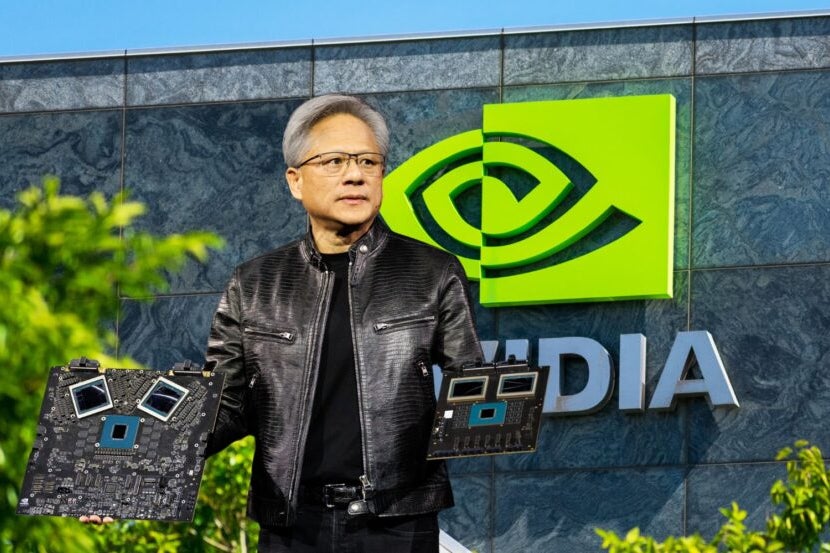
Anthropic Plans Initial Public Offering Amid AI Boom
- IPO Filing: Anthropic confidentially filed for an IPO with the SEC on June 1, indicating its rapid growth in the AI sector and positioning itself as a potential trillion-dollar company, likely to attract significant investor interest.
- Funding Background: Following a $65 billion Series H funding round, Anthropic's valuation reached $965 billion, surpassing OpenAI's $852 billion, reflecting strong competitive positioning and investor confidence in the AI market.
- Profitability Outlook: Anthropic expects to achieve nearly $50 billion in annualized revenue by the end of June and to turn an operating profit in the current quarter, making its IPO valuation potentially more attractive with a 20x forward revenue multiple compared to OpenAI's 40x.
- Market Sentiment: There is considerable anticipation for Anthropic's IPO, with investors assigning a 53% chance that its market cap will exceed $1.8 trillion on the first day of trading, indicating optimistic expectations for its future performance.
See More
SpaceX IPO Expected to Impact Investment Portfolios

- Historic IPO Size: SpaceX plans to raise $75 billion at a valuation of approximately $1.75 trillion, making it the largest IPO in history, which could profoundly impact investors' portfolios, particularly the 156 million U.S. adults holding S&P 500 index funds.
- Fast-Track Market Entry: The S&P 500 and Nasdaq-100 will provide fast-track entry for mega-cap growth stocks like SpaceX, allowing them to bypass traditional seasoning periods, thus preventing index fund investors from missing out on significant early gains and enhancing market liquidity.
- ETF Weight Adjustment: Due to SpaceX's relatively small float of $75 billion, the S&P 500 and Nasdaq-100 are likely to weight SpaceX based on three to five times the float value rather than its market cap, which will influence investment strategies for related ETFs.
- Communications Sector Outlook: If SpaceX joins the communications sector, its valuation in the Vanguard Communication Services ETF could reach between $225 billion and $375 billion, potentially making it one of the top three holdings in the ETF, thereby attracting investors seeking outsized returns.
See More

Three Dividend Stocks Worth Buying Now
- Pfizer Overview: Pfizer (NYSE: PFE) currently offers a dividend yield of 6.7%, and despite an average annual loss of about 7% over the past three years, its stock has risen 17% in the past year, indicating recovery potential; with a forward P/E ratio of 9.0, below the five-year average of 9.7, the stock appears undervalued.
- UPS Strategic Shift: United Parcel Service (NYSE: UPS) boasts a dividend yield of 7.7%, and while it has seen an average annual loss of 8.6% over the past three years, the company is cutting back on low-margin deliveries for Amazon, focusing instead on higher-margin customers like small businesses and healthcare, with domestic revenue down 2.3% but revenue per package up 6.5%, indicating improved profitability.
- ETF Investment Opportunity: The Schwab U.S. Dividend Equity ETF (NYSEMKT: SCHD) offers a yield of 3.25% and invests in about 100 dividend-paying stocks, having risen nearly 20% year-to-date, providing a compelling mix of income and growth, making it a suitable choice for investors looking to diversify.
- Investment Recommendation: Although Pfizer is not currently recommended by The Motley Fool as a top investment, its attractive dividend yield and potential market recovery make it worth considering, especially for investors seeking long-term growth opportunities.
See More
Nvidia Leads the AI Investment Wave

- Nvidia's Market Potential: Nvidia is considered the most attractive investment among the Magnificent Seven due to its relative growth rates and long-term potential, with significant demand for AI infrastructure projected to increase through 2030, driving strong future growth for the company.
- Meta's Investment Value: Meta Platforms trades at a P/E ratio of 19.3, lower than the S&P 500's 22.4, and while its ad revenue is growing rapidly, skepticism remains about its AI strategy; success in its AI projects could further enhance its market position.
- Microsoft's AI Revenue: Microsoft's annual recurring revenue surged 123% year-over-year to $37 billion last quarter, with a projected P/E ratio of 22.1 for fiscal 2027, indicating the effectiveness of its AI strategy and potential for stock price appreciation.
- Amazon's Cloud Computing Edge: Amazon's AWS division performed exceptionally well in the latest quarter, and significant growth is expected over the next few years due to investments in data centers, having secured clients for most of the new infrastructure, which lowers investment risk.
See More
NVIDIA Unveils New AI Skills to Accelerate Development
- New AI Skills Launch: NVIDIA introduced new physical AI agent skills at CVPR 2026 aimed at accelerating the development of autonomous vehicles, robotics, and vision AI, thereby enhancing development efficiency by addressing fragmentation in current research workflows.
- Technological Integration Advantage: The new tools leverage the 32-billion-parameter Alpamayo 2 Super VLA model, enabling researchers to convert fleet data into editable 3D scenes and conduct closed-loop reinforcement learning in high-fidelity simulations, significantly enhancing capabilities in autonomous vehicle research.
- Infrastructure Expansion: NVIDIA supports its research infrastructure expansion with new datasets and 'Physical AI Launchables' available on NVIDIA Brev, designed for rapid experimentation and streamlining the transition from model capabilities to actionable real-world autonomous systems.
- Global Research Support: By openly providing these tools on GitHub, NVIDIA enables global research institutions to more efficiently leverage its hardware and software ecosystem, further solidifying its critical role in the future development of physical AI.
See More
Nvidia Launches Vera CPU and Acquires Taylor Morrison
- Nvidia CPU Launch: Nvidia unveiled its Vera CPU in Taipei, aiming to enhance AI workload processing by integrating Blackwell GPUs with ARM architecture CPUs designed by Mediatech, challenging Intel and AMD's market dominance, although its current market share remains small.
- Market Competition Dynamics: The Vera CPU is designed for the high-end market, expected to enter at a price point of $2,500, potentially capturing only a single-digit share of the PC market, highlighting Nvidia's challenging positioning in the CPU sector.
- Berkshire Acquisition Strategy: Berkshire Hathaway's acquisition of Taylor Morrison for $8.5 billion marks the first major deal under CEO Greg Abel, reflecting confidence in long-term housing demand in the U.S., despite current pressures from high interest rates.
- Industry Outlook Analysis: Despite slow home sales, Berkshire's acquisition positions it favorably for future construction cycles, especially against the backdrop of a 4 million housing shortage in the U.S., showcasing its long-term value investment strategy.
See More
Anthropic Plans Initial Public Offering Amid AI Boom
- IPO Filing: Anthropic confidentially filed for an IPO with the SEC on June 1, indicating its rapid growth in the AI sector and positioning itself as a potential trillion-dollar company, likely to attract significant investor interest.
- Funding Background: Following a $65 billion Series H funding round, Anthropic's valuation reached $965 billion, surpassing OpenAI's $852 billion, reflecting strong competitive positioning and investor confidence in the AI market.
- Profitability Outlook: Anthropic expects to achieve nearly $50 billion in annualized revenue by the end of June and to turn an operating profit in the current quarter, making its IPO valuation potentially more attractive with a 20x forward revenue multiple compared to OpenAI's 40x.
- Market Sentiment: There is considerable anticipation for Anthropic's IPO, with investors assigning a 53% chance that its market cap will exceed $1.8 trillion on the first day of trading, indicating optimistic expectations for its future performance.
See More
SpaceX IPO Expected to Impact Investment Portfolios
- Historic IPO Size: SpaceX plans to raise $75 billion at a valuation of approximately $1.75 trillion, making it the largest IPO in history, which could profoundly impact investors' portfolios, particularly the 156 million U.S. adults holding S&P 500 index funds.
- Fast-Track Market Entry: The S&P 500 and Nasdaq-100 will provide fast-track entry for mega-cap growth stocks like SpaceX, allowing them to bypass traditional seasoning periods, thus preventing index fund investors from missing out on significant early gains and enhancing market liquidity.
- ETF Weight Adjustment: Due to SpaceX's relatively small float of $75 billion, the S&P 500 and Nasdaq-100 are likely to weight SpaceX based on three to five times the float value rather than its market cap, which will influence investment strategies for related ETFs.
- Communications Sector Outlook: If SpaceX joins the communications sector, its valuation in the Vanguard Communication Services ETF could reach between $225 billion and $375 billion, potentially making it one of the top three holdings in the ETF, thereby attracting investors seeking outsized returns.
See More
Three Dividend Stocks Worth Buying Now
- Pfizer Overview: Pfizer (NYSE: PFE) currently offers a dividend yield of 6.7%, and despite an average annual loss of about 7% over the past three years, its stock has risen 17% in the past year, indicating recovery potential; with a forward P/E ratio of 9.0, below the five-year average of 9.7, the stock appears undervalued.
- UPS Strategic Shift: United Parcel Service (NYSE: UPS) boasts a dividend yield of 7.7%, and while it has seen an average annual loss of 8.6% over the past three years, the company is cutting back on low-margin deliveries for Amazon, focusing instead on higher-margin customers like small businesses and healthcare, with domestic revenue down 2.3% but revenue per package up 6.5%, indicating improved profitability.
- ETF Investment Opportunity: The Schwab U.S. Dividend Equity ETF (NYSEMKT: SCHD) offers a yield of 3.25% and invests in about 100 dividend-paying stocks, having risen nearly 20% year-to-date, providing a compelling mix of income and growth, making it a suitable choice for investors looking to diversify.
- Investment Recommendation: Although Pfizer is not currently recommended by The Motley Fool as a top investment, its attractive dividend yield and potential market recovery make it worth considering, especially for investors seeking long-term growth opportunities.
See More
Nvidia Leads the AI Investment Wave
- Nvidia's Market Potential: Nvidia is considered the most attractive investment among the Magnificent Seven due to its relative growth rates and long-term potential, with significant demand for AI infrastructure projected to increase through 2030, driving strong future growth for the company.
- Meta's Investment Value: Meta Platforms trades at a P/E ratio of 19.3, lower than the S&P 500's 22.4, and while its ad revenue is growing rapidly, skepticism remains about its AI strategy; success in its AI projects could further enhance its market position.
- Microsoft's AI Revenue: Microsoft's annual recurring revenue surged 123% year-over-year to $37 billion last quarter, with a projected P/E ratio of 22.1 for fiscal 2027, indicating the effectiveness of its AI strategy and potential for stock price appreciation.
- Amazon's Cloud Computing Edge: Amazon's AWS division performed exceptionally well in the latest quarter, and significant growth is expected over the next few years due to investments in data centers, having secured clients for most of the new infrastructure, which lowers investment risk.
See More
NVIDIA Unveils New AI Skills to Accelerate Development
- New AI Skills Launch: NVIDIA introduced new physical AI agent skills at CVPR 2026 aimed at accelerating the development of autonomous vehicles, robotics, and vision AI, thereby enhancing development efficiency by addressing fragmentation in current research workflows.
- Technological Integration Advantage: The new tools leverage the 32-billion-parameter Alpamayo 2 Super VLA model, enabling researchers to convert fleet data into editable 3D scenes and conduct closed-loop reinforcement learning in high-fidelity simulations, significantly enhancing capabilities in autonomous vehicle research.
- Infrastructure Expansion: NVIDIA supports its research infrastructure expansion with new datasets and 'Physical AI Launchables' available on NVIDIA Brev, designed for rapid experimentation and streamlining the transition from model capabilities to actionable real-world autonomous systems.
- Global Research Support: By openly providing these tools on GitHub, NVIDIA enables global research institutions to more efficiently leverage its hardware and software ecosystem, further solidifying its critical role in the future development of physical AI.
See More